

A recent post on X by an overseas netizen sparked a massive debate: "anime male protagonists all look the same these days." They're usually black-haired, plain, and utterly indistinguishable, especially in rom-coms and isekai genres, where they're practically identical across the board.
After this design observation blew up online, Kanzaki Hiro (かんざきひろ), an animator and illustrator who has worked on numerous popular titles, stepped in to shed some light, revealing the clear creative strategy behind it.
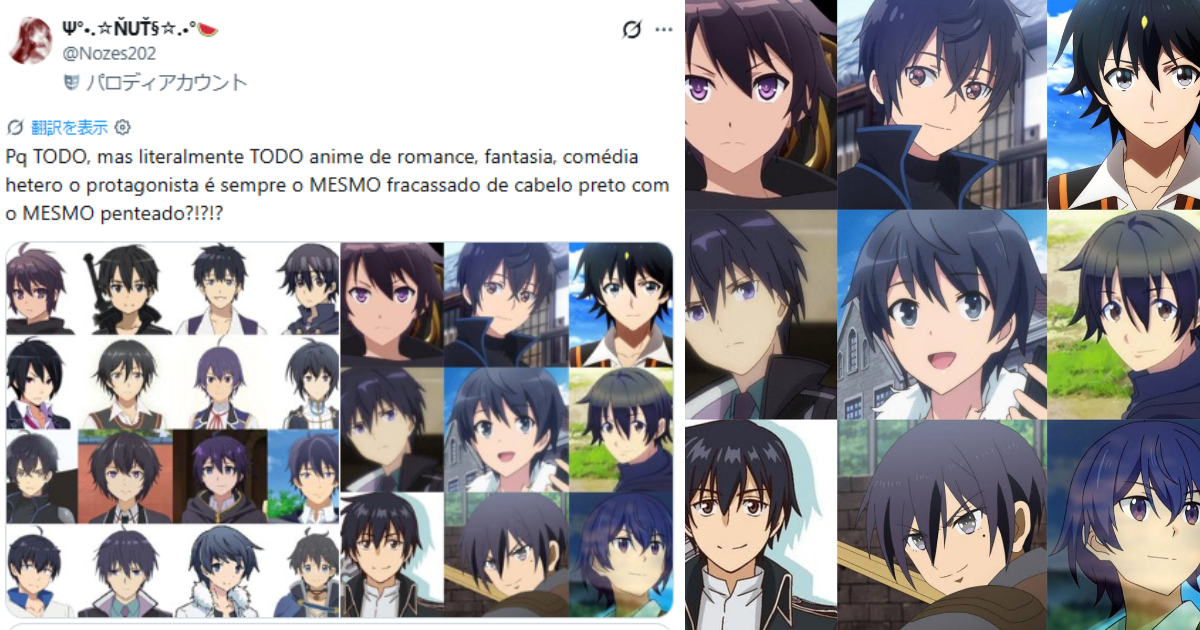
The overseas netizen who kicked off the discussion ranted, "Why do almost all male leads in romance, fantasy, and comedy anime have the same black hair, same hairstyle, and look like total duds?" This sentiment resonated with a huge number of people, igniting a fiery discussion.
And honestly, looking at the images they posted, it's hard to argue. Most of them indeed fit the description. If you don't look closely, they might just blend into a Google CAPTCHA challenge.
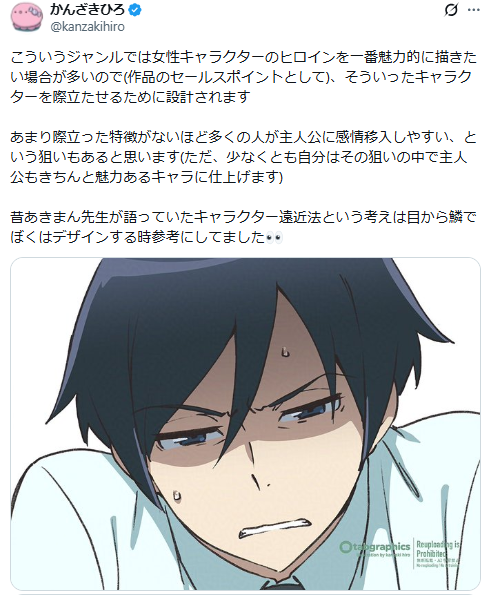
Kanzaki Hiro, known for his work on anime like "Eromanga Sensei" and "Rozen Maiden," and as the illustrator for the light novel series "Oreimo," responded:
In romance comedy, "the female lead is the main selling point." Therefore, character design prioritizes enhancing the heroine's charm. To make the female lead shine, male protagonists are often deliberately designed to be understated, lacking overly distinct features, creating a stark contrast.
He further pointed out another crucial reason for the protagonist's "less prominent" appearance: boosting viewer relatability. The more generic a character's features, the easier it is for viewers to project themselves onto them and get more invested in the story. However, he emphasized that even with this design approach, he still strives to give male protagonists a certain appeal, preventing them from becoming mere blank slates. He also mentioned that the "character perspective method" concept, once discussed by Akira Yasuda, greatly influenced his character designs and was quite inspiring.
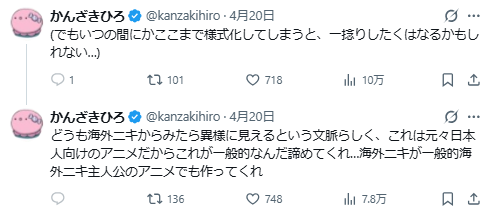
Kanzaki Hiro admitted that this phenomenon is actually an "established trope," a form of expression that has accumulated over time. However, he added that when this style becomes too formulaic, creators naturally want to introduce variations to avoid stagnation.
While this design might seem odd to overseas audiences, these shows are primarily made for a Japanese audience, so this style is the mainstream. If overseas viewers aren't digging it, hey, why not make an anime with a "foreign protagonist" version themselves?
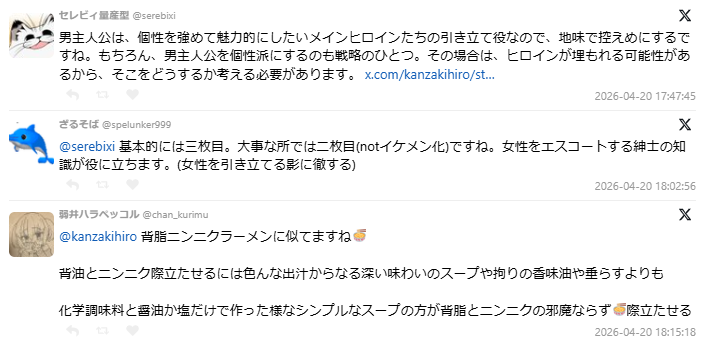
Many netizens agreed with this design logic, believing that male protagonists are essentially there to complement the female leads, so their appearance and personality are relatively subdued. However, some pointed out that if a male protagonist is designed with too much flair, he might steal the female lead's thunder, making balance a key creative challenge.
Another netizen used a "ramen" analogy, explaining that if you want to highlight the back fat and garlic flavor, the broth needs to be simple to make those elements pop, vividly illustrating the thought process behind character placement.
Some also believe that these "ordinary protagonists" act as a "blank template," making it easier for viewers to project themselves. In contrast, while characters like Kazuma from "KonoSuba," with their simple designs but strong personalities, are highly entertaining, they make it harder for viewers to feel that "that's me" connection.
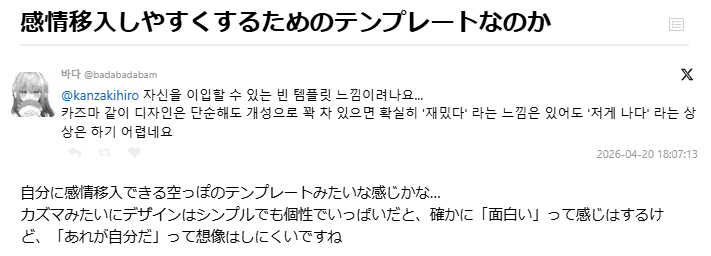
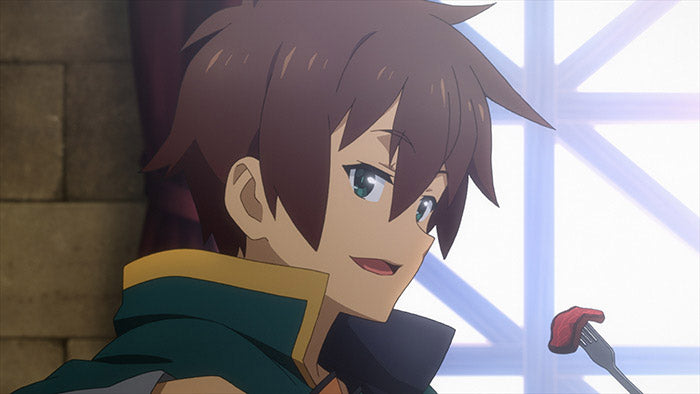
Simply put, if relatability is the goal, not only might characters need plain appearances, but their personalities might also need to be somewhat subdued, avoiding overly strong expressions to truly immerse viewers in that "that's me" experience.
Ultimately, this "ordinary male protagonist" phenomenon, as explained, isn't just laziness or repetition. It's a result of balancing commercial considerations, narrative demands, and audience psychology. Of course, how viewers actually feel about it is another story entirely.
via: togetter