

Remember those school days when your parents packed your lunch? Whether it was a meticulously crafted meal or just last night's leftovers, it was always a gesture of love. Maybe you grumbled about it back then, but as adults, we all appreciate that warmth now.
Families living abroad often face unique parenting challenges stemming from cultural differences. Recently, a Japanese parent residing in Canada shared a heartbreaking story: her child was mocked by classmates for bringing a Japanese-style bento to school, with kids calling it "gross" and "weird." The incident has sparked a heated debate online.
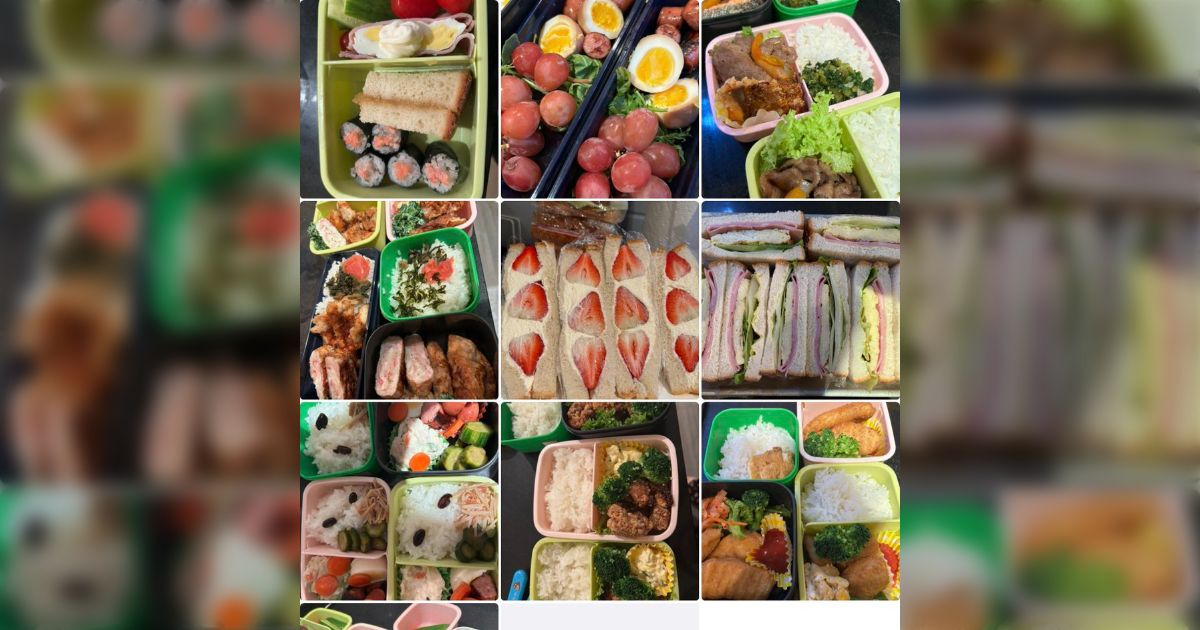
The mother, who is also a prominent X (formerly Twitter) user, explained that she moved to Canada about two years ago and has been diligently preparing four bento boxes for her children every day. Recently, however, her elementary school-aged second daughter started refusing to open her lunchbox in class, often bringing the entire meal home uneaten. Upon further inquiry, the heartbreaking truth emerged: classmates were teasing her about her Japanese bento, causing the child immense stress and fear.
She lamented that she'd "heard stories" about "Japanese bentos being looked down upon" in North America, where the lunch culture is quite different. Still, she never expected it to happen to her own family. While she speculates some teasing might stem from envy, her heart aches for the emotional toll it's taking on her daughter.
The post quickly went viral, drawing a flood of responses from netizens. Some pointed out that North American school lunches often consist of simple fare like sandwiches and fruit. In contrast, Japanese bentos, with their elaborate presentation and diverse side dishes, can stand out dramatically, sometimes even being perceived as "weird." Others shared their own experiences studying abroad, recalling how foods like onigiri (rice balls) and nori (seaweed) were mocked for their "unusual" smell or appearance.
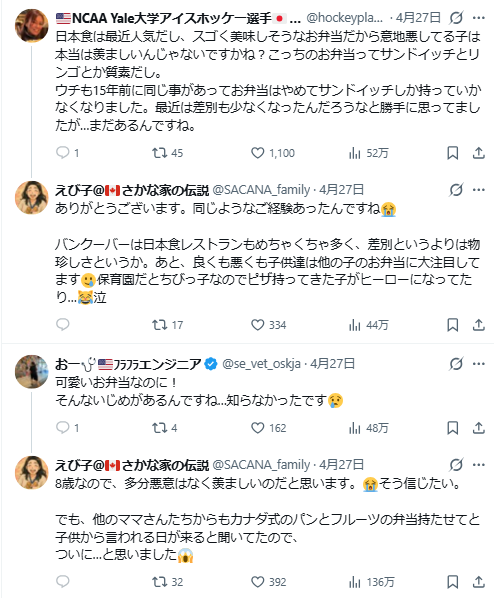
Some users analyzed the situation, suggesting that while the teasing might not be malicious, it likely stems from children's lack of understanding of different cultures and their immature ways of expressing themselves. Regardless, it can still cause significant harm. Others bluntly stated that instead of interpreting it as "envy," parents should acknowledge the child's refusal to eat and consider adjusting meal contents to help them integrate into the new environment first.
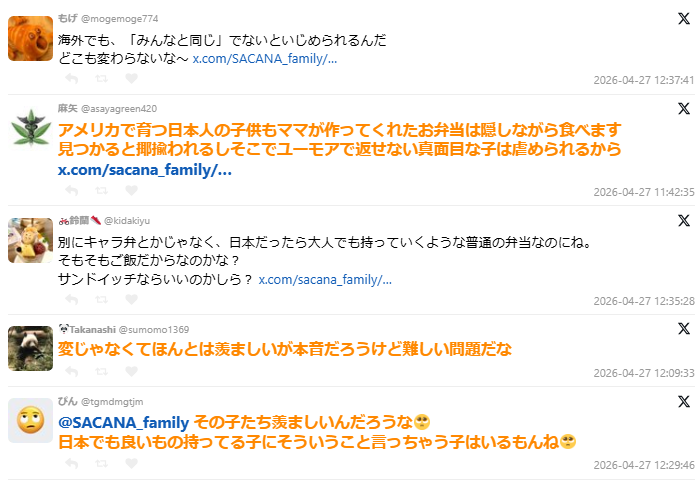
On the flip side, there were voices advocating for preserving cultural identity. Some netizens argued that Japanese bentos are nutritionally balanced and lovingly prepared, and children should be encouraged to build confidence and understand their own cultural value. However, they also conceded that for younger children, standing firm against peer pressure is no easy feat.
Furthermore, some who've been through similar experiences noted that such situations are far from uncommon abroad. Some children even develop psychological trauma from bringing "different" foods, highlighting how "being different" can easily become a major source of stress in schools.
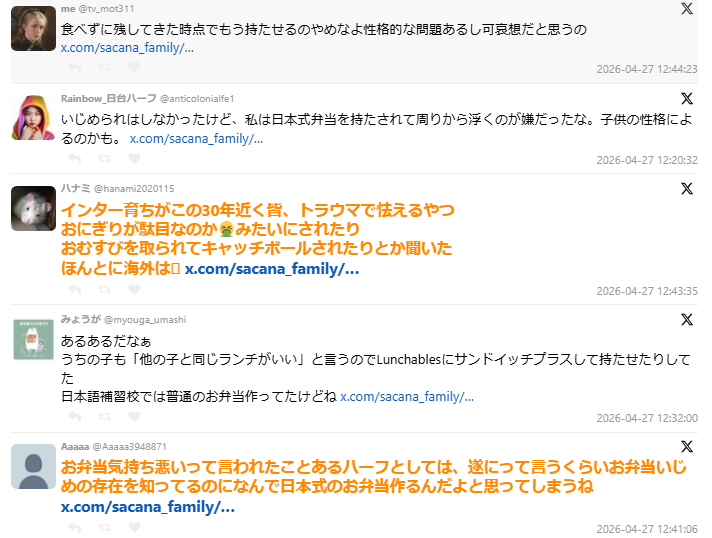
Of course, this isn't just an overseas phenomenon; similar issues can be seen even in Asia. In elementary and middle school environments, lunchboxes are just one indicator. When a peer is "different," teasing and exclusion can easily arise. The effectiveness of a school's educational system in addressing these problems is also a crucial factor.
For children like this Japanese mother's daughter, moving to a new country often means navigating the delicate balance between "maintaining one's identity" and "integrating into the group." This is undoubtedly a critical parenting challenge that families face when relocating internationally.