

Many might picture civil service as the ultimate "iron rice bowl" — a stable salary, rock-solid job security. It's a career aspiration for young people across places like Japan and Taiwan, and for good reason.
But a recent leak from Japanese salary platform OpenMoney, allegedly detailing the pay of a Ministry of Internal Affairs and Communications official, has sent shockwaves online. While the ¥14 million annual salary is certainly eye-catching, it's the staggering "200 hours of average monthly overtime" listed in the report that has Japanese netizens absolutely floored.
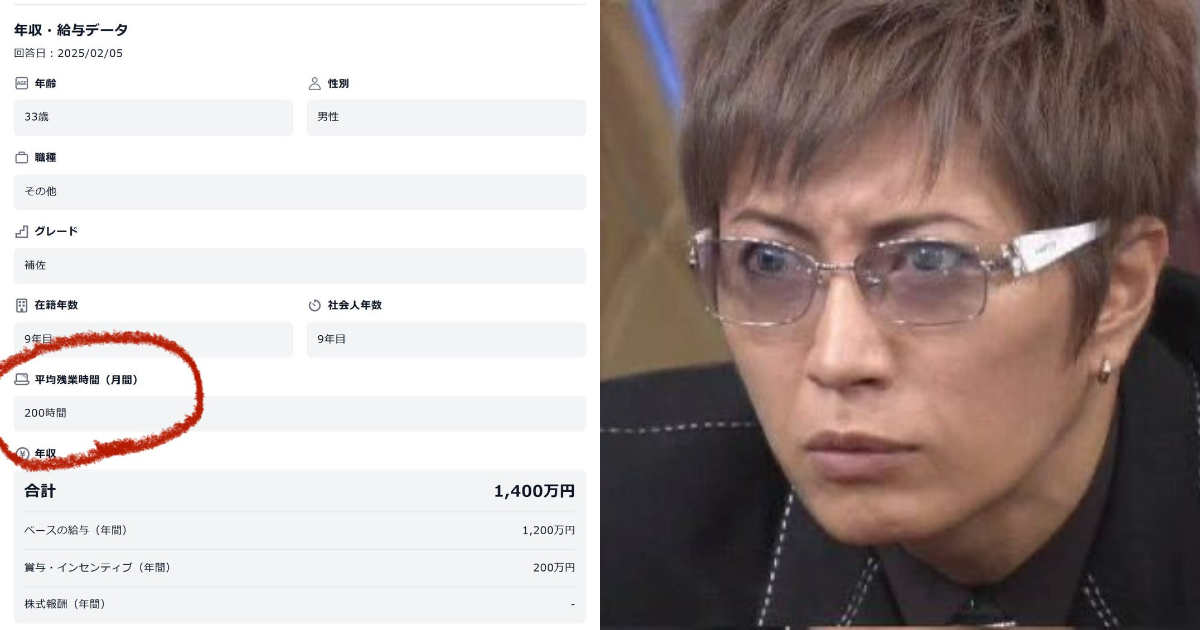
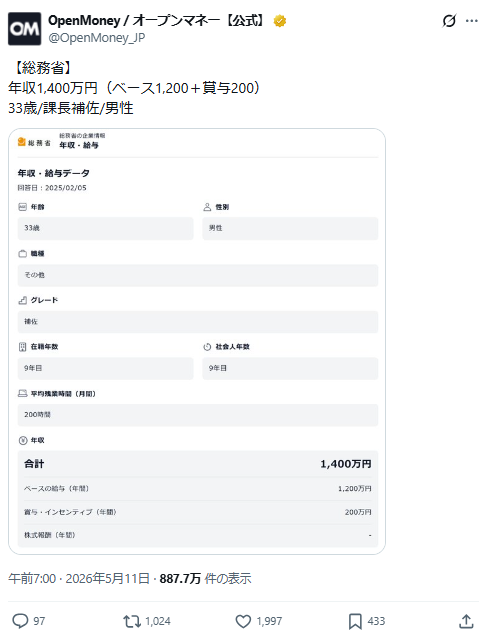
Per OpenMoney's official X account, the official in question is a 33-year-old male, serving as an "Assistant Section Chief" within the Ministry of Internal Affairs and Communications. His annual earnings reportedly hit around ¥14 million, comprising a ¥12 million base salary and a ¥2 million bonus.
However, the "average monthly overtime" entry in the data boldly declared "200 hours," leaving countless netizens utterly dumbfounded. The revelation quickly went viral, with many sharing it alongside GACKT memes to convey their sheer disbelief.
Many initially thought they'd misread the numbers. One netizen quipped, "I thought it said '200 hours of work per month,' but it's '200 hours of *overtime*'...'"

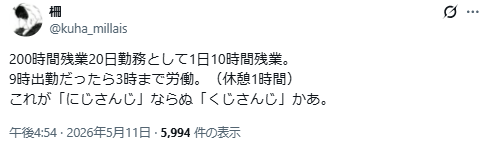
Others quickly crunched the numbers, exclaiming, "If you work 20 days a month, that's 10 hours of overtime *every single day*. Showing up at 9 AM means you're basically working until 3 AM!" Some even jokingly rebranded the popular Japanese VTuber agency Nijisanji as "Kujisanji" (a pun meaning 'painful, miserable job'), highlighting the truly hellish nature of such a schedule.
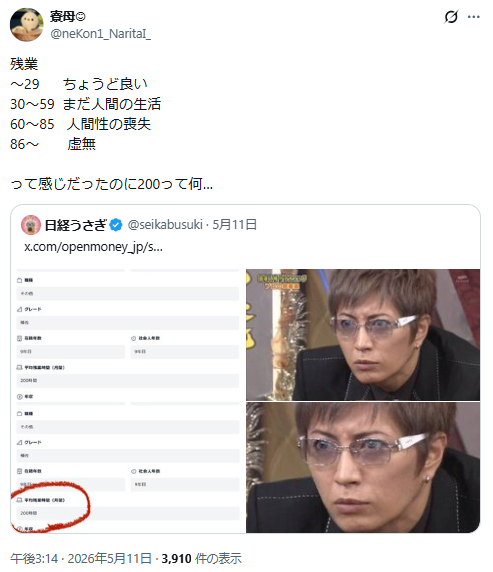
One netizen's comment perfectly captured the sentiment:
"I used to think:
0-29 hours: normal
30-59 hours: still a human life
60-85 hours: gradually losing humanity
86+ hours: entering the void
But seeing 200 hours? My brain just short-circuited."
Someone else pointed out that even if this official worked every single day of the month, they'd still be logging over six hours of overtime daily. Another netizen broke down the salary: "If standard working hours are 160 per month, then more than half of this person's income must be overtime pay. It could be a base salary of ¥4 million, with the rest entirely from overtime."
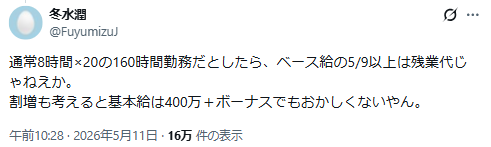
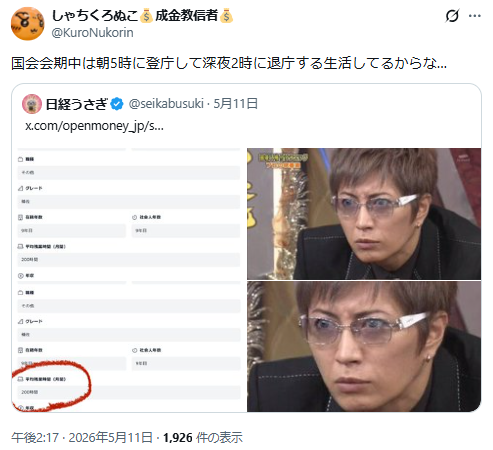
This data has once again thrown a harsh spotlight on the notoriously grueling work culture within Japan's central government ministries. One netizen, familiar with the Kasumigaseki bureaucracy, revealed, "During Diet sessions, it's common for many to arrive at the office at 5 AM and not leave until 2 AM."
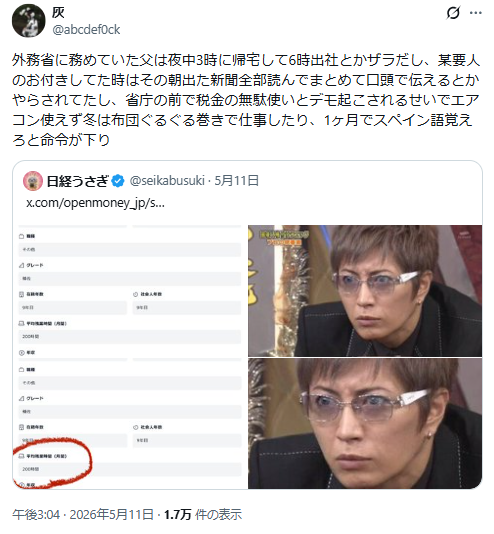
Another shared their father's experience at the Ministry of Foreign Affairs, noting, "Coming home at 3 AM and heading back out by 6 AM was just part of the routine."
Many are rightly concerned that these work hours far exceed Japan's widely recognized "karoshi" (death from overwork) warning threshold. However, since Japan's Labor Standards Act doesn't directly apply to national public servants, the issue of excessive hours within central government ministries has remained stubbornly unresolved for years.
Of course, this intense workload typically applies to officials in central government ministries, not necessarily smaller local government units. But even with an annual income of ¥14 million, these terrifying overtime hours suggest a life packed to the brim, leaving little room for peace or personal time.