

Generative AI has been a hot topic in the gaming industry lately, but gaming giant Capcom has been ahead of the curve. They partnered with Google Cloud last year, already leveraging generative AI for "Idea brainstorming" to cultivate more promising applications.
At Google Cloud's annual developer conference, "Google Cloud Next 2026," held in the US, Capcom shared how they're integrating AI into their massive game development pipeline. The goal? To tackle the ever-growing scale and escalating costs of AAA game production. 
When most people hear "AI in games," their minds immediately jump to AI automatically generating art, character models, or even full animations. But Capcom is making it clear: that's not their game plan.
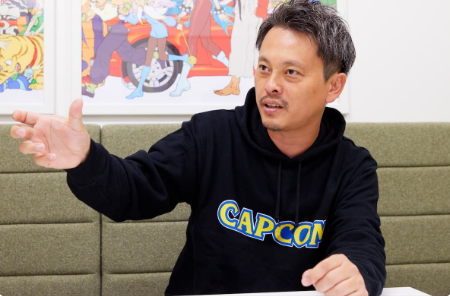
Shinichi Inoue, Head of the System Infrastructure Department, Division 2 Development Management at Capcom, stated, "AI is evolving incredibly fast, in some areas even surpassing average humans, and at times, even top-tier humans. However, what's truly crucial in the entertainment industry is 'sensibility.'" He believes that no matter how smart AI gets, it currently can't outdo human creators in "creative sensibility."
Capcom points out that the biggest challenge for AAA games today isn't just creating content; it's the "explosive increase in verification work." Back in the day, fixing one feature might mean checking 10 spots. Now, a single change in a massive game could require checking thousands of items. Think about it: screen clipping on colossal maps, bugs from countless equipment combinations, abnormal action responses, or glitches with every character pairing imaginable.
For content-heavy titles like "Monster Hunter Stories 3: Twin Dragons of Fate," just verifying character equipment combinations could gobble up thousands of hours. Inoue explained, "The larger the game, the exponentially routine confirmation work grows."
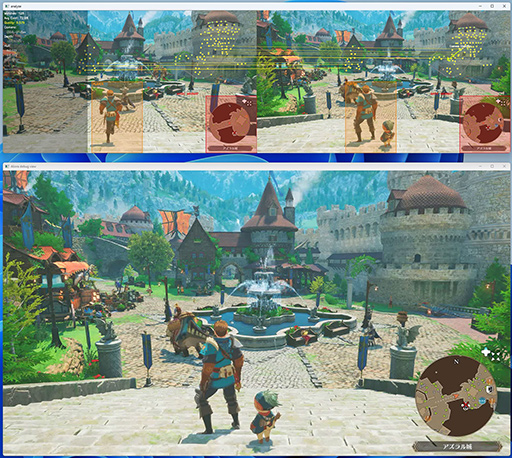
Capcom's newly implemented AI system automatically plays and scrutinizes games on a massive scale. And it's not just about finding bugs; the AI also assesses potential deviations from the "game director's vision," identifies which issues human developers should prioritize, and even suggests fixes.
Capcom reports that this system is already deployed across 6 to 8 game projects, with AI performing over 30,000 hours of testing work each month. The real-world results are staggering:
Map checks that once took 3000–5000 human hours → AI completes in approximately 72 hours.
Equipment appearance checks that previously required around 5280 hours → AI finishes in approximately 72 hours.
In other words, human testers no longer need to painstakingly comb through maps themselves. Instead, they can focus their efforts on the critical issues flagged by the AI.

Capcom is keen to emphasize that they aren't treating AI as a mere automation tool. Unlike standard business software, games are deeply subjective—"fun" is a feeling. That's why their AI learns the game director's design philosophy, the art director's visual style, and the team's desired player experience. Capcom even built its own AI models, such as an "Art Director Model," which works in tandem with Google's Gemini AI.
The aim is for the AI to understand, "Does this feel right for *this* game?" rather than just rigidly checking specifications.
Many worry that AI intervention will make games feel increasingly formulaic. Inoue directly addressed this, stating, "We will absolutely not choose a path that erases the creators' individuality." The goal is to return to a development environment where "everyone understands what the project is trying to achieve."

Finally, when asked if openly discussing AI might alienate players, Inoue articulated Capcom's core stance: "We're not trying to promote 'using AI'; instead, we want to convey that we deeply value creators, creativity, and our players." He stressed, "AI isn't for creating art, but for unleashing creators' potential."
For Capcom, AI's role isn't to replace humans. It's to free creators from repetitive labor, allowing them to dedicate more time to what truly matters: pure creativity.
via: 4gamer