

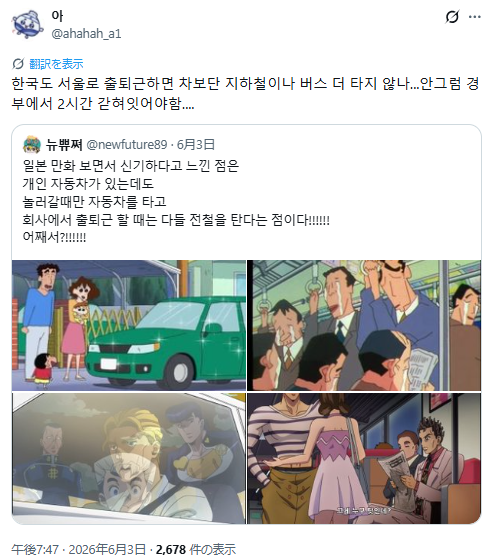
A Korean fan recently took to X to voice a long-standing confusion while watching Japanese anime: "They have their own car, so why do they still take the train to work?"
This seemingly simple question unexpectedly kicked off a massive discussion between Japanese and Korean netizens, shedding light on the starkly different commuting cultures in both countries. Japanese fans jumped in to explain the very real reasons why many people in Japan own a car but still rely on public transit for their daily commute.
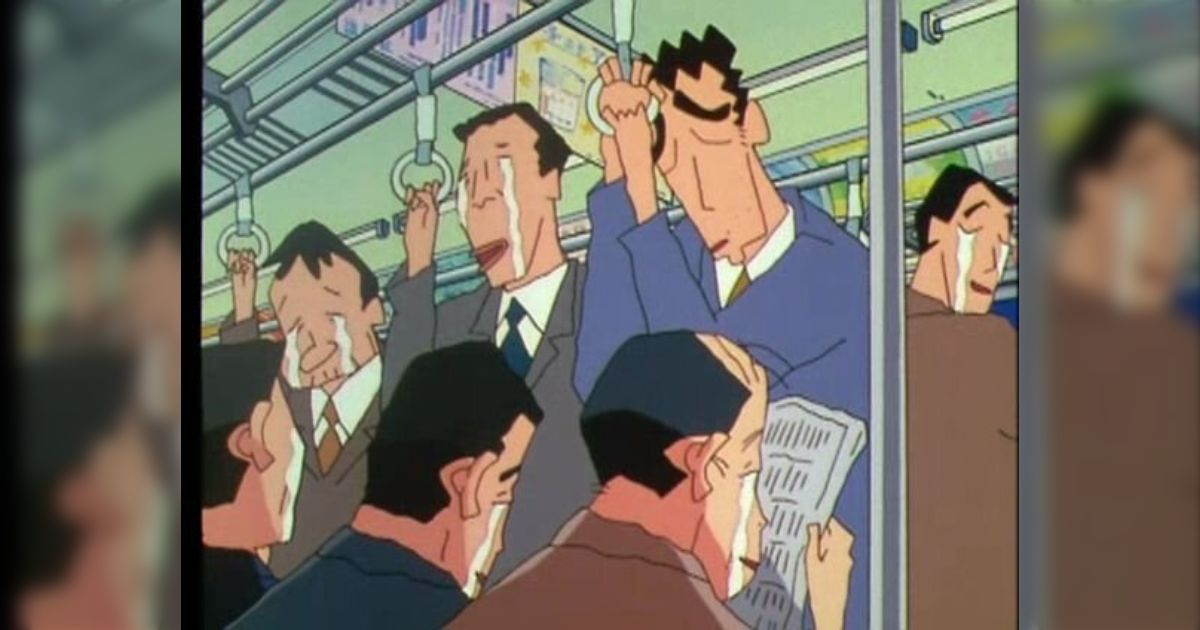
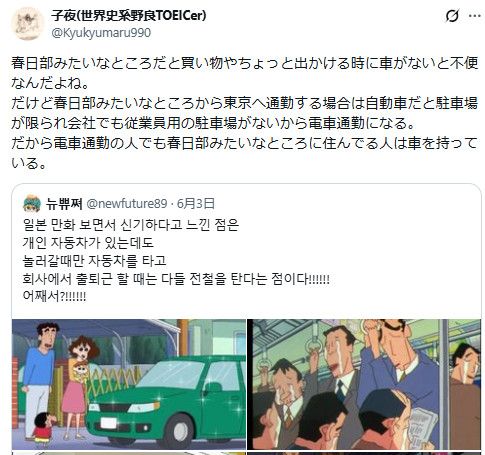
The original poster pointed out that many anime characters have a family car, but it's typically only used for weekend outings, while their work commute is almost always by train. They used characters from *Crayon Shin-chan* and *JoJo's Bizarre Adventure: Diamond Is Unbreakable* as prime examples. The setup left them wondering, "If you have a car, shouldn't you just drive to work?"
For many Koreans, the idea of owning a car but still opting for public transportation seems baffling. However, the post quickly caught the attention of Japanese users who were happy to clear things up.
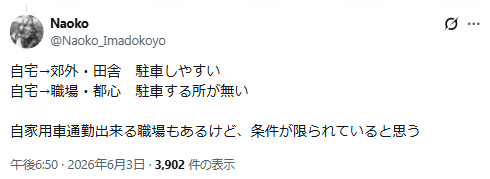
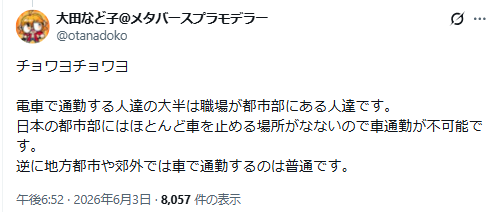
In response to the query, a flood of Japanese netizens offered explanations. Many pointed out that most anime series are set in major metropolitan areas like Tokyo, where the traffic situation is a world away from that of smaller cities.
One user commented, "There's basically no parking in the city center." Another added, "Even if you find a parking garage near your office, the fees are usually astronomical." For many Tokyo office workers, driving to work is actually far less convenient than taking the train, even if they have a car at home.
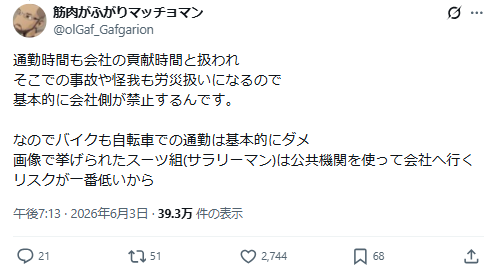
Beyond the parking nightmare, Japanese fans brought up another reason that might not be obvious to viewers abroad: some companies restrict or even prohibit employees from driving to work. The logic behind this is:
A traffic accident during a commute could be classified as a work-related incident, making the company liable for management responsibilities. Since driving carries a higher risk than taking public transport, many businesses encourage employees to use trains and buses. Some companies even have restrictions on commuting by bicycle or motorcycle.
Japanese netizens used Hiroshi Nohara from *Crayon Shin-chan* as a perfect case study. Hiroshi lives in Kasukabe, Saitama Prefecture, but works in central Tokyo. In this scenario, the train ride takes about an hour. Driving, however, could take an hour and a half or longer, and that's without factoring in traffic jams, which could make the time difference even greater.
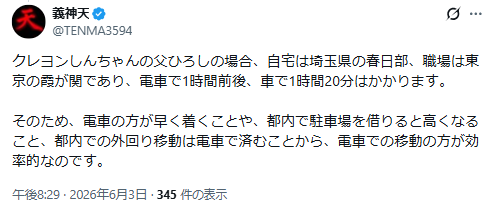
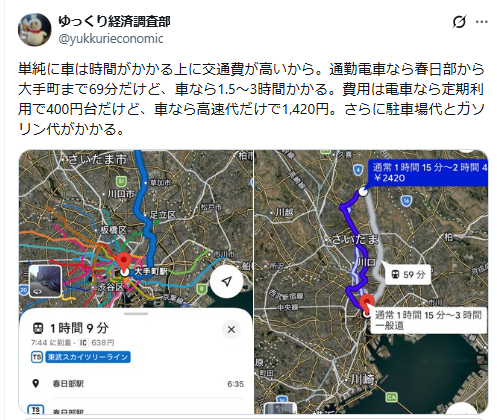
One user analyzed, "From the suburbs to central Tokyo, the train is almost always more efficient than driving." This has led to a common lifestyle for residents in the greater Tokyo area: take the train on weekdays for work, and use the car for shopping or trips on the weekend.
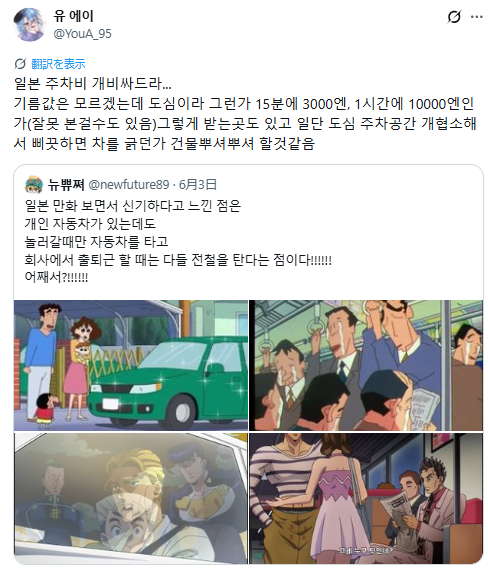
During the discussion, many Korean users expressed disbelief at Japan's parking fees. One shared their experience in Tokyo: "Some places charge 3,000 yen for just 15 minutes, and it can even hit 10,000 yen for an hour."
While prices can vary by location, the notoriously high cost of parking in central Tokyo is a well-known issue. When you add up highway tolls, gas, and parking, the total cost of driving to work far exceeds a train pass.
However, many Japanese fans were quick to add, "Don't assume all of Japan is like this." Outside of major metropolitan hubs like Tokyo, Osaka, and Nagoya, many smaller cities and rural areas are heavily reliant on cars.
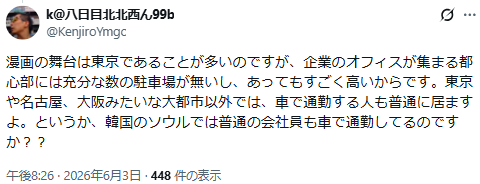
A netizen stated, "You're basically stranded without a car in the countryside." In these regions, commuting by car is the norm, which explains why many Japanese families own a vehicle even if it isn't used for the daily work commute in the city.
As the discussion continued, some Korean netizens chimed in with their own experiences. Many Seoul residents noted, "It's actually pretty similar in Seoul." If their office is near a station and the driving route is prone to gridlock, they'll also choose the subway over their car.
One Seoul resident shared, "If you drive into downtown Seoul every day, you could be stuck on the highway for over two hours." This shows that as urbanization progresses, major Korean cities are developing commuting patterns similar to those in Japan.
What started as a simple question about an anime trope turned into a fascinating opportunity for Japanese and Korean netizens to observe and understand the cultural differences in each other's daily lives.
via: X@newfuture89