

A recent post on X about "what Koreans must eat when visiting Japan" has sparked a massive debate among Japanese and Korean social media users.
Surprisingly, the most-named item wasn't the usual suspects like ramen, sushi, or yakiniku. Instead, the crown went to the humble "egg salad sandwich" found in every Japanese convenience store, a choice so unexpected it became a hot topic. One Korean user posted a photo of a Japanese convenience store "egg salad sandwich," noting that it has become a staple on any Korean tourist's itinerary. They argued that while it seems incredibly simple, you can only find this level of deliciousness in Japan.
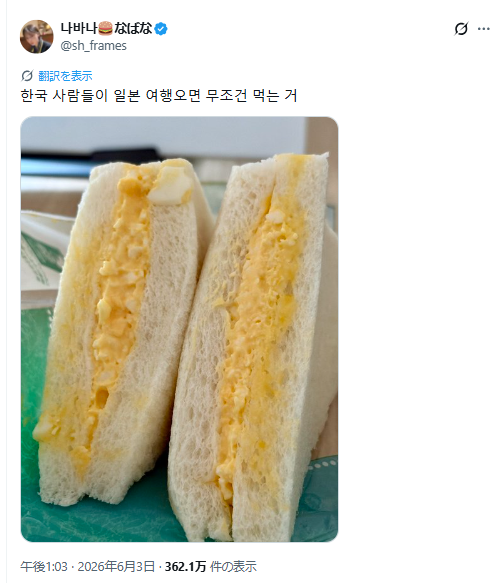
This left many scratching their heads. The ingredients for an egg salad sandwich are basic, and it's easily made in Korea, so why the obsession with the Japanese version? This question became the focal point of the online discussion.
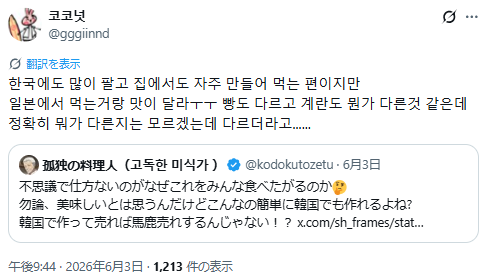
"I've always wondered why people love this so much," one user posted. "Of course, it's delicious, but it's something Korea should be able to make, right? I feel like it would sell like crazy if it was available in Korea."
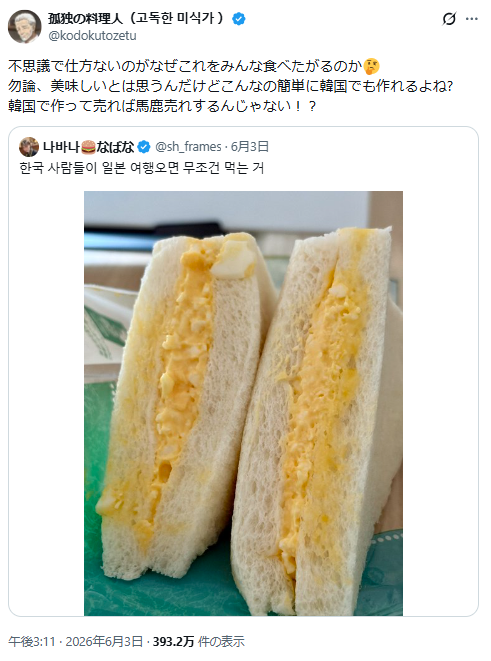
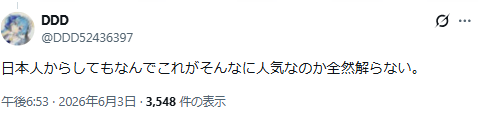
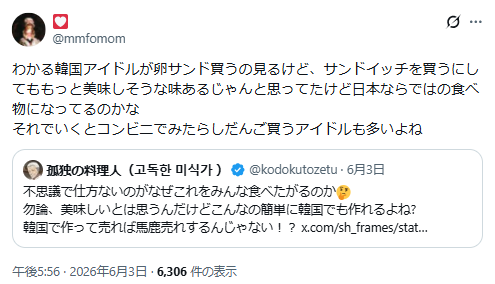
The comment immediately triggered a flood of responses, with even Japanese users admitting, "Honestly, even we Japanese don't quite get why it's so popular." Others mentioned that every time they see a Korean idol visit Japan, they immediately go buy an egg salad sandwich, feeling that there are far more unique Japanese foods to try.
However, many Korean users who have actually compared the sandwiches from both countries had a different take, stating flatly: "The egg salad sandwiches you get in Japan taste completely different from the ones in Korea."
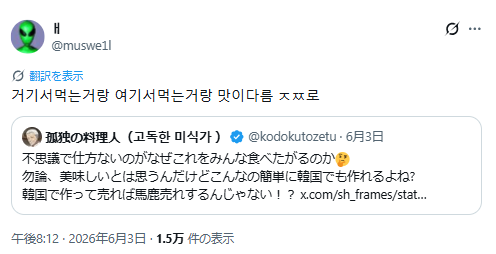
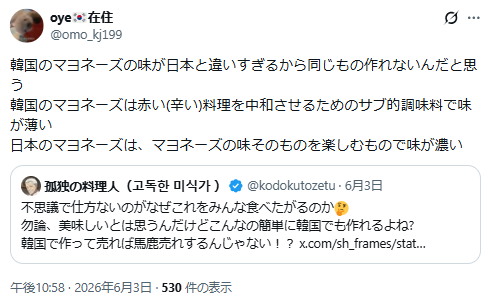
Among the many theories, the most frequently cited difference is the mayonnaise. Netizens pointed out that common Japanese mayo is made primarily with egg yolks, giving it a richer flavor, whereas many Korean mayonnaises use the whole egg, resulting in a distinctly different taste. One long-term resident of Korea explained, "Korean mayo is more like a supporting condiment for spicy dishes, so its flavor is relatively light. Japanese mayo is one of the main stars and has a strong flavor profile of its own."
This means that even with the exact same recipe, the final product will taste significantly different.

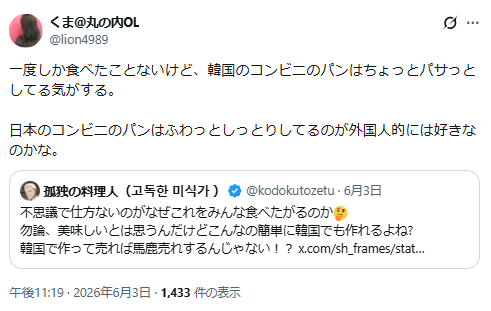
Beyond the eggs and mayo, many believe the real secret ingredient that's impossible to replicate is the bread. "You rarely find that signature soft, moist white bread outside of Japan," a Japanese user commented. A Korean user shared a similar sentiment: "A lot of bread in Korea is on the drier side," and "The bread from Japanese convenience stores is soft and fluffy." So even if the filling were identical, the overall texture would be a world apart.

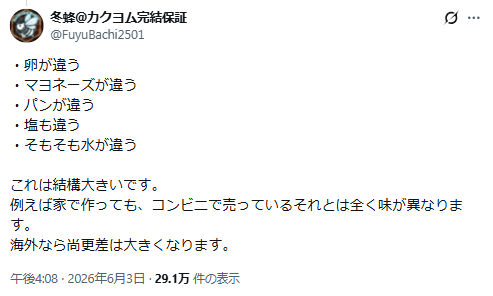
One user even compiled a list of "Reasons Why Japanese Egg Salad Sandwiches Are Hard to Replicate":
The eggs are different.
The mayonnaise is different.
The bread is different.
The salt is different.
The water quality is different.
"Even if you try to make it at home in Japan, it's hard to perfectly recreate the convenience store taste," they concluded. "The difference would only be greater in another country."
Another Korean user mentioned that while egg salad sandwiches are sold in Korea and they often make them at home, the
taste is just never the same as what you get in Japan. "The bread is different, the eggs feel a bit different... I can't put my finger on it, but it's just... different."
This discussion reveals that the magic of the Japanese egg salad sandwich is more than just "egg and bread." It's a perfect storm of quality eggs, flavorful mayo, pillowy bread, and even subtle differences in local ingredients and water. Add in the nostalgia and convenience of a travel memory, and you have the recipe for an iconic snack.
That's why, even though they can get egg salad sandwiches back home, many tourists can't resist walking into a Japanese convenience store to grab one first thing. If you find yourself in Japan, maybe it's time to hit up a local konbini or bakery and see what all the hype is about.