

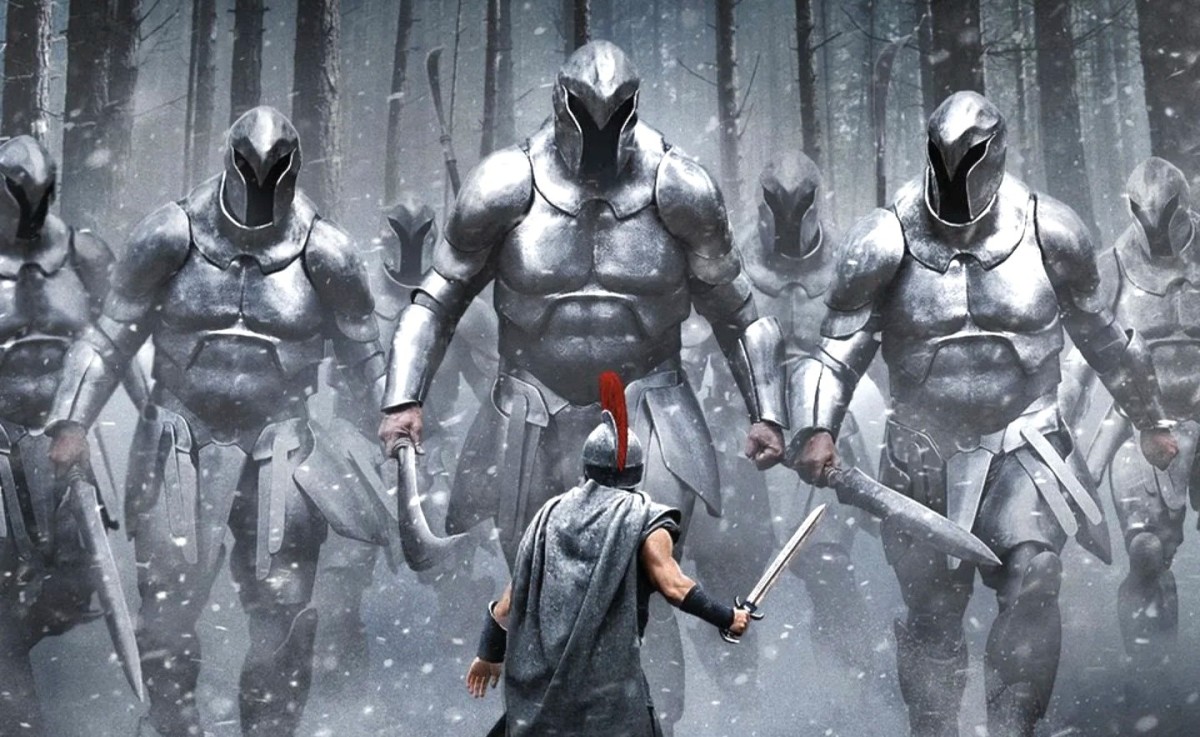
 (Image Source: Universal Pictures)
The grandeur and influence of "The Odyssey" are beyond dispute. Much like many of William Shakespeare's plays, it has long served as a foundational "story archetype" for countless works that followed. Even creators who haven't read "The Odyssey," or aren't consciously paying homage, adapting, or reimagining it, sometimes find their own creations inadvertently echoing its themes. This is because "The Odyssey" was the first, or at least among the very first, to tell this type of narrative, naturally establishing itself as a quintessential benchmark that subsequent works are destined to live within its shadow.
Consequently, we often describe certain novels or films as being "Odyssey-like," or a superhero's origin story as replicating "Hamlet." Christopher Nolan's films are certainly no exception. Spiritually speaking, he has explored "The Odyssey" multiple times, as his movies frequently center on journeys home. For instance, in "Batman Begins," Bruce Wayne, self-exiled and trained by the League of Shadows, ultimately aims to return to Gotham City, restore order to his chaotic hometown, and reclaim leadership of his family's enterprise. 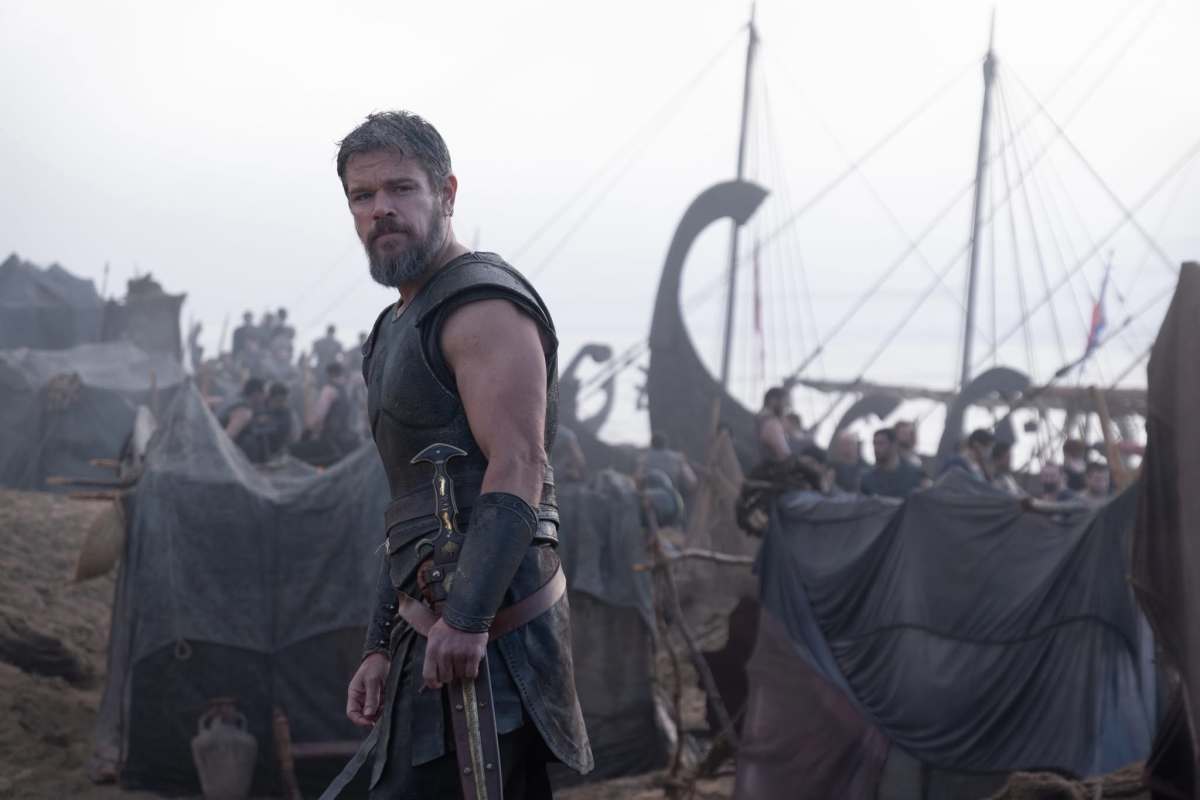
(Image Source: Universal Pictures)
Dom Cobb in "Inception" is another man who, after years away, must painstakingly work to return home. Bruce Wayne in "The Dark Knight Rises" similarly undergoes a journey of return, needing to climb out of the Lazarus Pit to restore order to a chaotic Gotham City. In "Dunkirk," the focus isn't on winning the battle, but on the victory of simply making it home safely. "Interstellar" is perhaps the Nolan film closest to "The Odyssey" in both theme and structure; Joseph Cooper is forced to leave home to fight a spiritual Trojan War, yet despite the vast distance, loved ones at home constantly yearn for his return. This prolonged anticipation, however, becomes the ultimate test of their family's faith.
Nolan is a family man, and his protagonists often just want to return home. Matt Damon, too, often plays characters who are "always waiting to be rescued and brought home," a running joke among fans. For both of them, "The Odyssey" feels like a return to foundational storytelling. "The Odyssey" even features a non-linear narrative, combining the themes of homecoming and non-linearity – it's almost as if Nolan was destined to direct "The Odyssey." You'd be hard-pressed to find a period fantasy subject more suited to Nolan. But do I like *this* "Odyssey"? Not at all. Ironically, I find this "Odyssey" to be his weakest film to date.  (Image Source: Universal Pictures)
First, I must emphasize that my dislike has nothing to do with "political correctness" controversies surrounding casting, nor with whether I'd read or understood "The Odyssey" beforehand. I have read it, and I do understand it (the story is so universally known, it would be hard not to). To Nolan's fervent defenders, don't just resort to dismissing critics as "not understanding" the film. Liking something and understanding it are not absolutely linked. Who says understanding something means you're guaranteed to like it? You understand that feces smells bad; does that mean you enjoy eating it? My reasons for disliking it are not about the story of "The Odyssey" itself; rather, I dislike Nolan's interpretation.
More precisely, liking a film and believing it's well-made are sometimes two distinct concepts. I can acknowledge a work as objectively good while simply not enjoying the experience of watching it, or I can dislike it precisely because I believe it's poorly made. However, I don't feel the need for extensive explanation, as the common perception often assumes the latter is the "only logic." My feelings toward *this* "Odyssey" fall squarely into that latter category. It's equally ironic that the areas where "The Odyssey" falters, beyond Nolan's inherent recurring flaws, are often the very characteristics he typically prides himself on. 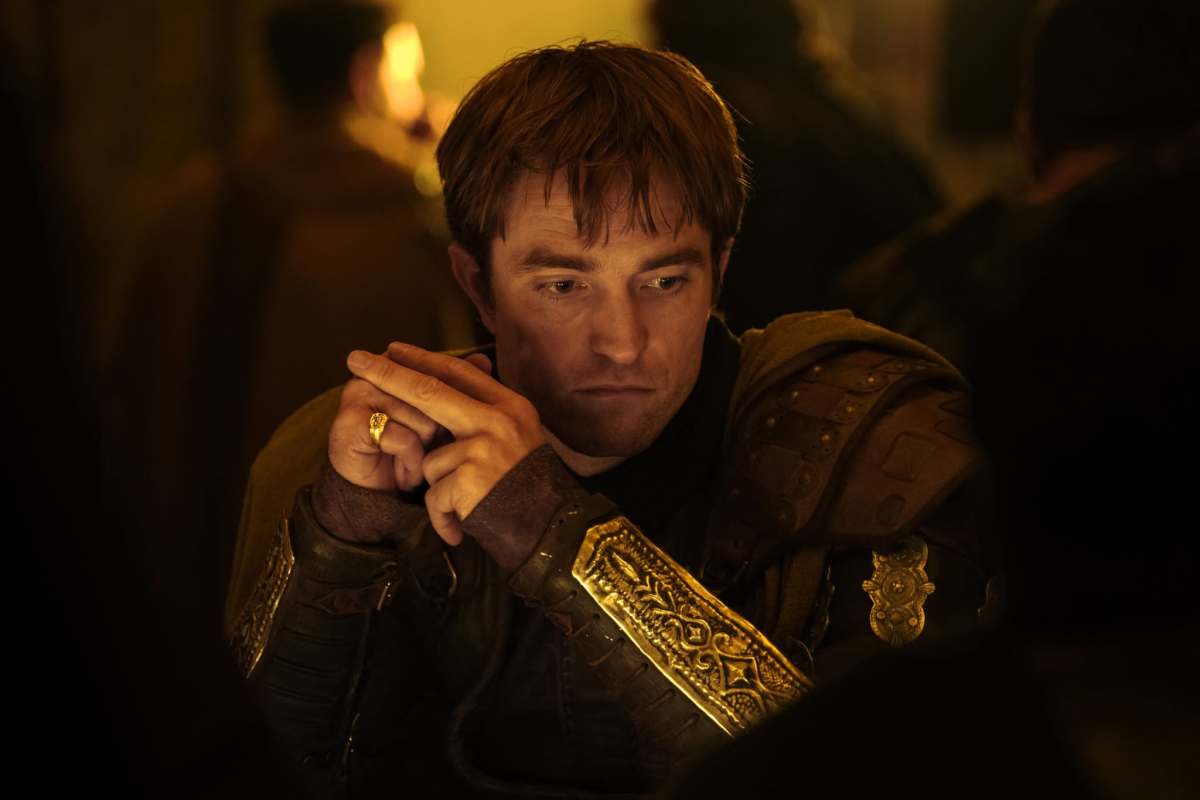 (Image Source: Universal Pictures)
Let's start with the biggest fatal flaw: the editing in "Odyssey" is an absolute trainwreck. I don't know what Nolan was thinking, but nearly every static dialogue scene is chopped to pieces. The cuts are all over the place, as if in a frantic rush, barely allowing you to watch an actor finish a single line. There's absolutely no room to breathe. Actors often praise editing as the key to making their performances shine, not just because it selects their best takes, but because the rhythm of the cuts directly shapes the audience's perception of their work. Bad editing can drag an actor down. And in "Odyssey," the editing is often a dead weight on the cast. This isn't an Odyssey; it's an ordeal.
I can't believe I'm seeing this in a Christopher Nolan film. In several scenes, the editing failed so spectacularly to build emotional momentum that I couldn't connect with the performances at all. No matter how much love or hate swirled in their eyes, or how much history tensed their muscles, I felt absolutely nothing. I initially wanted to give Nolan the benefit of the doubt, knowing the new IMAX cameras they used still can't shoot takes longer than three minutes. Perhaps that made the film difficult to edit, leaving him without long enough shots or usable material. But then I realized that couldn't be right. The scene where Robert Pattinson seduces Anne Hathaway features a very long take. So this isn't the camera's fault—the blame lies squarely with Nolan.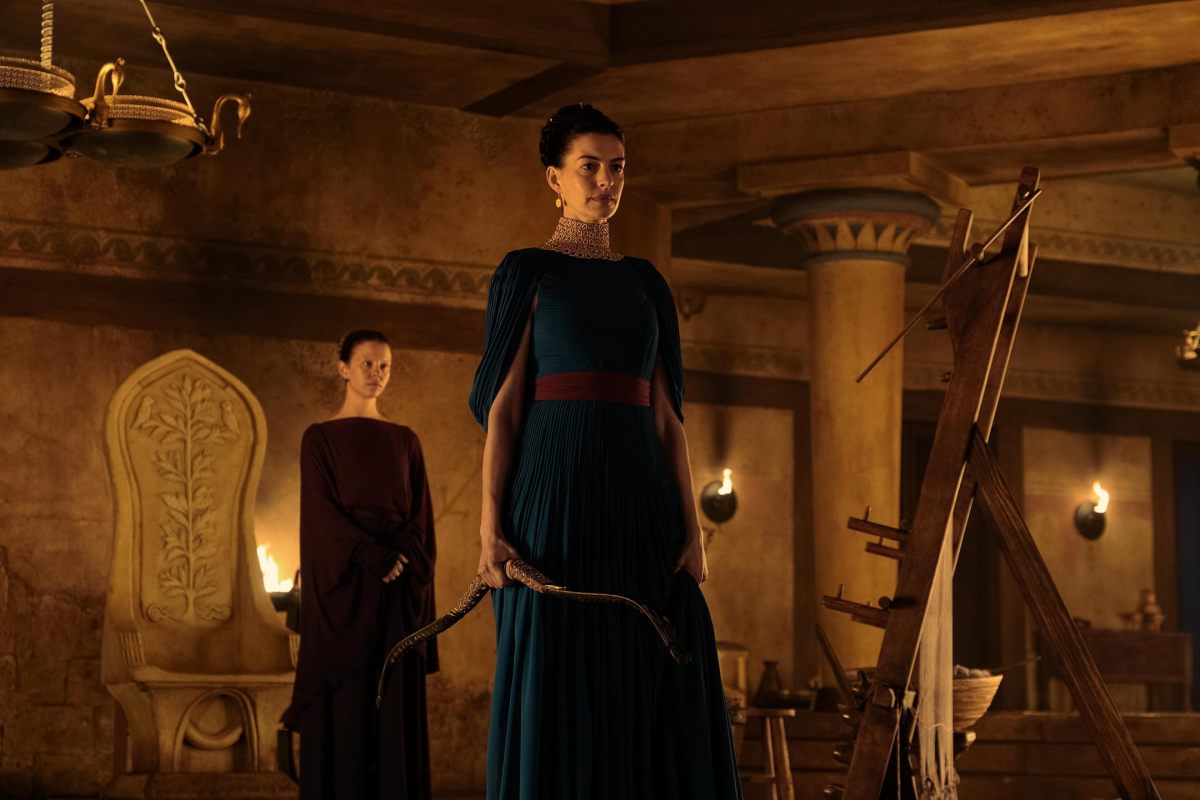
(Image: Universal Pictures)
It's not just the dialogue scenes; the flashbacks are just as bad. First off, the film abuses the flashback device to an absurd degree, flashing back so often it's more blinding than a J.J. Abrams lens flare. A flood of unnecessary flashbacks constantly interrupts the flow, shattering the integrity of the actors' performances. I understand some flashbacks convey crucial information or key childhood memories for certain characters, but there was no need to cram in so many. For instance, in the scene where John Leguizamo tells Tom Holland about Pattinson's childhood, I would have much rather just listened to Leguizamo talk more. It would have shown more confidence in the actor's performance, allowing the audience to focus on his storytelling and supplement it with their own imagination, aided by only a few, well-placed key flashbacks.
I never thought I'd see such shattered editing in a Nolan film. Editing is one of the hallmarks of his work. A huge reason I became a fan was his brilliant use of flashbacks and cross-cutting, which always managed to precisely stir the audience's emotions while deftly delivering or resolving plot points. This was most masterful in "The Prestige." But this time, even his signature non-linear storytelling became a headache. I couldn't appreciate any of the dramatic tension that's supposed to come from interweaving two timelines and jumping between different points in time. Even when it was present, it was incredibly weak. It just felt like he was frantically "explaining" things, like a teacher falling behind schedule and rushing through the lesson plan. (Image: Universal Pictures)
But this rigid, expository tone doesn't just come from the editing; the script itself is full of stiff, explanatory dialogue. While Nolan has shown tendencies for this in the past, it was never this severe. Here, the weakness is on full display, with every character sounding like an NPC bluntly "providing annotations." This isn't one of his usual sci-fi or action films where you need to explain the mechanics of a dream world, time dilation on different planets, or what new black-ops tech Batman needs for his next mission. Remember what Nolan said in "Tenet"? Don't try to understand it, feel it. "Odyssey," more often than not, needed moments of pure feeling and negative space—something he proved he could do in "Dunkirk." There's no reason he couldn't have done it here.
Honestly, after being adapted into a film, "Odyssey" just isn't suited for Nolan's later-career non-linear style. The editing style from his "Batman Begins" era would have been fine. But ever since "Interstellar," Nolan has pursued a highly dense, rapid-fire cross-cutting between timelines, almost like he's editing a music video. The structure of "Odyssey" isn't built for that kind of treatment, or rather, it's incredibly difficult to pull off without shooting yourself in the foot. And Nolan's foot clearly didn't dodge the stone. As a result, the various side-adventures during Odysseus's journey home after the Trojan War fail to connect with any real fluidity, leaving a sense of fragmentation that's impossible to ignore. (Image: Universal Pictures)
When it comes to the dialogue, Nolan’s insistence on modern, American accents remains baffling to me even after watching the film. The reasoning behind this choice must be too profound for a simple person like me to grasp. If he were making a historical parody, I wouldn't mind. But this is a serious, solemn epic, and it completely took me out of the experience. After all, like most people on this planet, I've been conditioned to accept British accents as the default for Hollywood productions about other countries' histories, even if it's just a facade. At the very least, give me something that feels "period-appropriate." To subvert that convention, you need a good reason, but Nolan doesn't provide one. His attitude just seems to be: "Because I felt like it."
In fact, many of Nolan's choices seem to be based on that same impulse. Charlize Theron has a commanding presence, Jon Bernthal is a powerhouse, and Matt Damon is great—I know all this. But putting them in a film like this just feels off. As I said, my brain has been conditioned over the long term. Even when Hollywood makes a film like "Clash of the Titans," the casting primarily leans toward European and Australian actors to maintain a semblance of historical authenticity. So, it feels instinctively jarring to see American actors, or someone like Theron with a more modern American vibe, in these roles. And just like with the dialogue, Nolan’s execution doesn't justify these choices; it really just feels like he did it because he could. As for British actors like Robert Pattinson and Himesh Patel, their performances are merely adequate, with no standout moments. I wouldn't call the casting a flaw, but it's more a matter of my personal taste.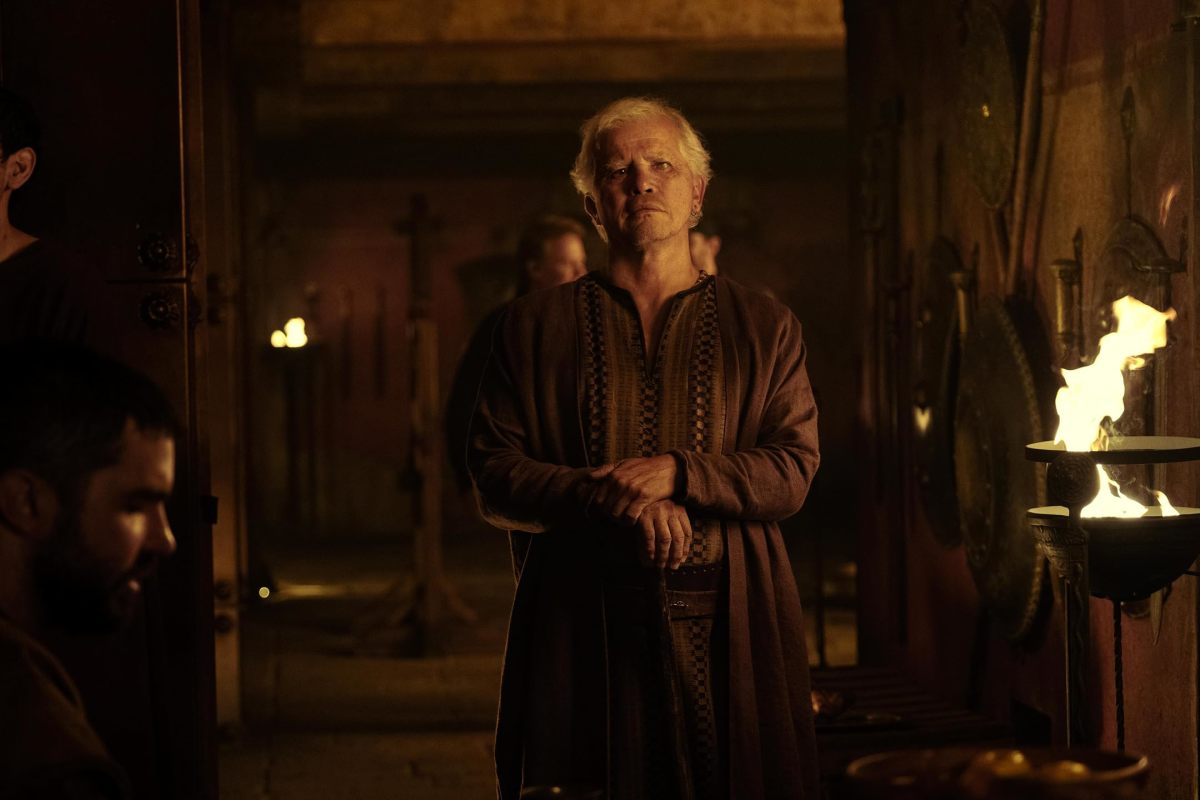
(Image: Universal Pictures)
Zendaya, however, is an exception—she is a genuine flaw and the most distracting element for me, which comes as no surprise. Hollywood rarely gives her roles that truly fit. She was great in "Malcolm & Marie" and "Euphoria," but in "Challengers," "Dune," and the "Spider-Man" series, it feels like she's being force-pushed into the spotlight. Every time she appeared in "The Odyssey," she looked like a time traveler who stole a costume from a theater troupe and wandered onto the set. She completely lacks the gravitas to portray Athena, and because she's in a role that doesn't suit her, her performance feels forced. Moreover, the way Nolan handles her entrances and exits is clumsy and abrupt, reminding me of how Peter Parker kept seeing the ghost of Captain Stacy staring at him in "The Amazing Spider-Man 2"—it's absurd to the point of being laughable. And don't tell me Athena is just a projection of Odysseus's guilt and not a real goddess; even as a projection, Odysseus would still perceive her as a god, not a diminished version.
Elliot Page, who was unfairly turned into a meme after being miscast as Achilles in rumors, and John Leguizamo, who plays Eumaeus, were ironically the most natural performances for me. One is Canadian, the other Colombian—not typically the first actors that come to mind for a British or American period piece. Yet, for some reason, Leguizamo blended in the best. Page won me over primarily in his brief scene with Damon in the underworld. That short exchange unexpectedly captivated me, one of the very few moments in "The Odyssey" where I was truly drawn in by an actor's performance. Honestly, the internet owes him an apology.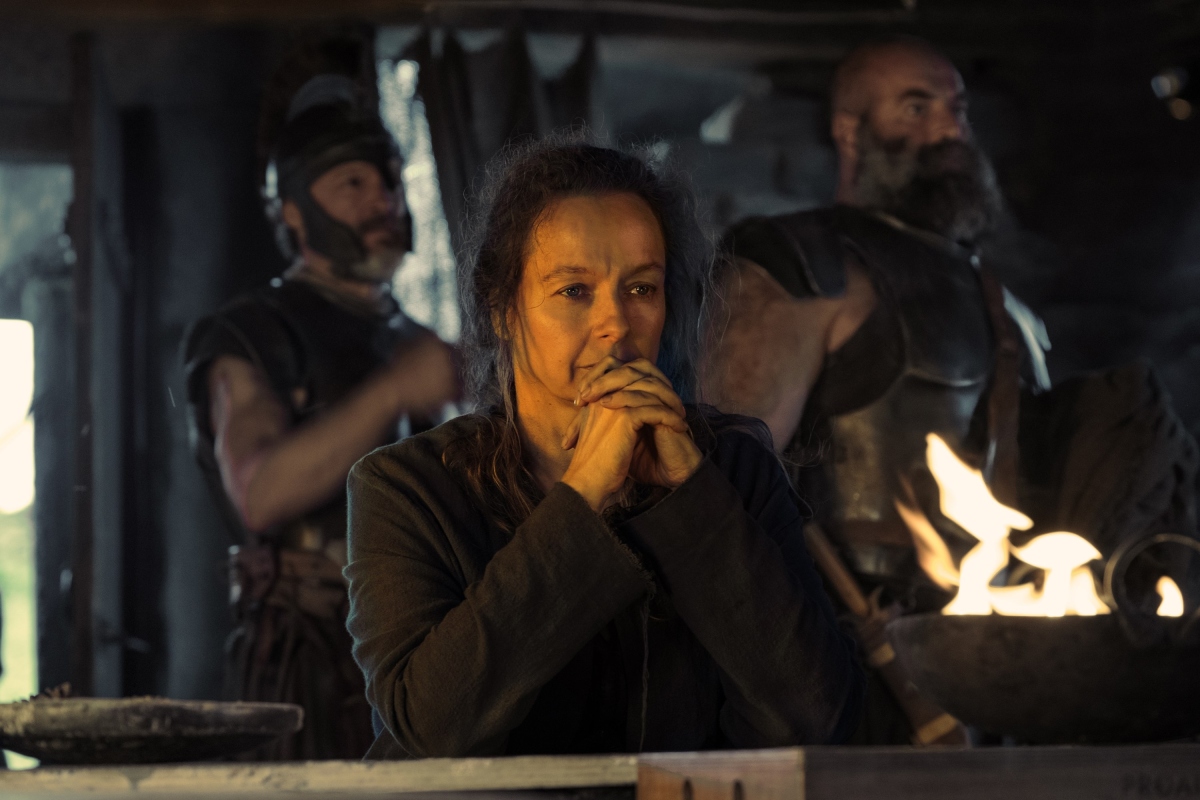 (Image: Universal Pictures)
Odysseus's final, anti-war repentance will undoubtedly be the film's most talked-about element and will surely draw frequent comparisons to the same theme in "Oppenheimer." But while "Oppenheimer" succeeded in constructing a sufficiently complex character study of a genius reflecting on the consequences of war, "The Odyssey" simply feels like it's shouting impassioned slogans. The powerful score, emotional dialogue, and the built-in faith of Nolan's fanbase (the "fan filter") are enough to dazzle most viewers.
But strip away the music, the fan filter, and the slogan-like dialogue, and the plot itself fails to clearly establish Odysseus's arrogance and contradictions (something Nolan achieved in "Oppenheimer," but not here). As a result, his final self-examination doesn't convince me. The atmosphere in the moment is moving, but I wasn't substantively moved by what was actually happening. I know the film tries to portray Odysseus's arrogant actions, but the execution feels hollow. He only does those things because the source material dictates he must at a certain point, with the film pausing to emphasize it as if forced to build a specific persona, afraid of making him too unlikable. Nolan wants to highlight the impact of war on a person's character, but there's no nuance in the before-and-after transformation. The entire process is just "told" to me by Damon, who acts as his own narrator, rather than shown through a coherent, tangible experience.
 (Image: Universal Pictures)
What ultimately killed the momentum for me in "The Odyssey" was its Nolan-esque montage ending. The editing for the finale of every Christopher Nolan film is basically the same: using a montage to simultaneously resolve each character's storyline while cranking the tension to its peak with an emotional score. "The Odyssey" even managed to bungle this part, leaving me with nothing but a deafening score blasting in my ears. Why is the music still so loud? The IMAX cameras have been updated to reduce noise, so there's nothing that needs to be covered up anymore. What's the point of cranking it up so high? That said, the score itself is high-quality—I'm not going to trash it entirely. Ludwig Göransson never disappoints, and Travis Scott's end-credits song was a surprisingly good fit, never feeling out of place despite its modern style.
Okay, I can't say I disliked *everything* about "The Odyssey." I liked Page, Göransson, and Leguizamo, and the Cyclops's slow-witted nature was also well-portrayed. I only liked "The Odyssey" in pieces, that's it. As for the film as a whole? Sorry, I just can't get behind it.