

Following the enthusiastic reception to Chiikawa the Movie: The Secret of the Mermaid Island, fans have begun discussing another question surrounding the franchise. Now that Chiikawa has grown into a cultural phenomenon, how has it managed to preserve the original work’s distinctive tone and worldbuilding throughout its expansion into anime, film, merchandise, and major collaborations?
A recent post on X struck a chord with many Japanese fans. The user observed that both the rights to the work and creator Nagano’s(ナガノ) creative autonomy appear to be strongly protected. While praising Nagano’s own creativity, they also credited the management team surrounding the creator. The discussion subsequently reminded other fans of an earlier trademark issue involving one of Nagano’s characters.
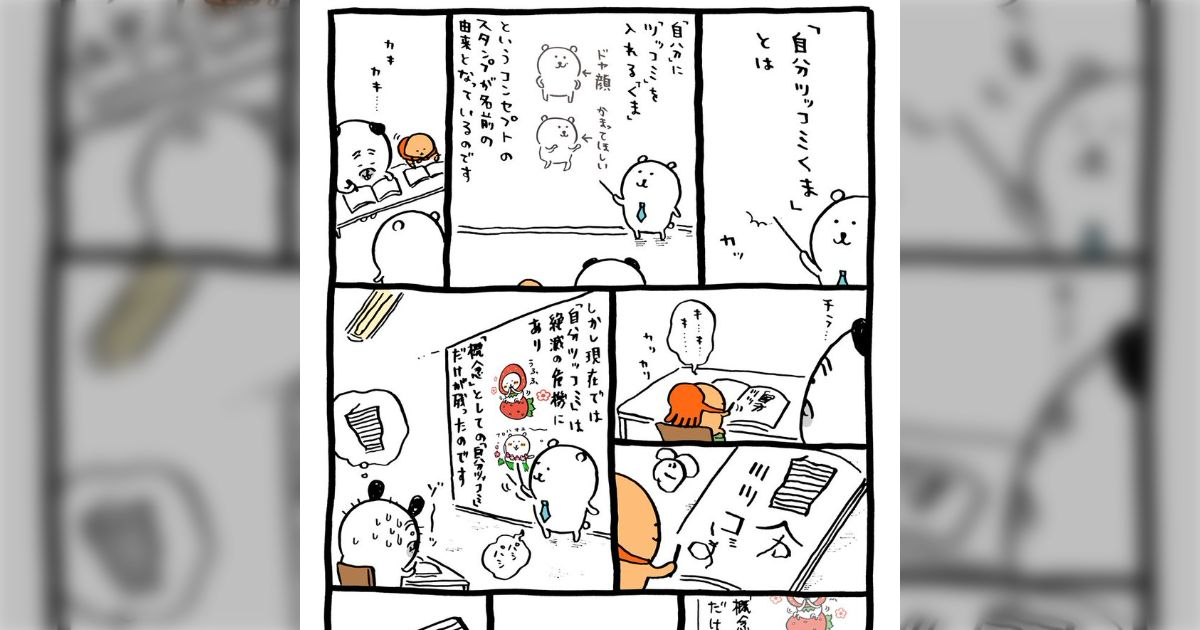
The user whose post sparked the discussion noted that Chiikawa has remained popular for several years. Given its current reach and commercial scale, they argued, it would hardly be surprising if a major corporation attempted to seize control of the IP. Yet judging from how the franchise has developed, both the rights to Chiikawa and Nagano’s creative authority appear to have been protected remarkably well.
The way Nagano participates in the production of the anime and film also suggests a particularly strong commitment to retaining creative control over the work.
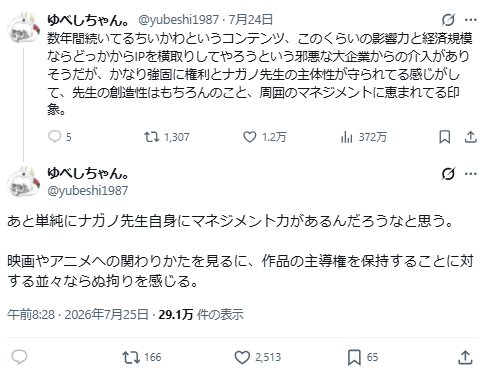
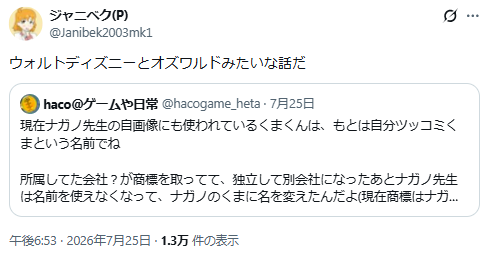
Fans familiar with Nagano’s career suspect that this approach may have been shaped by a past trademark issue involving “Jibun Tsukkomi Kuma” (自分ツッコミくま), a popular character Nagano created before Chiikawa.
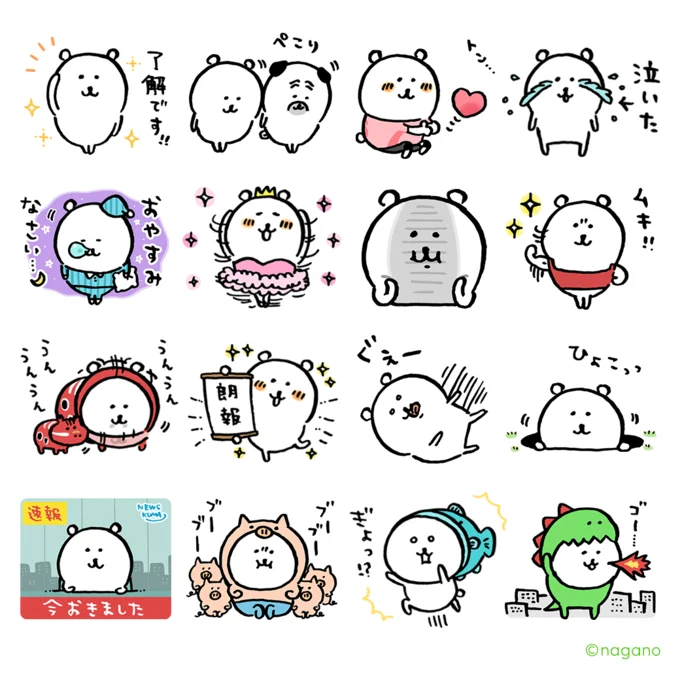
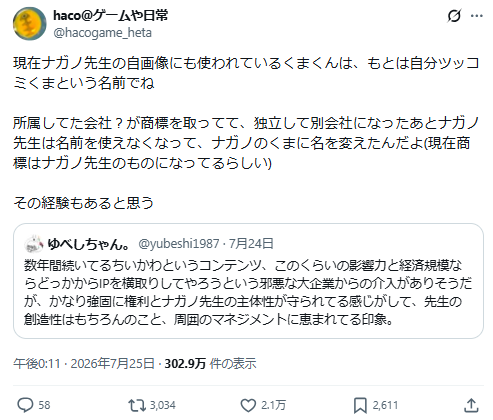
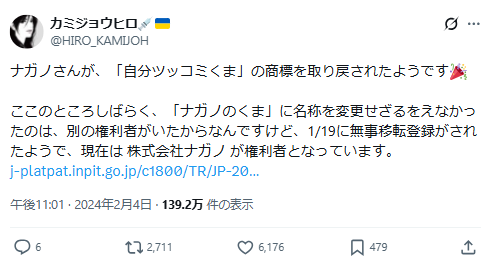
According to one user’s account, Jibun Tsukkomi Kuma was created by Nagano, but the trademark was held by a company the creator was affiliated with at the time. After striking out independently, Nagano was reportedly unable to continue using the Jibun Tsukkomi Kuma name for a period, leading the character to be renamed “Nagano no Kuma” (ナガノのくま), or “Nagano’s Bear.”
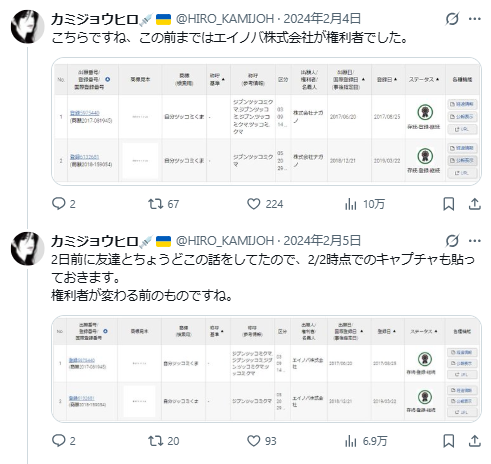
According to a user who had tracked the Japanese trademark records, the transfer was registered on January 19, 2024, making “Nagano Co., Ltd.” (株式会社ナガノ), the company established by the creator, the trademark holder. This apparently made the Jibun Tsukkomi Kuma name available for use again. However, neither party has publicly explained the circumstances behind the transfer or confirmed that a dispute took place. The idea that Nagano previously suffered a major setback over the character’s rights therefore remains a fan interpretation based on publicly available information.
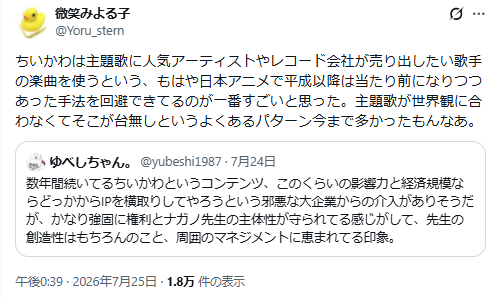
Other users praised Chiikawa for avoiding a commercial practice that has become common in modern Japanese animation. Many productions recruit a currently popular singer to perform the theme song, or feature an artist whom a record label is actively promoting. Sometimes, however, the resulting song clashes with the work’s atmosphere and ends up undermining the viewing experience.
Chiikawa, by comparison, has consistently used music that complements its distinctive tone. Many fans see this as another sign that the spirit of the original work is being respected.
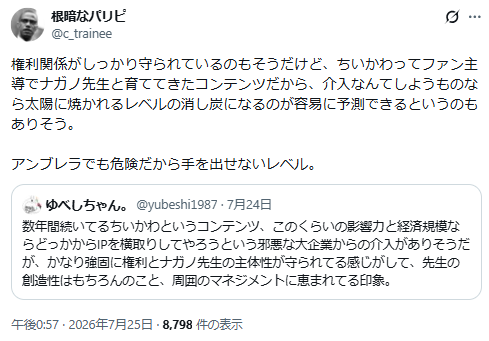
Some fans also believe Chiikawa has been able to resist excessive outside interference not only because its rights are carefully managed, but because the franchise has grown into a cultural phenomenon built jointly by Nagano and the audience. Any company attempting to force the work in a radically different direction would likely face an intense fan backlash, creating an additional, informal layer of protection around the franchise.
Several comments compared Nagano’s experience to Walt Disney losing the rights to “Oswald the Lucky Rabbit.” Fans suggested that both creators paid a price over the ownership of characters they had helped create, making them all the more determined to retain control of their later intellectual property.
Overall, many fans believe Chiikawa has preserved its signature dark humor and carefully constructed world even after becoming a household-name franchise because of more than Nagano’s creative convictions alone. They suspect that the earlier trademark experience may also have played a role—and that the lessons learned from it could be one reason Chiikawa has managed to hold so firmly to its original creative identity.