

The terms hikikomori (social recluses) and NEETs (Not in Education, Employment, or Training) describe individuals who often withdraw from real-world social interaction, frequently filling their time with online activities and mobile games. But does this digital substitution truly help with real-life socialization?
A research team from Nara Institute of Science and Technology (NAIST) and other institutions recently published a study in the academic journal ">PLOS ONE titled "Social marginalization risk and its negative association with socialising preferences in Japanese gamers." Their findings indicate that individuals at risk of social isolation, such as hikikomori or NEETs, tend to avoid interacting with or assisting other players, even within the virtual worlds of online games.
For those facing social isolation, real-world interpersonal interactions often come with immense psychological pressure. This has led to a long-held belief that online games, with their anonymity and freedom from physical distance, could serve as a safe practice ground for social interaction, potentially even aiding in a gradual return to society.
However, a crucial question remains: Do individuals who avoid real-life social interaction truly become more willing to engage with other players once they enter the gaming world?
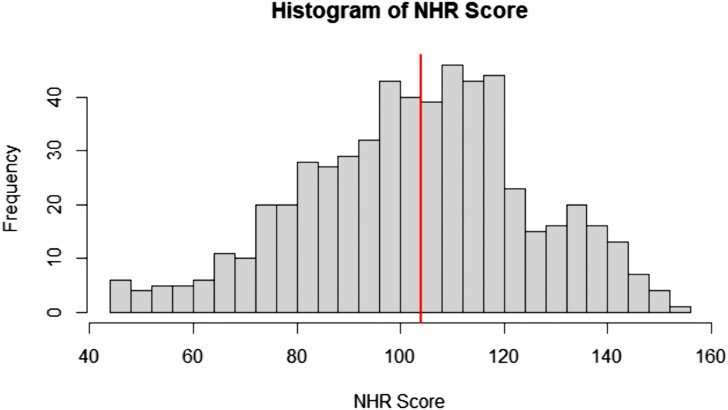
To shed light on this, the research team surveyed 587 Japanese gamers, analyzing the correlation between social isolation risk and preferred gaming styles.
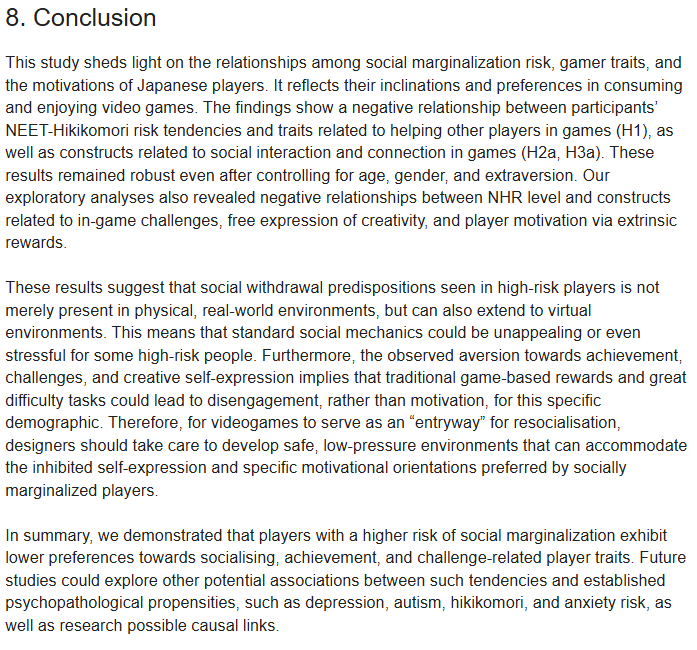
The study revealed that individuals with higher social isolation risk (NHR) were less inclined to interact with or assist other players in games. Even after controlling for factors like age and gender, a clear link was found between social isolation risk and a lack of interest in games' social features.
Furthermore, these players showed less preference for challenging high-difficulty game content and gameplay styles that emphasize creativity or self-expression. They were also less motivated by external rewards. This suggests that traditional reward systems and high-difficulty mission designs, often used to incentivize players, might not boost engagement for this group. Instead, such elements could potentially lead them to lose interest faster and disengage.
In other words, individuals who tend to avoid interpersonal relationships in real life exhibit similar patterns in their virtual gaming preferences. Therefore, if video games are to serve as a "first step" in helping socially withdrawn individuals rebuild their social skills, game designers must create safe, low-pressure environments that fully consider these players' reluctance to express themselves, along with their unique psychological needs and motivations.
The research team posits that this phenomenon doesn't necessarily indicate a lack of interest in gaming itself. Instead, it might be a proactive coping strategy to protect their mental well-being. Given that online games often involve verbal abuse, blame for mistakes, and various negative responses from other players, these individuals may deliberately choose single-player modes to avoid further harm and enjoy gaming in a relatively safer environment.
Therefore, the notion of "gaming your way back to society" offers limited real-world assistance. For games to truly foster social engagement among individuals at high risk of social isolation, it's crucial to select the right titles and design them in ways that cater to their specific needs and comfort levels.
via: itmedia