

Hiroya Oku, the mind behind manga juggernauts like [[OBJ_991]], Inuyashiki, and GIGANT, is calling it a career. After more than 30 years in the industry, the veteran artist recently sat down for an interview with Courrier, a web media outlet under Kodansha, to discuss his new series, Kanreki Hime. During the conversation, he announced his plan to retire from the world of manga after the new story concludes.
In the interview, Oku opened up about the reasons behind his decision and shared his candid thoughts on creating manga.
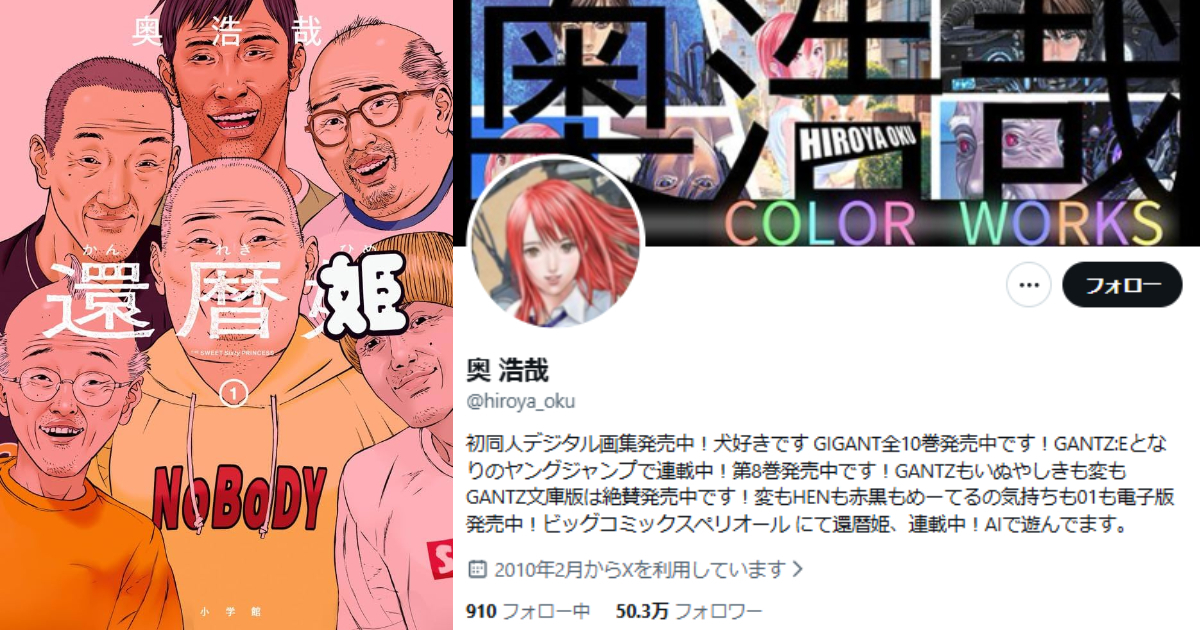
The interview was conducted in a Q&A format. Here are the questions and Hiroya Oku's answers.
Q: Kanreki Hime is about a man approaching 60 who transforms into a woman. You've explored this theme before in your earlier work. Why revisit it now?
Oku: The initial inspiration came from Doron, a manga by the shojo artist Hikaru Yuzuki. It's a gender-bending comedy where a boy turns into a girl. Even though it was a single-volume manga from 1972, the story had a huge impact on me and made me think, "One day, I want to draw something like this."
But just re-drawing an old theme wouldn't be interesting. So I wanted to depict the gender transformation process more realistically and try a new approach. That's how Hen and now Kanreki Hime came to be.
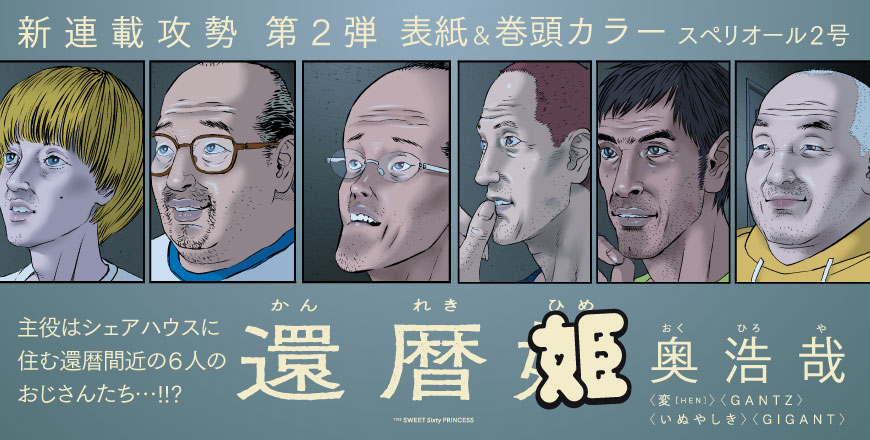
It's been about 40 years since my debut work, Hen. I've grown as a manga artist and my skills have improved, so I wanted to tackle this theme again. The share house where the nearly-60-year-old male characters live in Kanreki Hime has an atmosphere very similar to my own studio. I thought, "What would happen if a girl suddenly showed up here?"
It would never happen in real life, and I wouldn't want it to, but it was fun to imagine, so I drew it. I only turn the ideas that pop into my head into manga if they stick with me and I can't forget them. Honestly, new ideas are still coming to me all the time, but I'm turning 60 next year. I've reached that stage in life, so I've decided to officially retire from creating manga after Kanreki Hime.
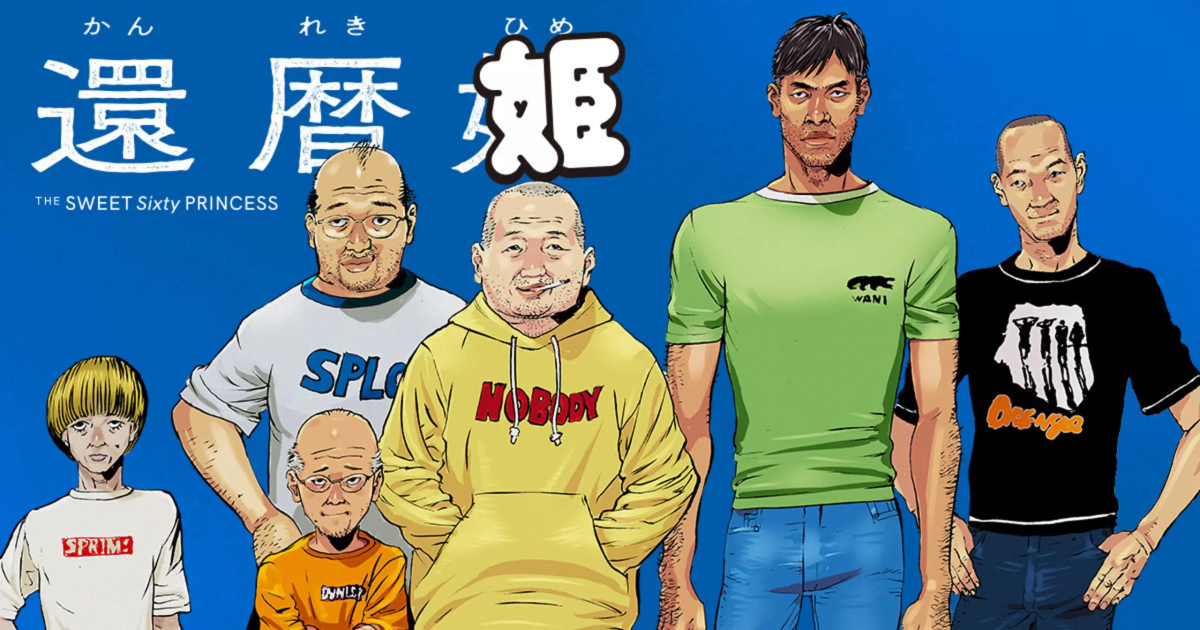
Q: Are you really sure about retiring? You won't change your mind? You know, like one of those "I'm retiring" announcements followed by a new project?
Oku: Nope, I'm done. I just don't have the mental energy to draw manga anymore. It's not that I've lost all creative desire, but the whole process—thinking up the story, drawing it, and keeping it going—takes a massive amount of mental and physical strength.
I don't have that in me anymore. For me, Kanreki Hime is the final chapter of my career. The old guys in the story are a reflection of creators like myself. I'm writing it with the thought of "let's see how this old man, chosen to be the protagonist, lives his life." There won't be any aliens or UFOs, but please, stick with it to the end.
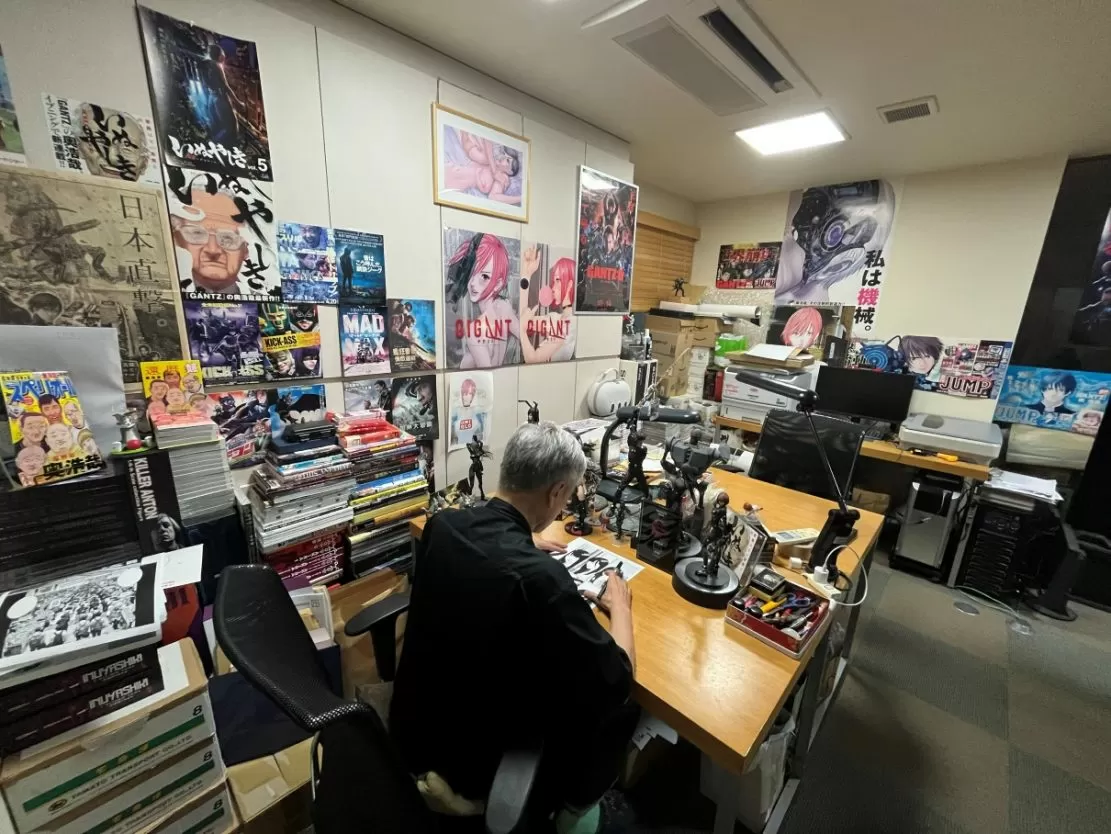
Q: You've long been seen as a pioneer for incorporating digital techniques into your backgrounds, earning high praise overseas. What made you start using digital tools?
Oku: I was introduced to digital tools by a senior manga artist back in the 90s when I was just starting out. At first, it was for things like screen tones and coloring, and later I started using "Shade3D," a 3D software for creating models and animations. So, incorporating digital tech into my backgrounds felt like a natural step.
In 1999, my manga 01 Zero One was set in the near future. When I asked my assistants to draw the backgrounds, each had a different style, and the inconsistencies in the line work became a problem. So we decided to create the backgrounds using Shade and Photoshop and then reuse them. It actually made it easier to express the cold, artificial feel of the buildings and machinery.
Q: The Japanese manga industry has always placed a high value on "hand-drawn" art, with some even believing that "a manga artist's skill is shown in their backgrounds." Did you have any hesitation about going digital?
Oku: I'm not hung up on that stuff. Even when I was an assistant, I'd be tracing backgrounds from reference materials and thinking, "Is this really necessary? Isn't this a waste of time?" A beautifully hand-drawn background looks amazing on the original manuscript, sure. But once it's printed, it's hard for readers to appreciate those nuances.
And with the pressure of a weekly serialization, it's impossible for me to draw every background myself. But if I leave it to assistants, their different styles creep in, which to me can feel like "noise" that disrupts the world of the story. For the sake of efficiency, I think going digital was inevitable.
However, even now, things like scattered debris from a collapsing building or rising smoke can't be perfectly replicated by the software I use, so those parts are still hand-drawn. The same goes for humans and other living things. Readers connect emotionally with living beings, not inanimate objects. So, the characters have to be able to "act," and I believe that has to be done by hand. No matter how much you chase efficiency, the tough parts are always gonna be tough.
Q: From your early works to your latest, you've always depicted things like menstruation and pregnancy quite naturally, which seems rare for a seinen manga. Why do you include these elements?
Oku: Because I don't see menstruation or pregnancy as taboo. After all, for any human woman, these are "things that can happen," right? It would be weird to over-emphasize them for no reason, but I think including these "uniquely human aspects of life" is part of creating a sense of realism.
Q: On the other hand, the female characters' breasts seem a bit detached from reality. Do you have a particular philosophy on that?
Oku: That's just what I like...! Large, full breasts are great for showing three-dimensionality and a sense of motion, so they're fun for me to draw and they look great visually. When I was in elementary school, I saw Fujiko Mine from Lupin the Third on TV, and her figure made a huge impact on me. She was beautiful, cool, and had this incredibly powerful charm. And even if people say her breasts are "way too big," there are real women out there with breasts even larger than the ones in my manga. I think a lot of people can understand that kind of visual appeal.
Whenever you're expressing something, some people aren't going to like it, and that's normal. But it's not fan service to please readers. I'm not drawing it for them. I'm just drawing what I find appealing.
On the flip side, I don't want to draw "fake" women. You know, the kind of female character who exists only to fulfill male sexual fantasies—the type who gets her chest groped and coyly says, "Oh, stop it~" after being stripped naked. The women I draw get runny noses and smoke in the bathroom; they have sexual desires, they get periods and cramps, and they get pregnant. They can be selfish and have mental breakdowns. Because I don't want to draw simple tropes or symbols; I want to draw women who feel like real, living people.
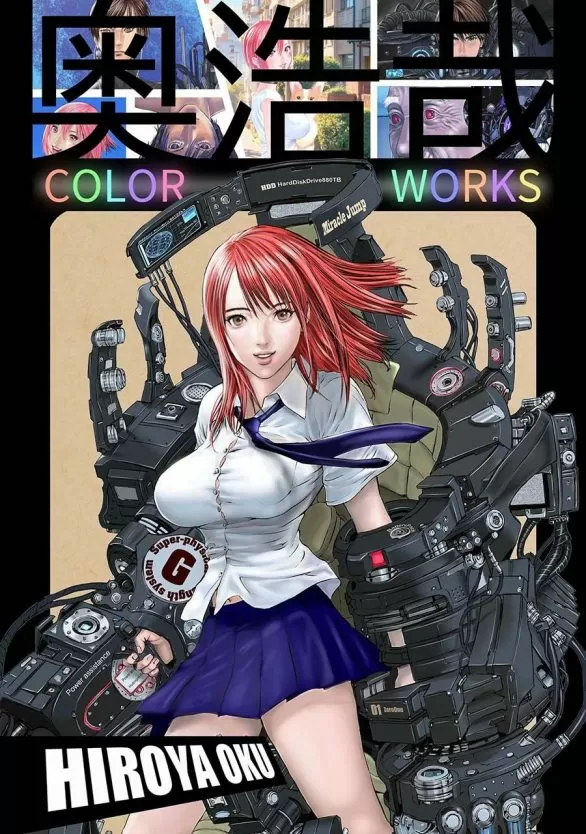
Q: Which manga artists have influenced you the most?
Oku: Osamu Tezuka and Fujiko F. Fujio.
Fujiko-sensei is the foundation of my creative work. I feel like my style is built on his "S.F." worldview, just with a modern sense of realism added. Fujiko F. Fujio once said that for him, S.F. didn't mean "Science Fiction," but "Sukoshi Fushigi"—"A Little Strange." I believe these are questions without answers, and things that everyone is interested in.
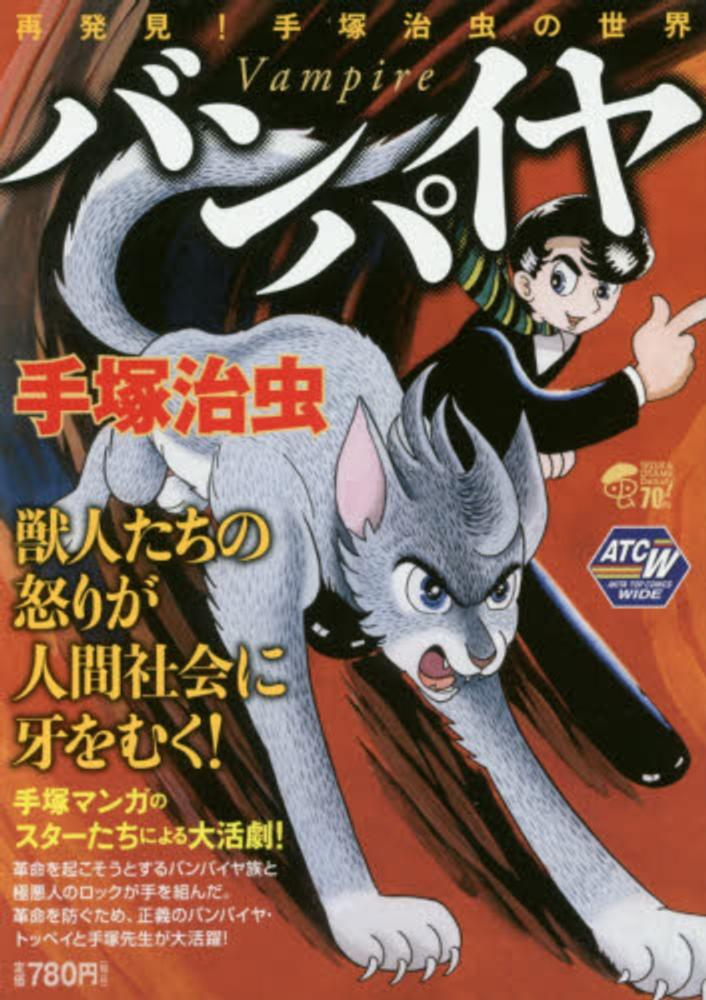
As for Tezuka-sensei, I was particularly struck by Vampires. My work often circles back to questions like: "Why is it wrong to kill?", "What is justice?", and "What does it mean to be human?" These are the same themes explored in Vampires. I raise these as questions in my work. If you provide a direct answer, the story immediately becomes contrived. I believe that it's the presence of contradiction that makes a work feel closer to reality.
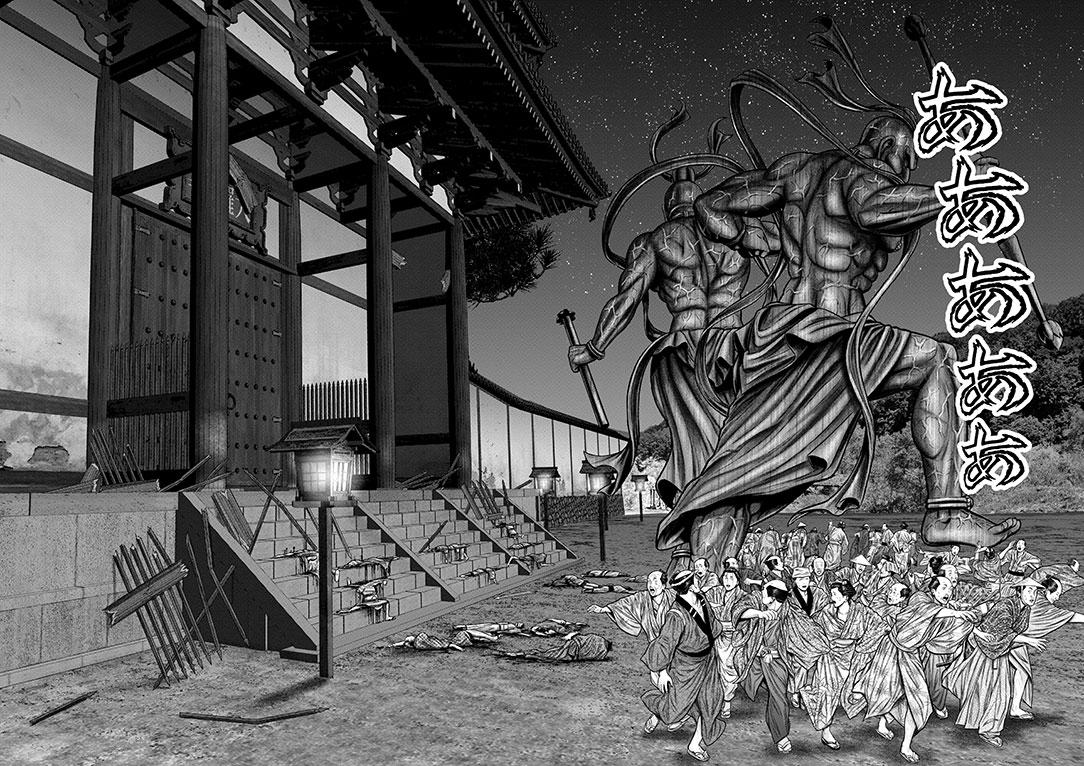
Q: Your work often features intense, large-scale massacres and brutal violence, depicted with a dynamism rarely seen in other manga. How are you able to portray this so skillfully?
Oku: Bloody violence and murder scenes might be rare in manga, but they're pretty common in movies. You see them all the time in Korean cinema, in Takeshi Kitano's films, and in Martin Scorsese's movies. The brutal scenes I draw are heavily influenced by them.
I don't personally enjoy brutal scenes. Things like violence, especially sexual assault, I really don't want to draw. There have even been times when drawing scenes of mass slaughter has affected my own mental state. But I still choose to draw them because I'm pursuing realism and entertainment. Given the situations my characters are in, sometimes deliberately avoiding these things would actually make the story feel less real.
Q: Many young manga artists must look up to you. What are your thoughts on the current manga industry and its creators?
Oku: I'm sorry, but I have to say it: I feel the overall quality of manga is declining. Maybe it's because the market has expanded so much that more and more people are treating manga as a business first. There are some works that make me wonder: "Do you really even love the medium of manga?"
As for manga artists, I feel like their numbers have exploded recently. But if you truly love manga, you should keep drawing whatever pops into your head, whether it sells or not. Of course, everyone has their own struggles, and I get that. But I can't help feeling that's not how modern manga artists operate anymore.
via: クーリエ・ジャポン