

The global memory shortage continues to ripple across the gaming industry. Nintendo recently said during an earnings briefing that it has secured enough memory supply and is not currently considering another price increase for the Nintendo Switch 2. Meanwhile, Macronix International, a major chip supplier for original Switch game cartridges, plans to gradually exit ROM production as data center demand grows—putting hardware pricing and physical game supplies under pressure on two very different fronts.
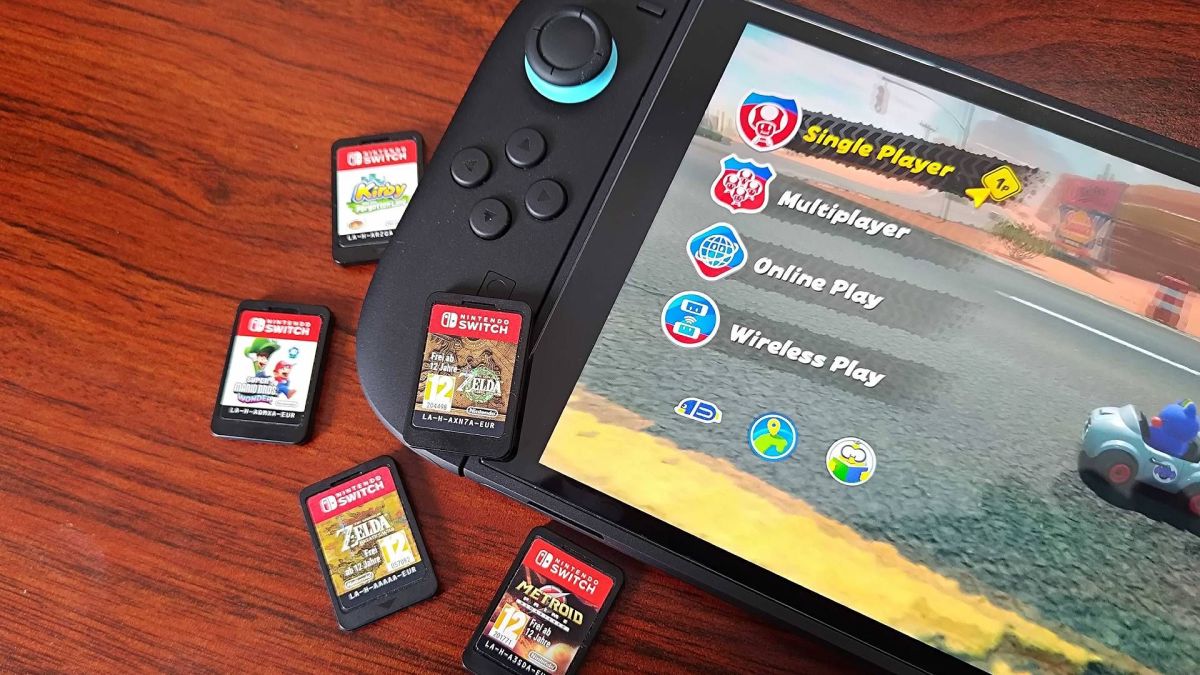
Nintendo President Shuntaro Furukawa said there had been no significant change in memory supply conditions and that the company could still secure the quantities it needs. The Switch 2’s US price was previously raised from $450 to $500, but Nintendo has no plans for another adjustment at this stage. That does not mean component costs have returned to normal, however, with other console manufacturers also raising prices in response to more expensive parts.
The same financial report showed Nintendo’s quarterly operating profit falling 16% year over year, while Switch 2 hardware unit sales declined by roughly 37%. Nintendo noted, however, that the new console’s cumulative sales remain ahead of the original Switch when comparing the same period after launch. The company hopes to maintain its current pricing through the year-end holiday season and continue expanding the console’s user base.
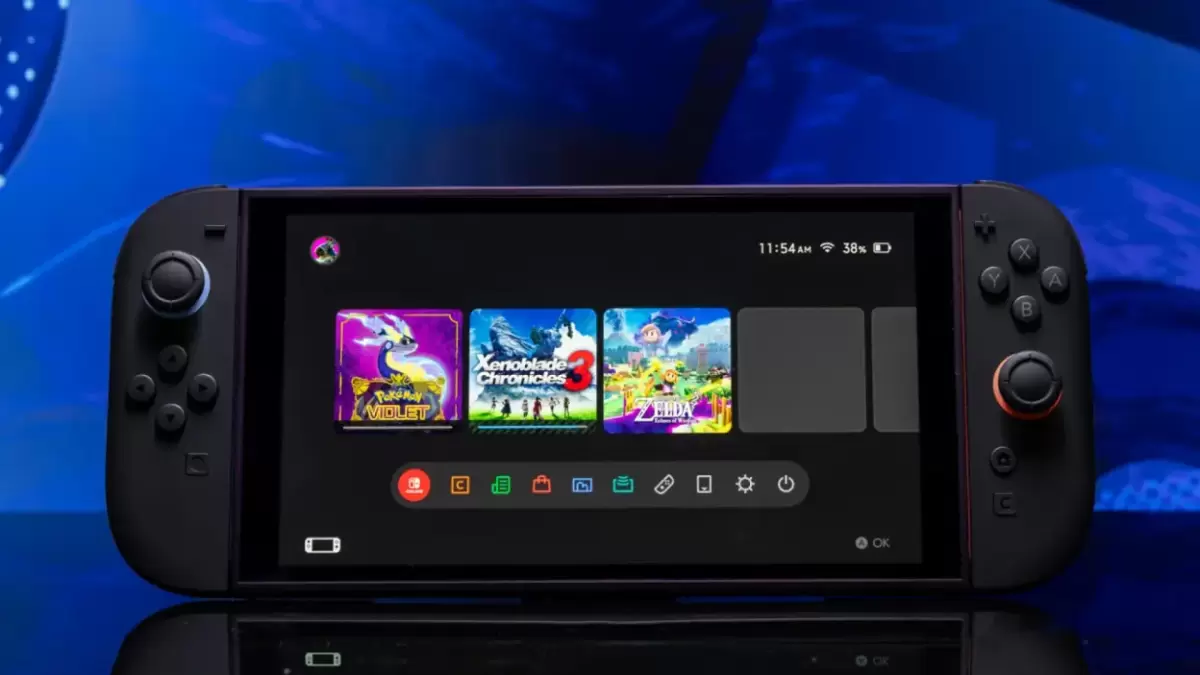
Macronix, meanwhile, released its third-quarter financial results on October 27, 2026. ROM revenue fell 39% year over year and accounted for just 5% of total revenue, down from 26% in the same period last year. Chairman Miin Wu said strong demand for NOR flash memory from data center customers had prompted Macronix to gradually scale back its ROM business and redirect production capacity and investment toward products including NOR and NAND flash memory.
Macronix has long supplied ROM chips for original Switch cartridges. The shift could increase long-term procurement costs for physical games, but it does not mean cartridge production will stop immediately. Nintendo has other chip suppliers, while Switch 2 cartridges use a different storage design that includes NAND flash memory, limiting the direct impact of reduced ROM production.
Analyst David Gibson noted that digital products accounted for 61.5% of Nintendo’s software sales between April and June 2026. With demand for physical cartridges gradually declining and AI data centers continuing to absorb chip production capacity, Nintendo may have stabilized console pricing for now, but the cost and availability of physical games will remain worth watching. 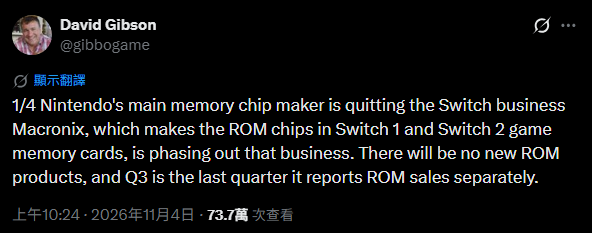
Note: Financial figures and earnings forecasts should be confirmed through the company’s official announcements.
via: VGC Taipei Times