

A working cartridge of the Nintendo DS game PokéPark: Fishing Rally DS, believed lost for around 20 years, has finally been confirmed to exist. What should have been an exciting discovery for Pokemon fans has instead sparked a game-preservation debate after its owner sent the cartridge to grading company PSA to be sealed. Some players argue that locking the only known playable copy inside a protective slab before publicly backing up the software has made the game inaccessible all over again.

PokéPark: Fishing Rally DS was available at the PokéPark theme park in Nagoya, Japan, in 2005. Visitors obtained the game through the Nintendo DS system's DS Download Play feature, then fished for Pokemon at different locations to compete for points. However, the game disappeared once the system was switched off or after 12 hours, and it was never released commercially, leaving it regarded as lost media for years. According to PSA's records, the game was also offered in Taiwan in 2006.
According to IGN, collector Daniel Quadri provided the outlet with gameplay footage proving that the cartridge can not only launch the game but also transmit it wirelessly to other Nintendo DS systems. Claire Shelton, head of PSA's video game division, also confirmed that she met with the owner before the cartridge was submitted and spent around two hours playing it, describing the fishing mechanics as simple but engaging. 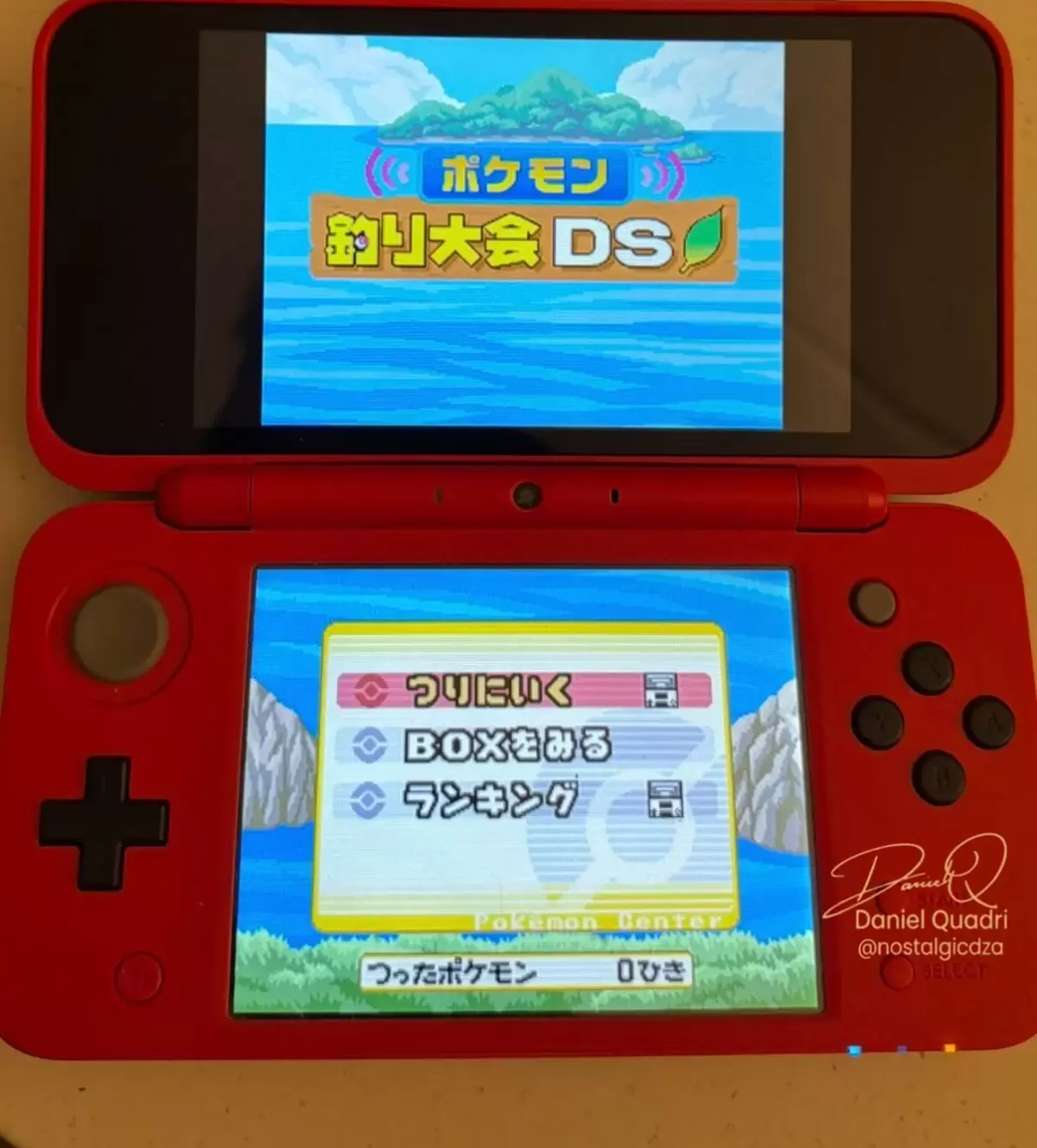
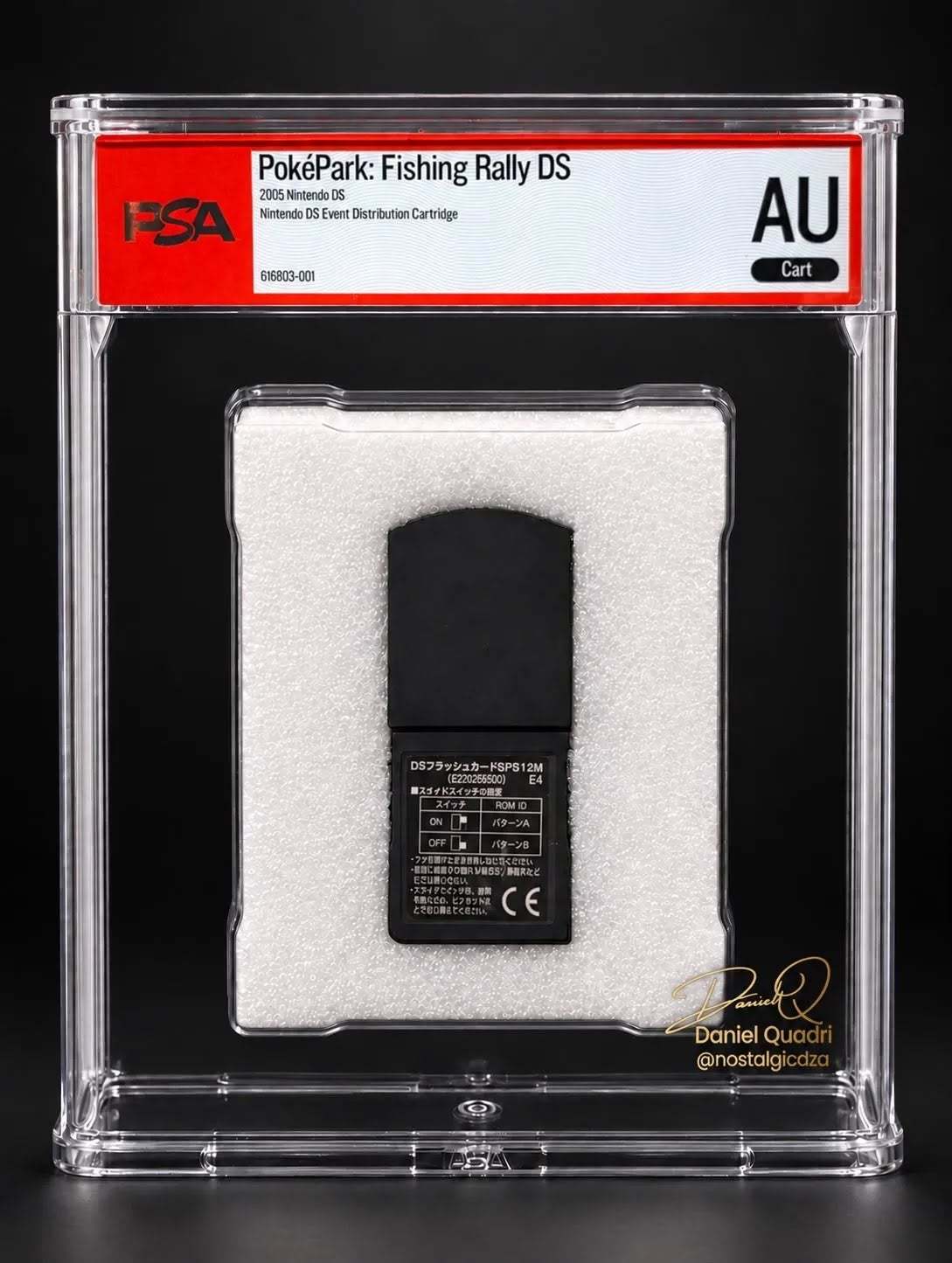 Once the grading process was complete, however, the cartridge was sealed inside a protective case and could no longer be directly accessed. Anthony, a user on X, formerly Twitter, criticized the decision: "They could have dumped the ROM and released it so everyone could play, but instead they put it in a PSA slab." He also urged the collector to open the case and back up the software, arguing that the cartridge could simply be encapsulated again afterward.
PSA maintains that authentication and encapsulation help document rare pieces of gaming history while confirming a collectible's authenticity and supporting confidence in future transactions. The dispute highlights the divide between physical collecting and digital preservation: one prioritizes protecting the original object, while the other aims to keep the software accessible for research and play.
A related development cartridge was previously sold for around $11,000, although its contents were never confirmed. As of now, the complete game ROM from this newly discovered cartridge has not been made public.