

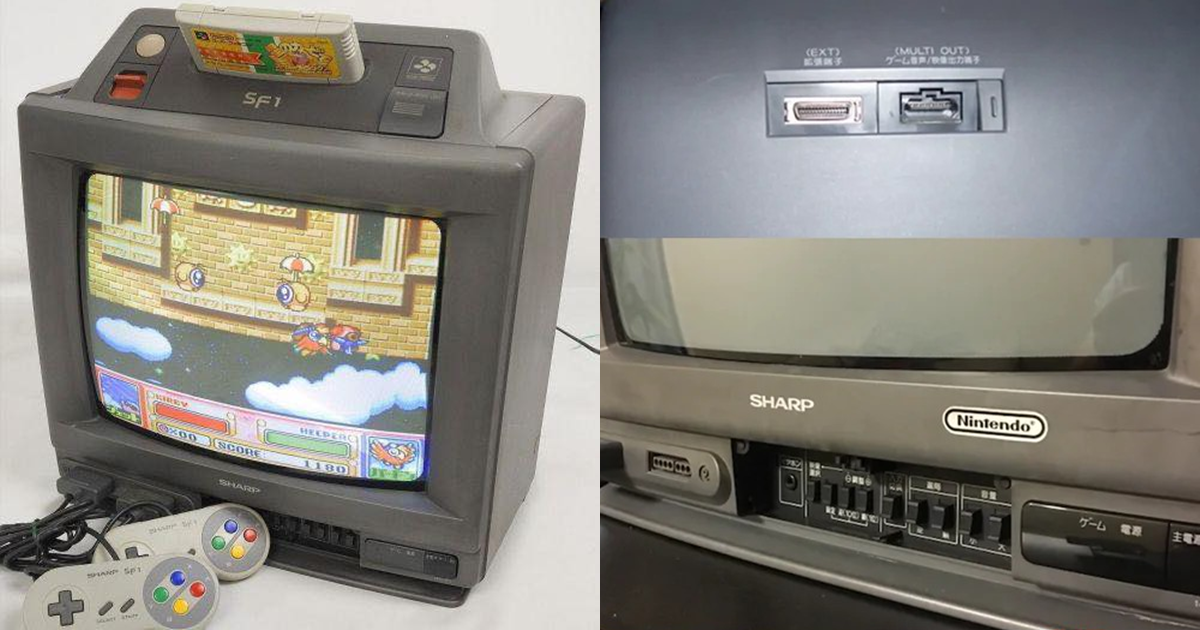
In an era where "all-in-one" is the name of the game, it’s hard to imagine that Japan was already experimenting with the concept back in 1990. Enter the Sharp SF-1 Super Famicom TV, a futuristic product that fused a home television with a video game console, offering a glimpse into a new kind of lifestyle.
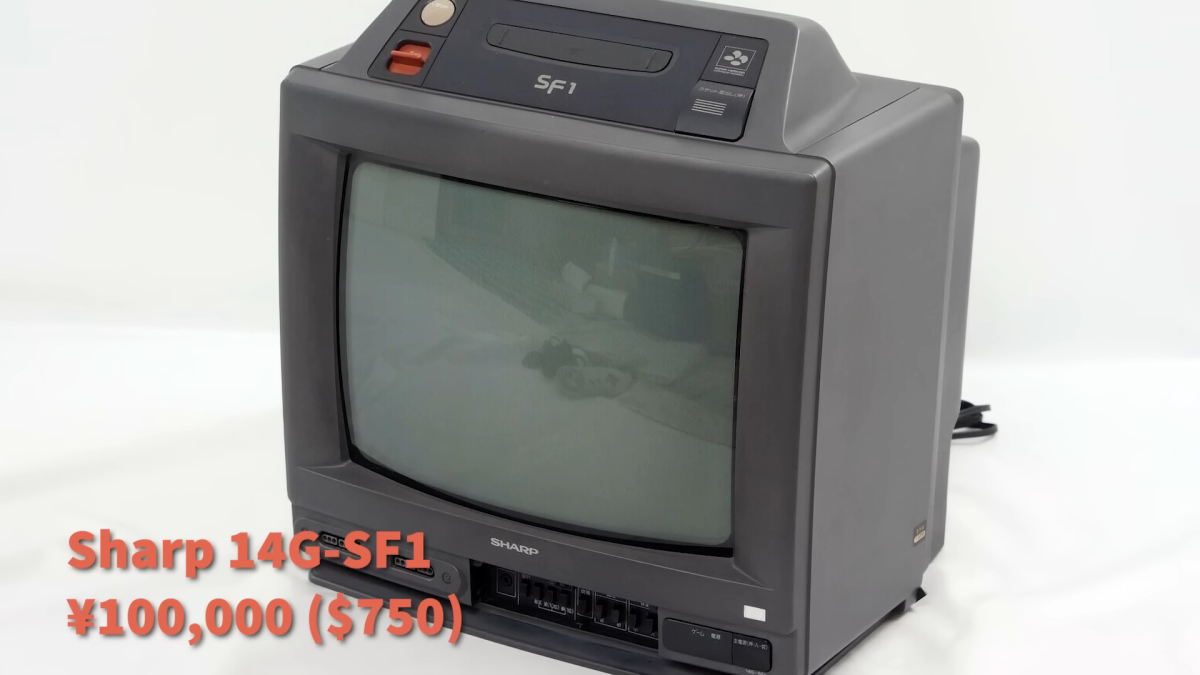
A collaboration between Japanese electronics giant Sharp and Nintendo, the SF-1 was a 14-inch CRT television with a Super Famicom built right into its hardware. The top featured a cartridge slot and power button, the front housed the TV's standard controls and speakers, and below them were two controller ports proudly bearing the Sharp logo. It was a subtle design that concealed a massive dose of innovation.
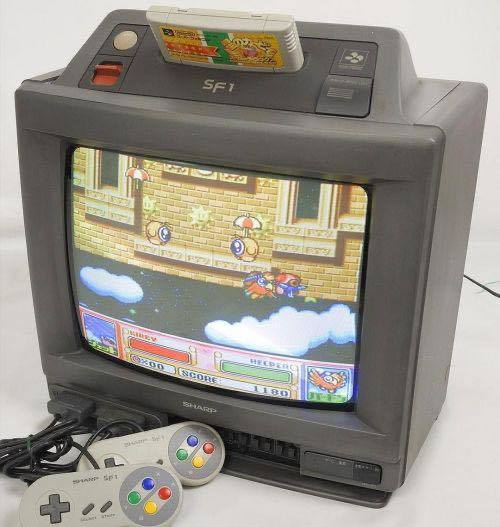
A Quirky Masterpiece Born at the Crossroads of Home Entertainment
The product's official name was the "Super Famicom Naizou TV SF1," which literally translates to "TV with a Built-in Super Famicom." When it debuted in 1990, the Super Famicom itself had just launched in Japan, and the country was buzzing with excitement for the new 16-bit era. The SF-1 emerged as a high-end solution amid this frenzy, designed specifically for gamers willing to shell out a premium for the ultimate integrated experience.
The philosophy behind the SF-1 wasn't just about saving space; it boasted "television quality dedicated to gaming." The goal was to perfectly match the screen's color and output frequency to the Super Famicom's signal, minimizing the distortion that could occur with separate components. The unit also had dedicated power and game switches, making it more intuitive to operate than a standalone console. Even the controllers were unique, featuring a distinct color scheme and the "Sharp" logo, marking them as exclusive accessories for the SF-1.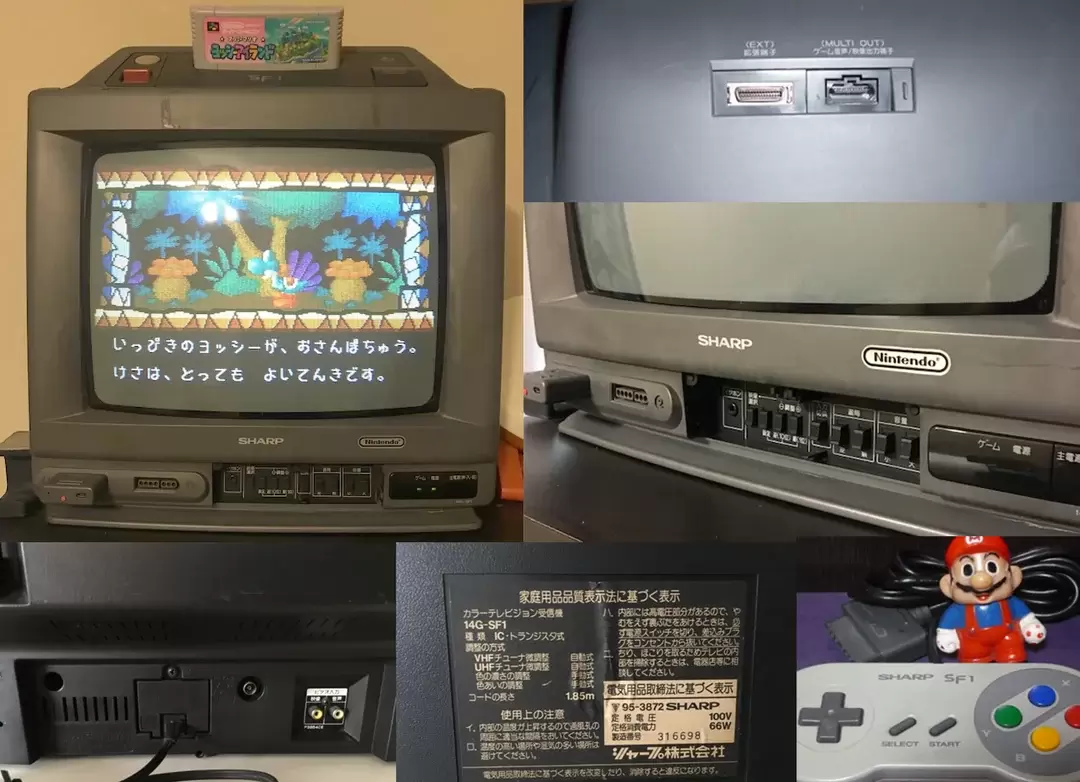
Innovation vs. Market Reality
Despite its brilliant design concept, the Super Famicom Naizou TV SF1 never broke into the mainstream. The reason was simple: it was way too expensive.
At the time, a standard Super Famicom console cost around 25,000 yen. The SF-1, however, was priced at a steep 100,000 yen, roughly the combined cost of a high-end TV and a console. This premium positioning kept it out of the mass market, limiting its sales to specific channels and preventing any official overseas release.
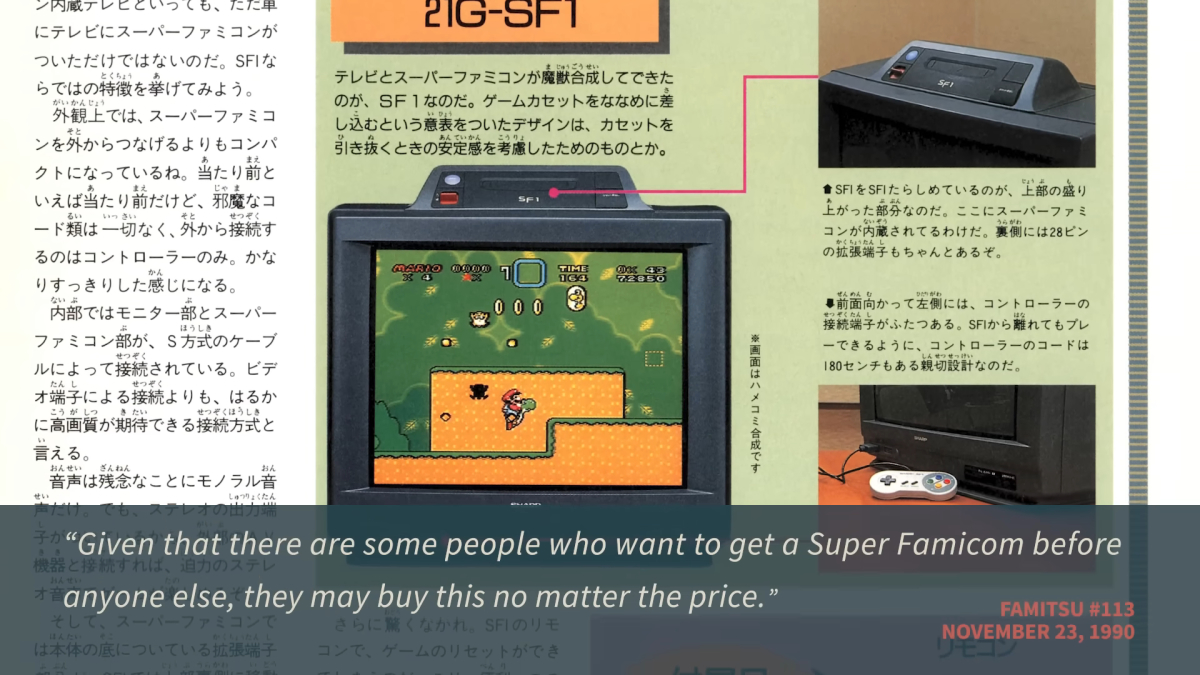 ▼ 14-inch model (14G-SF1): 100,000 yen
▼ 21-inch model (21G-SF1): 133,000 yen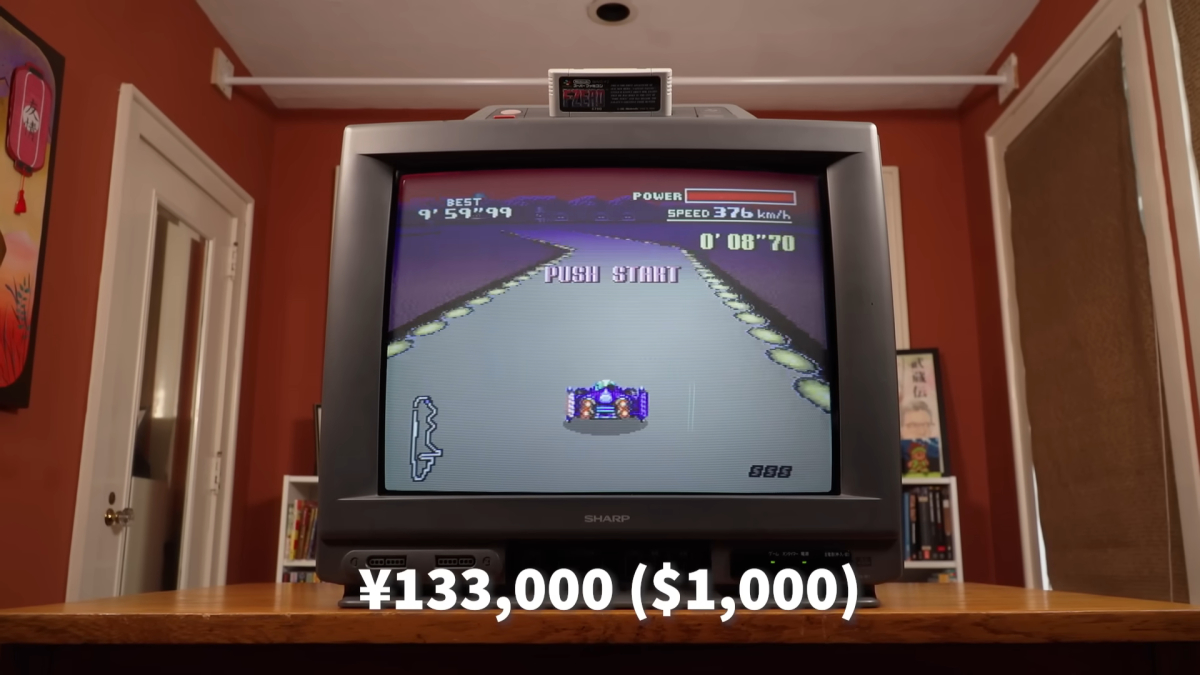
On top of that, the all-in-one design came with a major drawback: limited expandability. While it worked with most SFC cartridges, external controllers, and adapters, it couldn't fully support later peripherals like the Super Game Boy or the Satellaview. This lack of future-proofing made some hardcore gamers steer clear of the product.
From Obscurity to Holy Grail: A Retro Collector's Dream
Today, the Sharp SF-1 has transitioned from a commercial flop to a coveted prize in the game collecting community. Its extreme rarity, unique design, and perfect embodiment of '90s tech aesthetics have turned it into a "holy grail" for fans of the CRT retro wave.
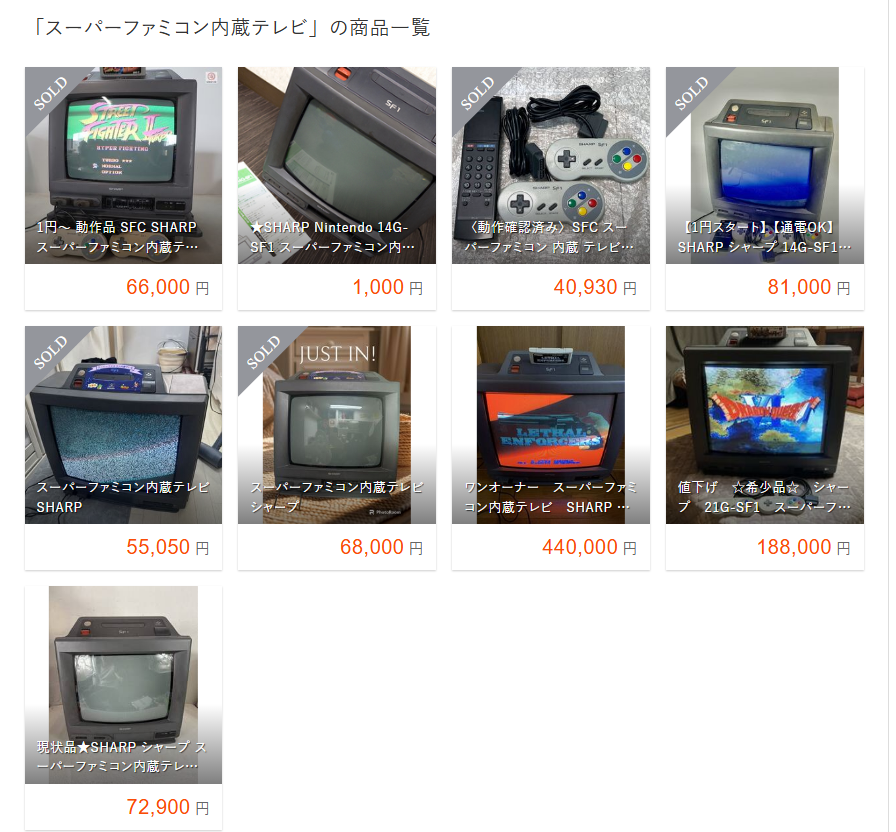
The spirit of the SF-1 lives on through modern makers, too. Hobbyists have created miniature replicas using Raspberry Pi or FPGA hardware, complete with custom-made shells and mock remote controls, bringing this piece of history to the 21st-century desktop.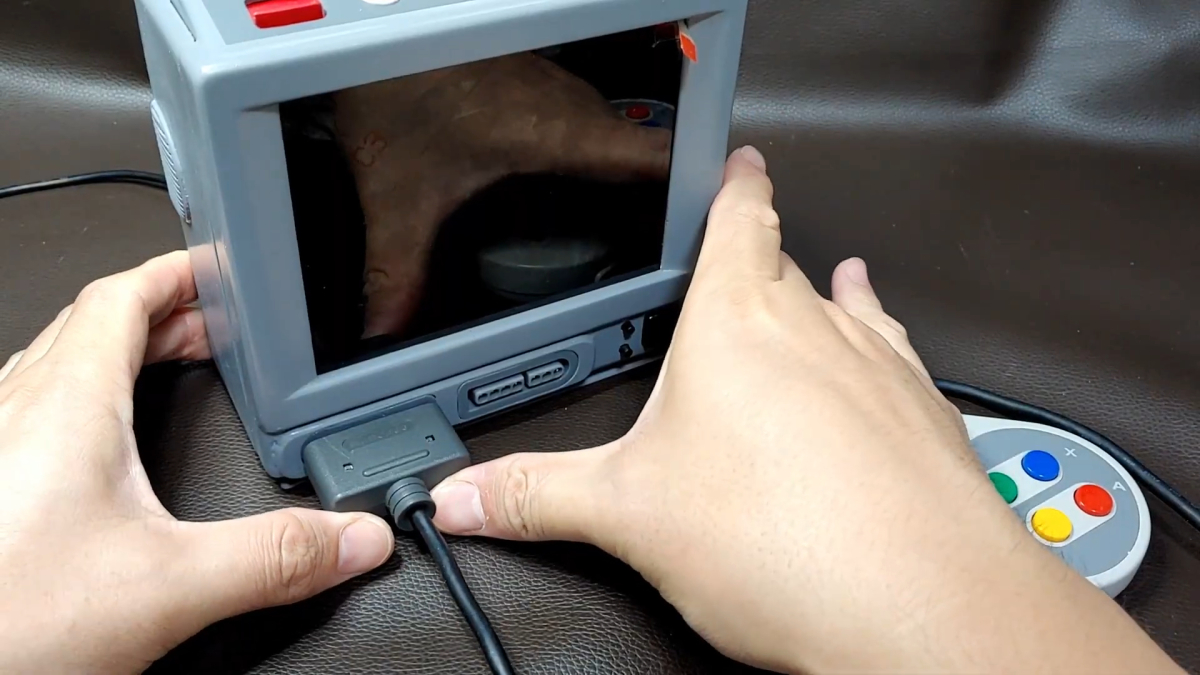
Where Gaming and Design Collide
The Sharp SF-1 proved one thing: a game console didn't have to be just another black box sitting next to the TV—it could be the centerpiece of a living space. You can see echoes of this philosophy in later Nintendo products like the Wii U and the Switch. In a way, the SF-1 predicted the modern concepts of "handheld as home console" and "plug and play" decades ahead of its time.
The Sharp SF-1 represents a rare intersection of gaming design and lifestyle design, a joint exploration of form and function by Nintendo and Sharp. It may not have been the most practical machine, but it remains one of the most romantic statements ever made in the art of consumer electronics.