

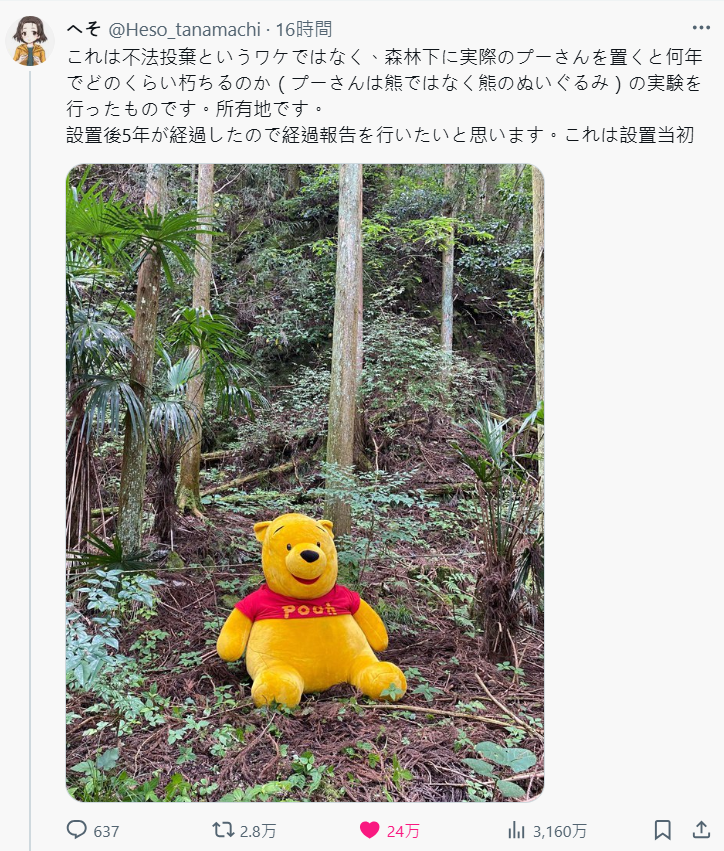
A Japanese X user named Heso (@Heso_tanamachi) recently shared a bizarre long-term observation experiment. He placed a Winnie the Pooh plush doll in his private forest to observe how it would change after five years of exposure to time and nature. The doll has been there for five years now, and he's finally revealed the results, instantly sparking heated discussion among netizens.
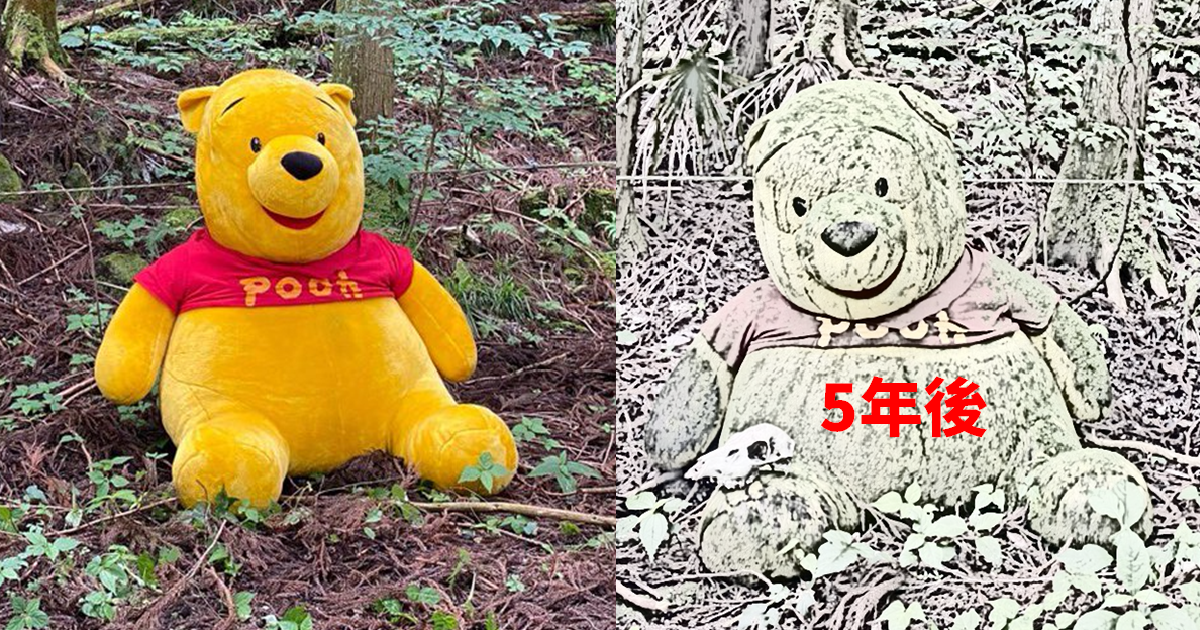
The user clarified that this wasn't illegal dumping, but an experiment to see "how long it would take for a plush doll to decompose in the forest," emphasizing that the land is privately owned. "This is how it looked when it was set up," the post included a photo of the doll when it was first placed.
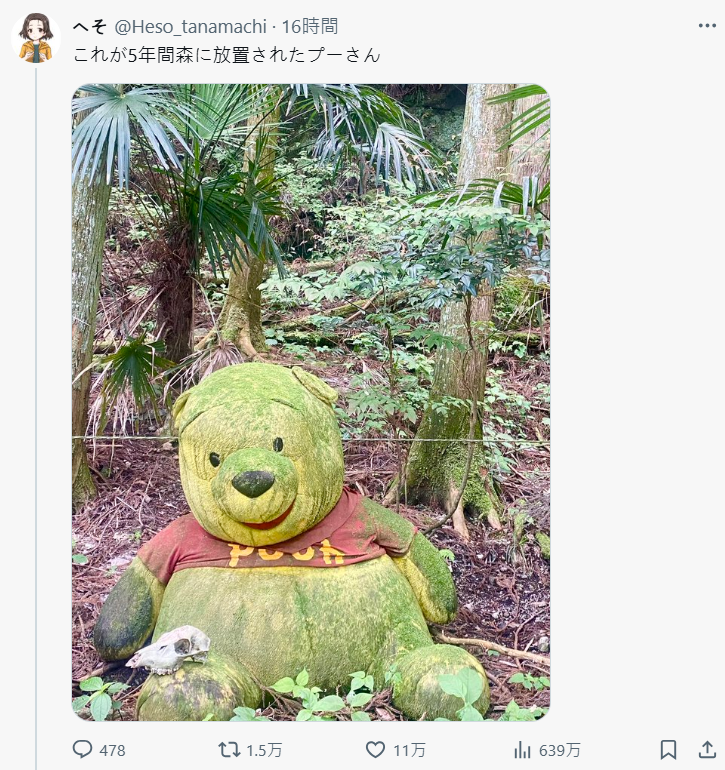
Five years later, he shared new photos, showing Pooh covered in moss, looking a bit droopy, yet surprisingly, its overall shape was still clearly recognizable. This sparked intense debate, with netizens exclaiming, "It hasn't rotted away yet!" and "Its shape is still intact – it's practically an urban legend!"
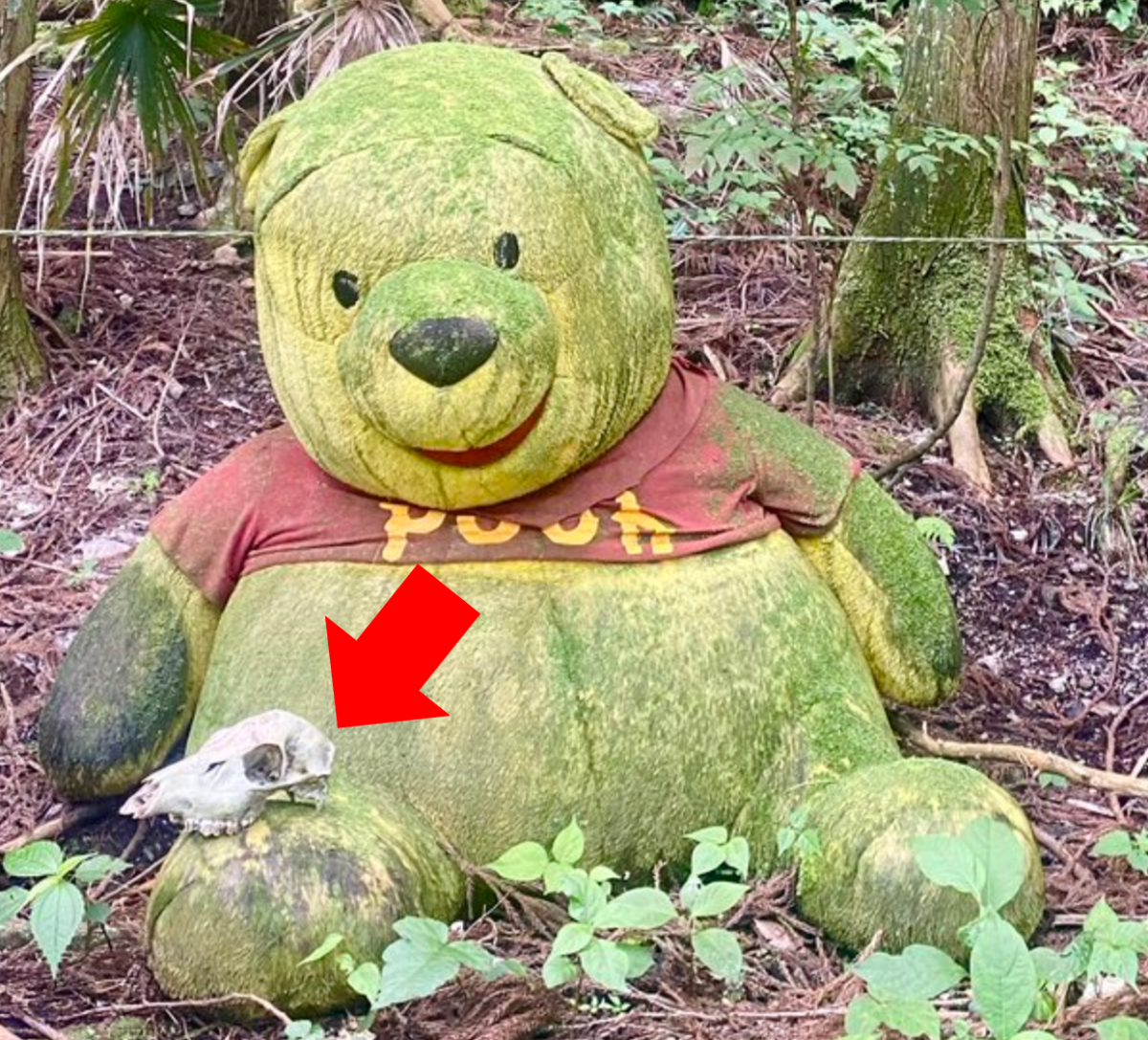
One netizen spotted an unidentified skull in the picture, asking, "Isn't that a bone?" The original poster replied, "It's a deer's." Another joked, "So, it survived five years by eating deer, huh?"

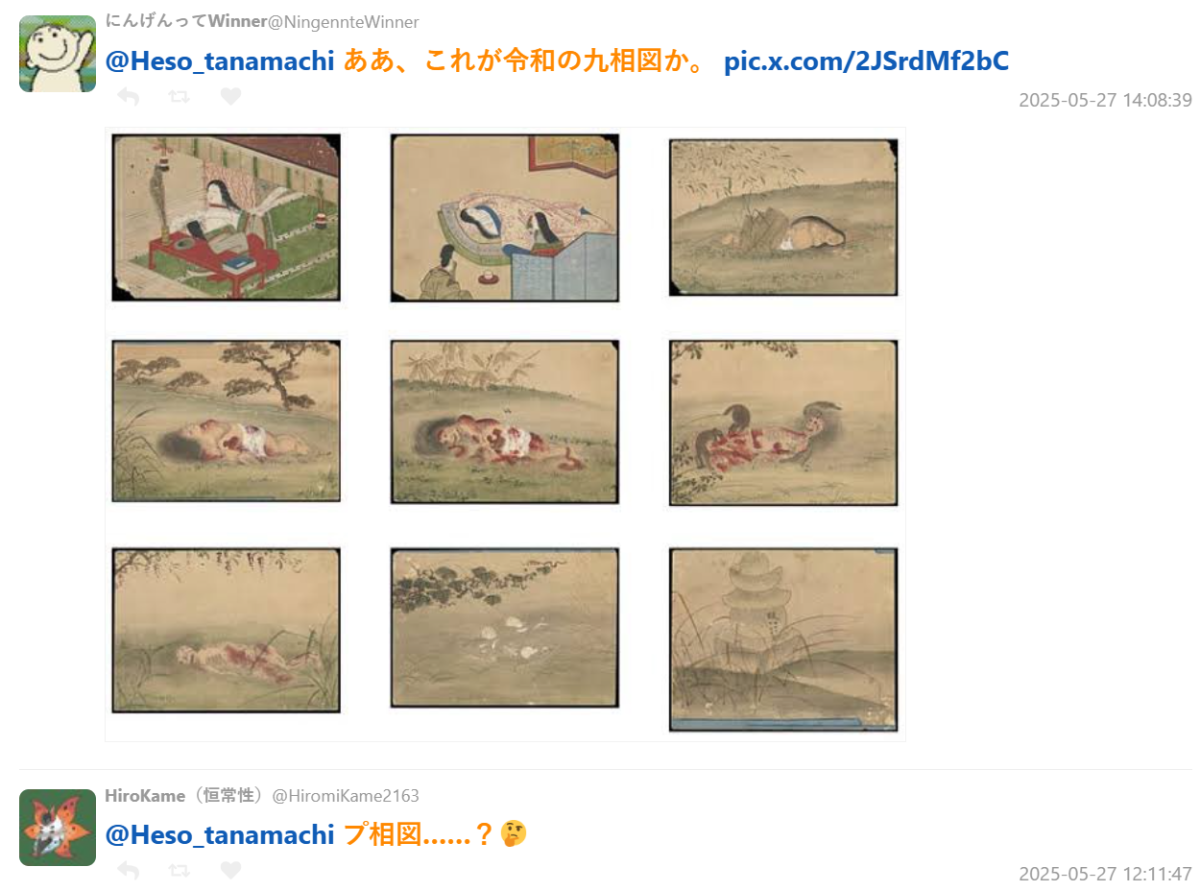
Many netizens were shocked by Winnie the Pooh's enduring form, marveling, "This material is so durable!" and "These synthetic fibers really don't break down easily." Some even drew parallels to the "Nine Phases of Corpse Decomposition" (Kyū-sō-zu) in Buddhism, calling it the "Reiwa-era Kyū-sō-zu" or "Pooh-sō-zu."
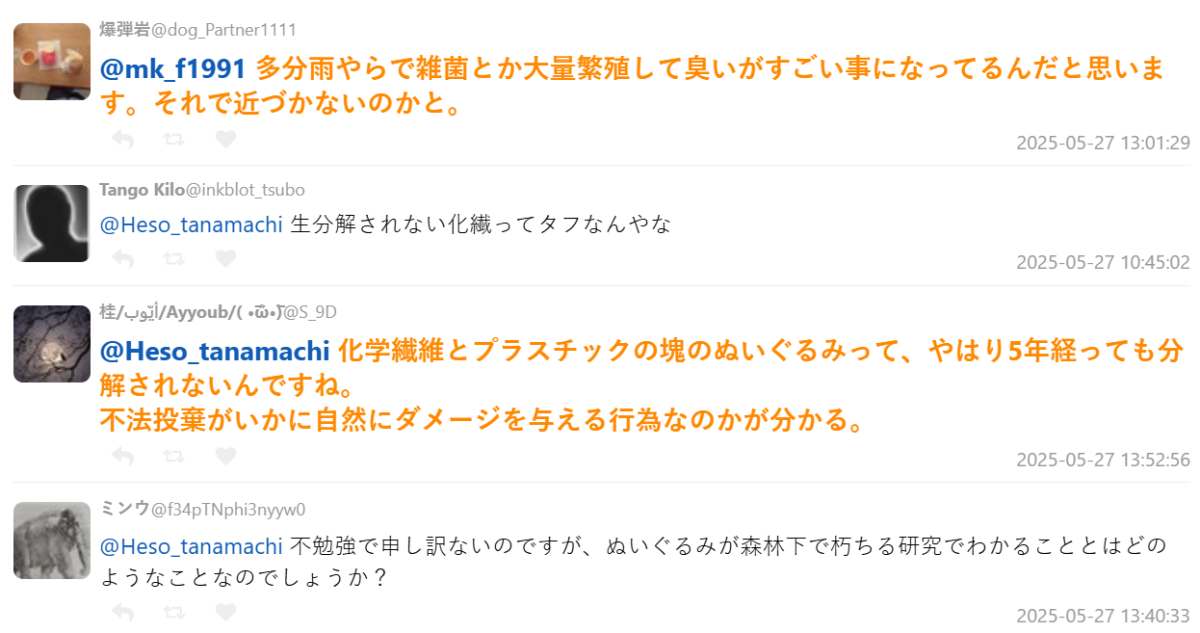
As for why the plush toy managed to survive five years unscathed in the forest, one netizen speculated, "Perhaps the rain caused a lot of bacteria to grow and emit strange odors, keeping wild animals away." Another added, "Plastics and synthetic fibers really don't biodegrade easily. Illegal dumping is truly harmful to nature."
 Some netizens also humorously compared the scene to the Laputa ruins from Hayao Miyazaki's "Castle in the Sky," saying, "A robot is going to walk out any second now!" and "It looks like something left behind after civilization collapsed."

However, some netizens expressed sadness about the experiment, finding it "too lonely and cruel" to leave a plush toy alone in the mountains. "I believe dolls can move, like in 'Toy Story,' so seeing this really breaks my heart," one user commented. "I hope someone can give it a proper burial," another added. "I won't criticize, but I genuinely feel sorry for it." The depth of Japanese people's emotional attachment to dolls and figures also became a focal point of the discussion.

The original poster stated that the experiment would continue, with results expected to be shared again in its 10th year, jokingly saying, "See you in ten years!" Some netizens lightheartedly warned, "Will X still be around by then? Remember to screenshot and back up!" and "I might not be around in ten years, so please enjoy the sight for me!"


While the user conducted this experiment out of scientific curiosity, it unexpectedly resonated with many netizens, with several lamenting that such dolls shouldn't be discarded in this manner. If you have cherished dolls, don't just toss them away; they might end up as non-biodegradable waste like this.
As for whether we'll actually see what this Winnie the Pooh doll looks like in ten years, that's entirely up to the original poster!
via: togetter