

Japan's Ministry of Agriculture, Forestry and Fisheries (MAFF) recently dropped a short video on its official social media channels titled "A Day in the Life of a MAFF Employee." The clip chronicles an employee's daily grind, from clocking in at 9:30 AM to finally heading home at 10:00 PM.
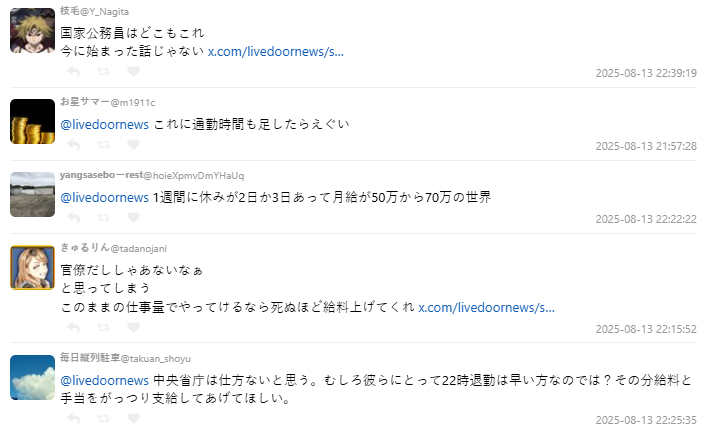
But after the video went live, it ignited a fiery debate online. While some viewers expressed gratitude for the hard work of Japanese civil servants, others surprisingly commented that a 10 PM finish was "actually quite early."
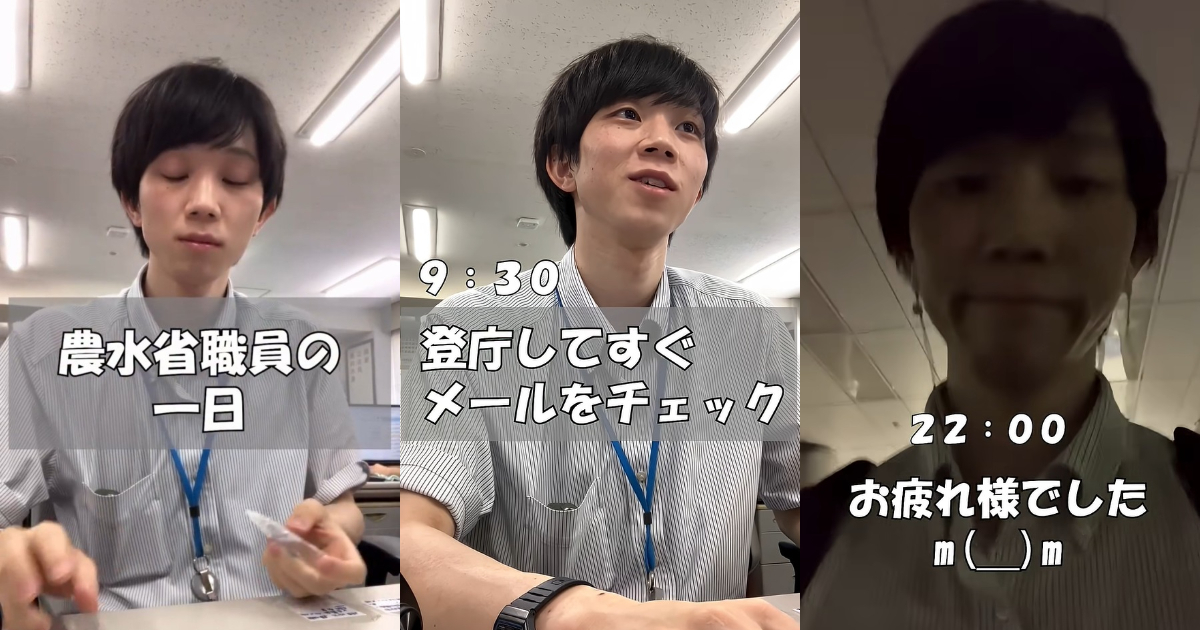
The video depicts the employee's day as a non-stop barrage of official duties, from morning till night. Lunch breaks are short, often just grabbing a rice ball, and working late is the norm, with a mountain of tasks needing completion before they can even think about leaving.
▼ Watch "A Day in the Life of a MAFF Employee" below:
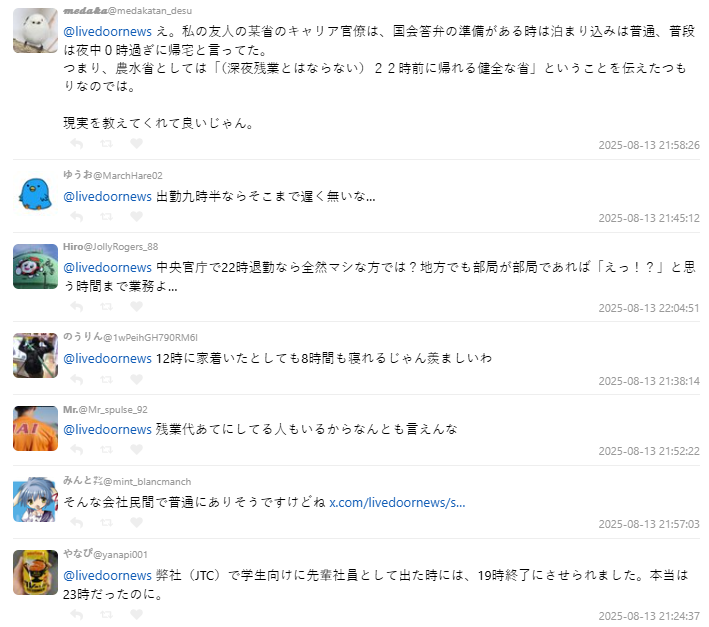
While many netizens reacted with comments like, "It's heartbreaking to watch" and "This is a microcosm of Japan's overtime culture," others familiar with the workings of central government ministries pointed out that a 10 PM departure is actually considered "normal" or even "early." They noted that during Diet sessions, officials often don't leave until the early hours of the morning, sometimes even pulling all-nighters to prepare documents.
One netizen shared that a friend, a former bureaucrat, revealed the average quitting time in Kasumigaseki (the district housing Japan's central government offices) is closer to 1 AM, making the MAFF video's schedule seem "healthy" by comparison.
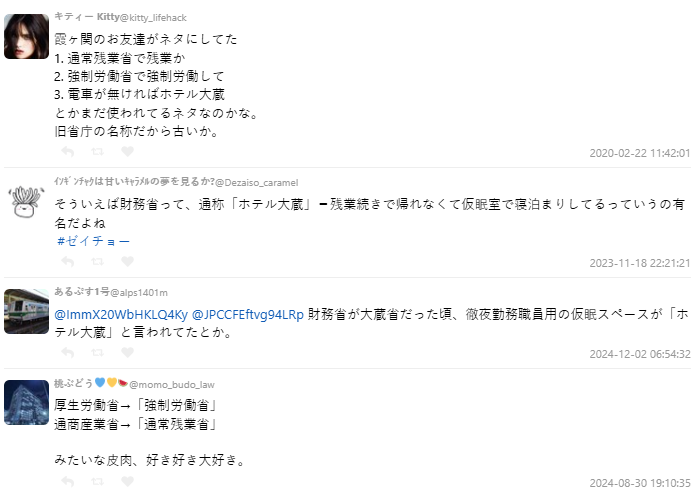
Some comments even joked about the long-standing nicknames for Japan's central ministries: the Ministry of Health, Labour and Welfare is playfully dubbed the "Ministry of Forced Labor," the Ministry of International Trade and Industry (now METI) was called the "Ministry of Constant Overtime," and the Ministry of Finance once had the dark humor moniker "Hotel Okura" (referring to staying overnight to work).
According to last year's report by The Nikkei, thousands of Kasumigaseki officials log over 80 hours of overtime per month (the threshold for karoshi, or death from overwork), with some even developing health issues due to prolonged work stress. While MAFF's video aimed to showcase an employee's daily routine, it inadvertently reignited a nationwide discussion about Japan's "bureaucratic overtime culture."
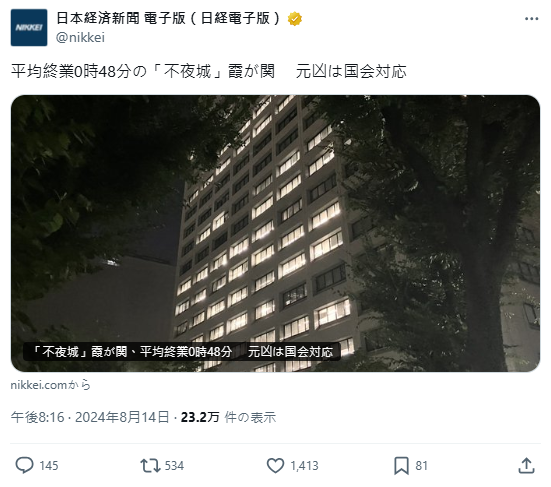
However, Japanese netizens also pointed out that the core issue isn't necessarily an unmanageable workload. Instead, much of the overtime is spent responding to parliamentary inquiries and administrative demands, which slows down policy development. Public sector employees often find their departure delayed as they wait for responses.
While many might not have a clear picture of Japanese civil servants' lives, it's evident that those working in central government offices face not only long hours but also precious little downtime.
via: togetter