

In recent years, the Japanese animation industry has continued its robust growth, expanding both domestically and internationally and showcasing its significant soft power. The international market, in particular, has seen substantial growth, partly fueled by the pandemic.
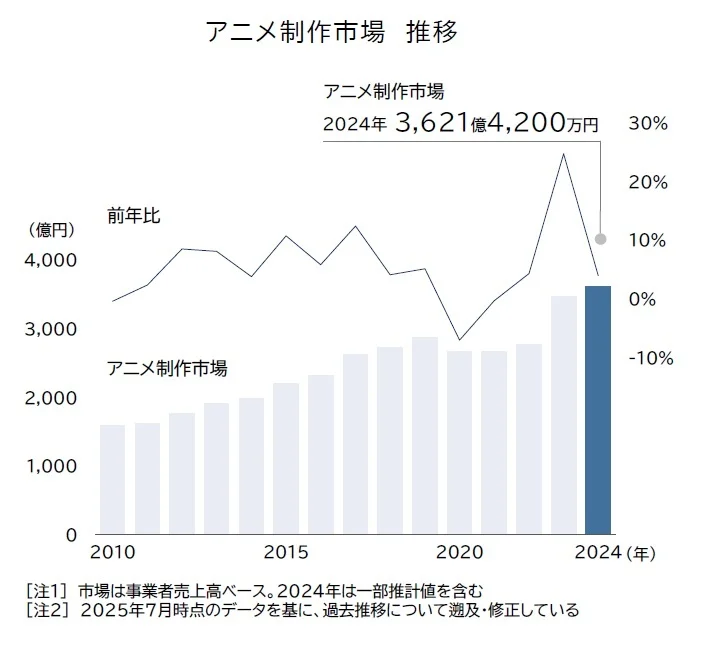
However, a recent report from Japanese business research firm Teikoku Databank reveals a paradox: the Japanese anime production market reached a record 362.1 billion JPY in 2024, marking an all-time high. This surge was primarily driven by strong sales of major titles and robust licensing operations. Despite this, the business performance of 60% of primary contractors (main production studios) actually worsened, highlighting the industry's struggle of being "swamped with work but not making money."

The survey indicates that the anime production market (based on company revenue) hit 362.1 billion JPY in 2024, a 4.0% increase from the previous year, setting a new record. Demand across television, film, and streaming platforms remains strong, and primary contractors have also performed well in secondary licensing (IP) businesses. The market size is projected to exceed this year's figures in 2025.
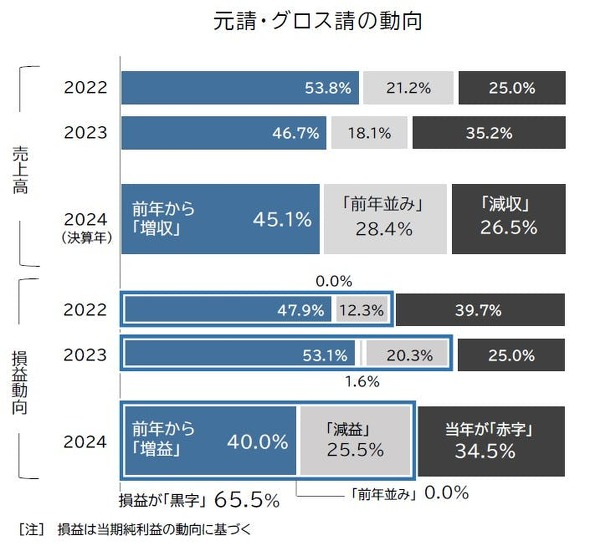
The average revenue for primary contractors also reached a historic high of 2.749 billion JPY. Yet, the profit situation is far from optimistic—only 40% of companies reported increased earnings, while 25.5% saw profits decline, and a significant 34.5% incurred losses. In total, 60% experienced a deterioration in performance.
While revenue increased due to higher production unit prices, strong streaming sales of older works, and growth in character licensing income, costs have surged even more dramatically. Soaring outsourcing fees, increased personnel expenses for in-house animators, and rising rent and maintenance costs for expanded offices have all contributed to a significant inflation of expenditures.
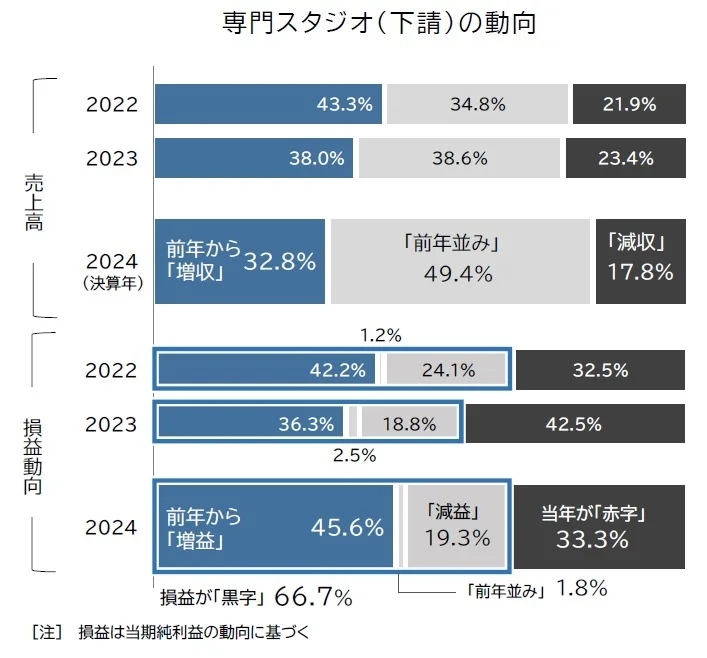
In contrast, specialized studios that primarily handle downstream, subcontracted work have seen their average revenue reach 438 million JPY, marking four consecutive years of year-over-year growth. Their profitability has also improved, with the proportion of studios operating at a loss decreasing to 33.3%, down 9.2 percentage points from the previous year.
Nevertheless, given the lower unit prices for subcontracted work and the lack of IP income as a buffer, these studios are inherently more susceptible to reduced profits or falling into the red.
Teikoku Databank points out that anime companies are broadly facing issues such as skyrocketing production and personnel costs, as well as labor shortages leading to production delays. Revenue growth is failing to keep pace with rising costs, trapping the industry in a "busy but unprofitable" state where they cannot pass on increased costs through their pricing. The report also emphasizes the urgent need for comprehensive reforms to labor conditions, including providing animators with fair compensation. While this is an understandable call, the report suggests that reversing this trend may prove challenging given the increasingly dominant position of the Japanese anime market.
Note: Financial figures and earnings forecasts should be confirmed through the company’s official announcements.
via: PR TIMES