

The scandal surrounding former SMAP leader Masahiro Nakai that erupted earlier this year has already tarnished the reputations of both the star and Fuji TV. Now, another major celebrity has been pulled into the controversy.
On August 17, a bombshell report from the weekly magazine Josei Seven alleged that popular actor and singer Masaharu Fukuyama had attended "networking dinners" arranged by Fuji TV with its female announcers, where he was accused of making comments that constituted sexual harassment. The news immediately sparked a massive public debate.
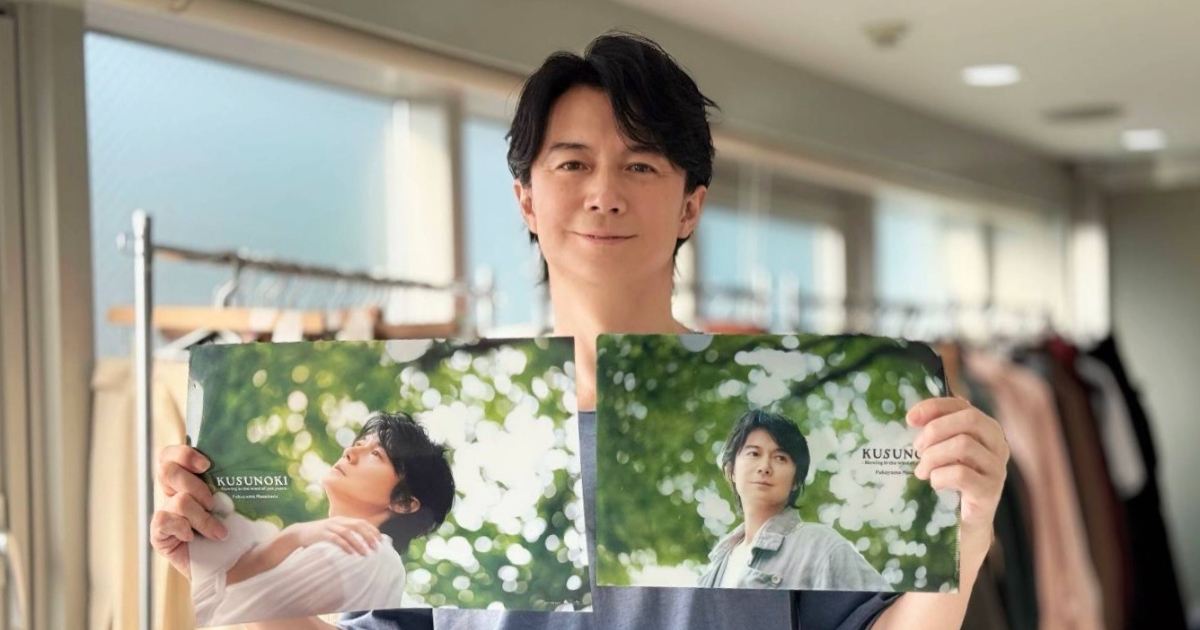
According to Josei Seven, the third-party committee investigation launched after the Masahiro Nakai incident uncovered a long-standing issue of "inappropriate gatherings" within Fuji TV. The magazine's own investigation identified Masaharu Fukuyama as the "major program guest" mentioned in the committee's report.
The controversy stems from female announcers who reported feeling uncomfortable at these gatherings due to Fukuyama's "sexually suggestive and off-color jokes," which others at the table allegedly played along with. While the report noted that Fukuyama was unable to meet with the committee in person due to his busy schedule, he denied making sexually suggestive remarks in a written response, though he admitted to asking the event organizer, Fuji TV executive Akira Ota, to invite female announcers.
In response to an inquiry from Josei Seven, Fukuyama's agency relayed that the star "wanted to explain in his own words" and agreed to a face-to-face interview. One day in August, he sat down for a 70-minute interview at his agency's office to address the allegations head-on for the first time. "After reading the investigation report, I was honestly tormented," Fukuyama said. "It's highly confidential, so I couldn't just come out and say anything, nor could I guess or identify the person who felt uncomfortable. How was I supposed to apologize? I was really struggling with that. This interview was my chance to finally explain things myself."
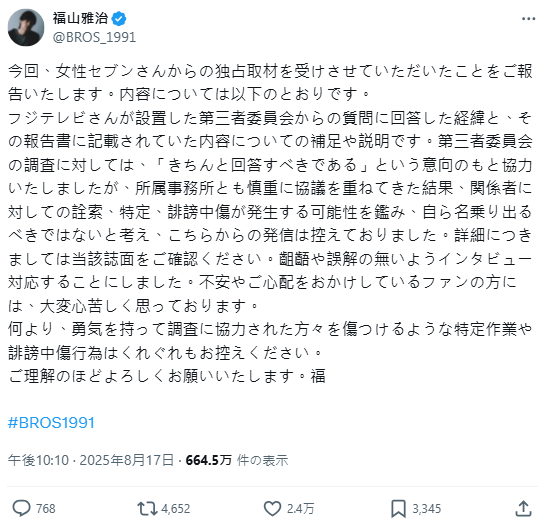
As the report went live, Masaharu Fukuyama quickly posted on X, explaining that he gave the interview to Josei Seven to provide additional context and prevent misunderstandings.
"I believed it was necessary to answer the Fuji TV third-party committee's investigation honestly. However, after discussing it with my company, we were concerned that if I spoke out proactively, it could lead to speculation or online bullying of the people involved, so I chose to remain silent. I apologize for worrying my fans. Most importantly, please do not try to identify or attack those who bravely cooperated with the investigation."
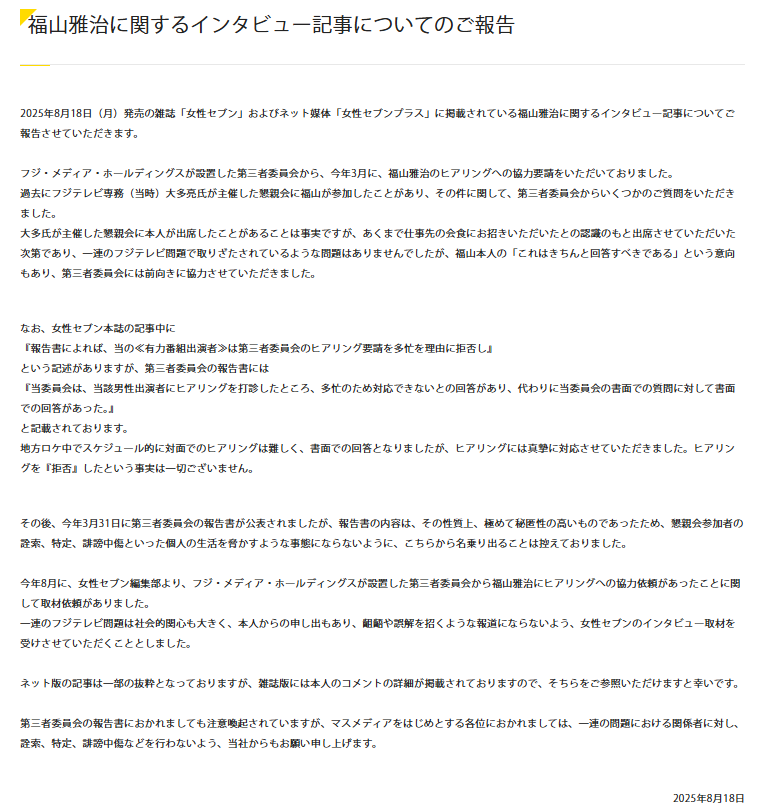
On August 18, Fukuyama's agency posted a statement on its official website, confirming that Fuji TV's third-party committee had requested his cooperation in March. The inquiry was related to his past attendance at dinners hosted by then-Fuji TV managing director Akira Ota.
The statement clarified that while Fukuyama had indeed been invited to and attended dinners organized by Ota, he did so on the premise that they were "work-related gatherings" and that the problematic activities currently being alleged did not occur. However, based on his personal belief that he "should respond honestly," he fully cooperated with the committee's questions.
Furthermore, the agency addressed the claim in the Josei Seven article that "the report states the major guest (Fukuyama) refused an interview with the committee due to a busy schedule." In fact, the report's actual wording was: "When the committee asked the male performer if he could be interviewed, he stated he was unable to attend due to a busy schedule but provided full written answers to the committee's questions." At the time, Fukuyama was tied up with an out-of-town filming schedule and could not make time for an in-person interview, but he responded sincerely in writing and by no means "refused" to cooperate.
After the investigation report was officially released on March 31, Fukuyama did not comment publicly on the highly confidential contents to prevent unnecessary speculation, identification, or slander against other attendees, which could have impacted their lives.
It wasn't until August that Josei Seven's editorial department requested an interview to clarify his cooperation with the investigation. Given the high level of public interest and Fukuyama's own desire to prevent misunderstandings or inaccurate reporting, he ultimately agreed to the interview. The agency noted that the online version of the article contains only partial content and recommended that readers refer to the full magazine for Fukuyama's detailed account.
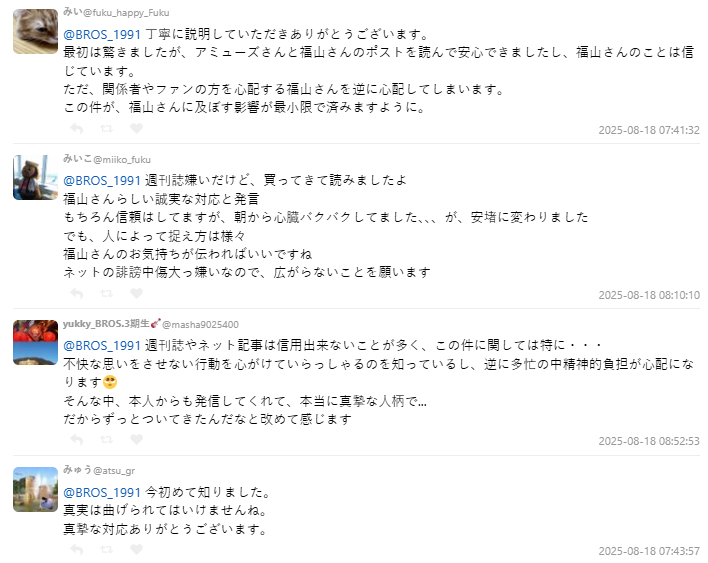
The revelations have triggered sharply divided reactions on social media.
Many users expressed disappointment that Fukuyama, a married man with children, would attend "networking dinners with female announcers" at all, let alone make inappropriate comments. "Just saying you want to apologize makes it sound like you have something to hide," one person commented. Another critic wrote, "Young people today simply won't tolerate these kinds of dirty jokes."
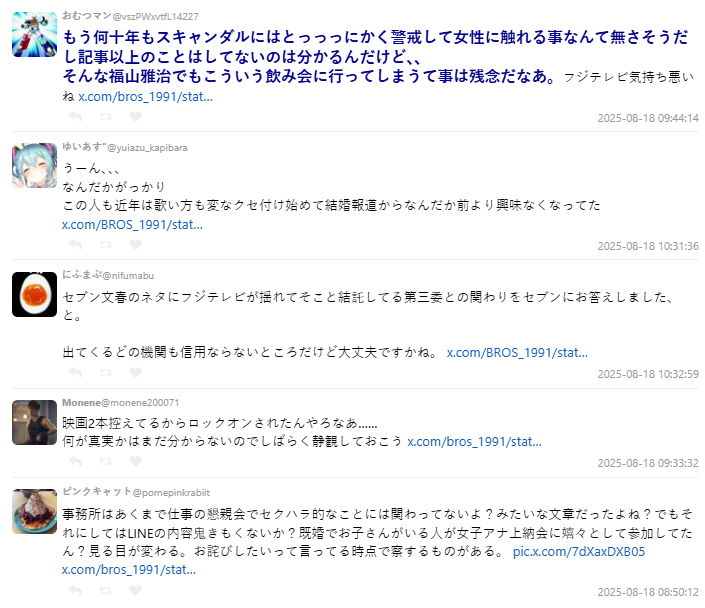
On the other hand, fans and long-time listeners rushed to his defense, pointing out that Fukuyama has been famous for his off-color humor since his days hosting the radio show All Night Nippon, making his jokes unsurprising. Some argued that it was just typical banter among older men at a dinner party and shouldn't be blown up into a major sexual harassment scandal. Others praised him for his sincere response and for addressing the issue directly, citing it as a reason for his enduring popularity.
The sudden news tying Masaharu Fukuyama to Fuji TV's "female announcer dinners" has certainly raised questions about his actual involvement and what he disclosed to the third-party investigators.
For now, it's confirmed that Fukuyama did attend related gatherings. Whether they were the "problematic" events at the heart of the scandal, however, is a truth that may still take time to fully come to light.
via: togetter