

When you're about to buy something, chances are you check out other people's reviews, right? The same goes for games! Every gaming platform has player feedback to help you gauge a game's value, experience, and overall pros and cons.
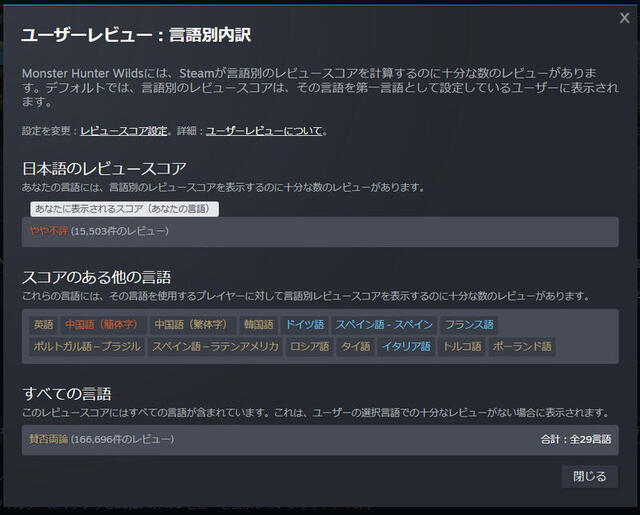
Steam recently rolled out a new feature: "View Reviews by Country." And what some netizens quickly noticed is that, across the board, Japanese players' reviews are almost always the lowest globally. This isn't because Japanese gamers are particularly picky; instead, it's sparking debate because it seems to stem from a cultural habit of "writing complaints but being too lazy to write praise."
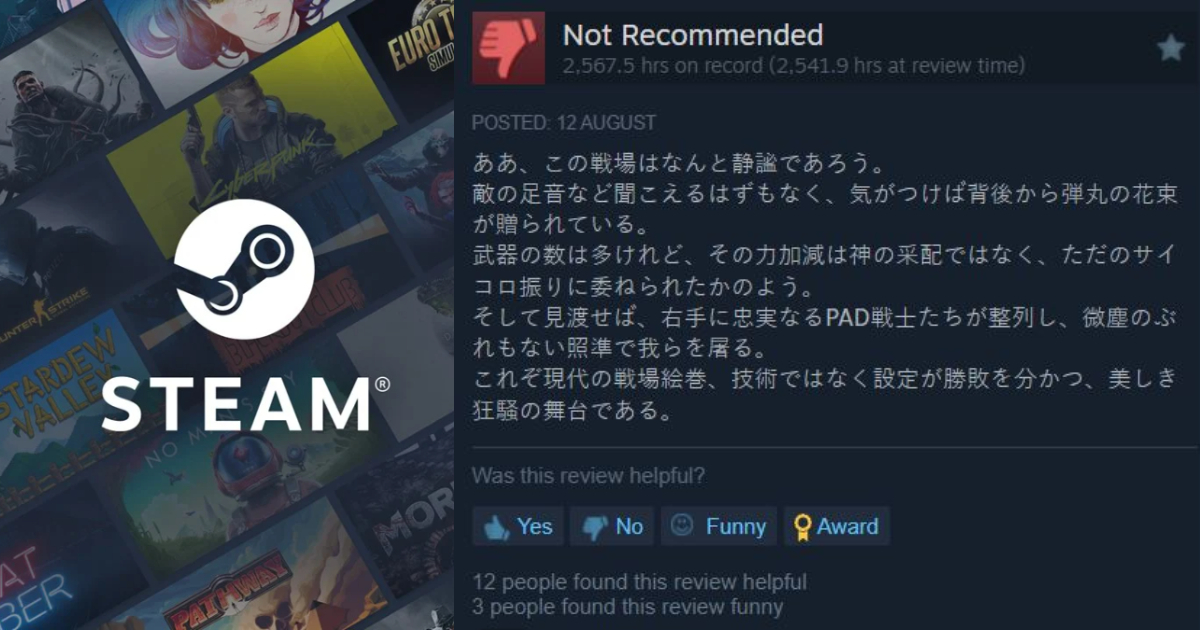
▼ Steam's new "View Reviews by Country" feature
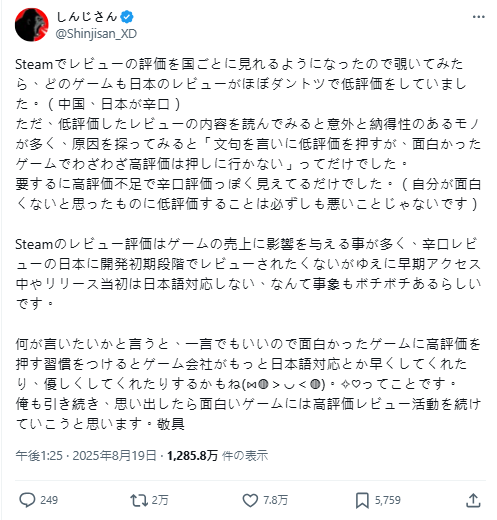
One X user, Shinji-san, shared their observation, noting that while Japanese reviews appear incredibly harsh, a closer look reveals most comments are actually quite reasonable. Shinji-san believes the real reason is simple: "If they're dissatisfied, they hit the downvote. But even if they love a game, they won't go out of their way to hit the upvote." This habit makes Japan's overall scores look particularly "poison-tongued" in the numbers.
Given that Steam reviews directly impact game sales, many developers have even opted not to offer Japanese versions during early access or initial launches, fearing a wave of low scores from early Japanese players. Shinji-san urged players to adopt a new habit: "Even if it's just one line, give a thumbs-up to games you enjoy." This, he suggests, could encourage game companies to support Japanese languages sooner and be more player-friendly.
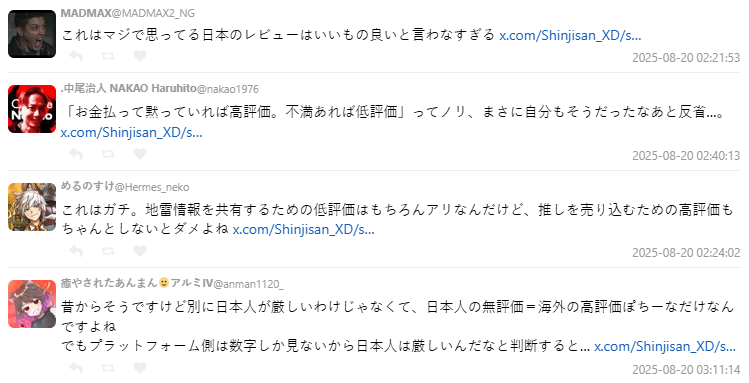
The post blew up, with many netizens agreeing that Japanese people rarely just say "good is good." Some players even reflected on their own habit of "only leaving negative reviews when dissatisfied." Many also felt that a Japanese player's "no review" often equates to a high score from an international player, but since platforms only crunch numbers, it mistakenly makes Japanese players seem overly critical.
Others drew parallels to restaurant reviews, noting how Japanese customers are quick to complain about minor issues but completely silent when a restaurant goes above and beyond.
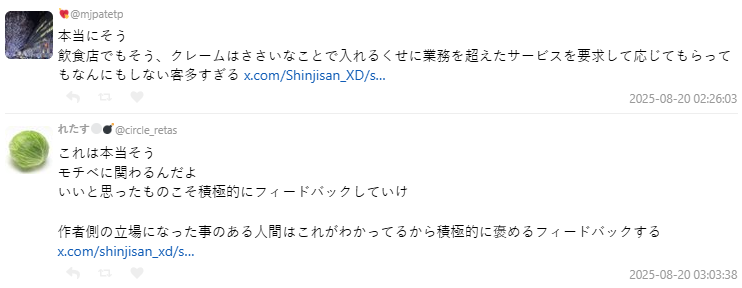
Numerous users also pointed out that Japanese reviewers often give "satisfied but not full marks" or "write positive comments but only give three stars," leading to an underestimated score. This led to calls for players to directly support games they love with high scores, emphasizing that whether you're a critic or just a casual player, doing something is better than doing nothing.
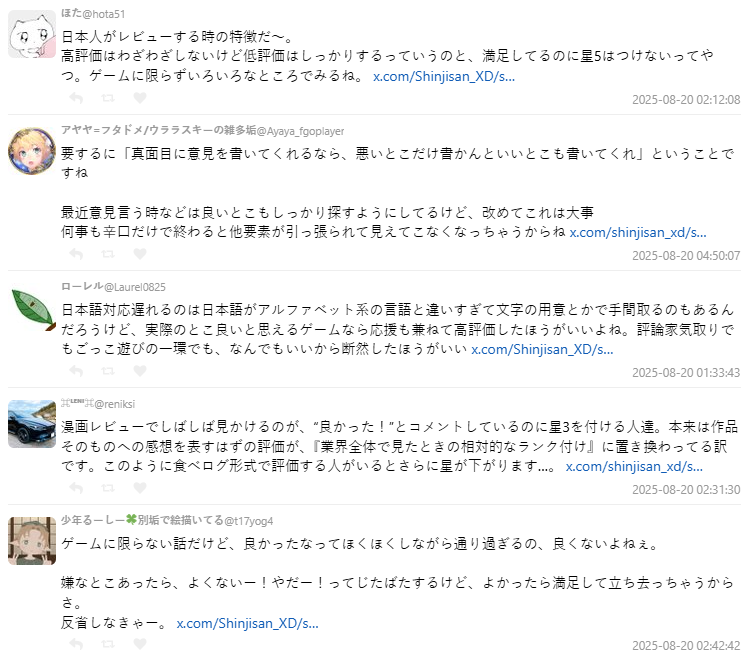
Some netizens believe this phenomenon is tied to Japanese culture, where people are often raised with "subtractive thinking," making it psychologically challenging to give a high score. This unique "score conservatism" among Japanese people often leaves a significant buffer before reaching the highest possible score, especially in public review spaces like Steam. Another point raised was that Japanese people subconsciously feel that "products on the market should inherently be good," so they don't feel the need to specifically praise them.
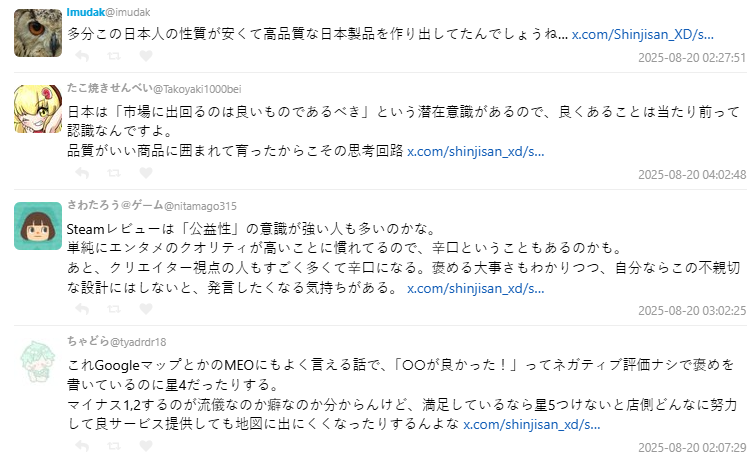
This discussion about "Japanese player review habits" unexpectedly unveiled a cultural difference: Japanese players aren't shy about complaining, but they're stingy with praise. Some players also noted that this isn't exclusive to Japan, with similar tendencies observed in other Asian regions like China, Taiwan, and Hong Kong/Macau.
As more people become aware of "the importance of high-score support," we might see a gradual shift in Japanese players' review attitudes in the future.
via: togetter