

 (Image: Sony Pictures)
"Materialists" is a romantic film that defies easy categorization. While it broadly fits the romance genre, a closer look reveals multiple complex layers. For marketing purposes, A24 has packaged it as a traditional and easily digestible "two men fighting for one woman, rich vs. poor" drama, attempting to frame it as a retro revival of the classic romantic comedy. This strategy clearly worked, as "Materialists" has already grossed over $85 million worldwide—an impressive feat in an era where theatrical rom-coms have all but vanished.
But in reality, "Materialists" is far more than its marketing suggests. If you're expecting a classic meet-cute rom-com in the vein of Meg Ryan or Julia Roberts, you might be disappointed; it's romantic, but not in that conventional way. Nor should you anticipate a "Past Lives 2.0" (though the love triangle setup bears some resemblance, and the female lead's earliest connection receives the most narrative focus in both). The film's tone is distinctly more commercial and stylish than that of "Past Lives."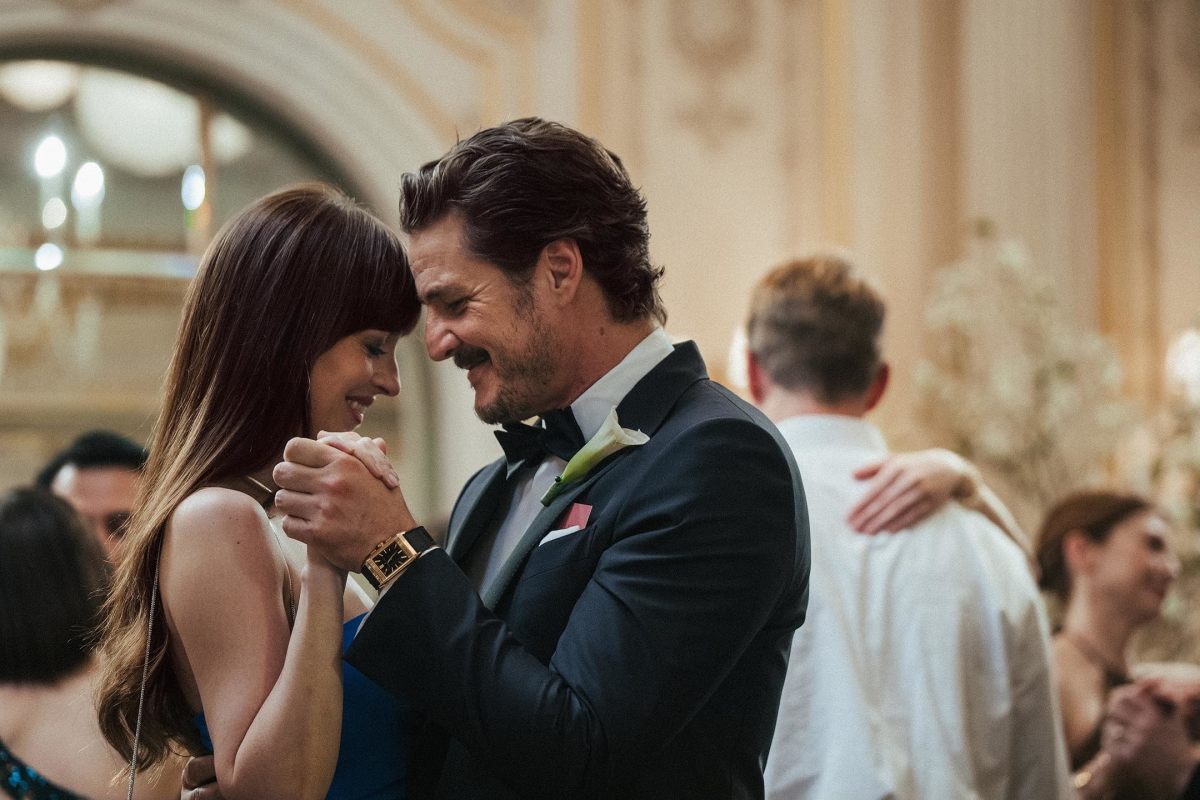
(Image: Sony Pictures)
You could even argue that "Materialists" is simultaneously a deeply traditional romance and a rebellious anti-romance. Its tradition lies in its structure and ultimate conclusion (it still champions an unwavering belief in true love), while its rebellion is found in the journey it takes to get there. This subversion isn't achieved through meta-satire of rom-com formulas—a well-worn trope by now—but by directly deconstructing modern views on relationships. Much like "Past Lives," the film aims to provoke thought rather than simply chronicle the coming together or drifting apart of its characters.
While most rom-coms are content to serve up the sugary rush of a meet-cute and electric chemistry, "Materialists" is one of the few films to seriously "talk" about relationships. This isn't a "Hitch"-style playbook for getting a date; instead, it uses the profession of a matchmaker to assemble a mosaic of contemporary courtship. There's little sweetness in this process. In fact, its cold, almost cruel depiction of modern dating might leave audiences feeling exposed and ashamed. Hollywood romances often shy away from the economic disparity between partners or at least soften the blow, but "Materialists" tackles the issue head-on without flinching. (Image: Sony Pictures)
Although this uncomfortable journey is presented with a satirical edge, director Celine Song exercises remarkable restraint, never letting it tip into broad comedy. This control is evident throughout the film. Seemingly absurd scenarios aren't played for big laughs, not because they fail to land, but because their sincerity is almost painful. This very sting is where the film's rebellious spirit lies. Song and A24 may have baited audiences with the promise of a Meg Ryan-esque flick, but the final product feels more like a brilliant monster (and I mean that as a compliment) born from the DNA of Yorgos Lanthimos and Wes Anderson.
Celine Song often uses Lucy (Dakota Johnson) to articulate the idea that relationships are business transactions, and she means it. The film's narrative core resembles a startup-crime story where a once-struggling protagonist gets rich through questionable means, only to be consumed by guilt after crossing a line—think "Catch Me If You Can" or "Hustlers." Johnson's character follows a similar arc. Just look at how she and Pedro Pascal's character "make an offer" and "draw up a contract" before sleeping together. Their delivery is so clinically detached it could be straight out of a Wes Anderson film, while the substance of their conversation feels like a Yorgos Lanthimos-esque satire of human behavior. (Image: Sony Pictures)
The influence of Jane Austen also looms large. Johnson's character can be seen as a modern-day Emma Woodhouse from "Emma" or Elizabeth Bennet from "Pride and Prejudice." Chris Evans fills the role of the steadfast George Knightley, while Pascal embodies the archetypal Austen dream bachelor, akin to Frank Churchill. It's a film with a wonderfully chaotic blend of influences (again, a compliment). But most importantly, it's a powerful showcase of Celine Song's potential as a master filmmaker. Her confident use of long takes and score-less moments of silence lends the work a timeless quality—a level of sophisticated direction you rarely see in a romantic comedy.
Some may be tempted to crown Celine Song the next Nora Ephron or Nancy Meyers, but she has the potential to be much more. Her vision is clear even in her casting choices, particularly with Chris Evans. She manages to unearth a new dimension to his performance, creating a sense of authenticity and groundedness that made me feel like I was seeing him as an actor, not just a movie star, for the first time. This was the film's most pleasant surprise; Evans has finally leveled up. I came for Dakota Johnson (whose effortlessly charming presence is a perfect fit for the genre), but left with the unexpected gift of a career-best performance from Evans.