

Japanese animation has been absolutely crushing it lately, expanding its reach both domestically and internationally and flexing some serious soft power. Thanks to a pandemic-era boost, the global market for anime is looking more lucrative than ever.
To help Japan's anime, films, and other homegrown content hit the international stage even faster, the government is stepping up its financial support for production. This new policy, unveiled on the 17th, aims to triple overseas sales of Japanese content to a whopping 20 trillion yen by 2033.
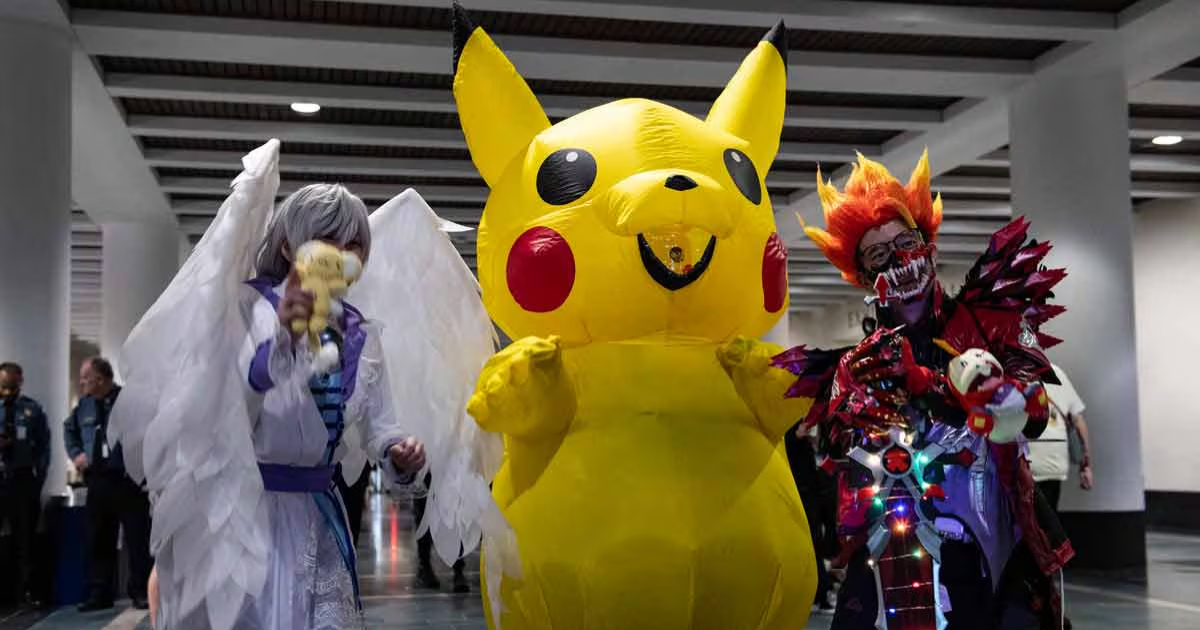
To create a more stable creative environment for production companies, the government plans to inject more resources and encourage businesses to aggressively target overseas markets. Currently, Japan's Ministry of Economy, Trade and Industry (METI) offers subsidies of up to 200 million yen for large-scale film and TV productions with budgets exceeding 300 million yen. Future plans include potentially raising this subsidy cap. The government expects to hold inter-ministerial meetings soon to finalize the policy, after which the funds will be allocated in this fiscal year's supplementary budget.
This initiative also includes measures for talent development, international co-productions, and enhanced overseas copyright protection. All these efforts will be integrated into the "Cool Japan" strategy, which promotes internationally recognized Japanese cultural soft power abroad.
Of course, this move is also a response to global trends, as other countries have long been actively pushing public-private partnerships. For instance, South Korea earmarked approximately 76.2 billion yen in 2023 to support the overseas expansion of its content industry. And California, home to Hollywood, pours massive subsidies and tax incentives into bolstering its film and TV sector.
In contrast, Japan's current related budget stands at only about 25.2 billion yen. Critics argue that these funds haven't truly reached domestic production companies, leaving many hesitant to fully commit to overseas expansion.
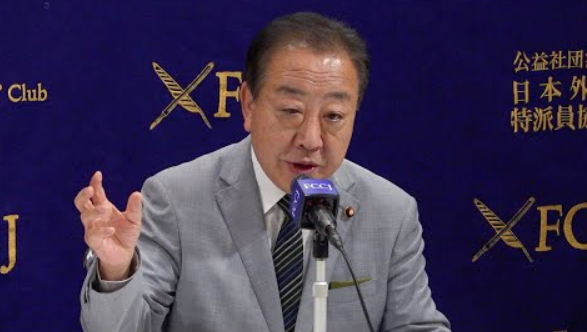
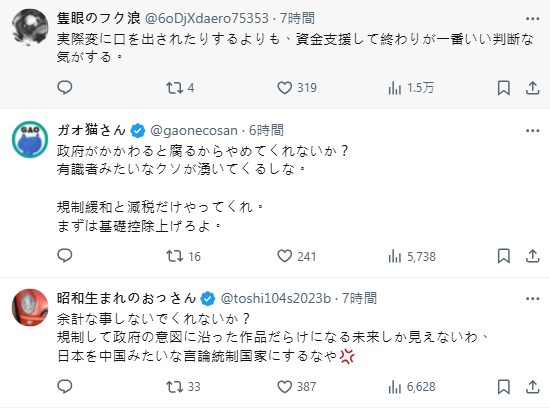
However, after the news broke, reactions from Japanese netizens on X (formerly Twitter) have been sharply divided. Some applaud the potential for improved creator compensation and stronger content, while others worry about past policy failures, funds being siphoned off by intermediaries, and even the risks of excessive government intervention leading to content control.
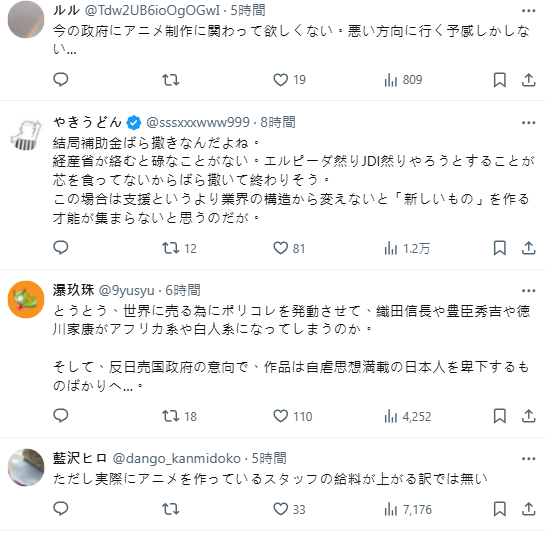
Some netizens also pointed out the dire state of anime production, questioning whether these subsidies, even if given to production companies, would actually improve the notoriously poor working conditions for animators or if frontline workers would even see any increased compensation.
While it's confirmed that the Japanese government plans to boost the anime and film industries with subsidies, the current economic climate isn't ideal for the public, and trust in the government isn't exactly soaring. It's no wonder such a policy is sparking backlash. The actual results and benefits of this implementation will, of course, remain to be seen.