

Japanese indie ASMR creator Quattro recently took to X (formerly Twitter) to call out Bilibili users for unauthorized uploads of her ASMR audio works. What started as a direct plea in the comments section quickly escalated into a full-blown debate after she shared the mind-boggling responses she received, igniting a firestorm among netizens.
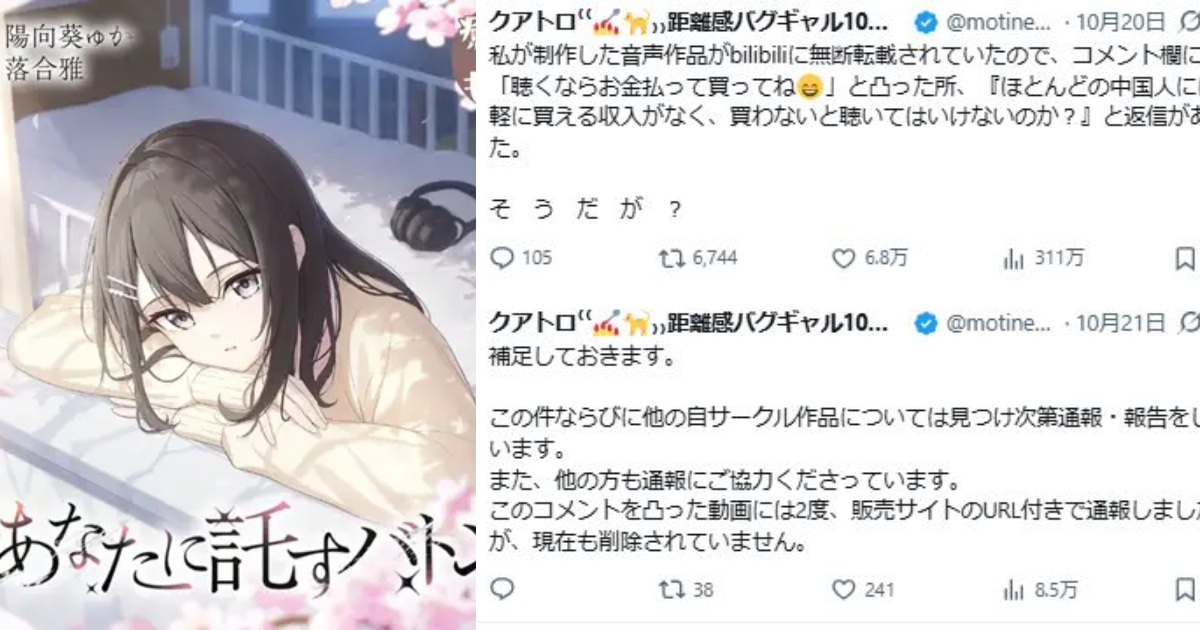
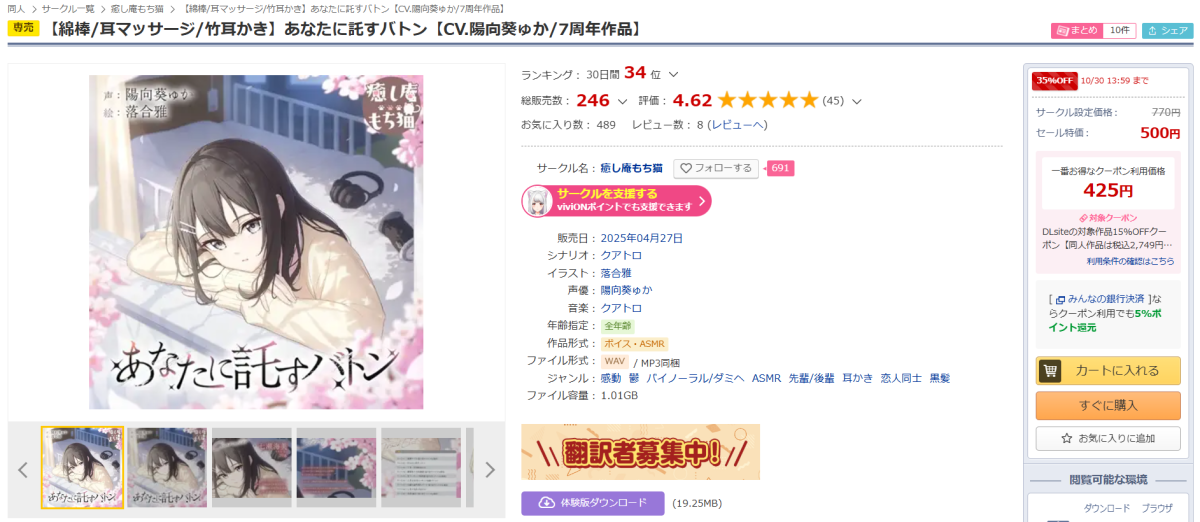
Quattro's work, "You Pass the Baton to Me" (あなたに託すバトン), is an ASMR audio drama featuring popular voice actress Yuka Himukai (陽向葵ゅか). Written by Quattro, the piece is exclusively sold on DLsite and has garnered significant praise for its poignant, life-themed narrative.
Quattro's frustration boiled over when she discovered the pirated uploads on Bilibili. She personally commented on one of the videos, stating, "If you want to listen, please pay for it." To her astonishment, a user replied, "Most Chinese people have low incomes, so can't we listen without paying?" Quattro's blunt retort? "Exactly." She expressed her disbelief at such a response, questioning how anyone could use "not having money" as a justification for piracy.
She further elaborated on the situation, explaining that "You Pass the Baton to Me" is a deeply emotional story about a girl diagnosed with only six months to live, who records ASMR as a "final message to her lover."
However, in the Bilibili comment section, some users posted "NTR" (Netorare) comments, like, "Actually, I was that doctor, and my diagnosis was wrong. Now she and I are on our honeymoon~" These offensive comments even racked up numerous likes and shares. Quattro was furious, stating, "In the world I created, this girl has already passed away. To have someone arbitrarily change it into a comedic plot and make fun of it is truly painful. Uploading it without my permission and messing with my work is an insult to a creator."
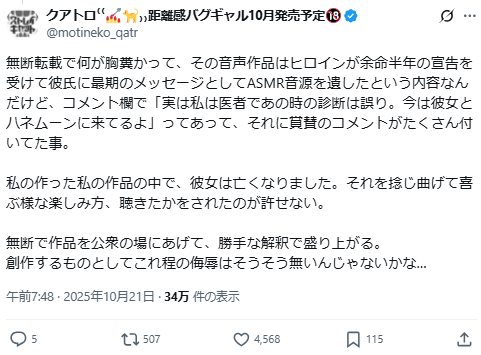
Her concise response quickly went viral in Japan, drawing widespread support from creators and netizens alike. Many echoed the sentiment that "not having money is no excuse for stealing," with some even suggesting, "If only we could charge them like NHK!" and "Those who don't understand the value of a work should not touch creative content."
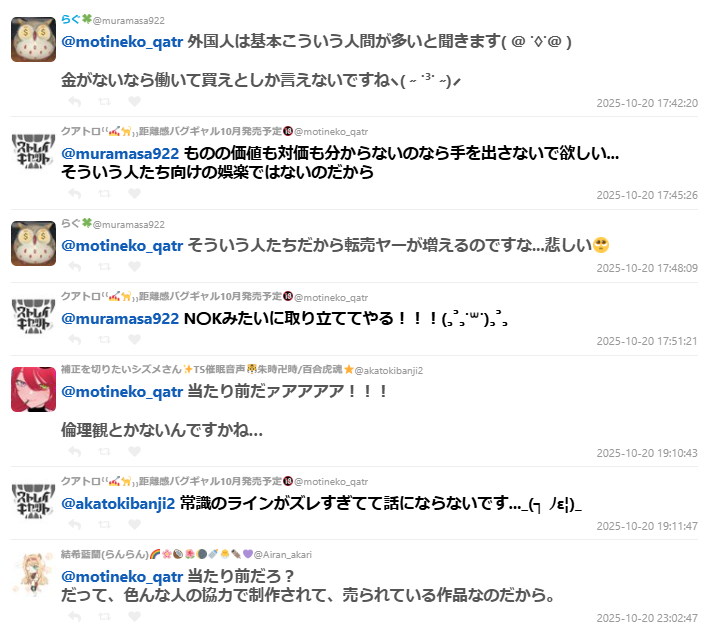
Other creators shared their own experiences with piracy. One recounted, "I was also pirated, and someone even emailed me begging, 'Please don't report me, I have no income now,' which I completely ignored."
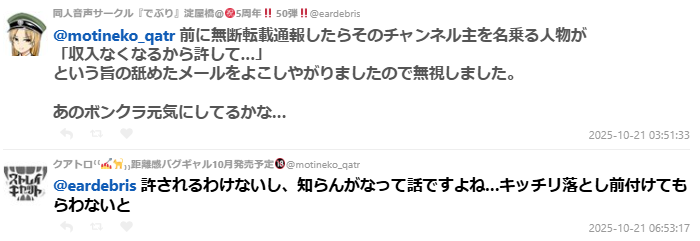
Many Japanese netizens focused on the "cultural and value differences," commenting, "Piracy is just too common in China," and "Communist ideology or whatever is just an excuse; it's fundamentally a moral issue." However, Quattro also added, "I have Chinese fans who are very respectful and support official releases, but unfortunately, they are too few."
While some industry peers admitted to facing similar piracy issues but viewed it as "a sign of popularity," the majority emphasized, "Unauthorized re-uploading is simply wrong, with no excuses."
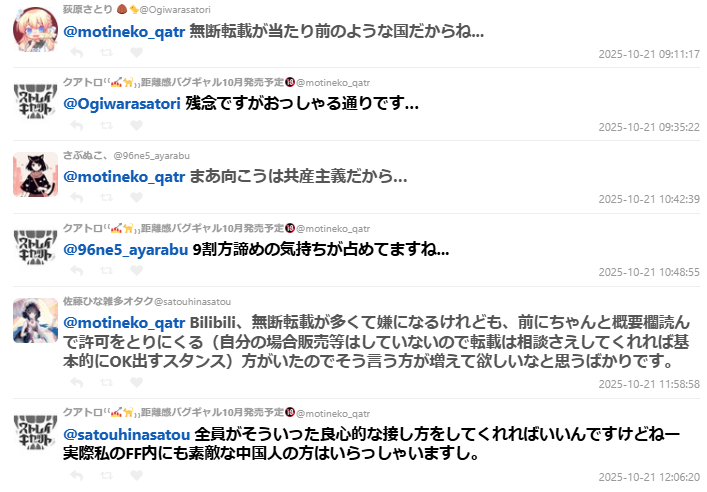
This incident not only highlights the ongoing gap in copyright awareness in China but also underscores the helplessness creators face against piracy in the digital age. As Quattro rightly put it: "To enjoy a creator's work, the most basic form of respect is to pay and support their efforts."
via: togetter