

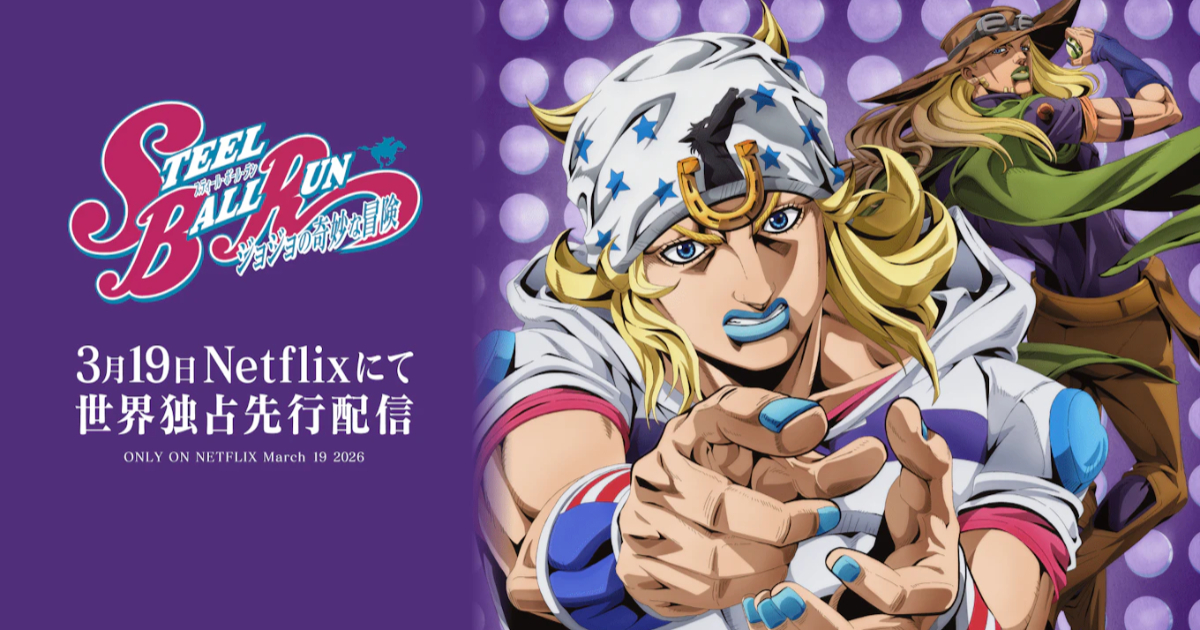
The latest installment in the JoJo's Bizarre Adventure anime saga, JoJo's Bizarre Adventure: Steel Ball Run, dropped on Netflix on March 19. While only one episode has been released so far, its incredible production quality has already blown fans away, setting high expectations for the rest of the series.
The official team recently released an interview with director Yasuhiro Kimura, who shared his thoughts on the production process and how it differs from his previous work on JoJo's Bizarre Adventure: Golden Wind.
Here’s a breakdown of the interview:
Q: Director Kimura, after "Golden Wind," what led you to take on "Steel Ball Run"?
Kimura: It actually happened while we were wrapping up the voice recording for *Golden Wind*. I went straight to the producer at Warner Bros. and said, "I want to do *Steel Ball Run*." And now, here we are.
Q: Wow, so you asked for it! What was your main focus when adapting this part?
Kimura: I see this story as having two core elements: "Skill" and "Stands." Gyro's Steel Balls represent skill, while Stands are on a completely different, supernatural level. These two opposing yet coexisting forces mirror the American setting of the 1890s—a transitional period where you had cars and horses, new and old values clashing. I find that contrast fascinating, and it even resonates with modern times, so I really wanted to emphasize it in the anime.
Q: How did you approach the script?
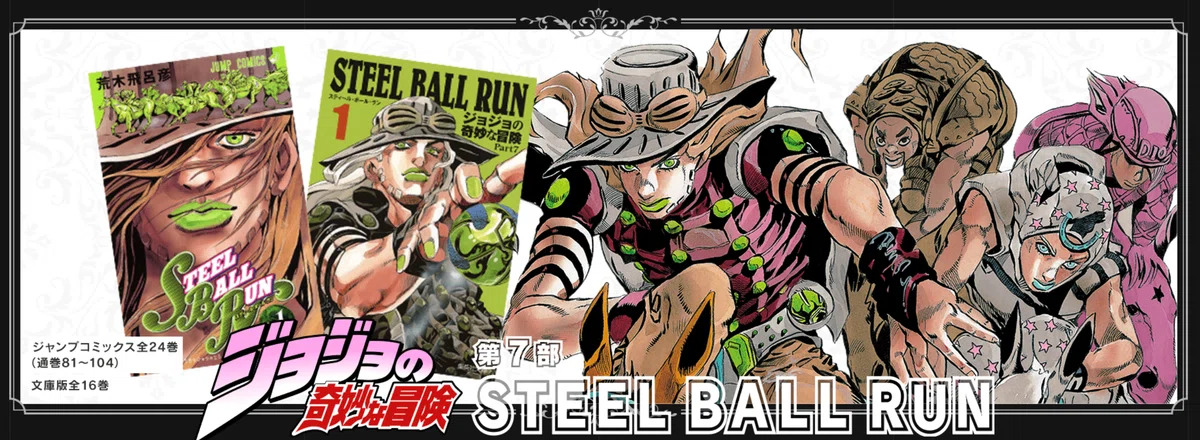
Kimura: The first thing I considered was the series' greatest strength. The answer was clear: the "buddy dynamic" between Johnny and Gyro. I made it a point to keep as much of their dialogue and interaction as possible. Also, while the original manga is 24 volumes long, the panels are large, which makes for a very smooth reading pace. We're trying our best to replicate that sense of rhythm in the anime.
Q: So the panel size was a factor?
Kimura: Yes. *Golden Wind* still had a classic shonen manga feel, but *Steel Ball Run* shifted from *Weekly Shonen Jump* to *Ultra Jump* during its run, giving it a more mature, seinen tone. If we just copied the directorial style of *Golden Wind*, it wouldn't feel right. We had to strike a careful balance between "how much JoJo-ness to keep" and "how much to tone down."
Take the onomatopoeia, for example—it's a hallmark of *JoJo*. But using it too much in the anime can feel jarring. So we made adjustments to satisfy long-time fans without making it feel over-the-top, aiming for a slightly more mature visual style overall.
Q: Let's talk characters. What do you find so compelling about Johnny?
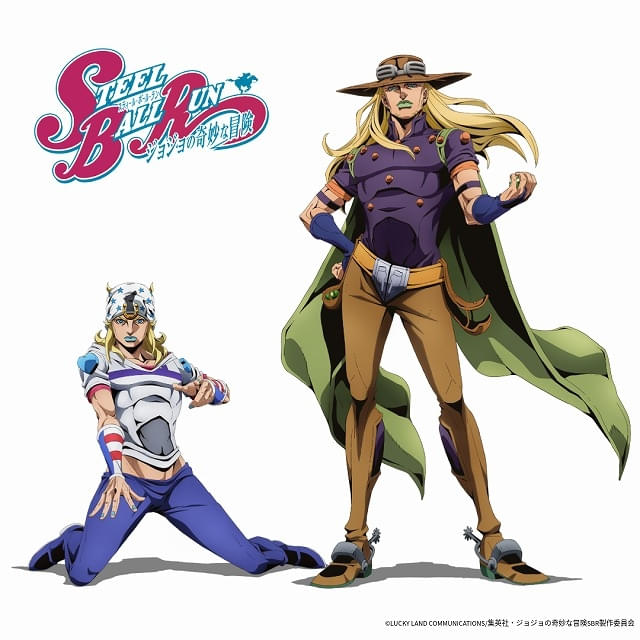
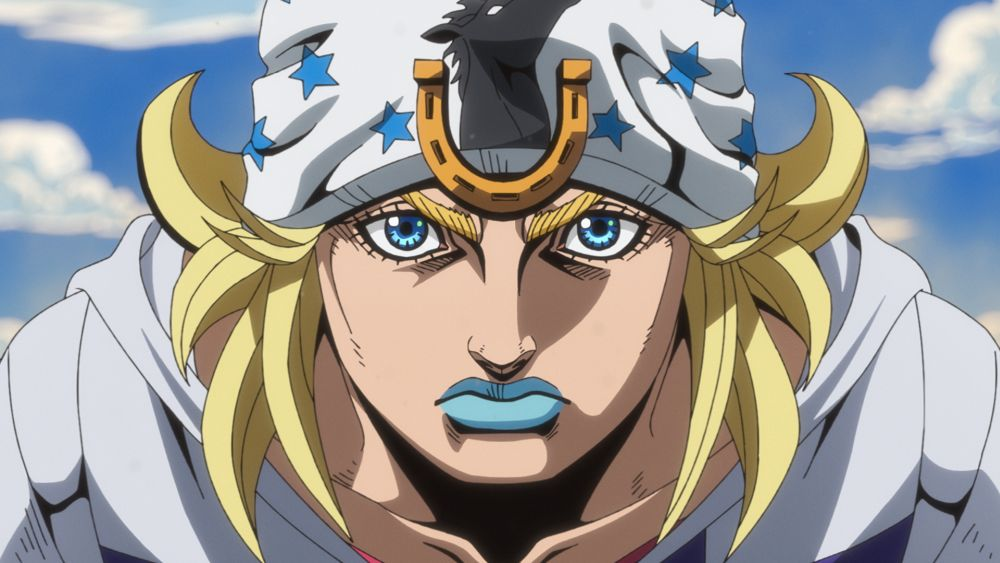
Kimura: He basically has no brakes (laughs). Once he decides he wants to do something, he goes for it without hesitation. I think that decisiveness is incredibly cool and a defining trait of his youth.
Q: Did you give any special direction to Johnny's voice actor, Shogo Sakata?
Kimura: Not really, because everyone did their homework and read the manga thoroughly. Shogo Sakata and Yohei Azakami, who voices Gyro, nailed their characters right from the start. That's why they were chosen during auditions.
Q: What about Gyro?
Kimura: During the "1st STAGE," he's still a bit distant from Johnny and hard to read. But he gets even cooler later on when he starts expressing his thoughts more clearly. Simply put, Gyro's charm is his unpredictability. He can seem friendly, but he's also ruthless. He has that goofy "Nyo-ho-ho" laugh, but he's terrifying in a life-or-death battle. We intentionally amplified that mysterious vibe where you never know what he'll do next.
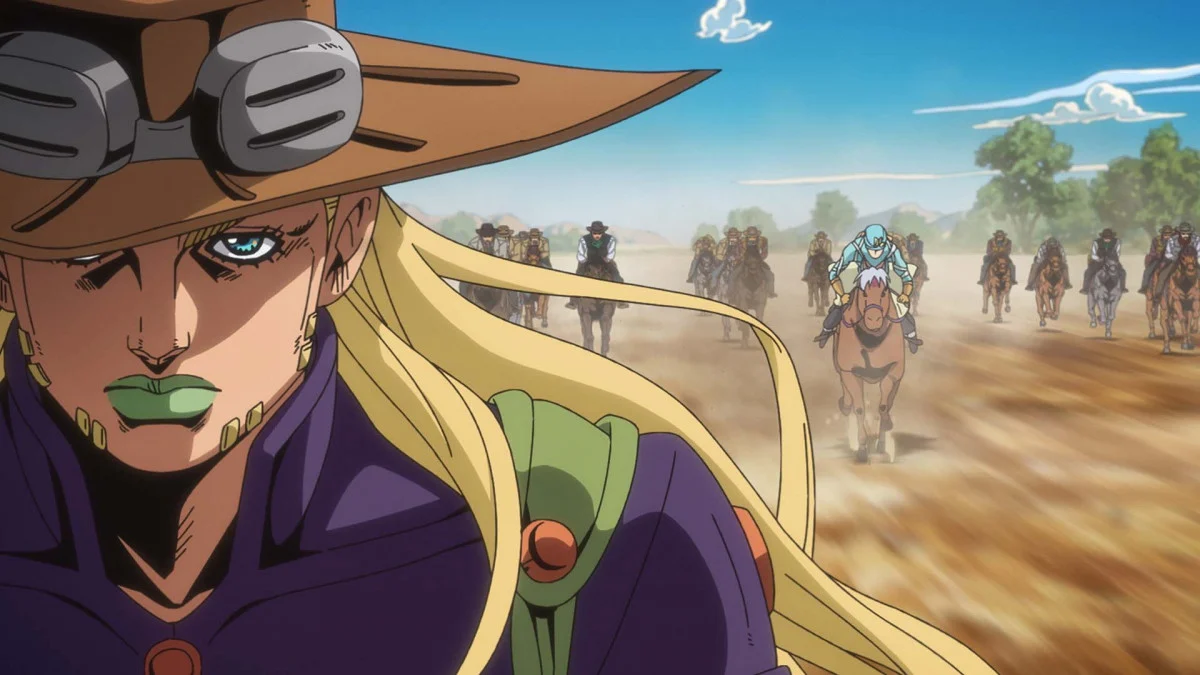
Q: The story is a cross-country race across America. How did you translate that into the animation?
Kimura: This is also a road movie across America, so we really wanted to capture that "feeling of a journey." I noticed while working on *Golden Wind* that the *JoJo* series has surprisingly few scenes of characters eating during their travels (laughs), usually because an enemy attacks the moment they try. So this time, even if it wasn't in the manga, we tried to add scenes of camping, cooking, and eating to build that journey atmosphere.
Art-wise, we have towns and buildings, but also vast, empty wilderness. We want the audience to feel that sense of scale. The visual mood changes with each region, and we hope everyone enjoys that variation.
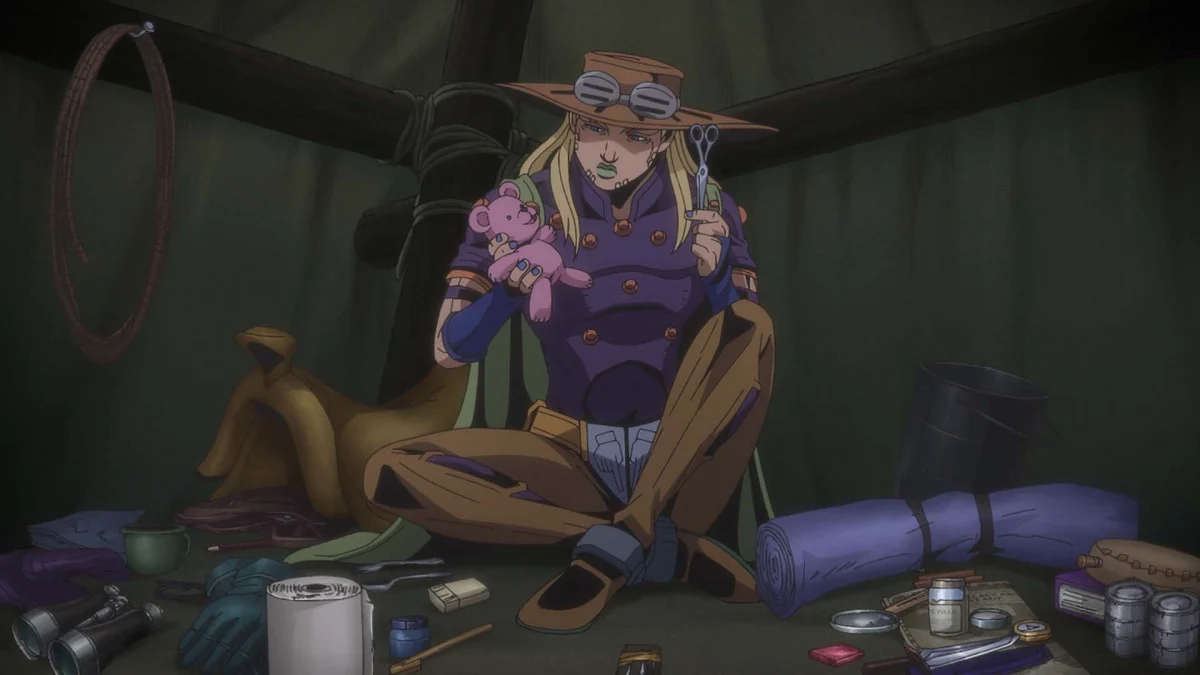
Q: I heard gathering research materials for 1890s America was tough.
Kimura: It was incredibly difficult. There's almost no relevant material in Japan, and online information wasn't enough, so we brought in a historical consultant. We had to verify everything from clothing, customs, and food to architecture to see what existed at the time. What's more, there are virtually no experts on the American Old West in Japan, so we ended up having Professor Hidekazu Nishikawa, an American history specialist, supervise the project.
Q: What was the main focus for the "1st STAGE"?
Kimura: The goal was to treat *Steel Ball Run* as a "racing story." We spent a lot of time fine-tuning things like the sense of speed and the rhythm of the race commentary. We put a ton of effort into the second half of the race in particular.
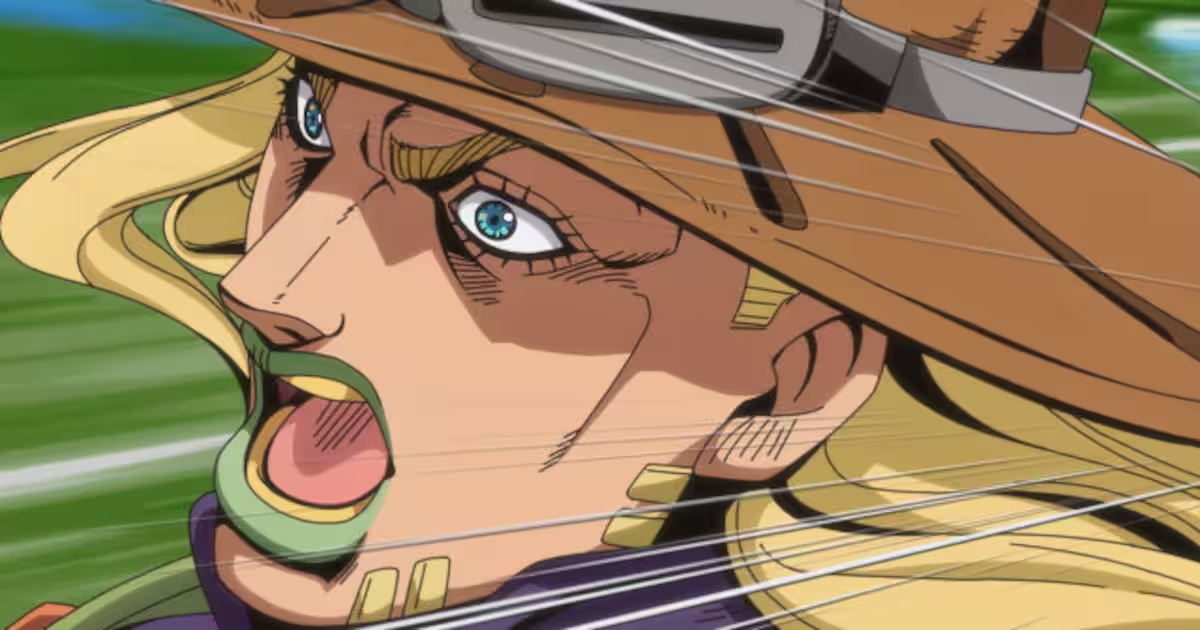
Q: Since it's a horse race, the horses must have been crucial.
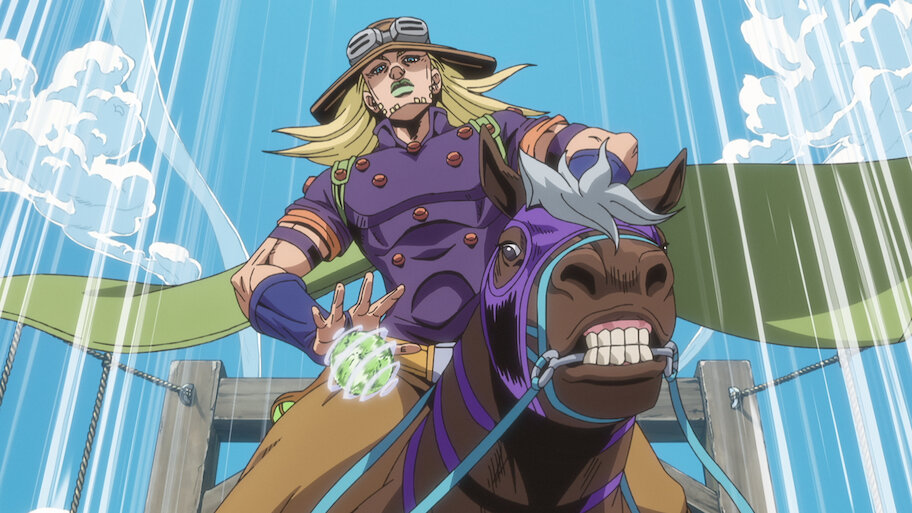
Kimura: The horses were the biggest hurdle from the very beginning. My job wasn't just to draw the most detailed horse, but to establish a "horse animation system" that could maintain stable quality and prevent breakdowns throughout the entire series. If we were only making the "1st STAGE," we could have aimed for higher quality, but this is a long-running project. The priority is to create a system where anyone on the team can draw the horses and maintain a consistent standard.
Q: Did you use any specific references?
Kimura: I actually went horseback riding. I realized their backs are triangular, and your line of sight is high and unstable. It makes you think, "It's insane they crossed America on these things!" (laughs). But we didn't replicate it with 100% realism in the anime. We studied many different ways horses run, but the more we researched, the more complex it got. It was impossible to animate it all perfectly, so we simplified it to create a unique running style for *Steel Ball Run*.
The entire series is expected to have over 5,000 shots featuring horses. Drawing them all by hand is unrealistic, so we had to design a production method that could maintain quality while considering budget and manpower.
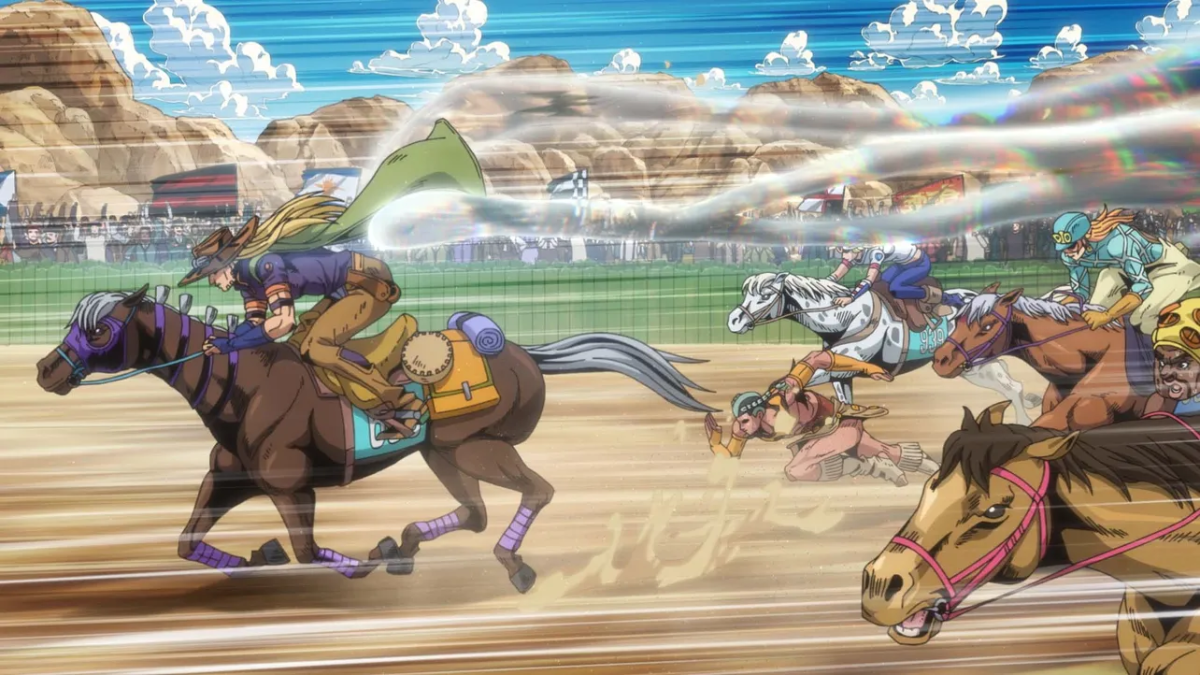
Q: How did you split the work between 3DCG and hand-drawn animation?
Kimura: Basically, if a horse is shown in a full shot (including its legs), it's likely 3DCG. But for specific angles featuring characters, we use hand-drawn animation. We assign the essential shots to the animators and use 3DCG for the rest to share the workload.
Q: Many manga fans are curious about how you animated Gyro's Steel Balls.
Kimura: The Steel Balls are a mix of hand-drawn and 3DCG animation. For the "1st STAGE," we also added an effect similar to "the Ripple" (Hamon). This is an anime-original touch, mainly to create a connection to past parts of the series. It's not exactly the Ripple, but the sound effects will have a similar feel.
We also focused heavily on the texture of the Steel Balls. The sound director, Yasumasa Koyama, had a tough time creating the spinning sound—he even bought actual steel balls to record the audio! (laughs).
Q: Finally, a message for the fans looking forward to the anime!
Kimura: Although this is a brand new series, it's easy to get into whether you're a long-time *JoJo* fan or a newcomer. Our entire team is pouring everything we have into this, so please look forward to it!
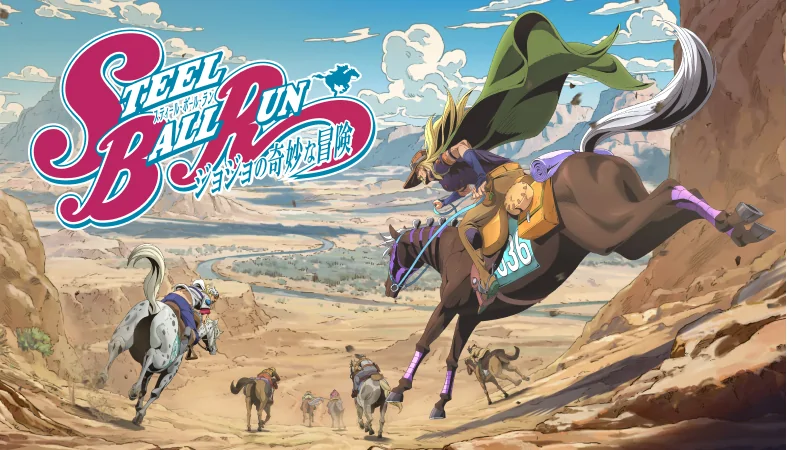
It's clear the animation team for *JoJo's Bizarre Adventure: Steel Ball Run* has gone to great lengths for this horse-racing-themed saga, investing significant resources and research to authentically portray 1890s America and tackle the massive challenge of animating horses.
While only one episode is out, it's well worth a watch to see the stunning production quality for yourself as we wait for more to drop.
via: 《JOJO的奇妙冒險》官方網站