

Ever wonder if all those hours spent catching 'em all actually did something to your brain? A new study from Stanford University suggests that extensive exposure to "Pokémon" during childhood might actually influence neural development, creating fixed responses to Pokémon characters in the visual cortex. The research team delved into the brain activity of both "Pokémon experts" and novices, aiming to unravel how early experiences shape brain development and organization.

Jesse Gomez, the study's lead author, revealed that his own journey with Pokémon began in first grade. This personal connection sparked an idea: the consistent visual stimuli experienced during childhood could serve as a "natural neuroscience experiment." He noted that back then, most players used handheld consoles, viewing the screen from similar distances and spending countless hours identifying hundreds of pixelated characters. These shared experiences, Gomez theorizes, might have prompted the brain to develop specialized regions dedicated solely to processing Pokémon.
To test this hypothesis, the research team employed functional magnetic resonance imaging (fMRI) to scan the brains of 11 Pokémon experts and 11 novices. Participants were shown various images, including human faces, animals, cartoons, and, of course, Pokémon. The results were striking: individuals who played Pokémon extensively as children exhibited specific response regions in their high-level visual cortex, and remarkably, the location of these responses was highly consistent across different subjects.
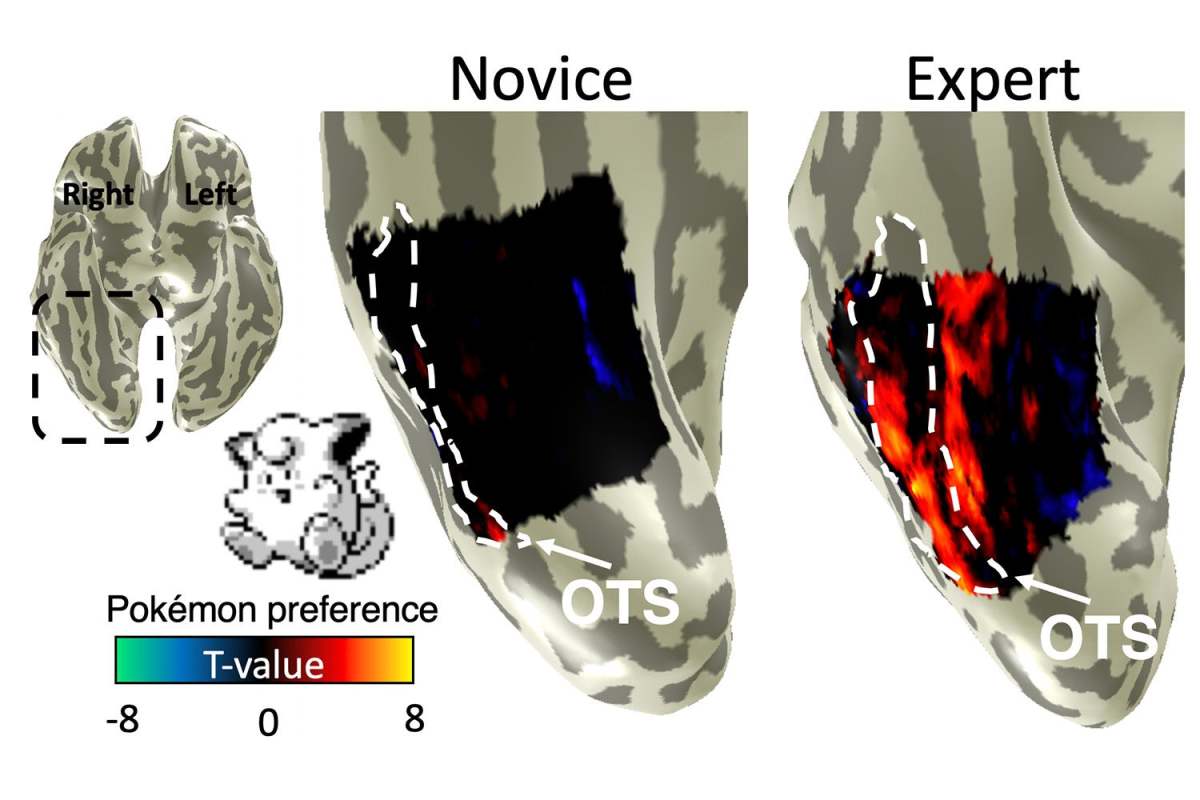
The study also highlighted that Pokémon characters activate the fusiform gyrus, a region typically associated with human face recognition. This finding supports the "eccentricity bias" theory, which posits that brain responses are linked to how stimuli are viewed on the retina. Researchers believe these discoveries not only deepen our understanding of brain development but could also open new avenues for research into visual issues like dyslexia or prosopagnosia (face blindness), underscoring the long-term impact of childhood visual experiences on brain organization.
via: Stanford Report