

"GACHIAKUTA," the hit series serialized in "Weekly Shonen Magazine" and adapted into a critically acclaimed TV anime last year, has captivated fans with its distinctive art style and character designs.
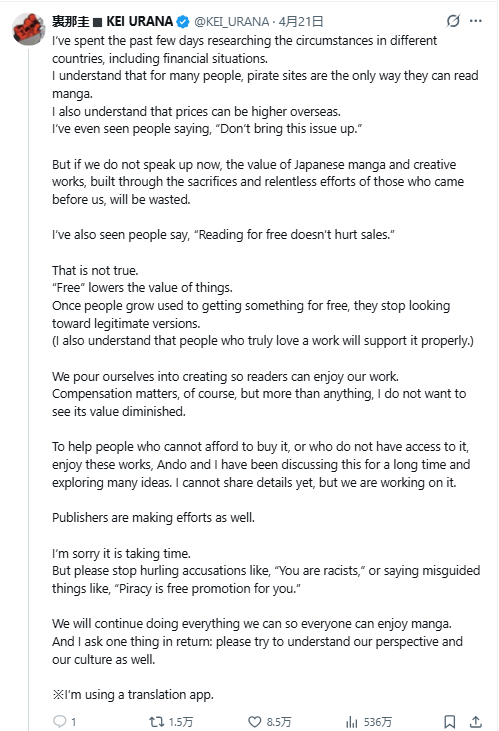
But author Kei Urana recently took to X (formerly Twitter) with a direct English message to overseas readers. She pointed out that an official English version of the manga is available and urged fans to stop consuming pirated copies. This plea, however, triggered a backlash from some international netizens who accused her of racism and even invoked Japan's past "atomic bomb" history to mock her, sparking a heated online debate.
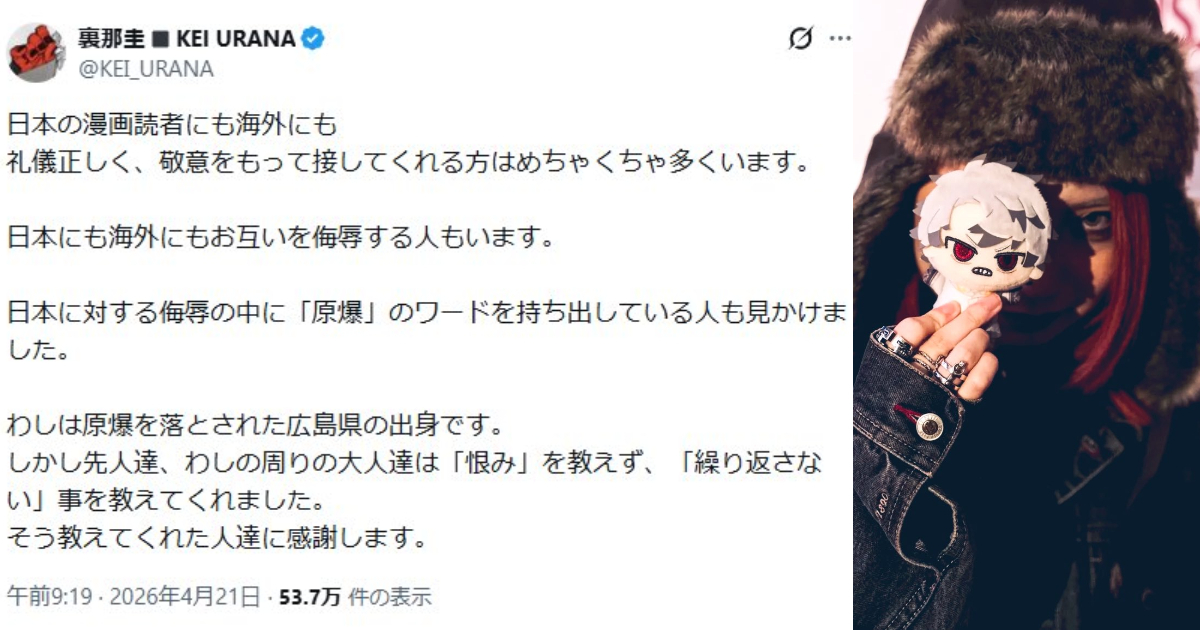
The whole thing kicked off when Urana noticed several overseas users posting and discussing manga that were clearly illegal online pirated versions. She didn't hold back, directly commenting on their posts to call out their consumption of illicit content.
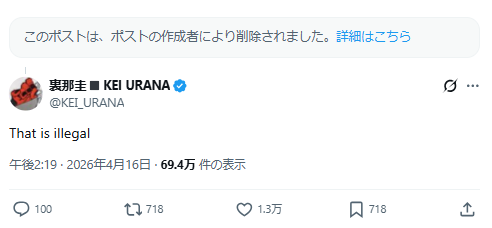
However, some netizens fired back, claiming they had no other choice. They argued that Kodansha's online manga is geo-restricted, and official English updates are slow, leaving piracy as their only option to keep up.
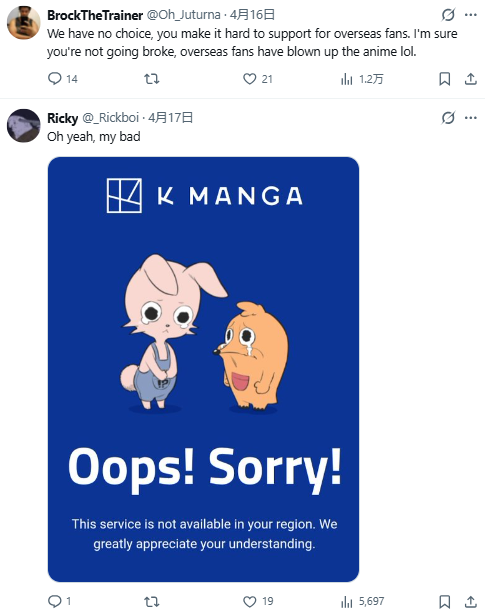
Urana acknowledged that many overseas manga readers are polite and respectful of creators. But she also highlighted that there are indeed some who use terms like "atomic bomb" to mock Japan.
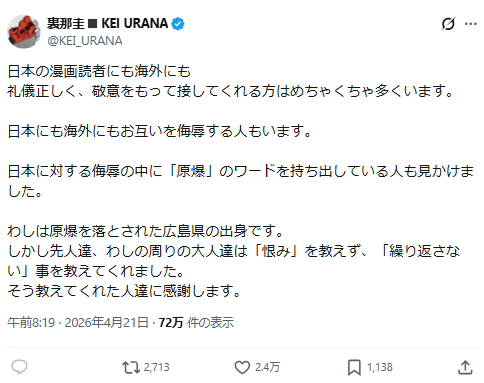
Addressing this, Urana candidly stated: "I come from Hiroshima Prefecture, a place where an atomic bomb was dropped. But my ancestors and the adults around me never taught me to harbor resentment. Instead, they taught me, 'Never let this happen again.' I am truly grateful for that lesson."
Urana also weighed in on the criticism regarding overseas accessibility, pointing out:
"I've spent the past few days researching the conditions in various countries, looking at economic situations and purchasing power. I understand that some people genuinely can only access works through piracy. I also know that prices can be higher in some overseas regions. I've even seen comments saying, 'Stop bringing this up!' But if we don't speak up now, the value of 'Japanese manga' and 'creative culture' that our predecessors painstakingly built will be utterly wasted."
She also noted comments like: "Watching pirated content for free won't affect sales anyway."
But that's simply not true," she countered. "The very act of 'free' consumption inherently devalues the work. Once people get used to free content, they become less inclined to engage with official releases. (Of course, I know true fans will still buy it.) We creators pour our hearts into our work solely so readers can enjoy it. While compensation is important, for me, what matters even more is—preventing the 'value' of the work from being diminished. For those who can't afford or easily access the work due to economic reasons, I've actually been discussing solutions with Shukichi Yantodo, who handles the graffiti designs, to find ways for everyone to enjoy the series. While we can't reveal details yet, we've brainstormed many ideas. The publisher is, of course, also working hard, and I apologize for the slower progress.
But please, stop with the accusations like 'You're all racists!' or 'Piracy is just free promotion!' These completely miss the point. We genuinely just want everyone to simply enjoy manga. And please, try to understand our Japanese perspective and culture a bit more."
This incident has now become a major online talking point. While Urana's direct comments certainly stirred the pot, it's clear many people need more accessible avenues to enjoy these works. However, resorting to accusations of "racism," "promotion," or even worse language to attack the author seems destined to only make the situation more toxic.