

With generative AI technology advancing at lightning speed, we're seeing an explosion of AI-generated videos and images using celebrity faces and voices without consent. This has sparked major concerns about legal issues like likeness rights and publicity rights.
Now, popular voice actor Kenjiro Tsuda is taking a stand. He's officially filed a lawsuit in Tokyo District Court, demanding that TikTok, the short-video platform, remove videos that unauthorizedly mimic his distinctive voice using generative AI. This case is once again shining a spotlight on the controversial issue of AI impersonating celebrity voices.

Tsuda is renowned for his deep, magnetic voice, lending his talents to iconic characters like Kento Nanami in "Jujutsu Kaisen" and Seto Kaiba in "Yu-Gi-Oh!" In recent years, he's also made a name for himself in live-action dramas.
According to the lawsuit, since July 2024, a TikTok account named "Hakkai" has been using generative AI to unauthorizedly imitate Tsuda's voice, creating and publishing over 180 narration videos. Tsuda's legal team argues that these videos infringe upon his "publicity rights"—the right of celebrities to capitalize on the commercial value derived from their fame and image. Consequently, they are demanding that TikTok's operating company remove the offending content.
The lawsuit was actually filed back in November of last year. Tsuda's lawyers report that TikTok's defense is that the narration in the videos is merely a "common male voice" and does not infringe upon Tsuda's publicity rights, requesting the court to dismiss the lawsuit.
So, how close is the imitation? Does it really sound like Tsuda's signature magnetic voice? You can judge for yourselves by listening to clips from the channel, compiled by Japanese netizens.
Given Tsuda's massive fanbase, many netizens have scoffed at the "common male voice" defense. They argue that a voice actor's unique vocal tone is absolutely their asset, and it's absurd to claim such a distinctive voice is "common." Fans are exclaiming, "Where exactly is this magnetic, sexy voice considered common?!"


Japanese netizens also believe that if Kenjiro Tsuda cannot win this case, the problem of AI voices will become even harder to regulate in the future. They hope this lawsuit will set a precedent to protect voice actors. 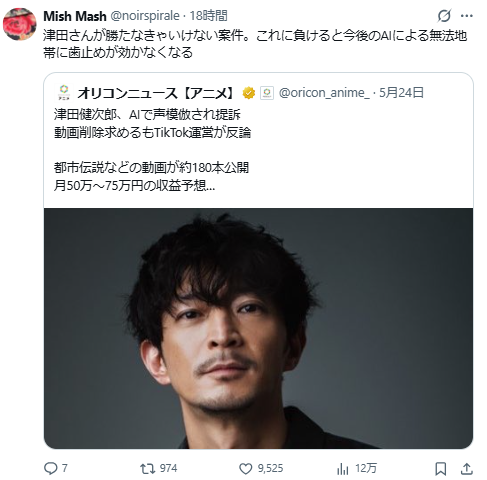
In fact, Japan's Ministry of Justice established a special review committee in April of this year to discuss the conditions under which liability for damages can be established when AI content is created using someone's face or voice without consent, aiming to further improve relevant legal frameworks.
Whether this lawsuit will provide a crucial precedent for the future remains to be seen as developments unfold.