

A nostalgic post about childhood memories has blown up on X in Japan, striking a chord with countless users who grew up in households with strict rules about video games.
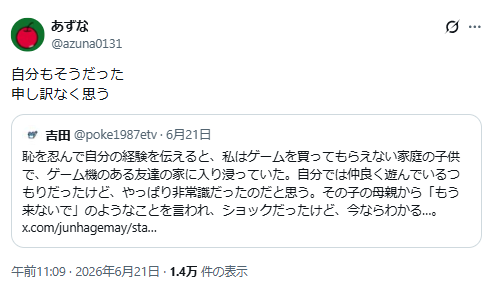
One user recalled how, without a console of their own, they spent every day at a friend's house just to play. The routine came to a crushing end when their friend's mom told them, "Don't come over anymore." While devastating at the time, the user now understands the parent's perspective. This has kicked off a massive discussion, with many sharing similar stories and debating whether banning kids from playing video games simply shifts the burden onto other families.
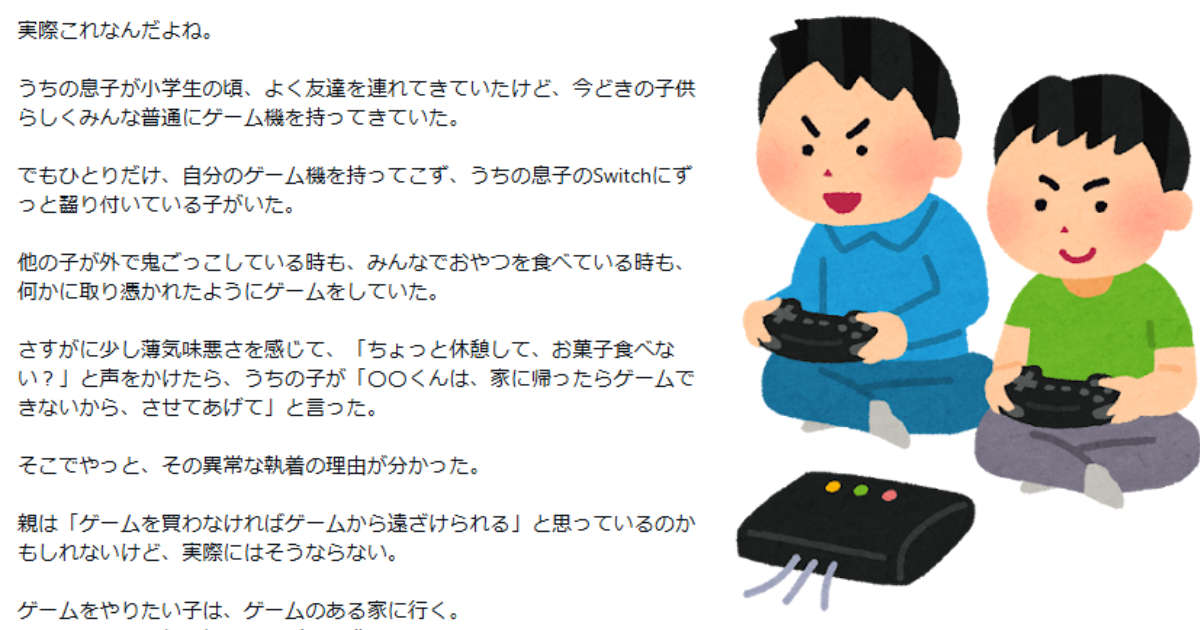
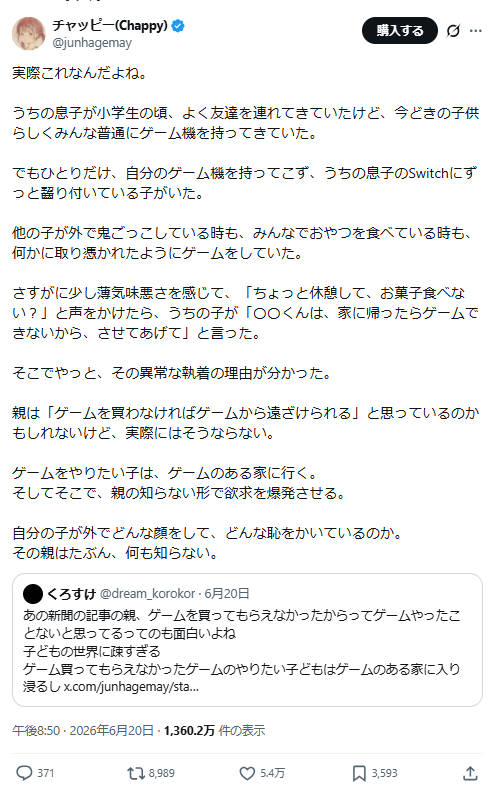
The conversation was sparked by a parent who shared a story about their son's elementary school friends. Most kids now have their own consoles and would bring them over to play together. But one child was different—he never brought his own console and would be glued to the son's Nintendo Switch all day, refusing to let it go.
Even when it was time for snacks, the boy was in a trance, his eyes locked on the screen. The parent grew concerned and gently suggested, "Hey, how about a little break for some cookies?" That's when their own son chimed in: "He can't play games at home, so just let him play."
In that moment, the parent understood the boy's unusual obsession. Some parents believe that not buying a console will keep their kids away from gaming. But the reality is, kids who want to play will just find a friend who has one. And when they're out of their parents' sight, all that pent-up desire comes rushing out.
The parent mused that those who enforce these bans probably have no idea what their kids are like outside the home, the awkward situations they face, or how they might be perceived by others.
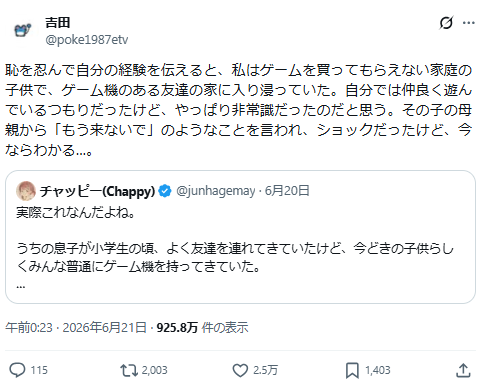
Another user shared the flip side of the story, recalling, "I grew up without a game console, so I was always at my friend's house." They admitted that at the time, they just thought they were having fun with their friend and never realized they might be an inconvenience. That all changed the day their friend's mother bluntly told them something along the lines of, "Don't come over anymore," which was a huge blow to their younger self.
Now an adult, they can see things from the parent's point of view. They added that the memory is still embarrassing and that their own mother likely had no idea her child was causing trouble for another family.
After these two posts gained traction, many people chimed in with identical experiences. Now parents themselves, some even said they're grateful that the other parent was direct enough to say something.
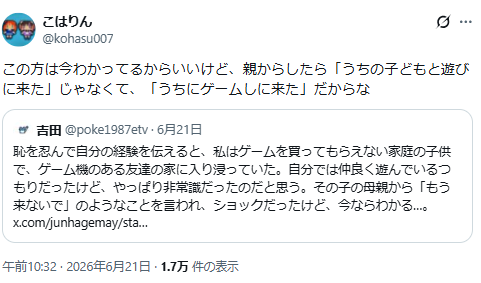
The story resonated deeply with other parents. One commented that from a parent's perspective, there's a huge difference between a child "coming over to play with a friend" and "coming over to play games at someone else's house."
Many others shared that they came from low-income families and could only play games at friends' houses. Looking back, they just want to thank the friends and parents who were so welcoming.
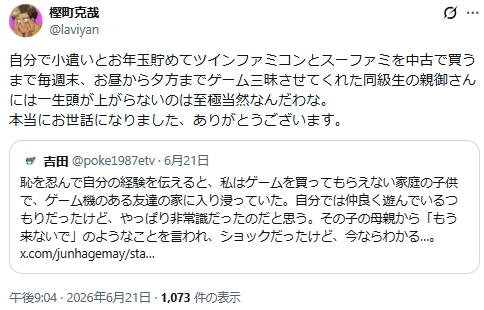
One user mentioned spending nearly every weekend at a classmate's house until they finally saved up enough allowance and New Year's money to buy their own console. To this day, they remain incredibly grateful to the friend's family for taking them in.
Of course, people who were on the "hosting" side of the situation had their own stories to tell.
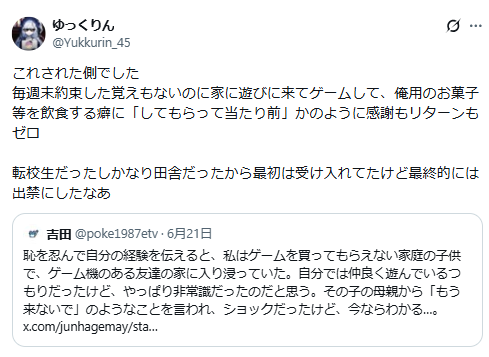
One person recalled a friend who would show up unannounced almost every weekend to play games, help themselves to snacks and drinks, and never say thank you or offer anything in return, acting as if it were all owed to them. Eventually, it became too much, and they had to ask the friend to stop coming over.
However, not all parents see it as a problem. Some said that as long as their own child doesn't mind, they're happy to let kids without consoles come over and play together.
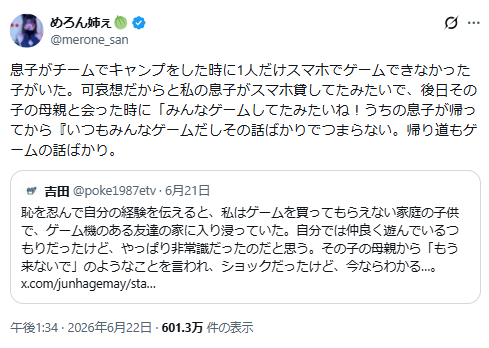
One parent shared an anecdote from their son's team camping trip. A teammate, whose family forbids mobile games, was bored while everyone else was playing. So, the parent's son lent him his phone. Later, the other boy's mother laughed about how her son came home complaining that everyone just talked about games all day and it was boring.
But looking back, the parent realized it probably wasn't that the boy hated games. It was more likely his way of telling his parents, "I want to play with everyone else, too." After all, to this day, that same boy still happily joins in on game sessions whenever he visits their house.
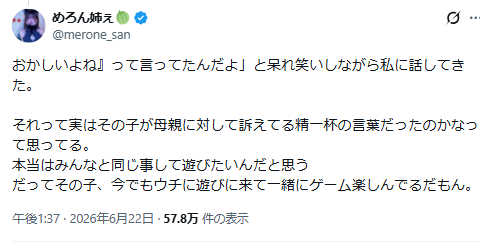
Ultimately, it's clear that for kids in these "no-games households," a ban doesn't stop them from wanting to play. If anything, seeing their friends play makes them want to join in even more to be part of the group, which leads to them becoming the "kid who only comes over to play games."
In more extreme cases, being forbidden from gaming can even lead to social difficulties, a challenge that parents on both sides of the issue have to navigate and understand.
via: X@junhagemay