

In recent years, classical concerts based on video game music have exploded in popularity worldwide, and many now see them as a vital source of income for orchestras.
A recent post on X sparked a viral discussion by pointing out that traditional classical performances have long struggled to cover their own operational costs, relying heavily on grants, donations, and foundation support. In stark contrast, video game concerts are attracting massive young audiences, forging an entirely different business model and shattering box office records that were once dependent on subsidies.

The conversation was kicked off by user Aakash Gupta, who noted that ticket revenue for U.S. orchestras covers, on average, only about one-third of their annual budget—and that's for the financially healthy ones. Since 2010, orchestras in cities like Philadelphia, Louisville, Honolulu, and Syracuse have all filed for bankruptcy.
Gupta argues that the business model for classical music has always relied on external subsidies. From Beethoven receiving an annuity from Viennese nobles to Wagner having his debts paid by the King of Bavaria, the core structure hasn't changed much. Today, that support comes from corporate and individual donors or foundations, but the fundamental problem remains: performance revenue doesn't cover costs, and the gap is filled by outside funding.
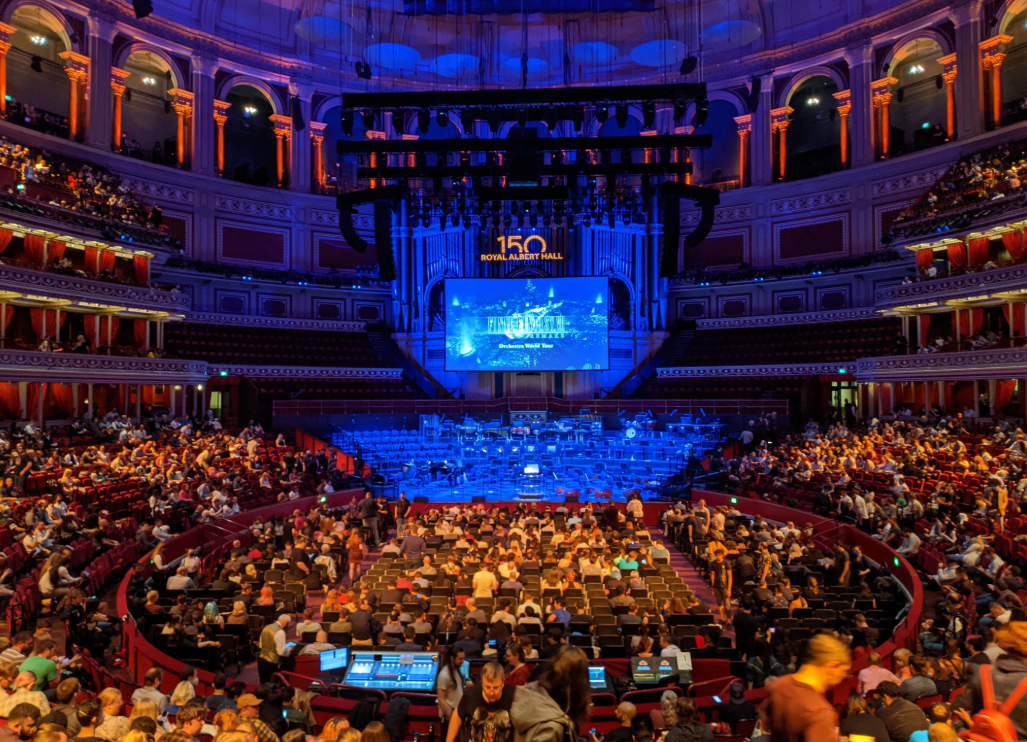
However, video game concerts seem to be breaking this long-standing model. Gupta points to the world tour for "The Legend of Zelda: Symphony of the Goddesses," which sold out numerous venues; the Final Fantasy VII Rebirth concert, which sold out the Royal Albert Hall in the UK; and the Sonic the Hedgehog concert, which packed London's Barbican Centre for three consecutive nights. The key to their success, he argues, is a completely different audience demographic.
The subscribers for traditional classical concerts are largely nearing retirement age, and the industry is losing older patrons faster than it can attract younger ones. In contrast, the audience for game music concerts is dominated by teens and twenty-somethings, some of whom even show up in cosplay. More importantly, these fans have already formed a deep connection with the music long before buying a ticket—they are absolute die-hards.
Gupta goes so far as to suggest that Nintendo composer Koji Kondo and *Final Fantasy* series composer Nobuo Uematsu have inadvertently created the largest "on-ramp" to orchestral music in history. For example, a 19-year-old who hears a 90-piece orchestra perform music from *The Legend of Zelda* for the first time might just become a long-term classical music patron.
As he puts it: "The 19-year-old at the Zelda concert tonight might be the Mahler subscriber of 2046." While Haydn needed aristocratic patrons to fund his symphonies, *The Legend of Zelda* can fill a concert hall with fans paying full price. Gupta sees this as a unique shift in the 300-year history of orchestras: for the first time, a large audience is directly covering the entire cost of a performance through ticket sales.
▼ The *Final Fantasy VII Rebirth* concert at the Royal Albert Hall in the UK
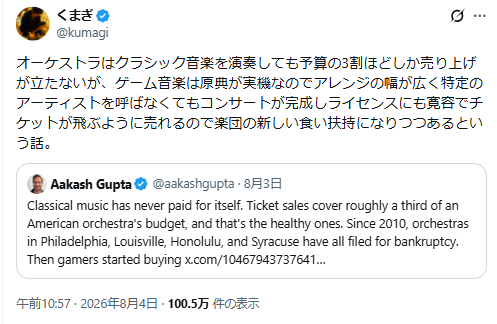
This discussion has also gained significant traction on Japanese social media. Japanese user "kumagi" pointed out that while classical performances typically only generate about 30% of an orchestra's income, game music offers immense potential for adaptation and can be arranged into full orchestral concerts without necessarily requiring the original composer's direct involvement.
Furthermore, licensing for some game franchises is relatively easy to secure, and the built-in familiarity among fans often leads to sold-out shows. In his view, game music is steadily becoming the "new meal ticket" for orchestras.
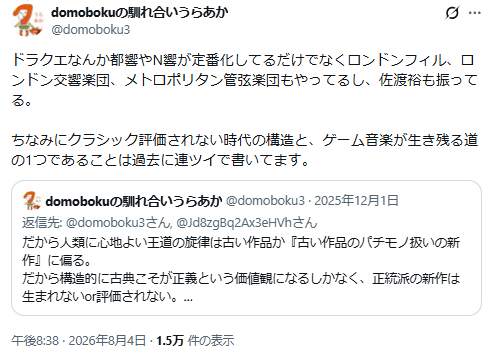
Other users noted that orchestral performances of game music are nothing new in Japan. The music of the *Dragon Quest* series, for instance, is frequently performed by the Tokyo Metropolitan Symphony Orchestra and the NHK Symphony Orchestra, and has even been performed by world-class ensembles like the London Philharmonic and London Symphony Orchestra.
Japanese composer Koichi Sugiyama's early work creating symphonic suites for *Dragon Quest* is widely considered a pivotal moment in the orchestral popularization of game music.
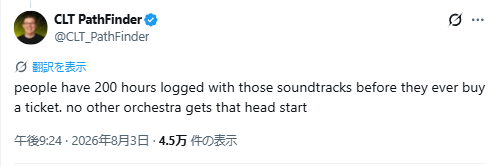
Another fascinating perspective emerged from the discussion: video game music may be becoming the classical music of the modern era. Netizens pointed out that contemporary game scores often feature large-scale orchestral arrangements. Unlike pop songs, they aren't constrained by airtime limits, and they aren't always vocal-driven, allowing for an incredibly rich diversity of musical styles. Most importantly, players hear this music on repeat throughout their gameplay.
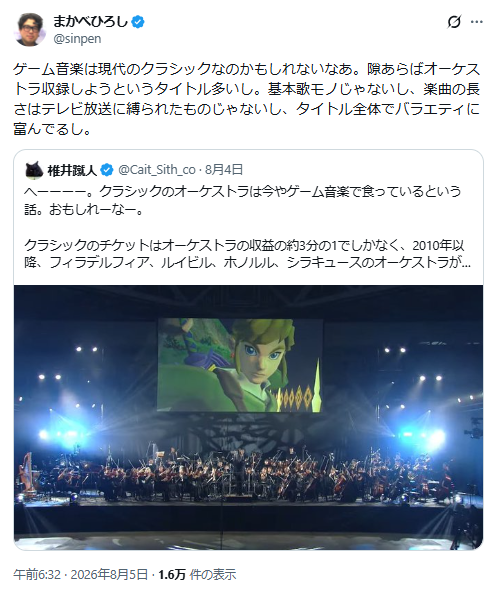
Some games are played for dozens or even hundreds of hours, giving players a level of familiarity with the melodies that far surpasses a first-time encounter with a classical piece. So when this music is brought to the concert hall, the audience isn't hearing it for the first time; they're experiencing a live performance of a soundtrack that holds years of accumulated memories.
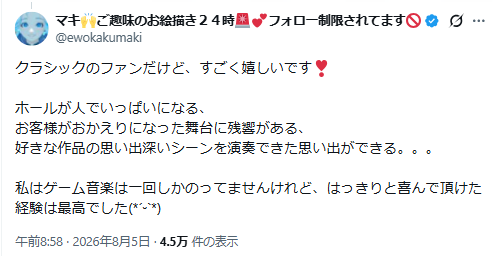
Although the original discussion mentioned that some classical musicians might resent "orchestras making money off game music," the reaction from Japanese netizens, including many classical music lovers, has been overwhelmingly positive. Most agree that if game music can fill concert halls and boost an orchestra's income, it's a win-win.
Some classical fans even expressed excitement about this trend, arguing that when an orchestra's revenue streams increase and its financial situation stabilizes, it has more freedom to tackle non-mainstream works instead of sticking to the safest, most classic repertoire.
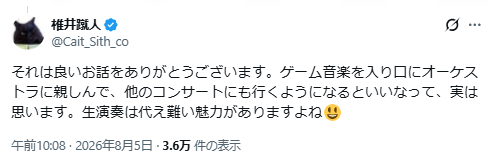
From *Dragon Quest* to *Final Fantasy* and *The Legend of Zelda*, the history of game music in the concert hall has been building for years. These scores, which were themselves influenced by classical music, are now being heard repeatedly by a younger generation through the medium of games, ultimately bringing them back to live orchestral performances.
Perhaps this isn't a case of "classical music being replaced by game music," but rather game music becoming a new pathway for orchestras to reconnect with the public. As the traditional classical audience ages and financial pressures mount, the ability of game music to attract young listeners—and potentially turn them into lifelong classical fans—may be crucial for the future survival of orchestras.
Instead of saying game music is stealing the spotlight from classical music, it might be more accurate to say: video games are bringing orchestras a whole new audience they could barely reach before.
Note: Financial figures and earnings forecasts should be confirmed through the company’s official announcements.