

In recent years, generative AI has been widely adopted across advertising, design, and promotional materials. In Japan, an increasing number of food and beverage businesses—and even major convenience store chains—have begun using AI-generated food imagery and marketing posters.
However, a recent post on X (formerly Twitter) sparked heated debate after a user pointed out that restaurants using AI-generated images are proliferating, often producing bewildering visuals with ingredients not even present in the actual dish. Many netizens chimed in, admitting they deliberately "avoid visiting" dining spots that rely on AI-generated promotional posters.
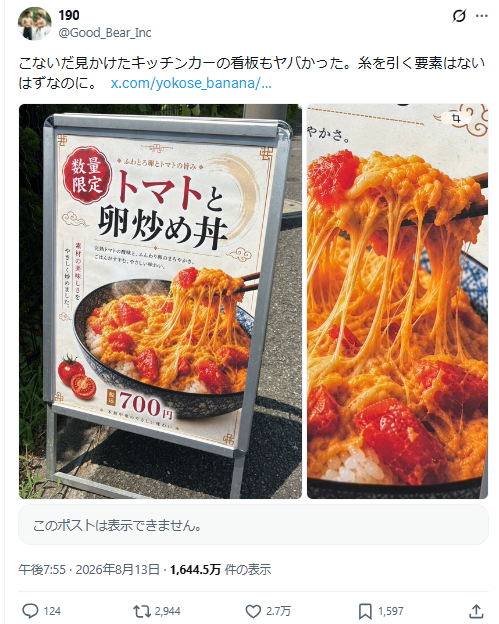
The controversy ignited when a Japanese user shared a photo of a food truck menu board. The signboard pictured a "tomato and scrambled egg rice bowl" featuring prominent, gooey "melted cheese pull" effects—despite the actual dish containing no cheese whatsoever. It became glaringly obvious that the image was an AI-generated fiction rather than actual product photography, leaving onlookers baffled as to why the vendor chose to use it.
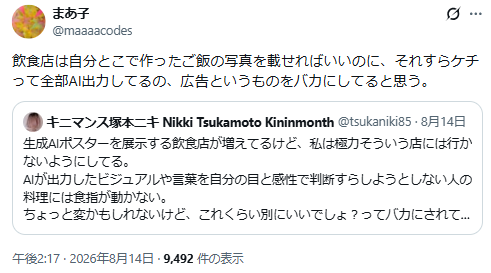
This incident prompted another user to share her own perspective, stating that she consciously steers clear of restaurants displaying generative AI posters. She explained: "If a shop lacks the dedication to carefully review AI-generated images and text with their own eyes and sensibilities, it's hard to believe they put any genuine passion into their cooking."
She added that such practices give off an aura of laziness—a sense of "this should be good enough"—leaving patrons feeling dismissed as customers who would settle for subpar standards. The post quickly resonated with thousands of netizens.
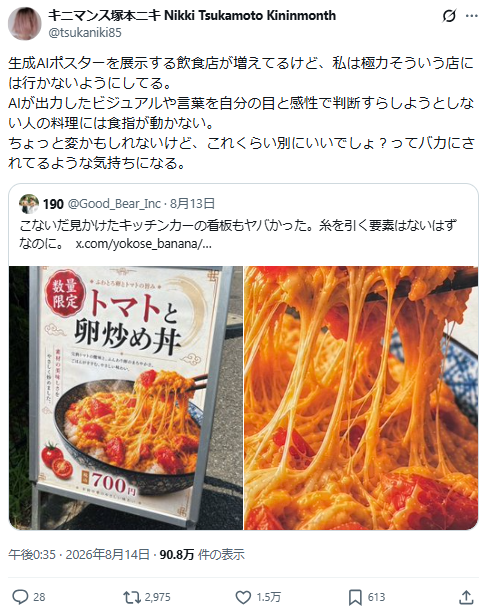
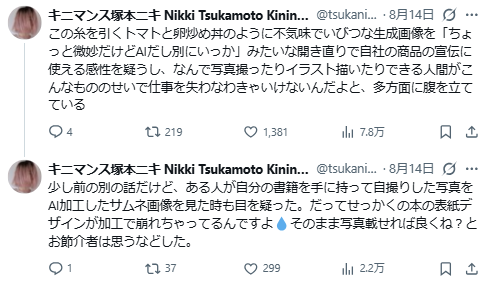
The poster also criticized the attitude of turning a blind eye to blatantly weird visuals simply because "it's just AI." She questioned why low-effort AI imagery is being adopted at the potential expense of professional photographers, illustrators, and creators who possess genuine craft and expertise.
Following the online backlash, the food truck in question, GOTOU kitchen car, issued an official apology on social media, admitting to using AI-generated imagery on their signboard that misled customers into thinking the meal contained cheese.
The vendor clarified that the actual ingredients consist solely of egg and tomato with no cheese, pledging to replace all images on their physical signboards and social media channels with real photographs of their food.
Many netizens argued that the most fundamental aspect of restaurant marketing is showcasing the actual food prepared by the kitchen, calling the practice of generating food from scratch via AI inherently unnatural. As one user remarked: "Why not just photograph your actual dish and use AI to assemble the poster layout? Why generate the food itself from thin air?"
Others were blunt, suggesting that such practices make customers doubt whether the shop even cares about the food it serves. In the eyes of these consumers, glitches and inaccuracies on AI posters are not merely "bad graphics"—they serve as a red flag regarding whether an establishment genuinely values product quality and customer integrity.
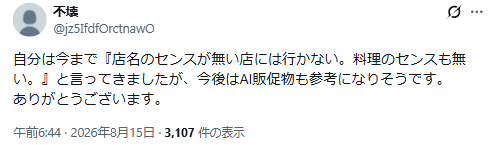
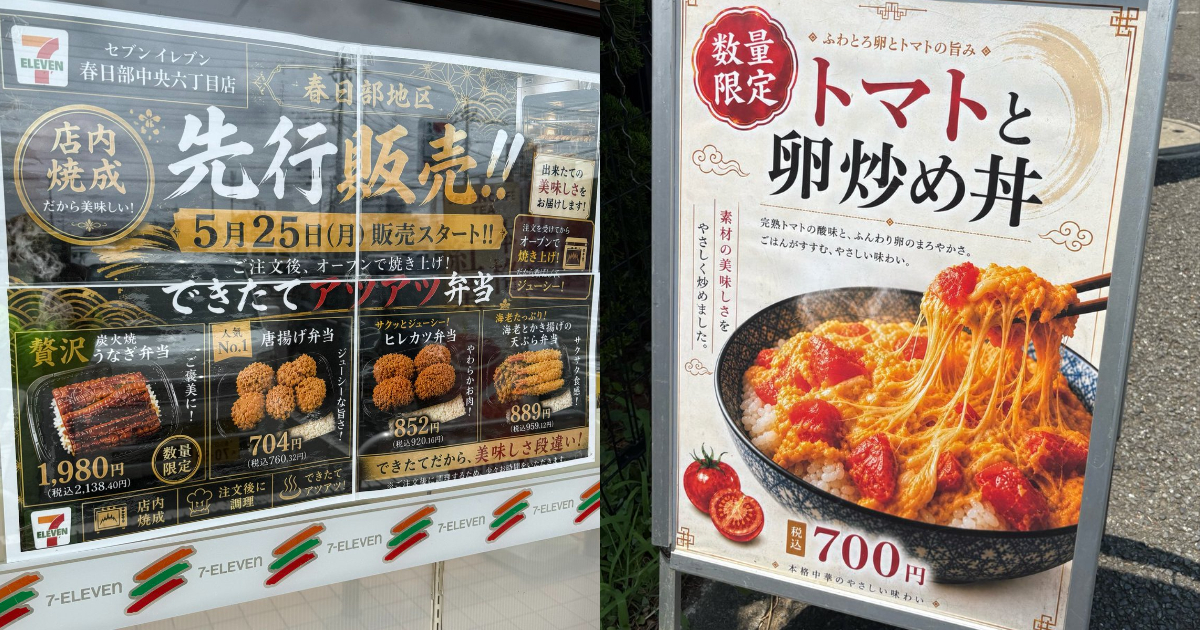
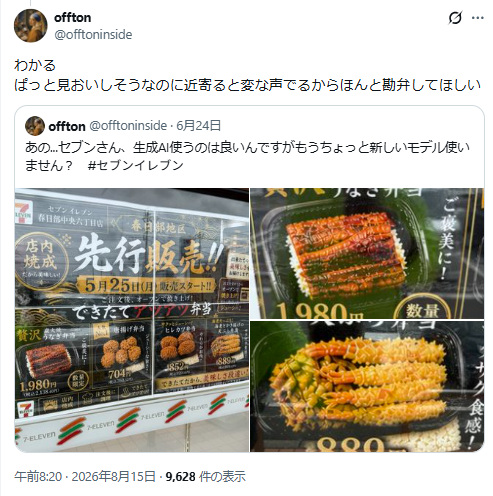
Some users also noted that even major brands like 7-Eleven Japan have started rolling out AI-generated images for product promos, questioning why authentic products are being marketed with jarring, obviously fake visuals that degrade the consumer experience.
This controversy elevates the debate beyond "whether restaurants should use AI advertising" into a broader cultural question: as AI makes content generation effortless, are businesses and creators losing their commitment to quality, authenticity, and attention to detail?
If convenience continues to supersede craftsmanship as the default, the flood of disjointed, artificial images and videos in our everyday dining and shopping spaces may only be beginning.