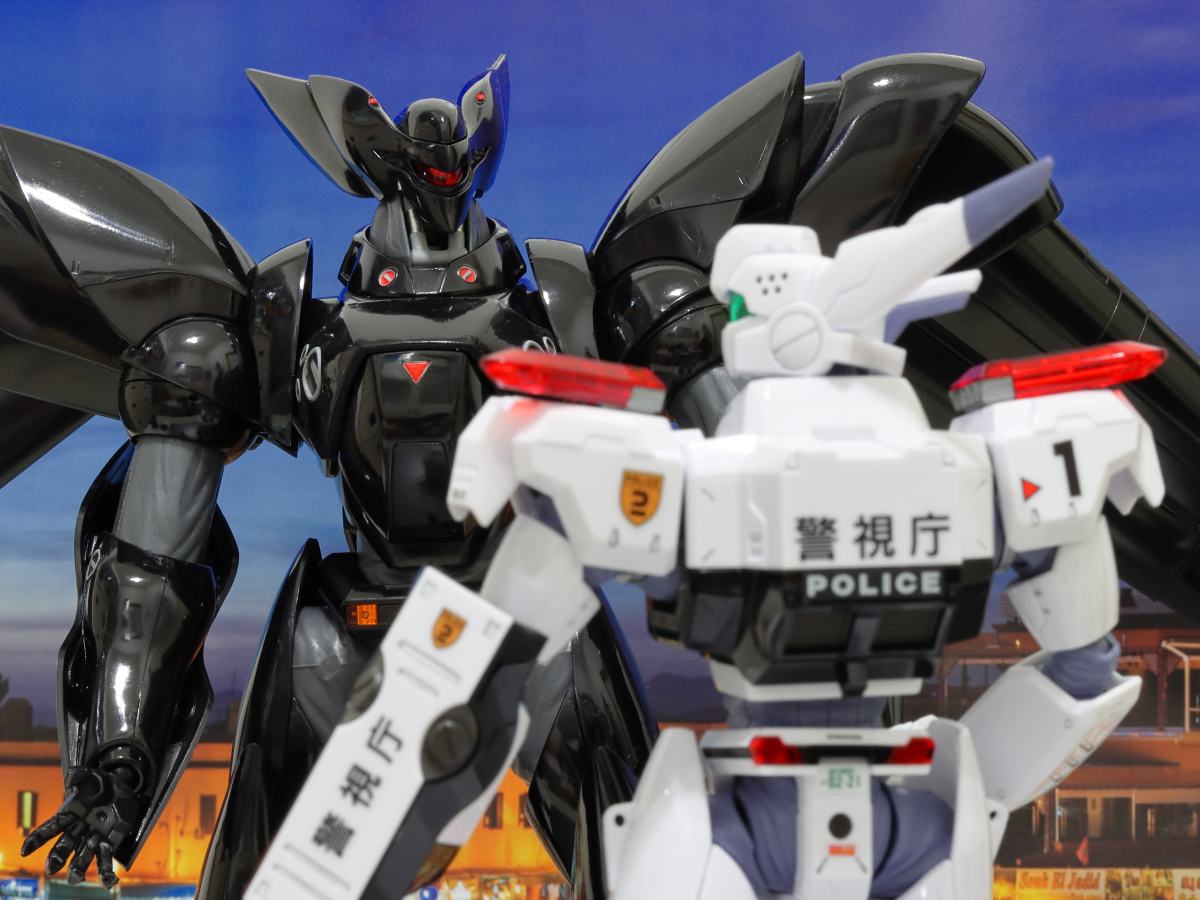
SV2, Towa Kuga, moving out!

After years of silence following its new project announcement in 2017, the classic slice-of-life mecha anime has finally returned this year with a brand-new story, Patlabor The Mobile Police: EZY. For fans who have always loved the Ingram's timeless black-and-white design, seeing it brought to life again with modern production standards after more than 30 years is a truly special occasion.
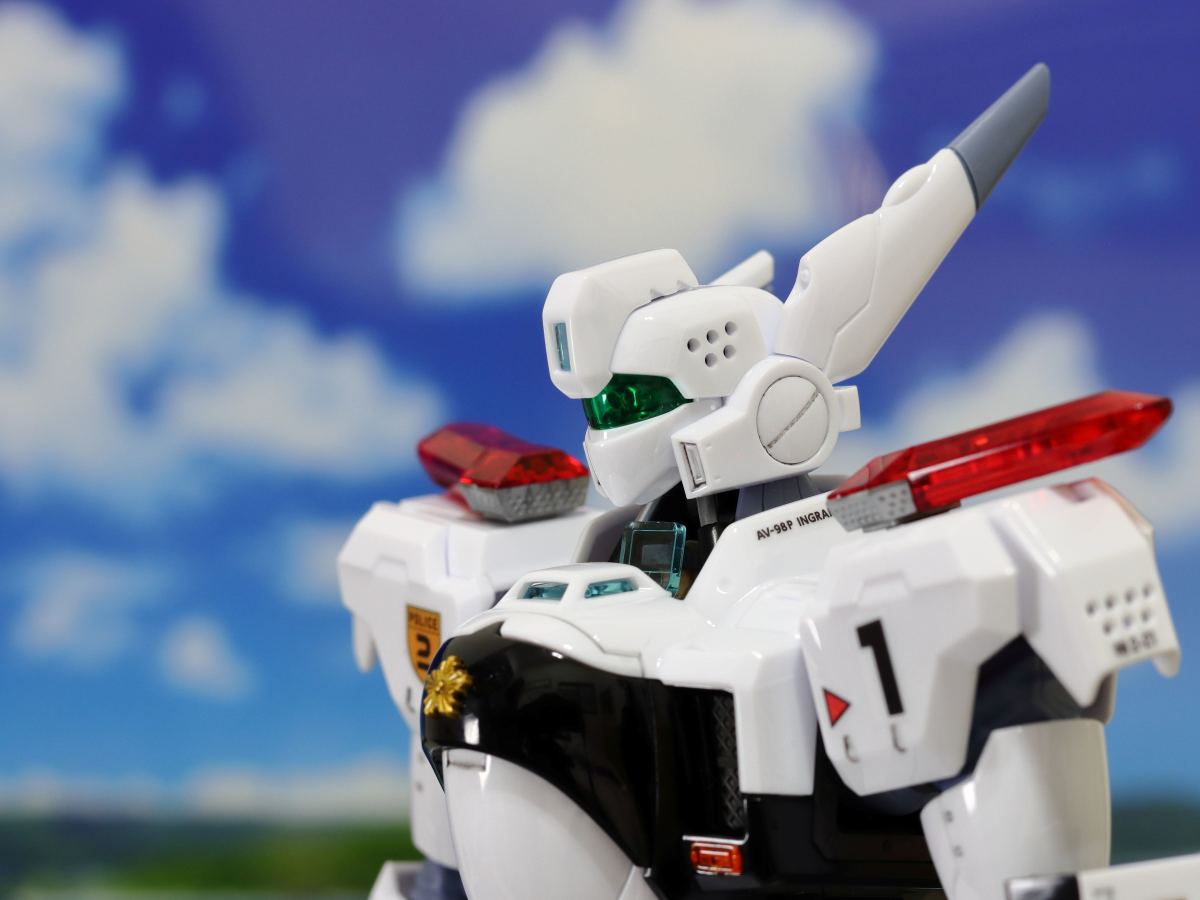
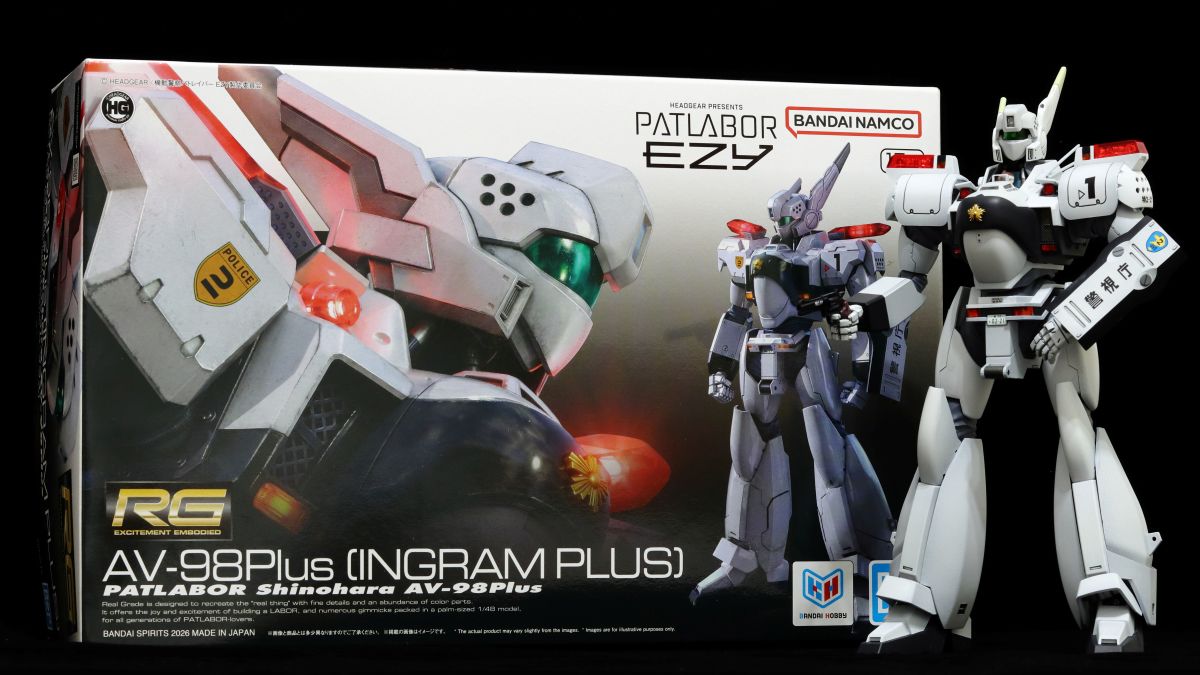
Following the recent Gunpla news reveals, this Ingram Kai is confirmed as the one and only standard-release Real Grade kit for the year, making it both the best and worst of the lineup by default. While this unboxing is coming in super late, we're still going to stick with tradition and give it a thorough look.
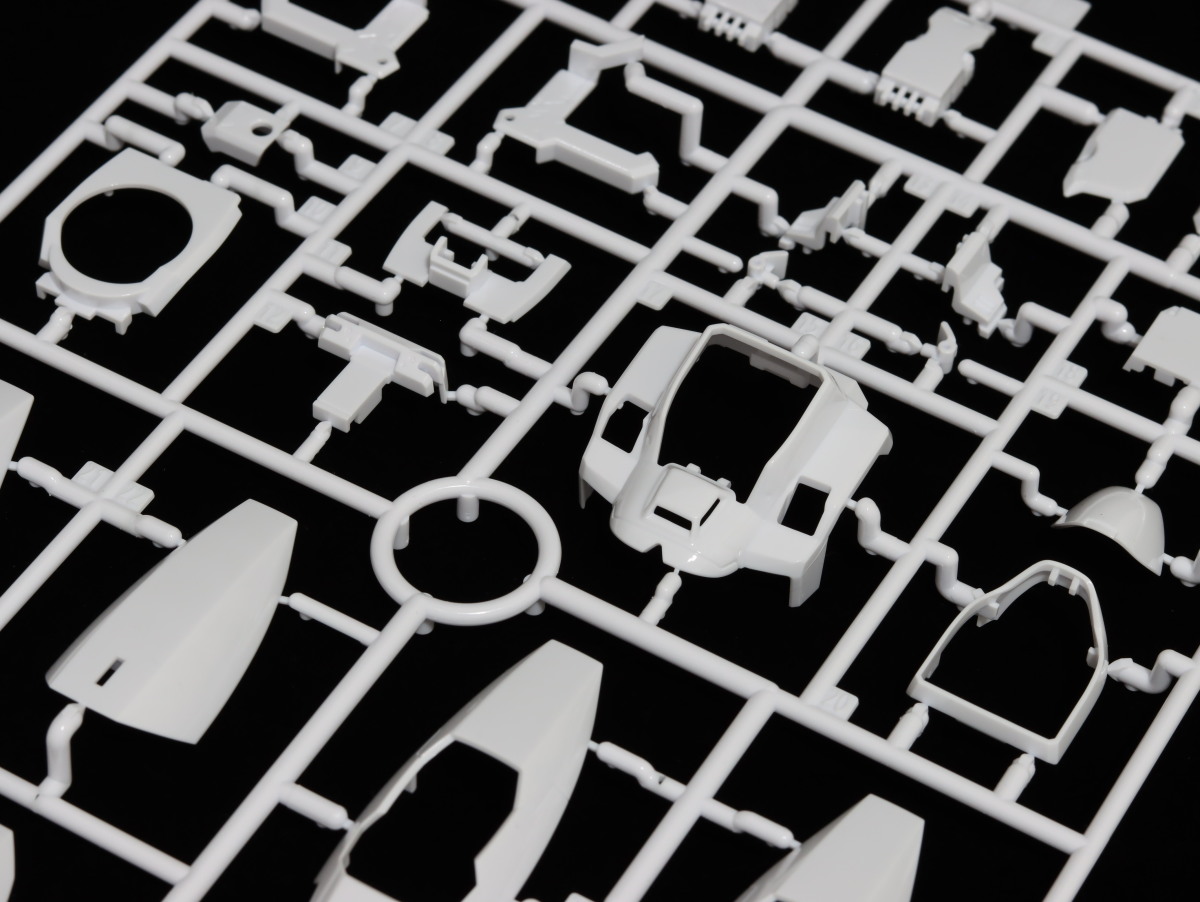
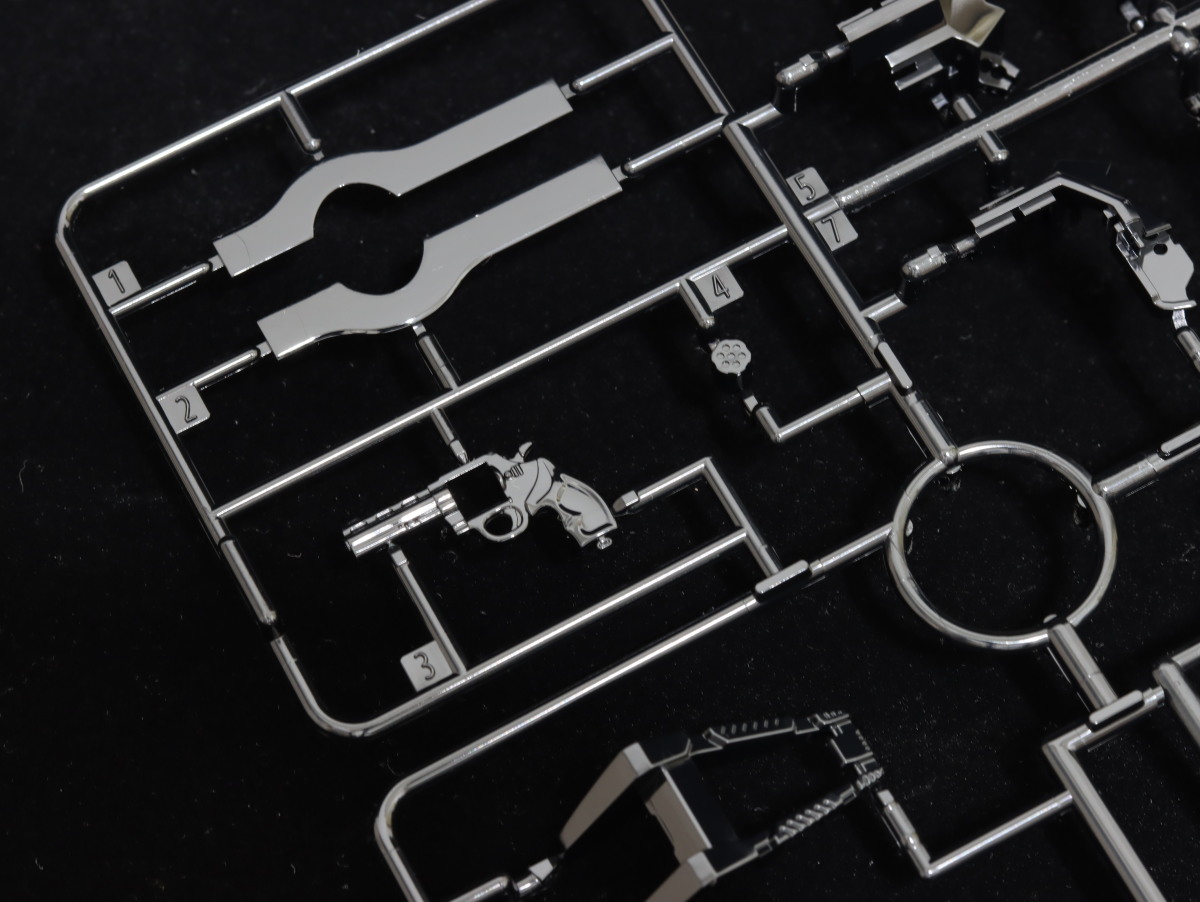
A key feature of this kit's runners is that the main outer armor parts are all treated with a high-gloss finish, giving them a surface as smooth as a freshly waxed car body.
The black parts share the same smooth, mirror-like finish, making even the revolver cannon shine like new.
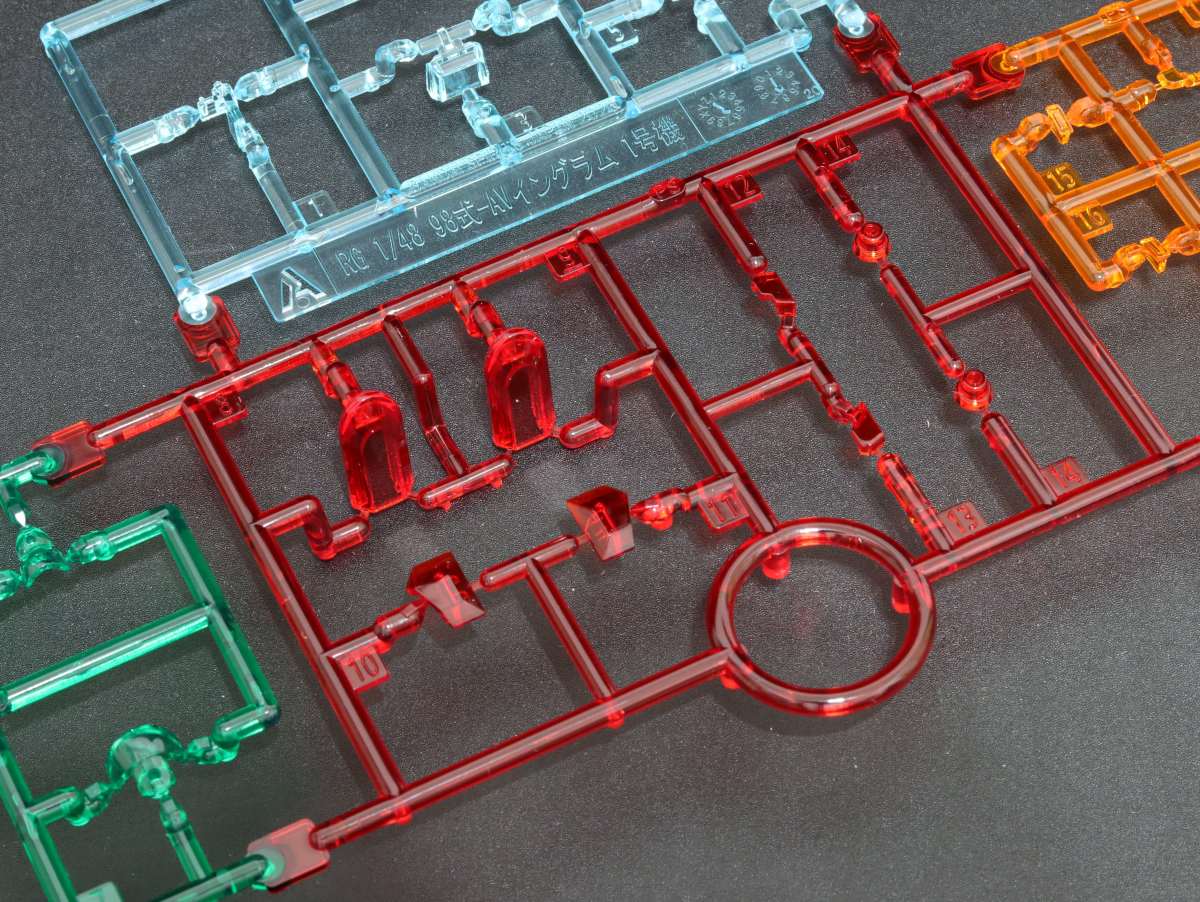
This time, the multi-color injection runner integrates the various decorative clear parts used on the Ingram Kai, such as the warning lights and face shield.
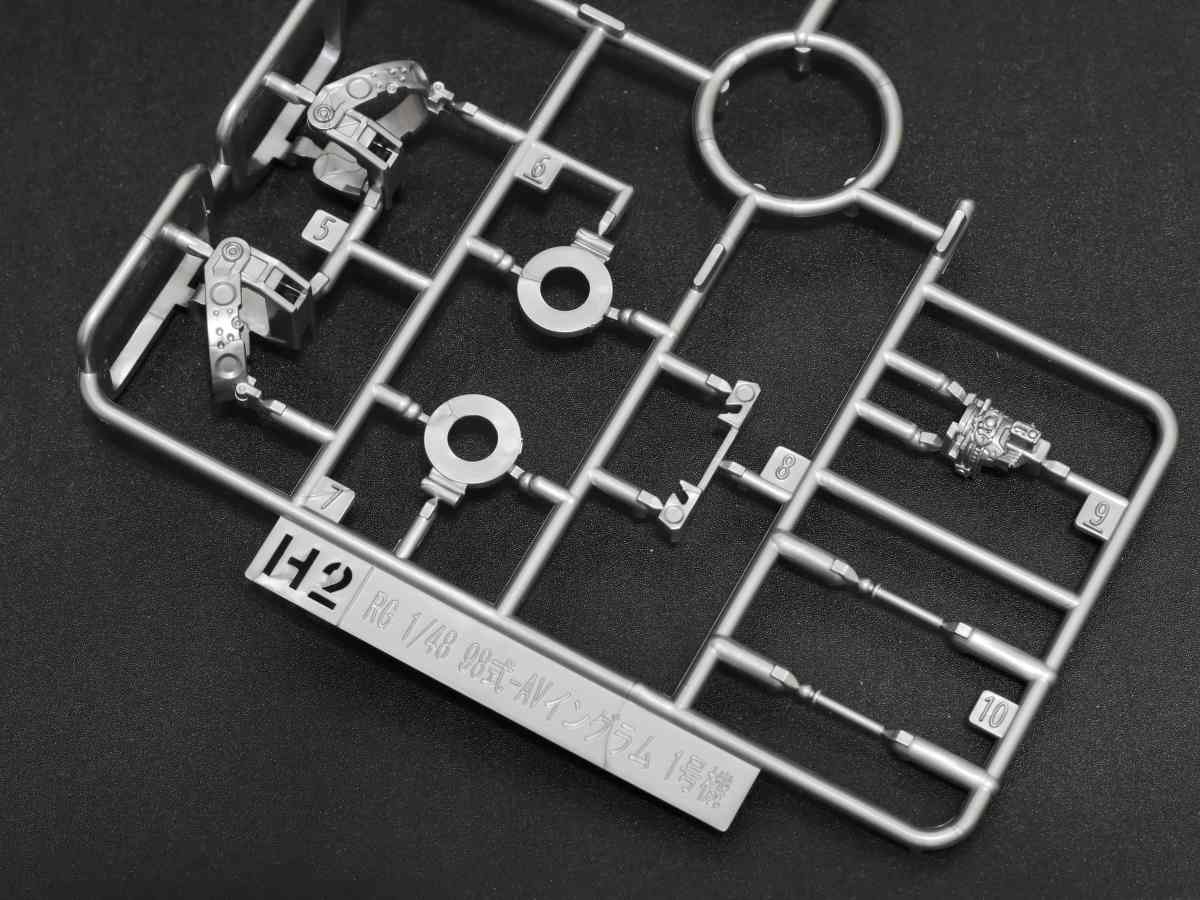
The silver runners utilize the realistic metallic injection molding technology that has become quite common in recent years. This brilliant visual presentation adds a significant layer of realism to the inner frame details.
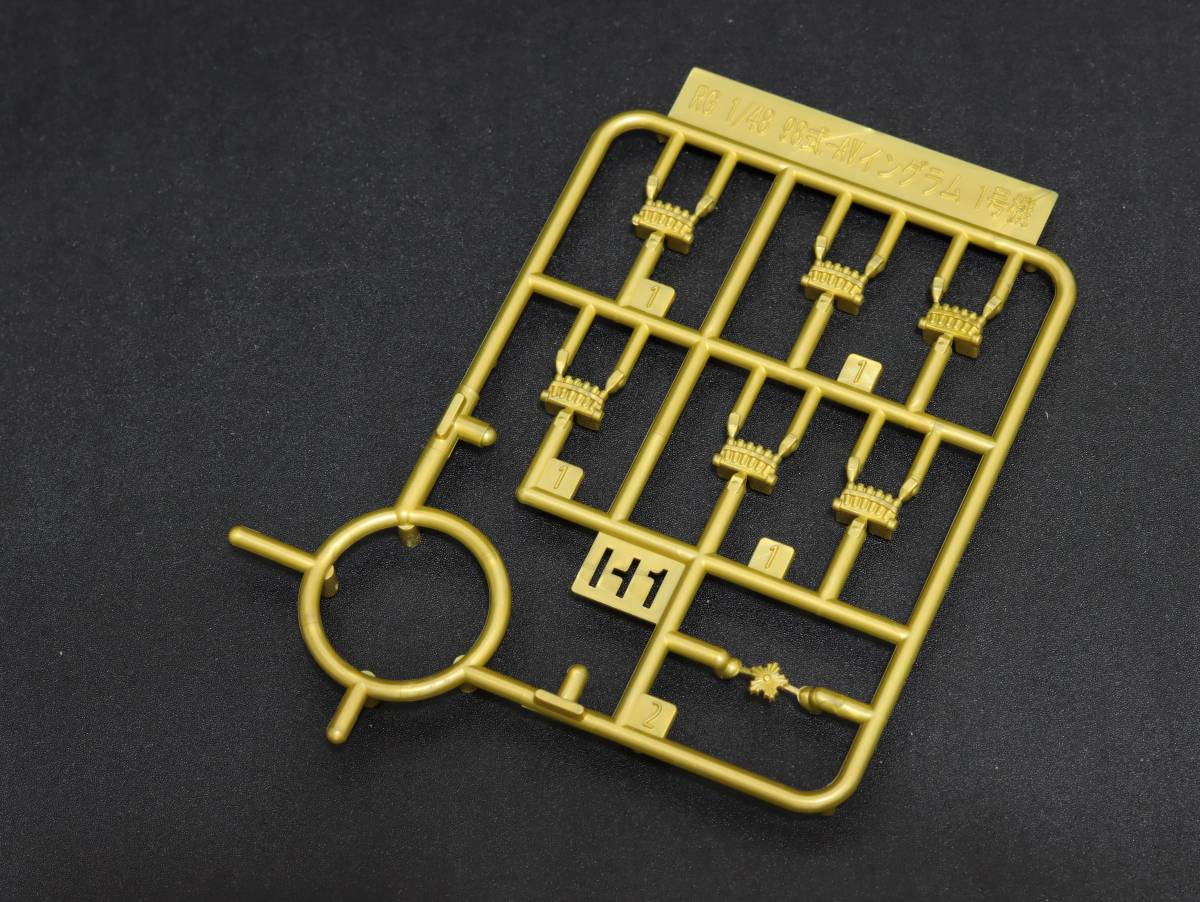
However, the gold is a bit underwhelming. While it's not the cheap-looking "poop gold" plastic, it feels like a step down compared to the early MG Patlabor kits, which provided a plated part for the chest emblem. The RG feels a bit stingy in this regard. For a better look, a little bit of spray painting will be necessary later on.
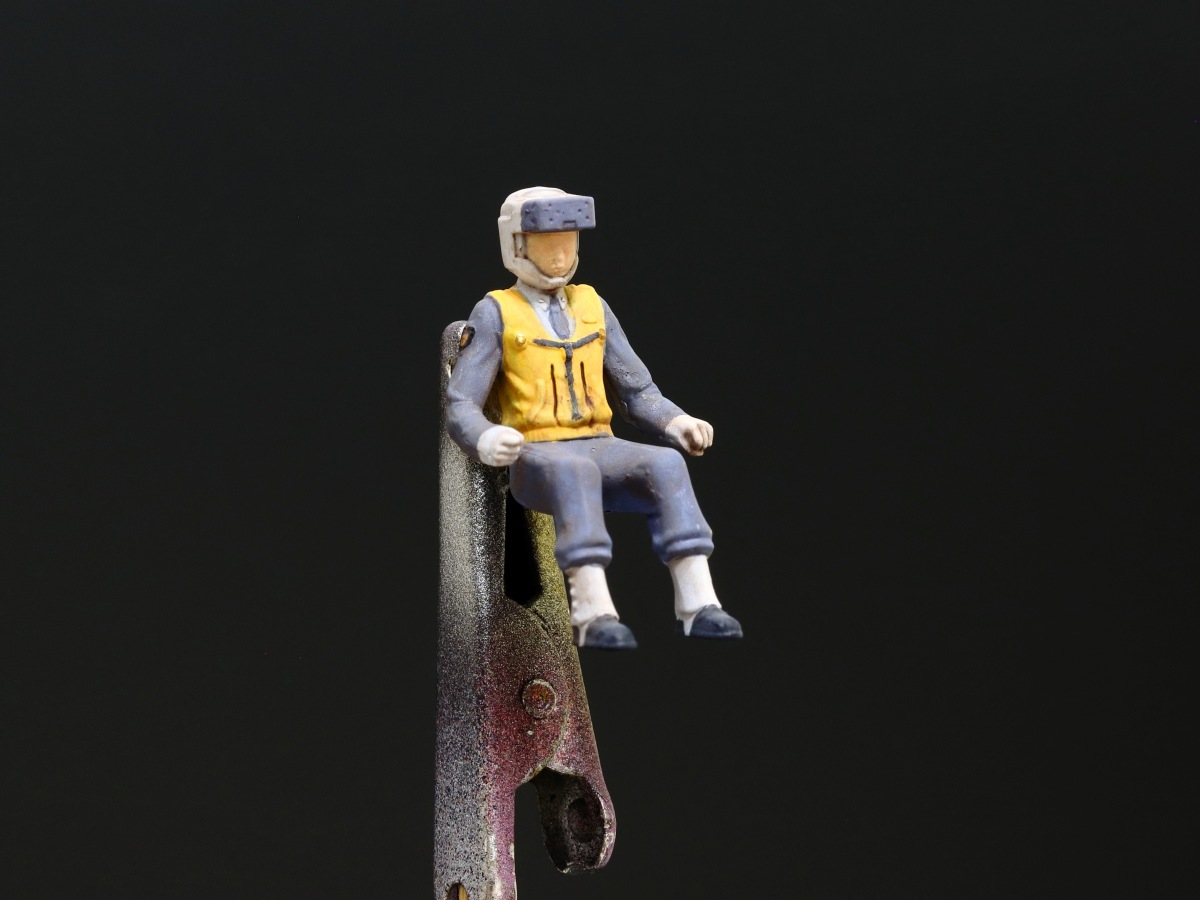
Another part requiring some color correction is the new pilot for Unit 1, Towa Kuga.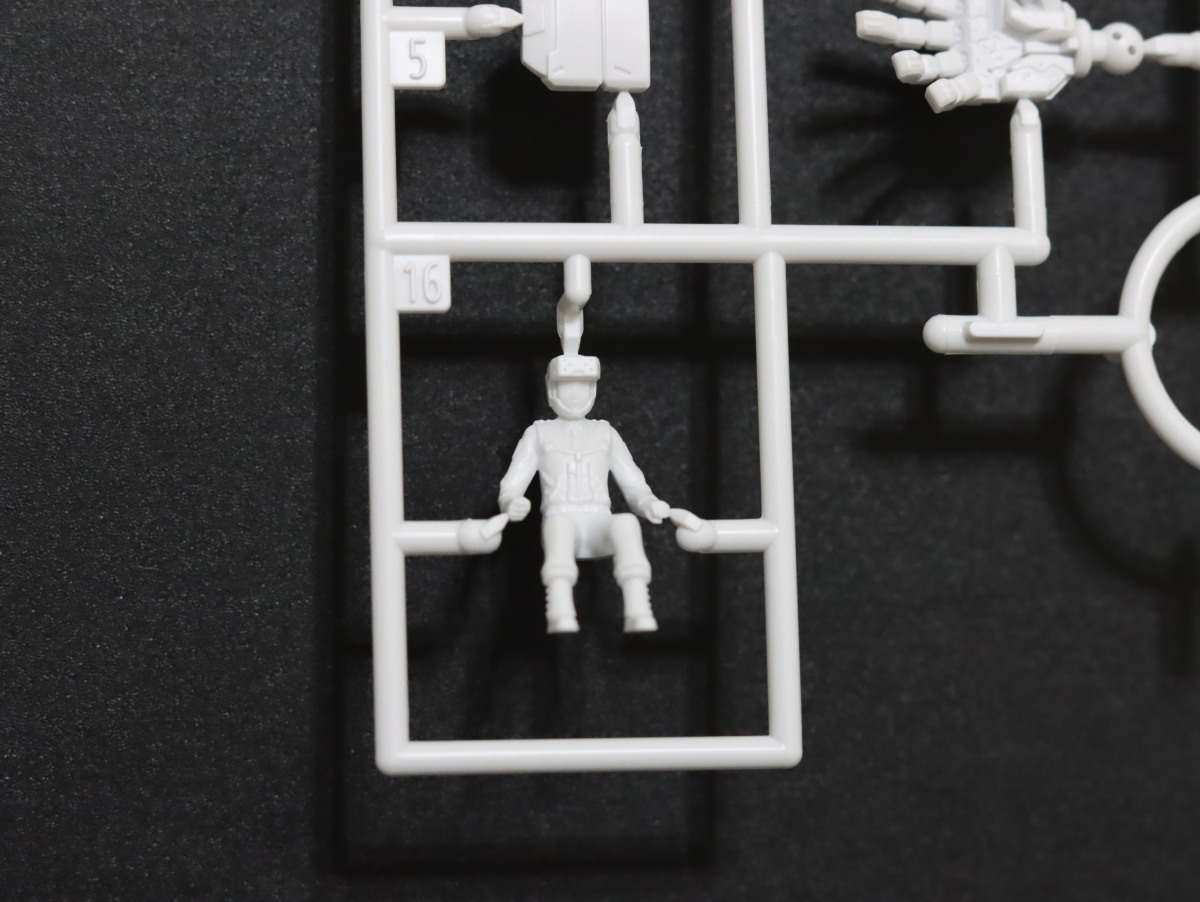
Compared to the pilot figures included with the old MG kits, the molding detail on this RG figure is incredibly fine.
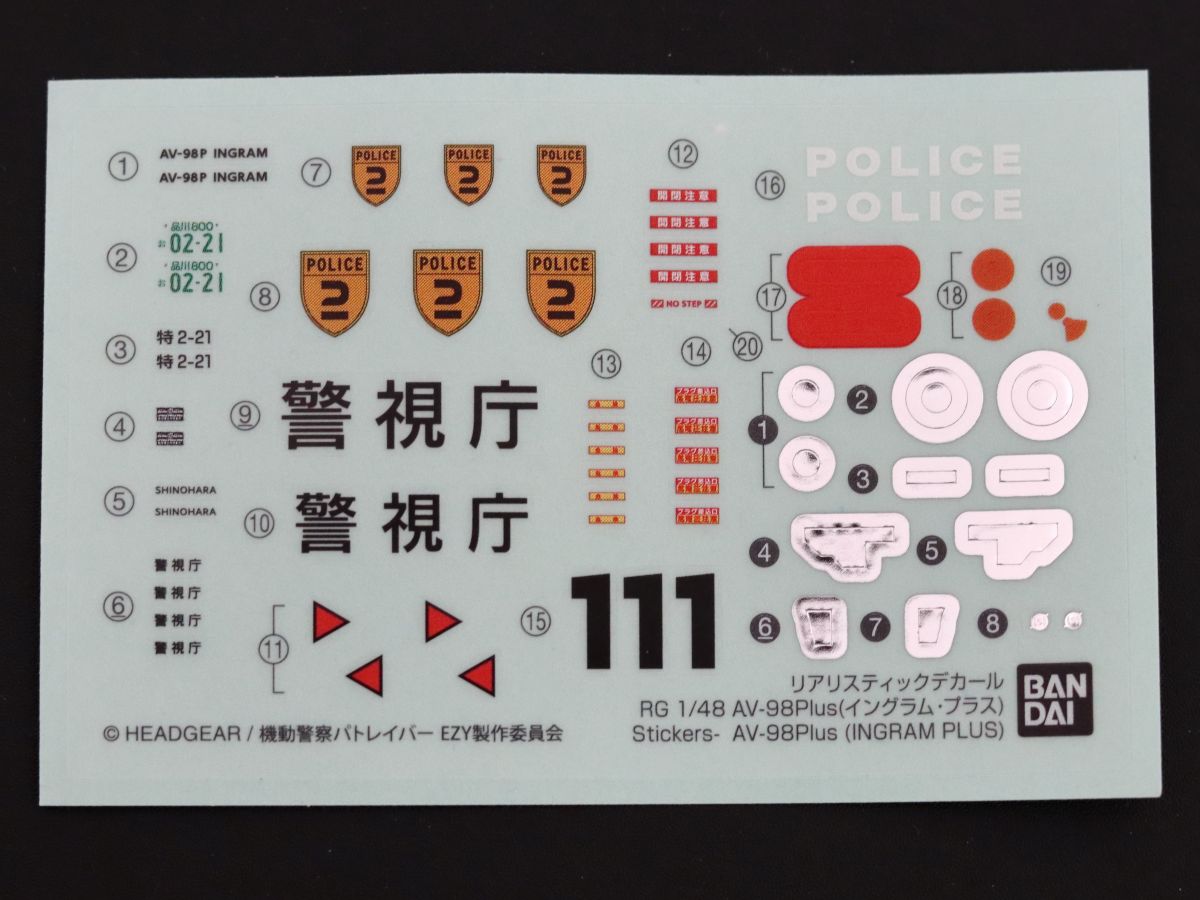
The number of marking stickers is on the lower side for an RG kit, which is a friendly touch for those who struggle with applying decals.
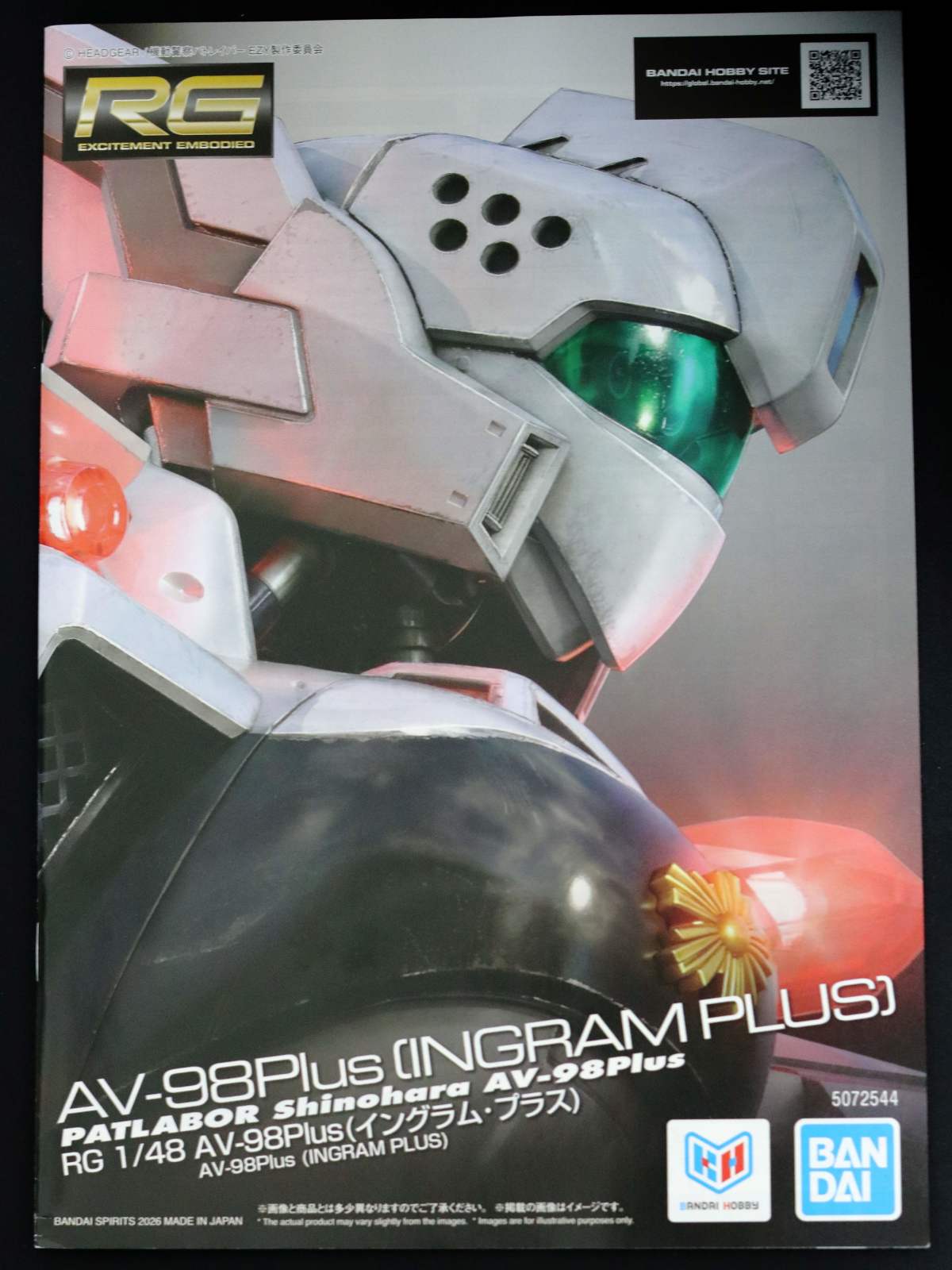
Now, let's hurry up and assemble the Ingram, just like Kippei Amatori in the anime's opening sequence!
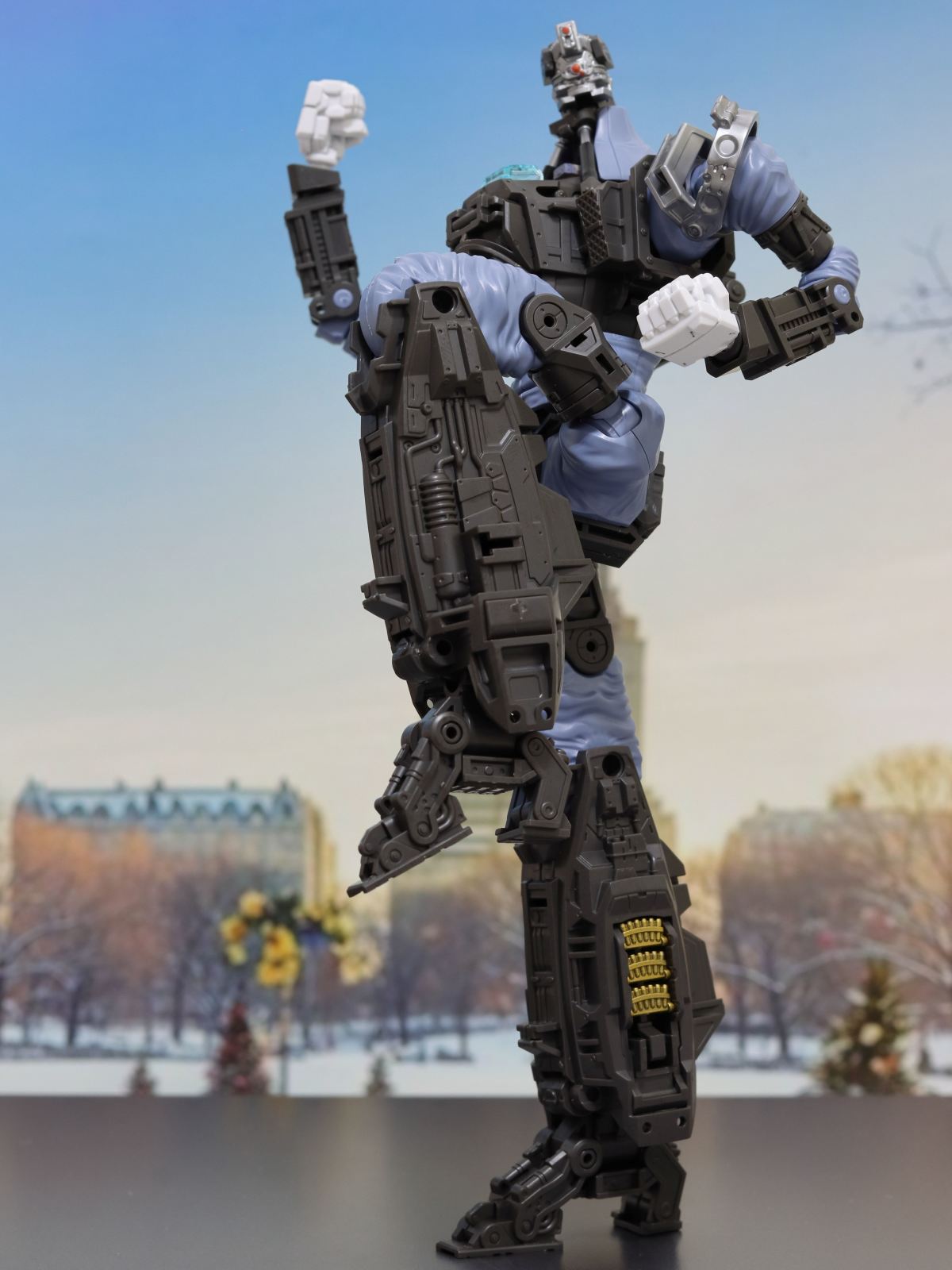
Since the instruction manual doesn't separate the assembly process, we first completed the inner frame form to showcase the internal mechanics, referencing the official product examples.
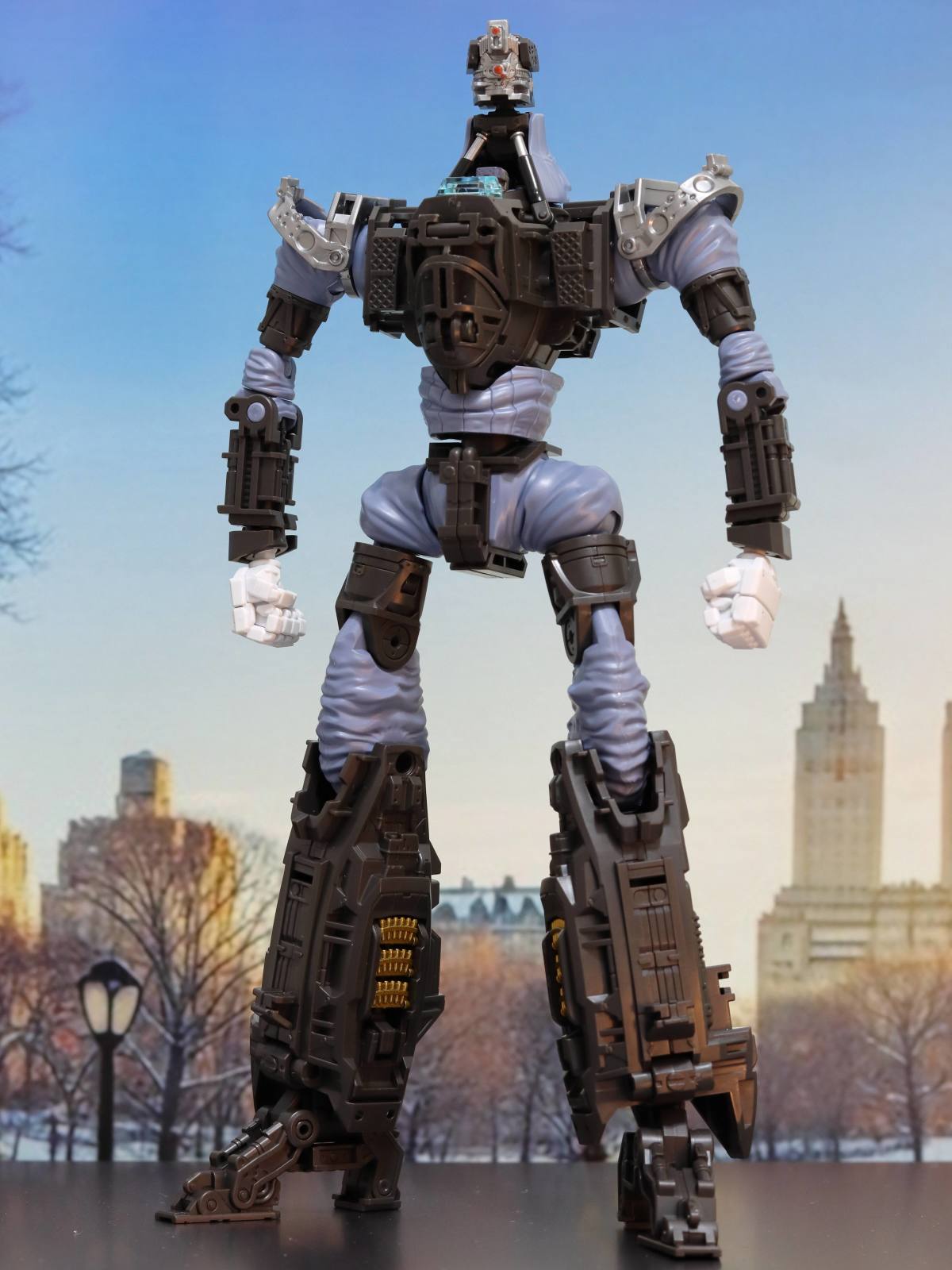
The joint seals on this kit ditch the soft vinyl material of past MG releases. This not only improves the aesthetics but also dramatically increases the range of motion in the limbs.
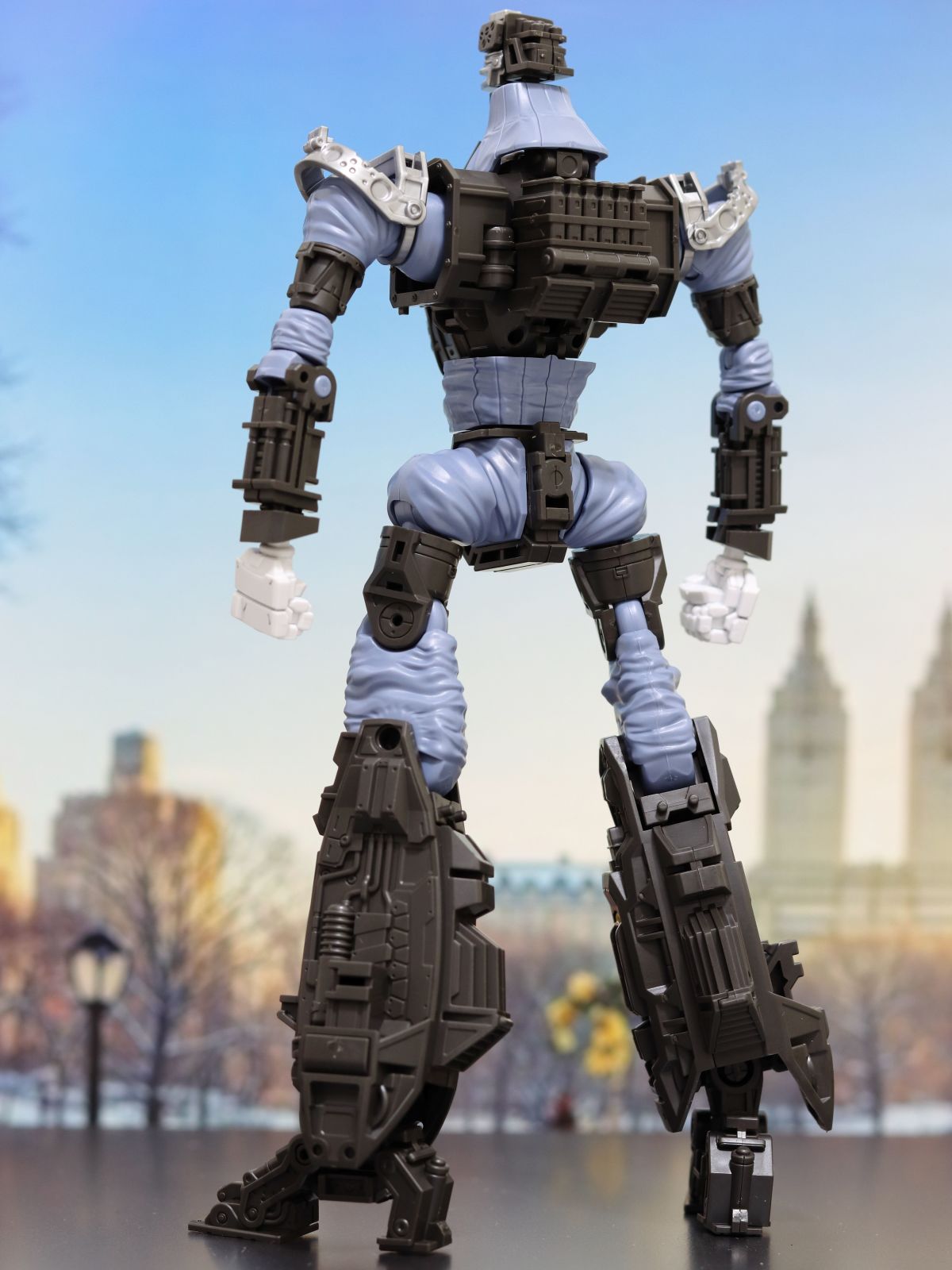
The head detail was quite a fresh sight. The hydraulic tubes below are made from soft plastic tubing paired with silver parts, doing its best to replicate mechanical piston movement at this scale.
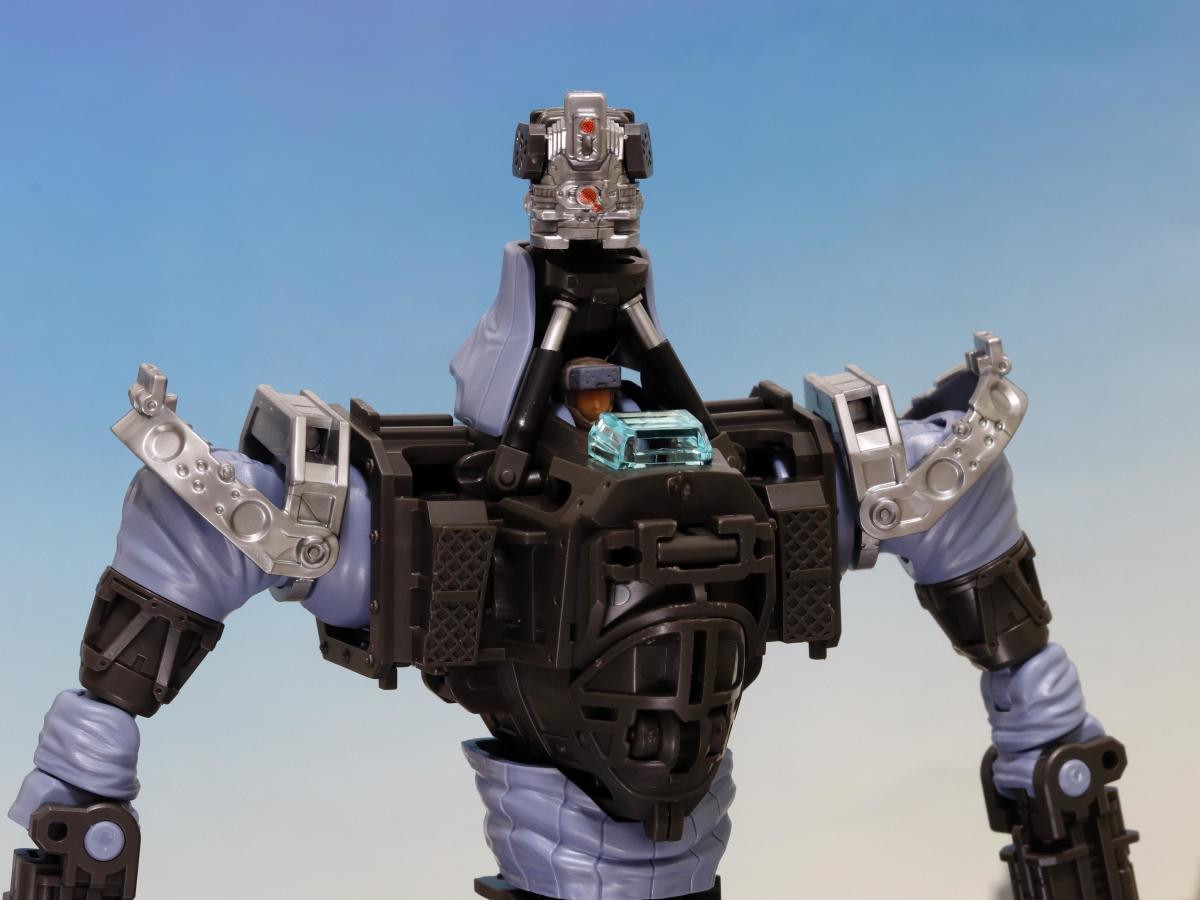
Although I spent some time painting the small pilot figure, most of it gets covered up once installed in the body.
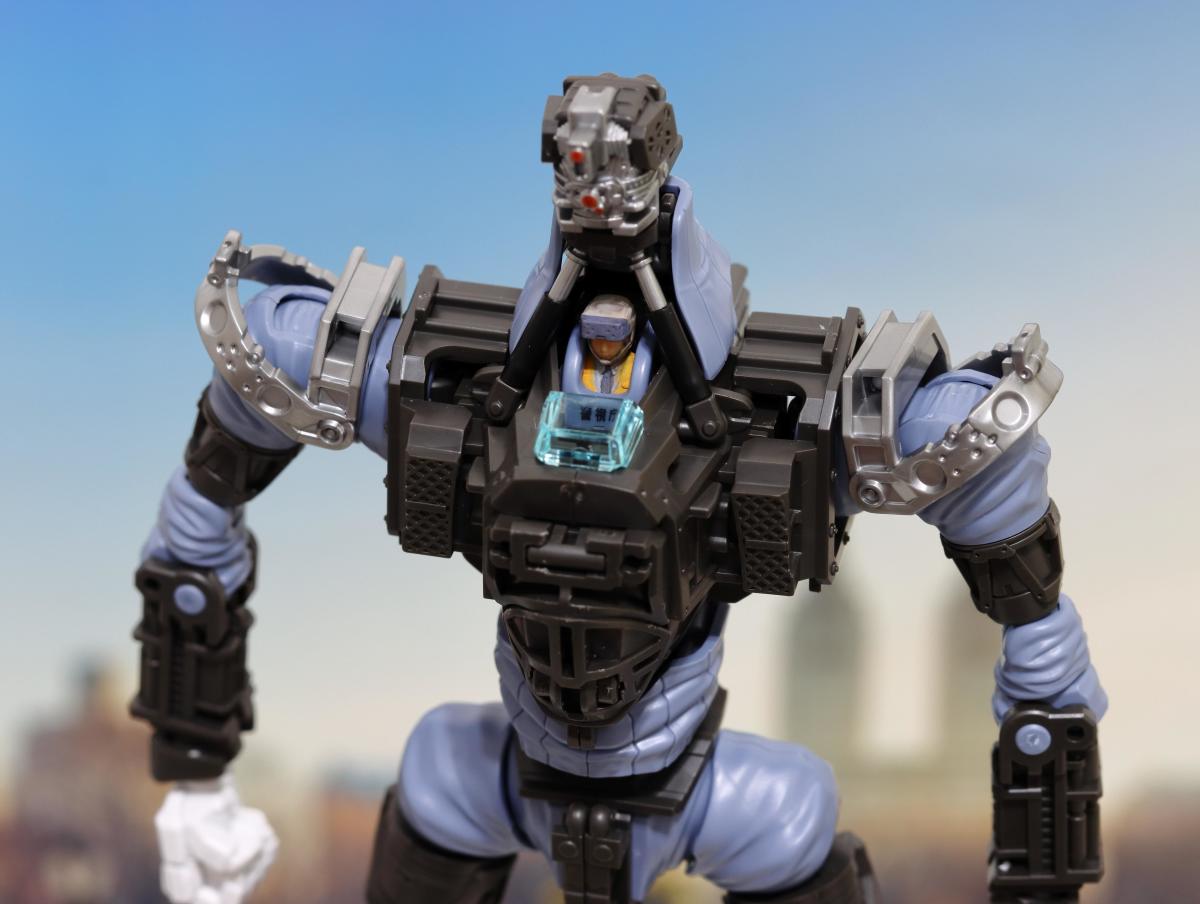
Opening the chest hatch barely offers a glimpse inside, but the detail on the cockpit monitors is spot-on, creating a strong sense of immersion.
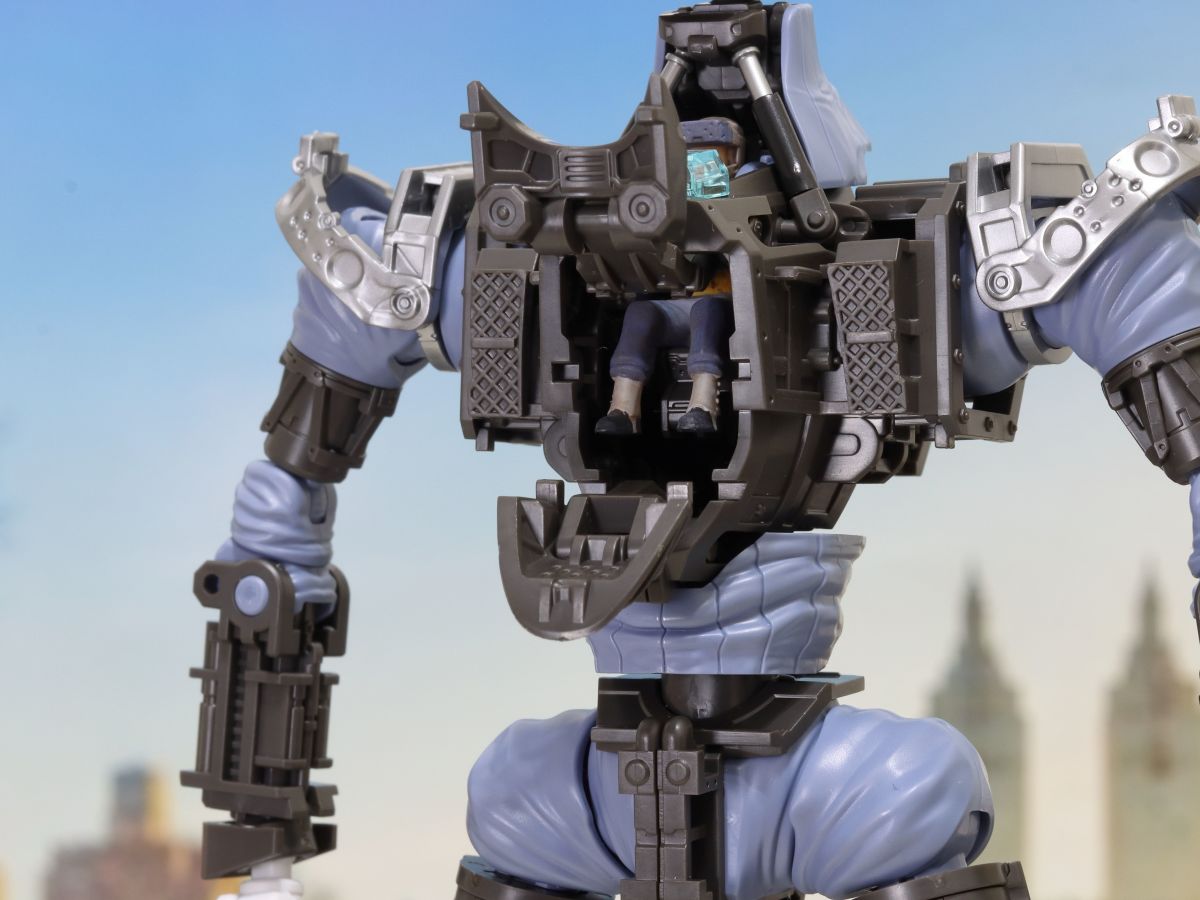
Moving to the rear of the machine, the central pillar on the back includes a function to raise and lower the pilot's seat, which we'll demonstrate later.
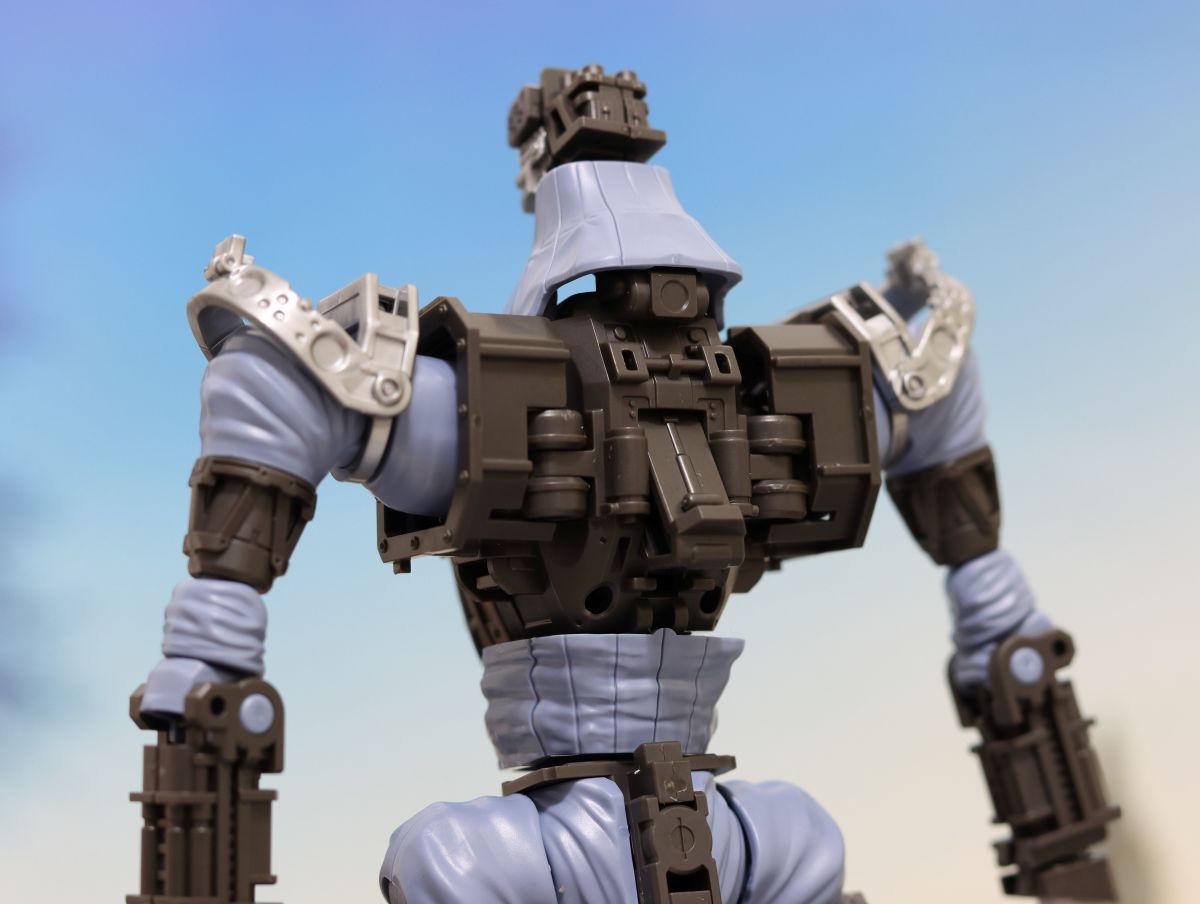
Moving on to the limbs, the arm extension is a huge upgrade in freedom compared to the old MG, thanks to a joint design with fewer obstructions. However, the tightness of some pivot points is inconsistent, so it takes a bit of fine-tuning to get the pose just right.
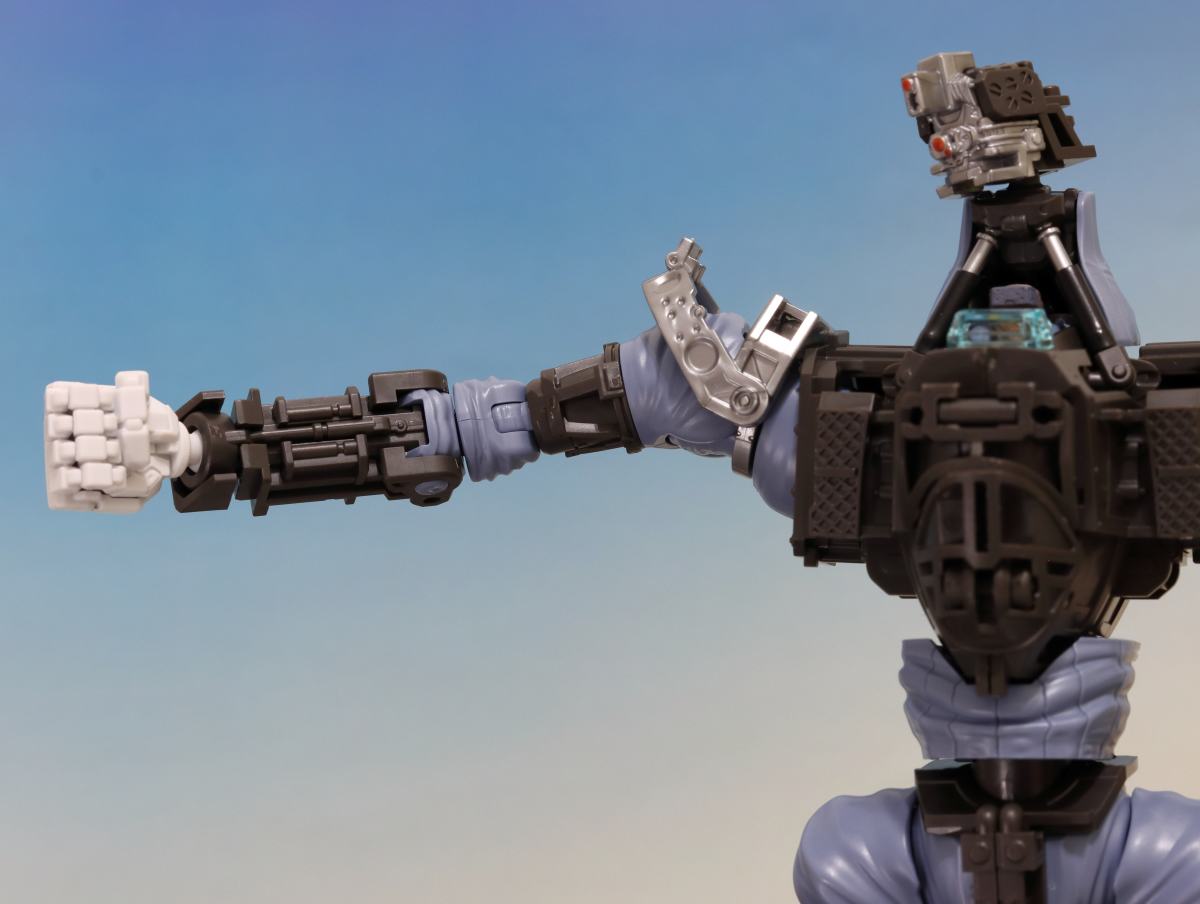
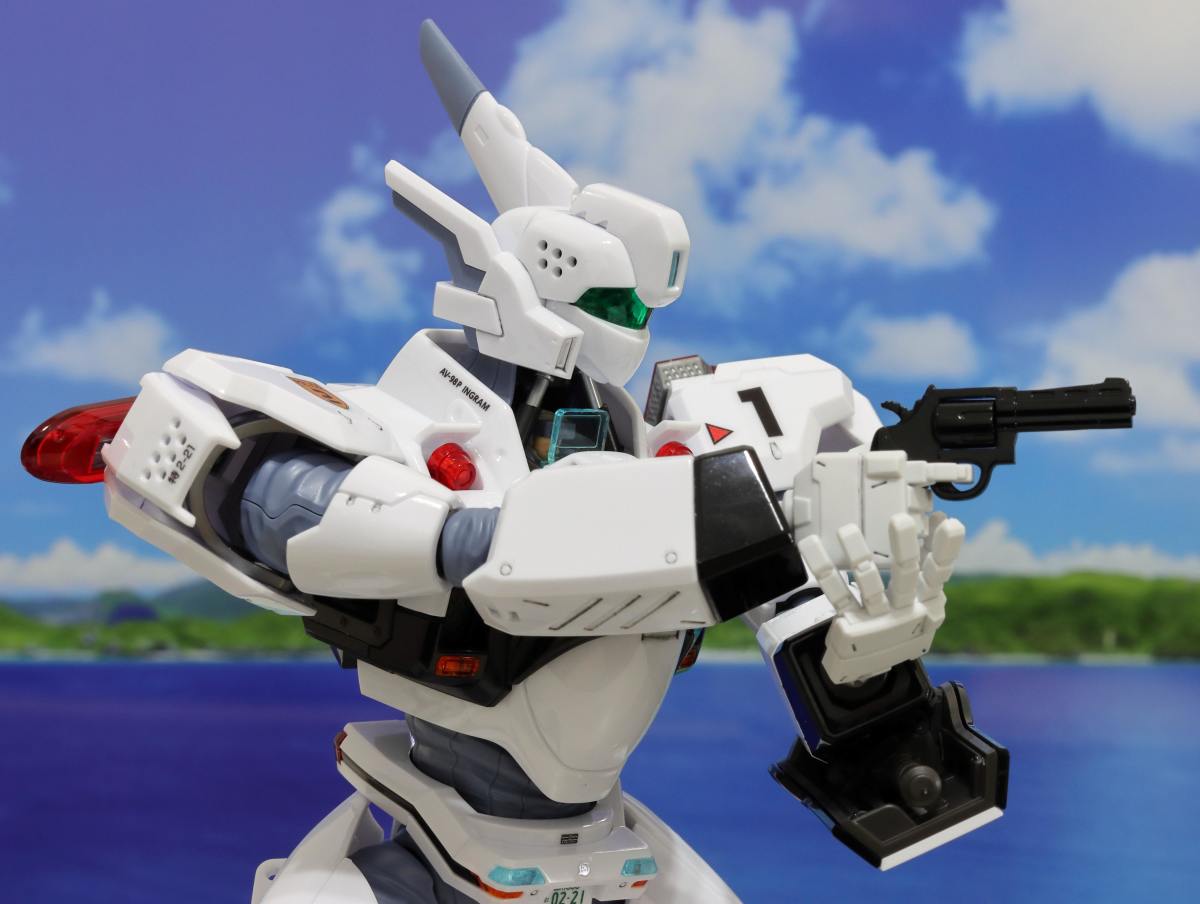
The classic forearm extension gimmick for drawing the revolver cannon is, of course, faithfully recreated. That said, if they had included a red flexible tube to act as a cable, it would have definitely enhanced the realism of the mecha.
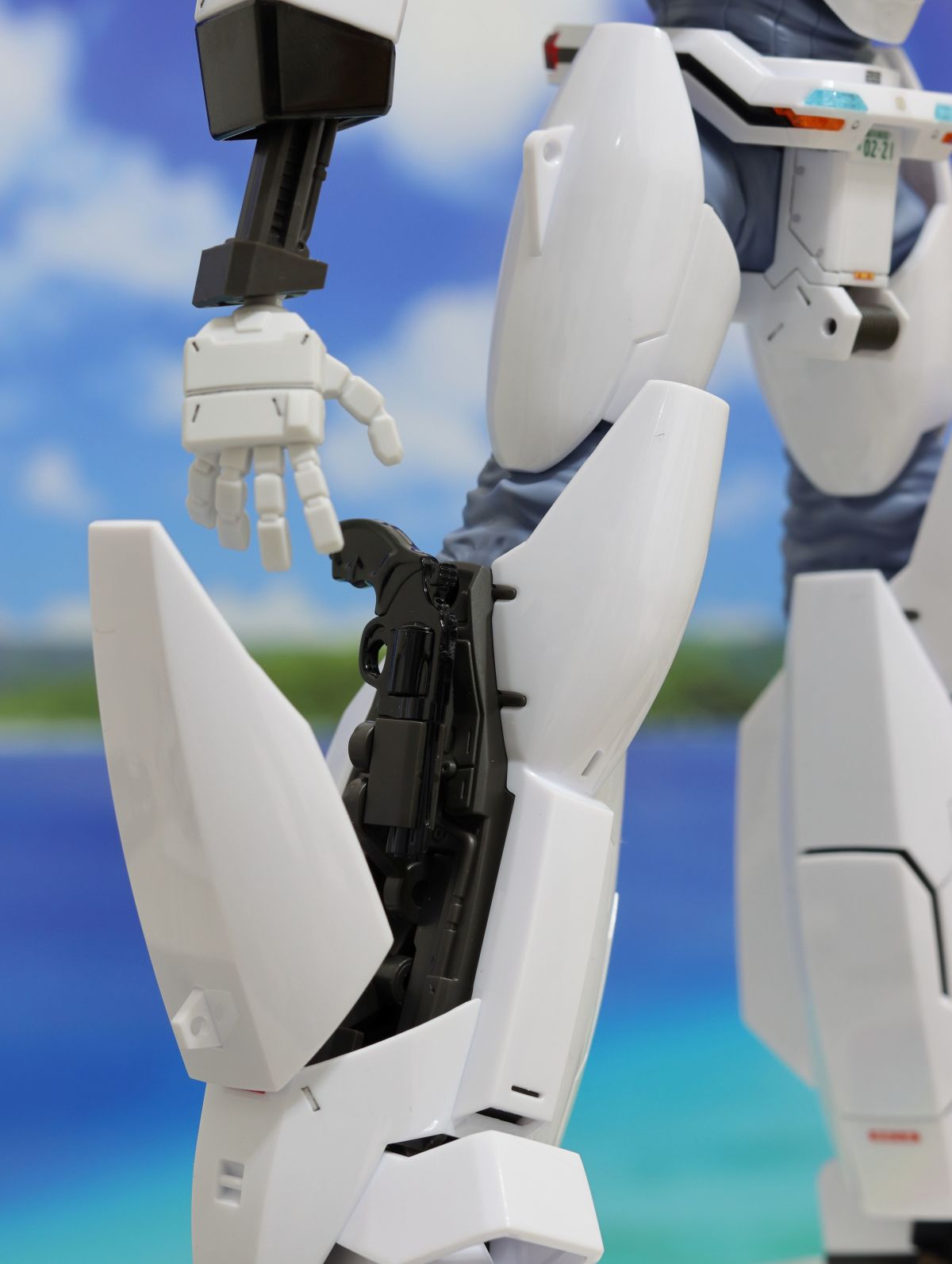
Next, let's shift our focus to the legs. The storage mechanism for the 37mm police revolver on the outer calf is another major highlight.
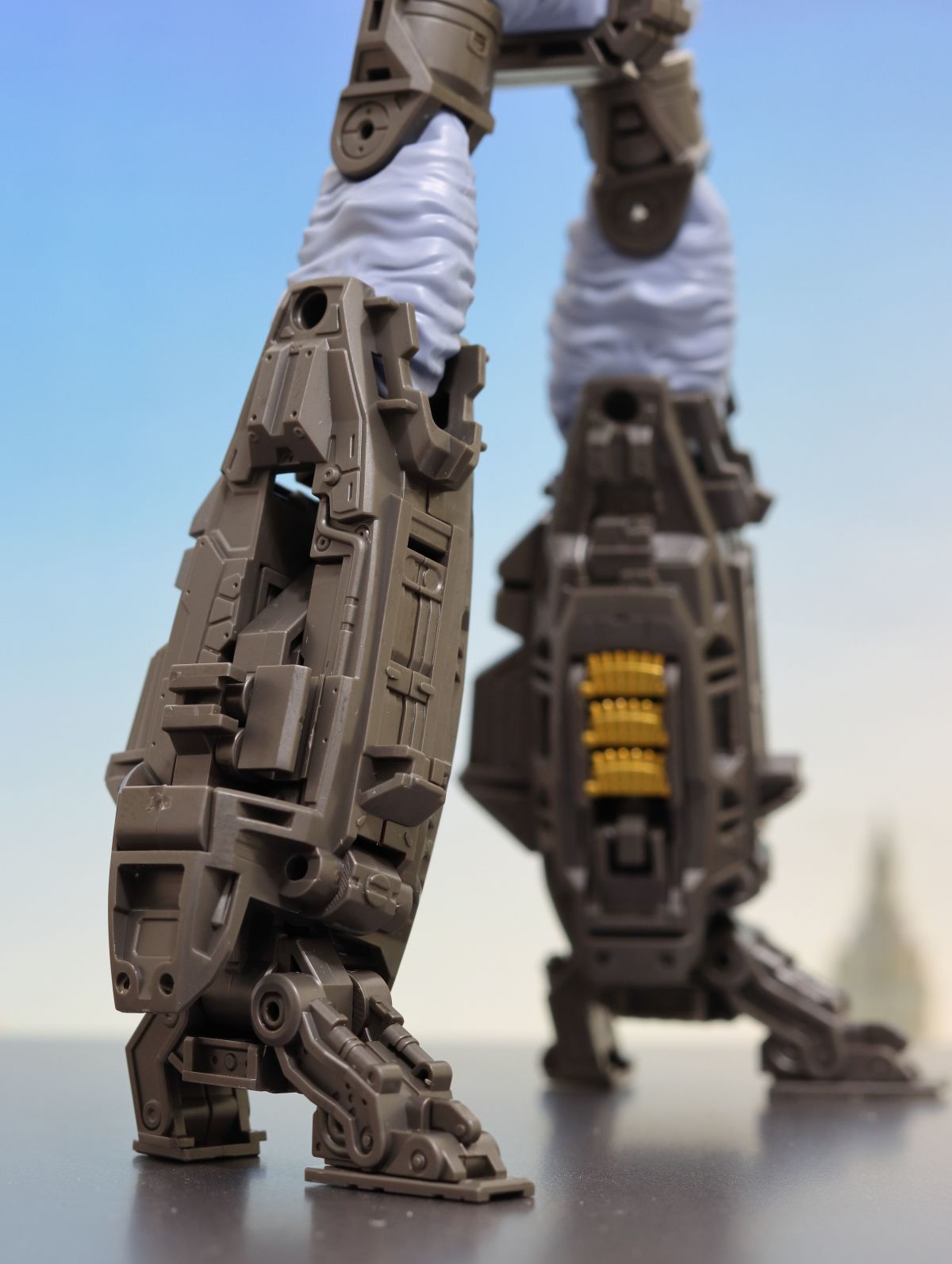
The silky-smooth linked mechanism is hardly new tech, but every time you play with it, you can't help but cycle it over and over again.
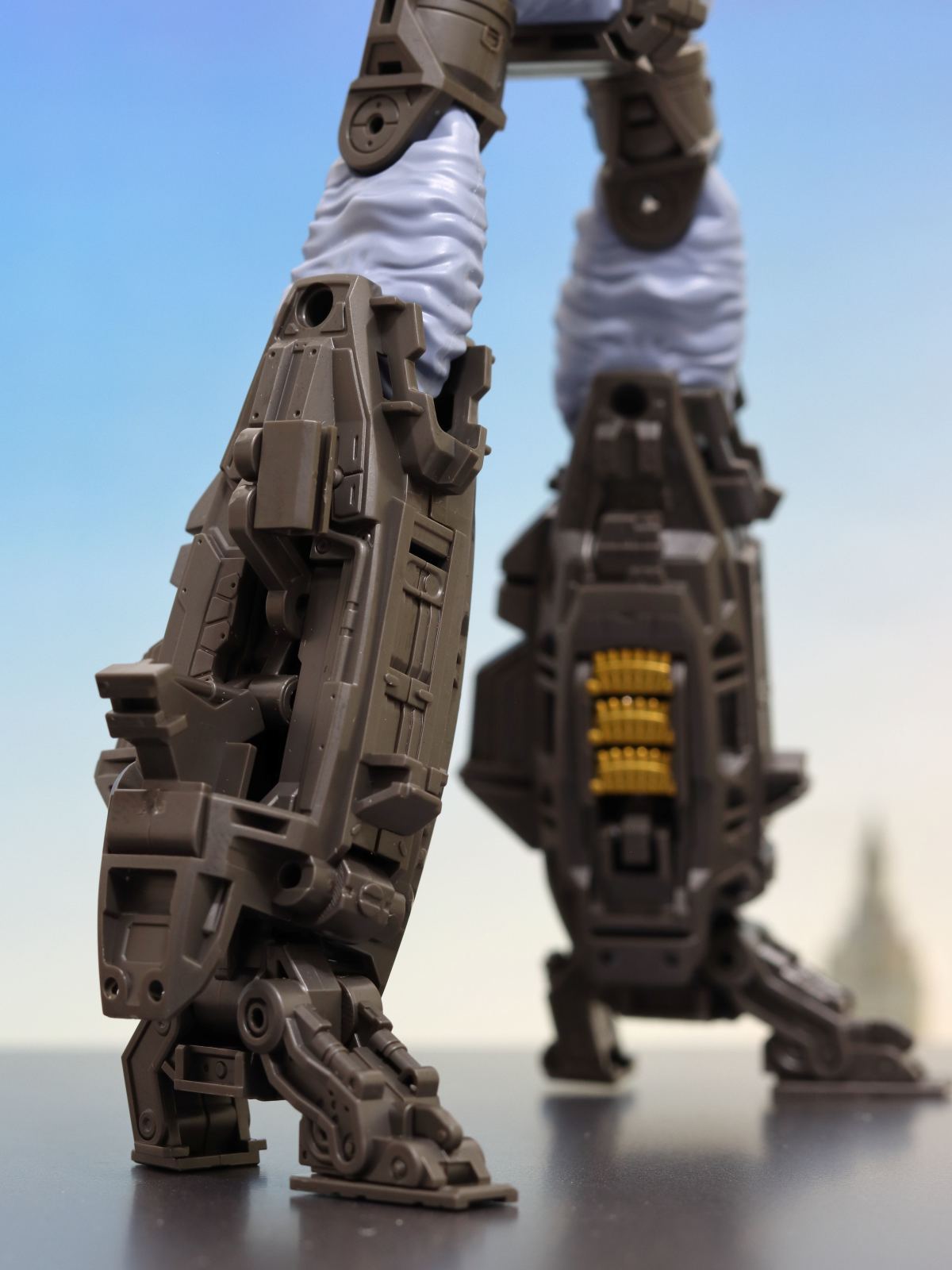
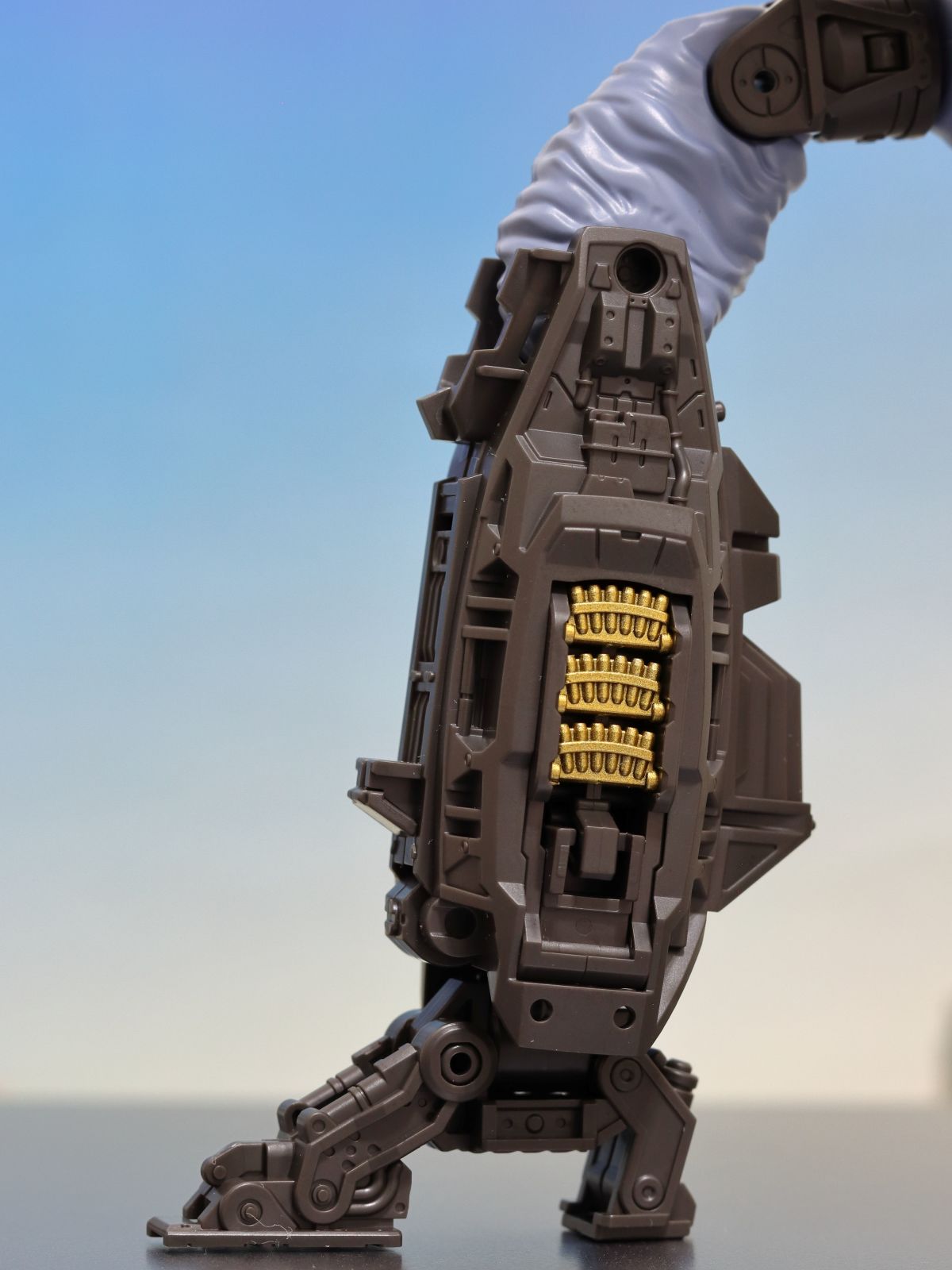
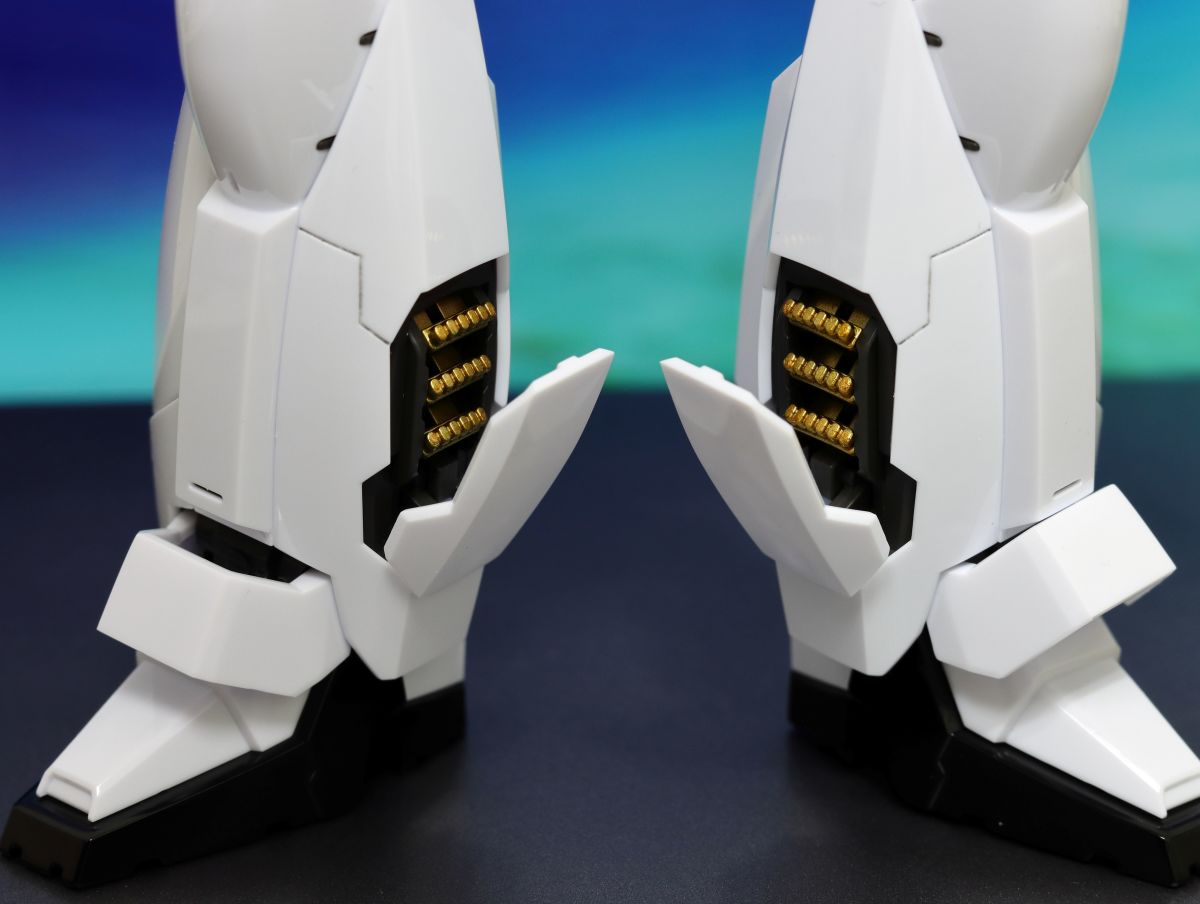
And this Ingram Kai adds a new bullet storage compartment on the inner calf, really proving the old saying: "Fear comes from a lack of firepower!"
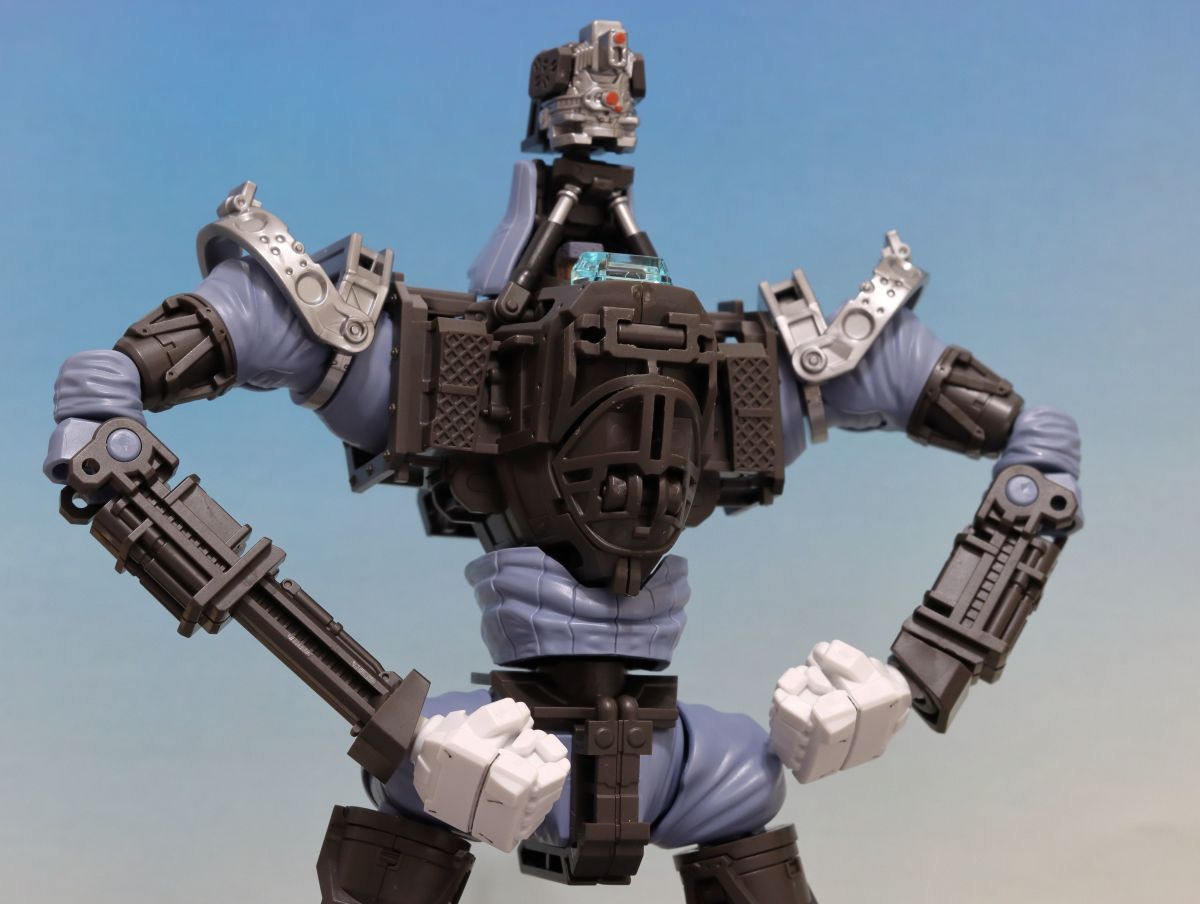
Finally, let's strike a cool pose to perfectly demonstrate the high articulation of this RG's inner frame.
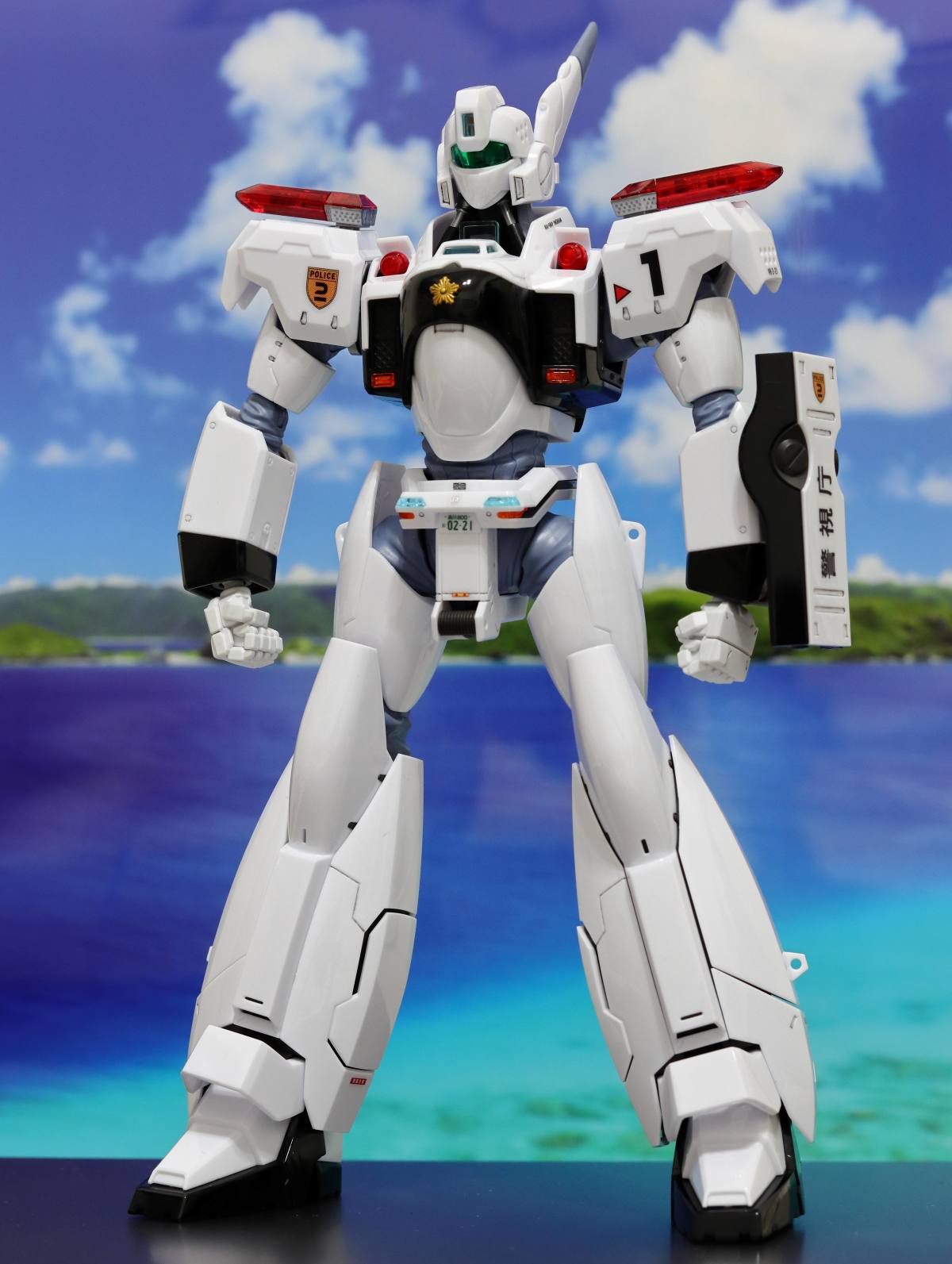
Now, let's install the black and white outer armor. Behold the Ingram Kai AV-98Plus, stepping into a new era!
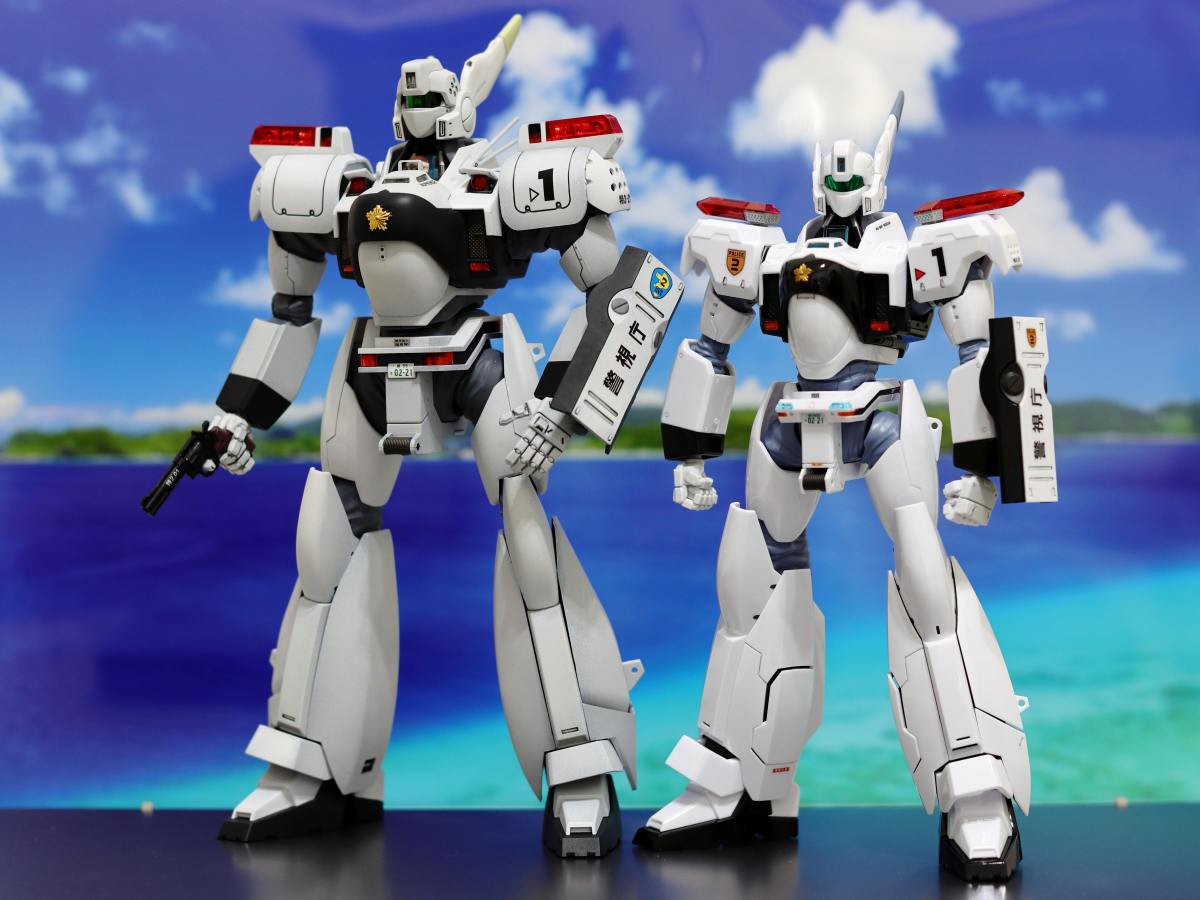
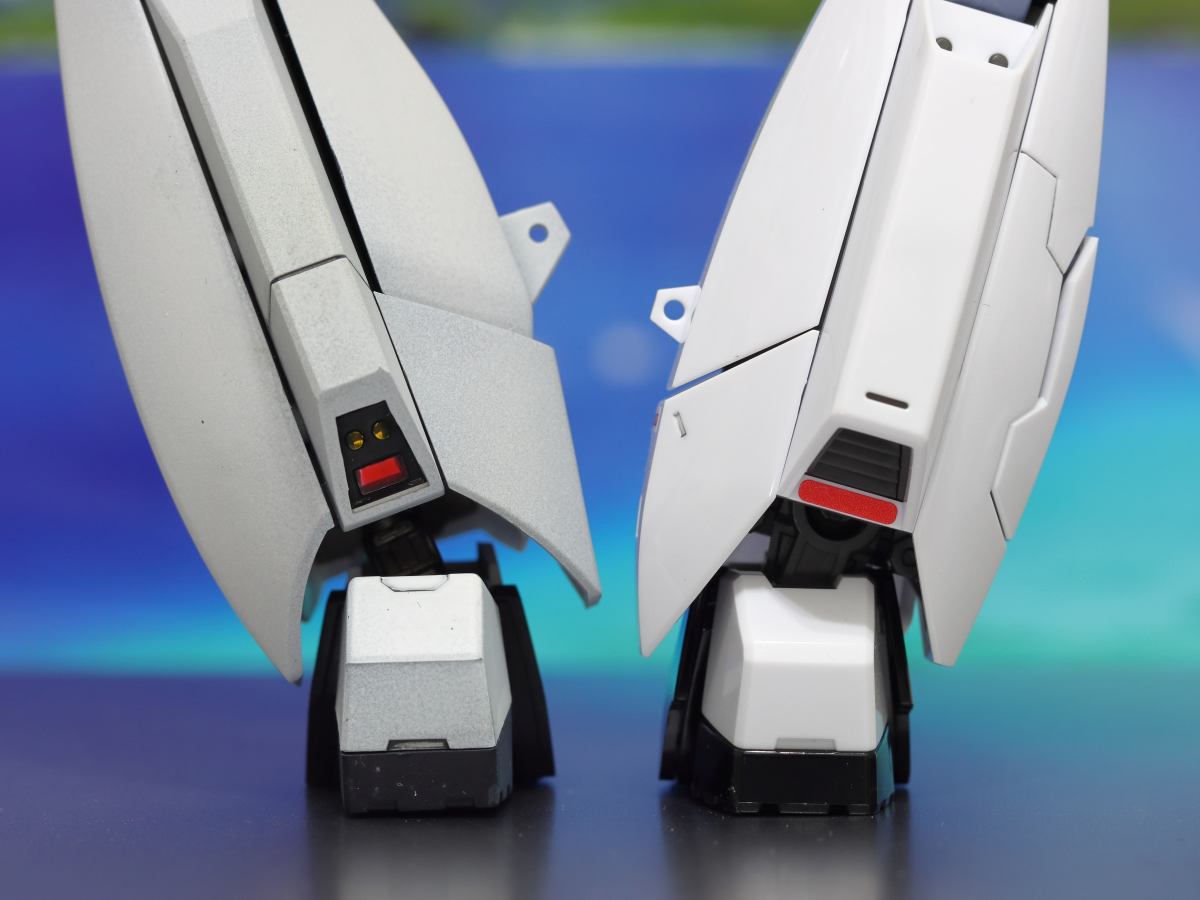
Here's a comparison with the similarly scaled 1/43 version released by Aoshima. Although based on the mecha's 7.5-meter height, the difference between the two should be less than two centimeters, but when placed side-by-side, the height gap is quite noticeable.
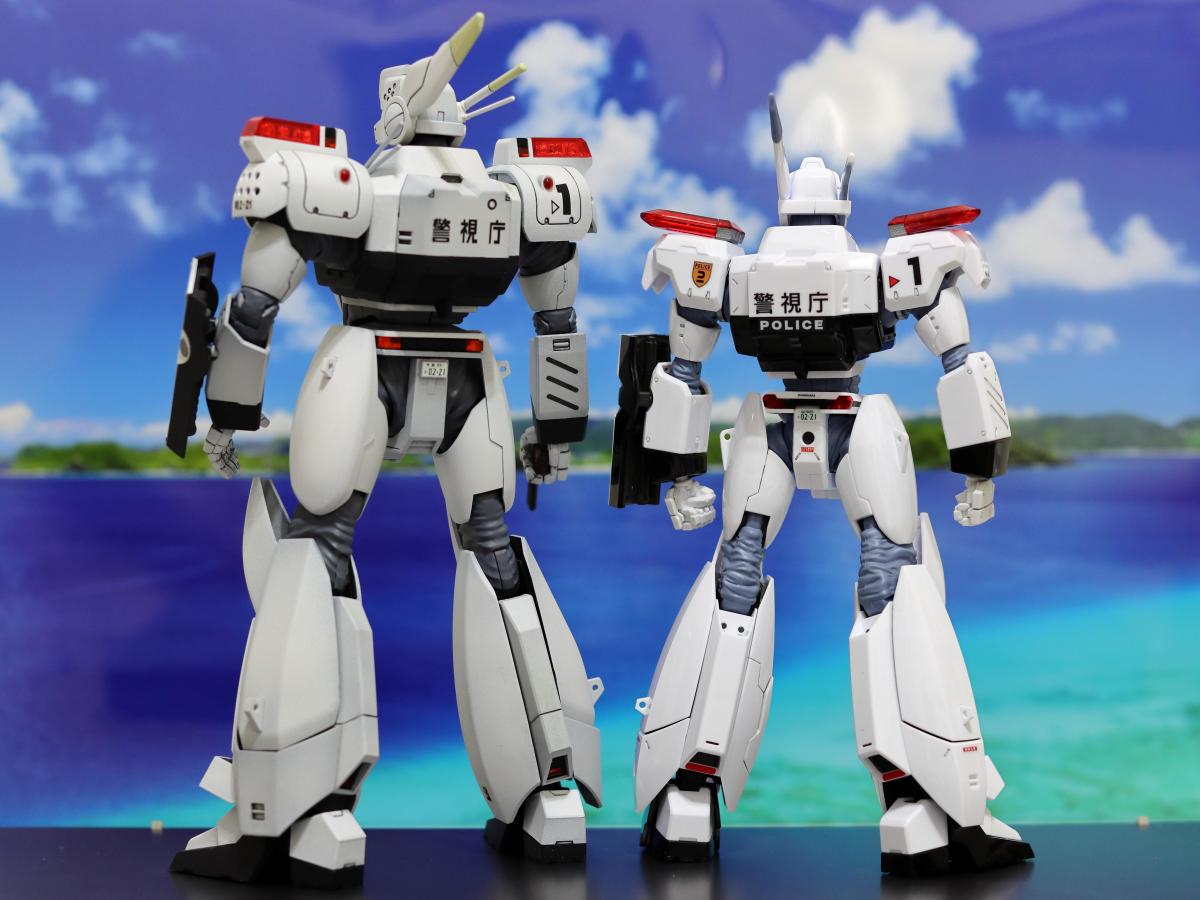
Inspecting the covered joints from the back, it's clear the RG's design is superior in terms of aesthetics and integration.
The old and new versions offer different interpretations of the mechanical style. Aoshima's design features rounder lines, while the RG adds sharp, angular details for a crisper look.
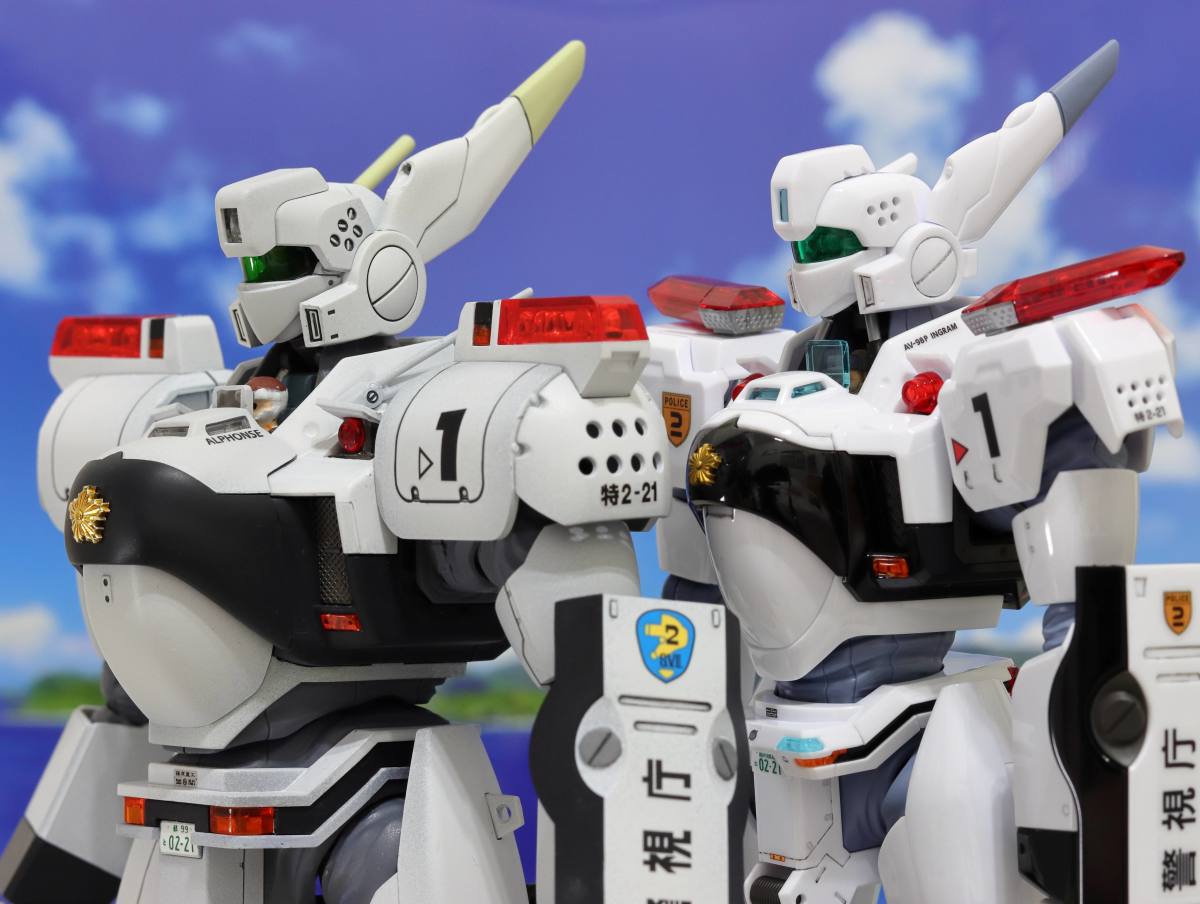
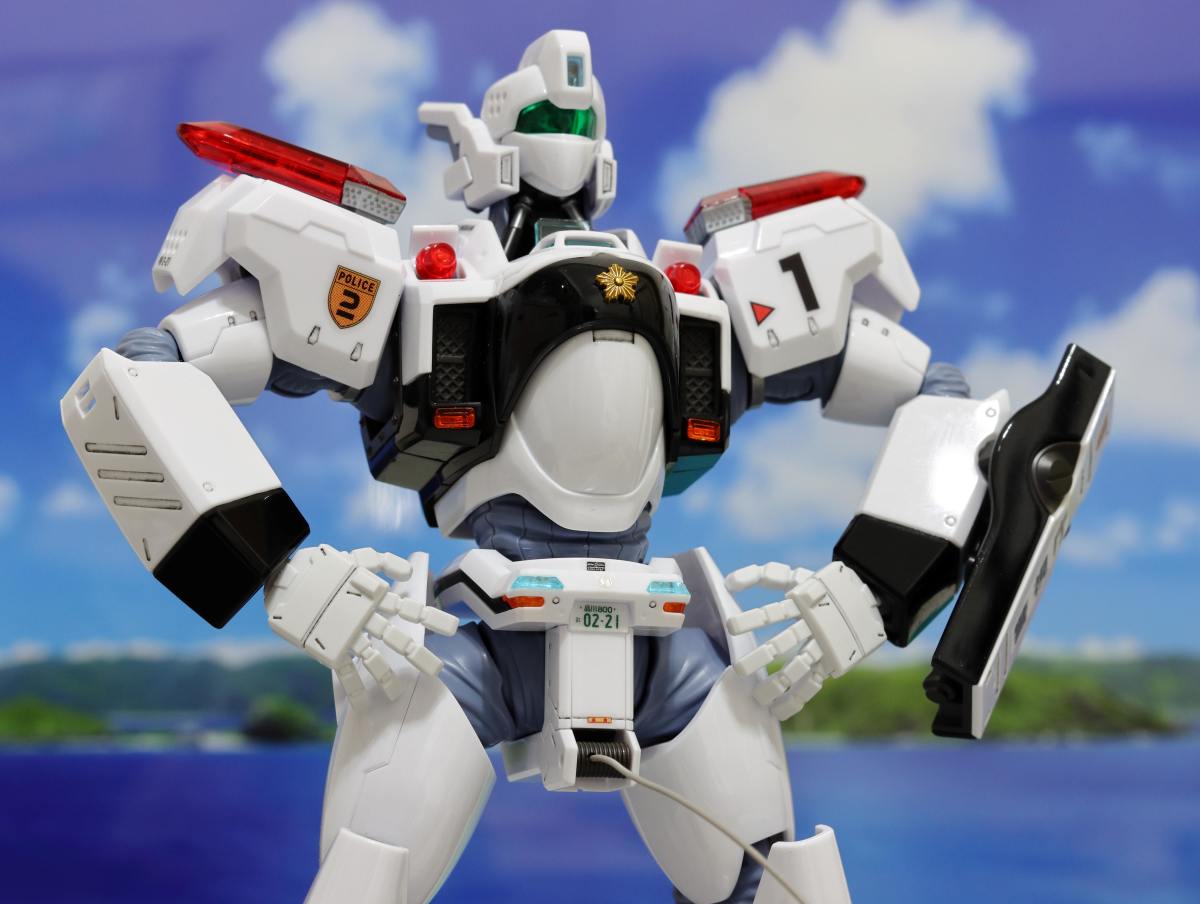
The shoulder-mounted warning lights are one of the bigger changes on this Ingram Kai, with a slanted design that gives it a more modern feel.
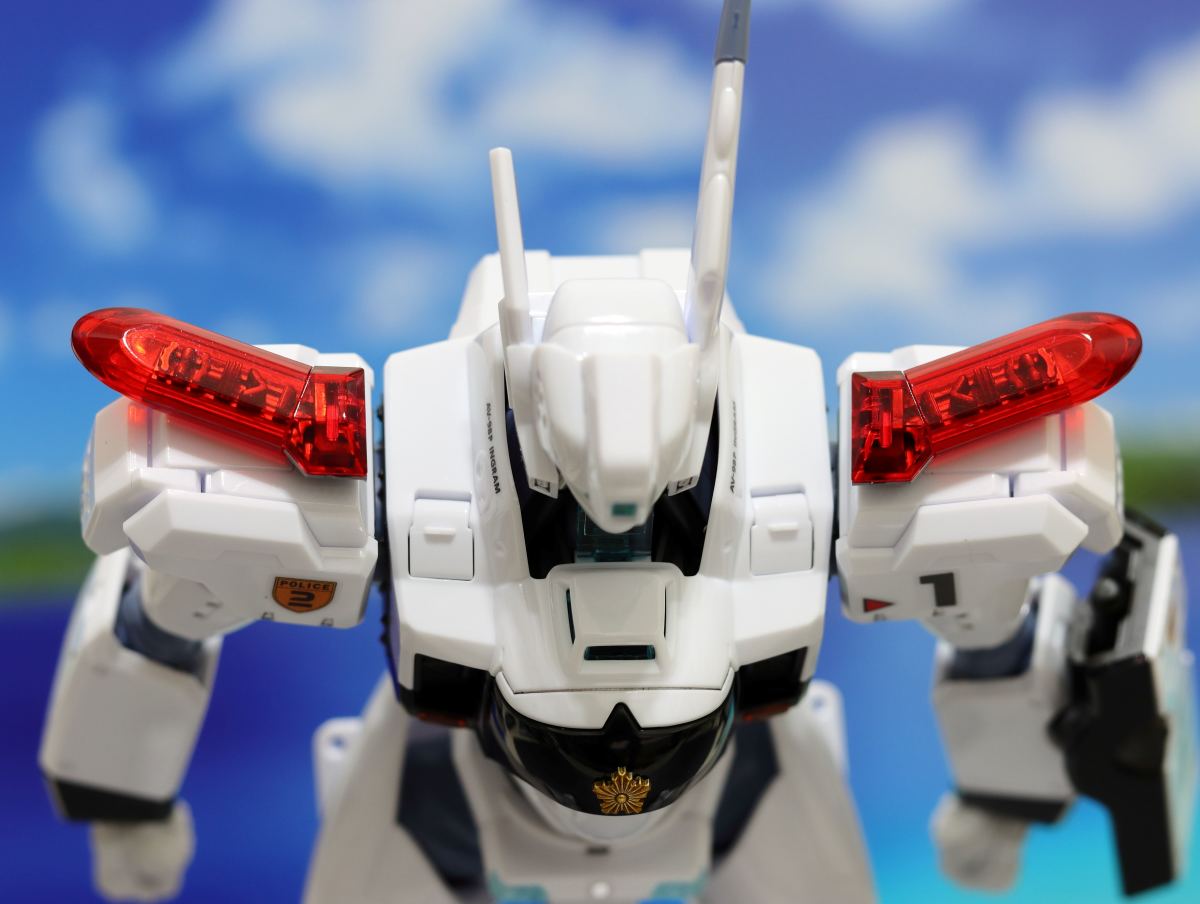
The two deployable searchlights on the upper chest finally no longer require part-swapping. Plus, foil stickers are used inside the red clear parts to increase reflectivity, a detail that deserves praise.

Let's also operate the pilot seat lifting function mentioned earlier. Before the seat is raised, the internal blue transparent canopy remains closed.
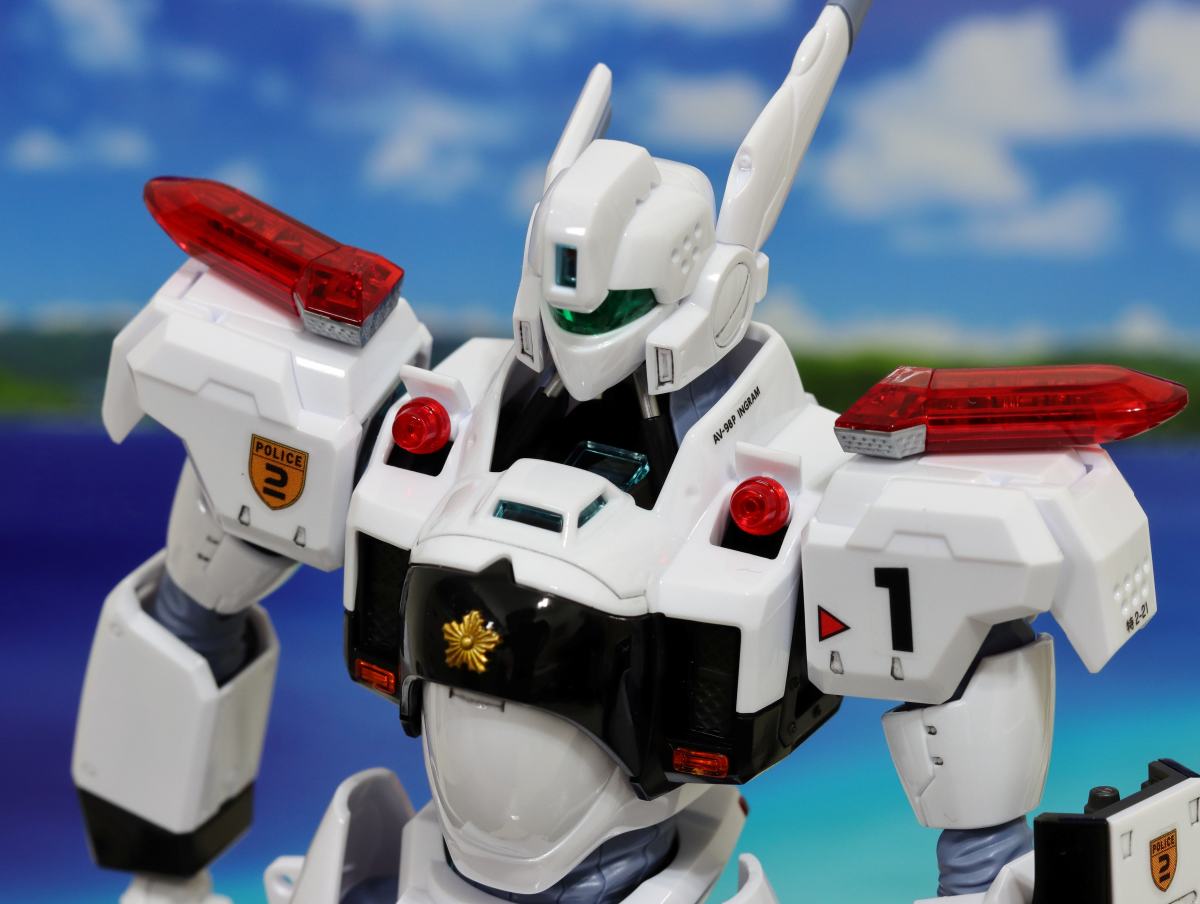
Pushing the pillar on the back raises the pilot and simultaneously pushes up the blue canopy. It's a pretty clever design.
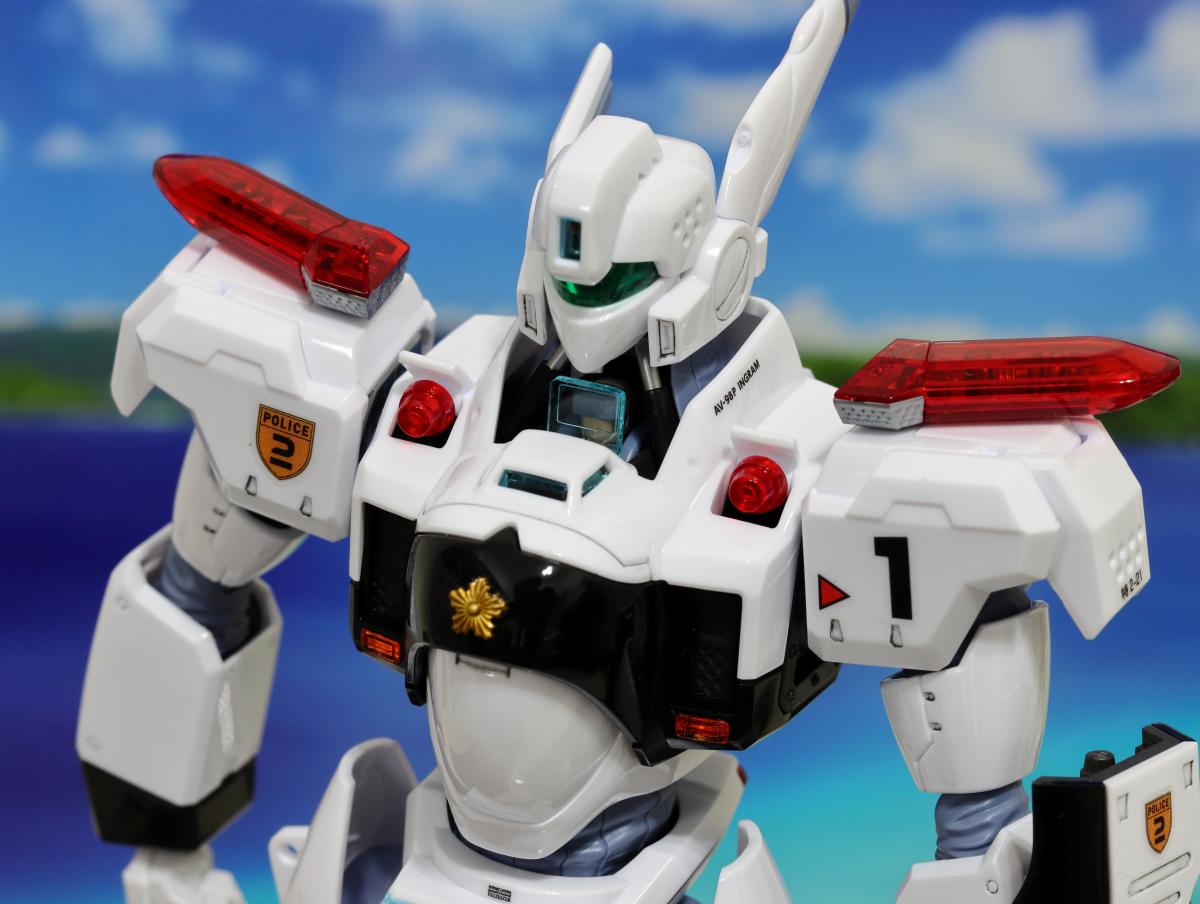
Another equally ingenious mechanism is hidden in the shield mounted on the left arm.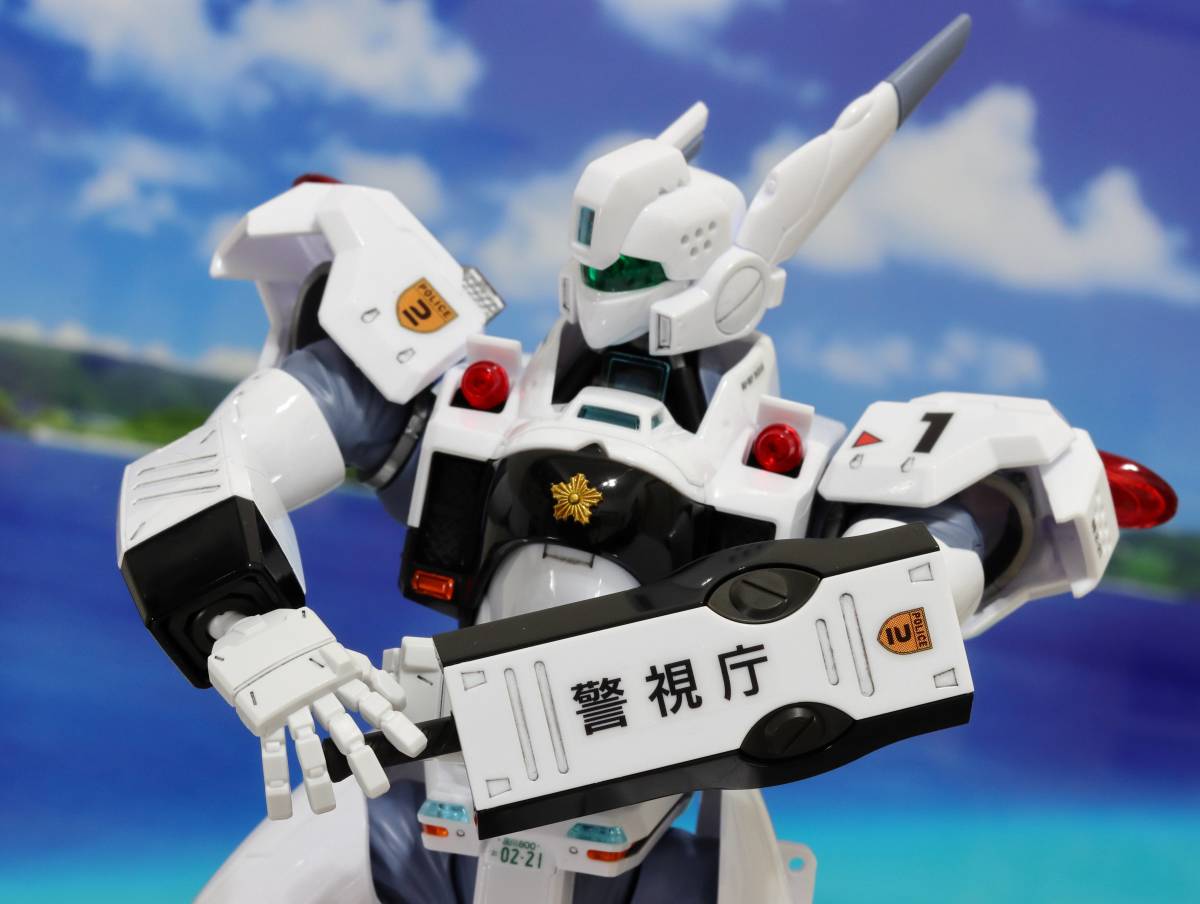
Flip it over and there's more than meets the eye. The stored electromagnetic stun baton can be drawn out using the slider on the bottom left.
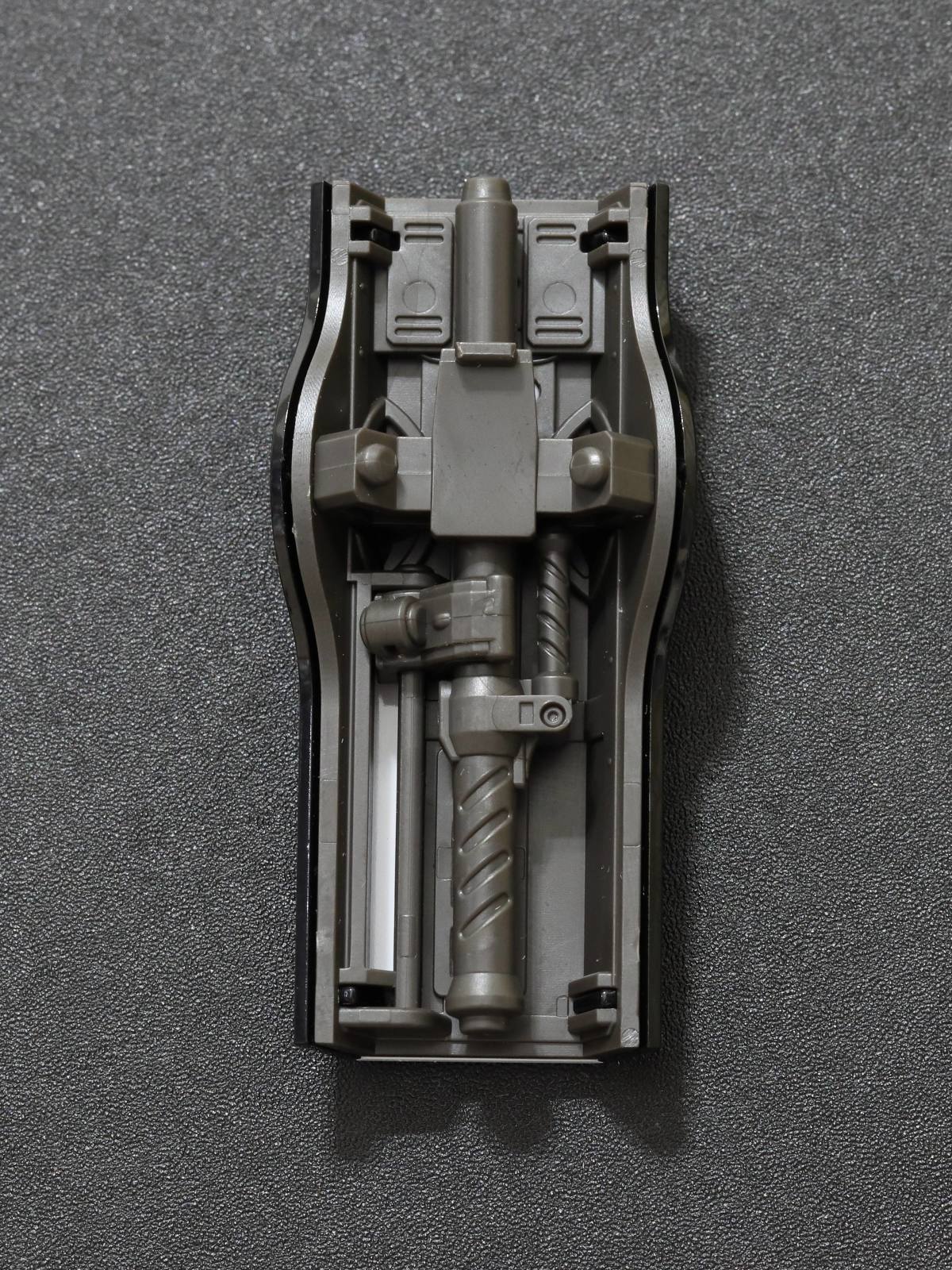
Of course, you still need to swap parts to recreate the baton in its extended form.
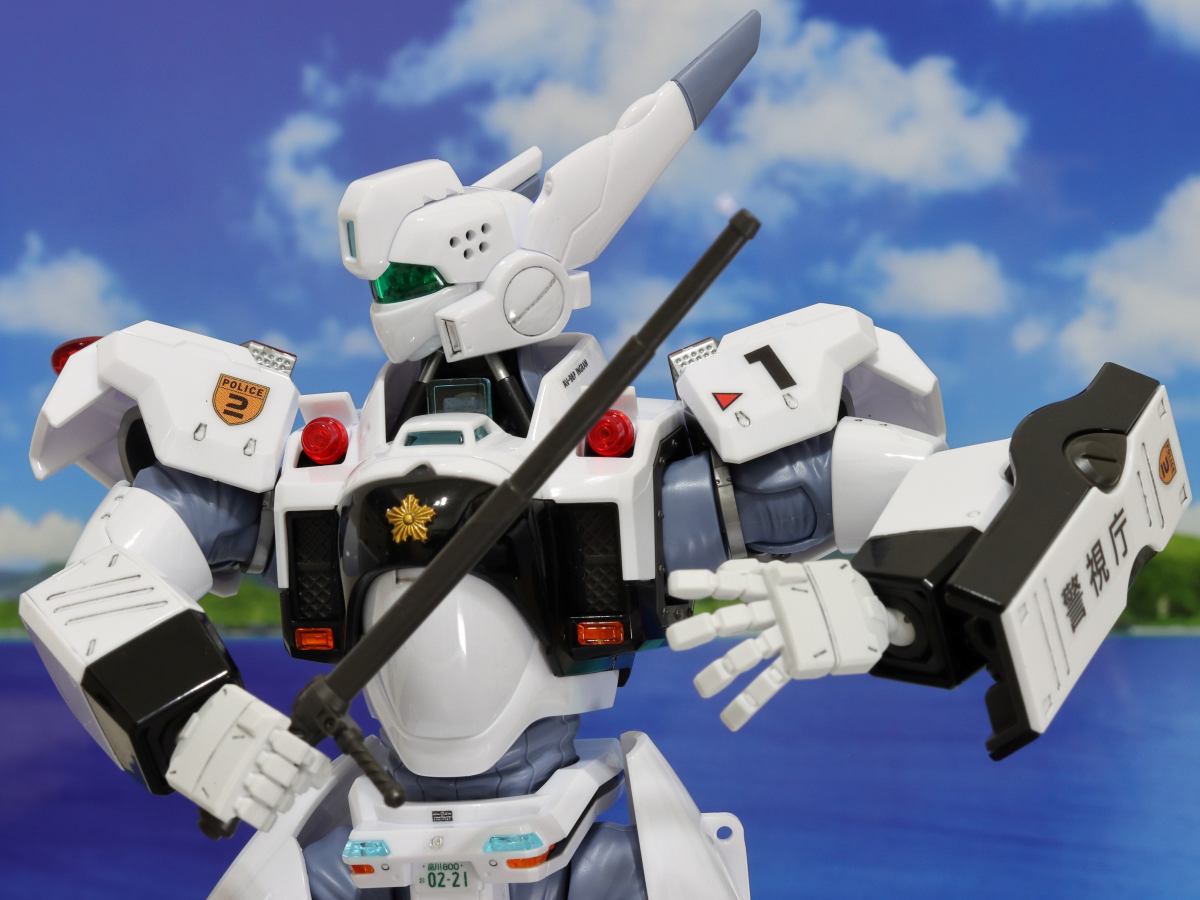
In the anime, the protective face mask deploys automatically. Unfortunately, the model still uses a tedious plug-in method for this, which is a bit of a shame.
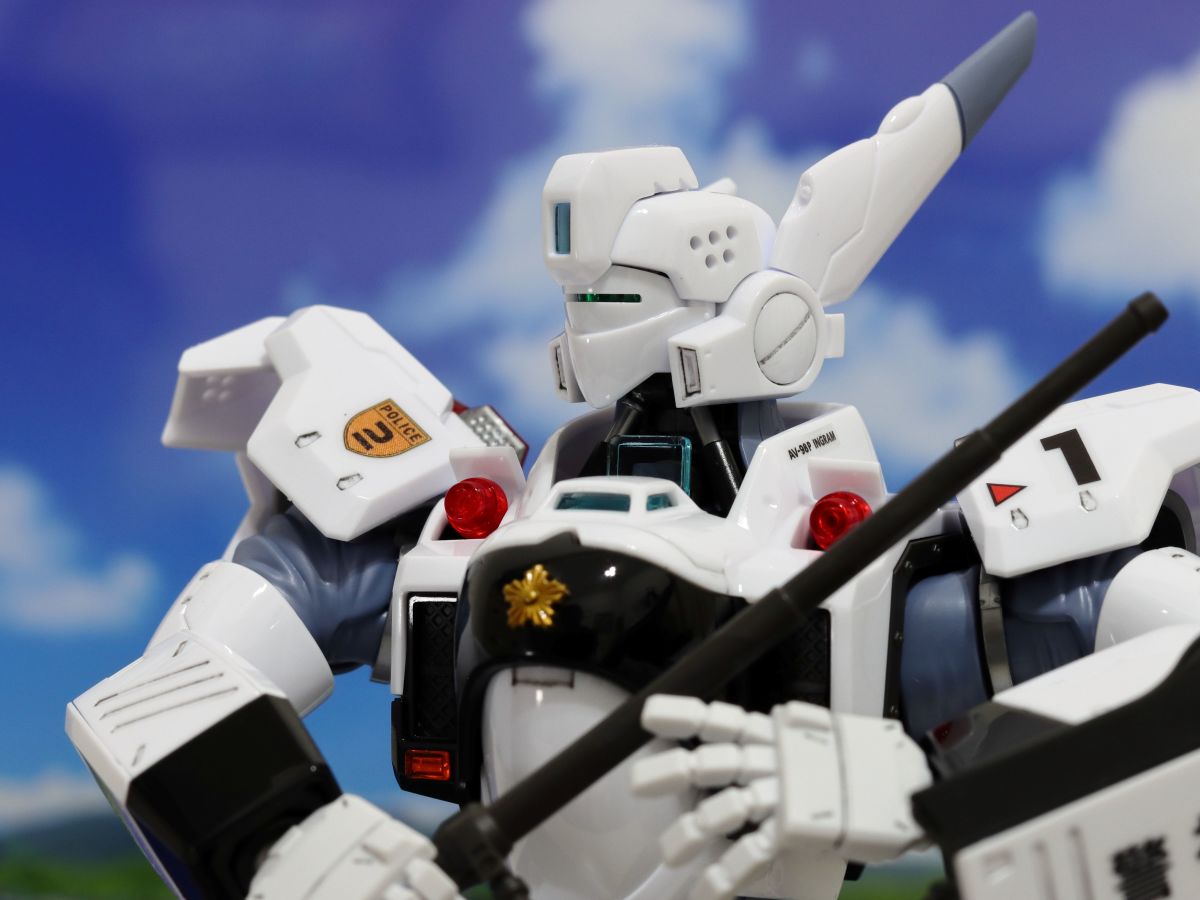
Continuing down to the lower body, the electric winch on the crotch is recreated with separate parts.
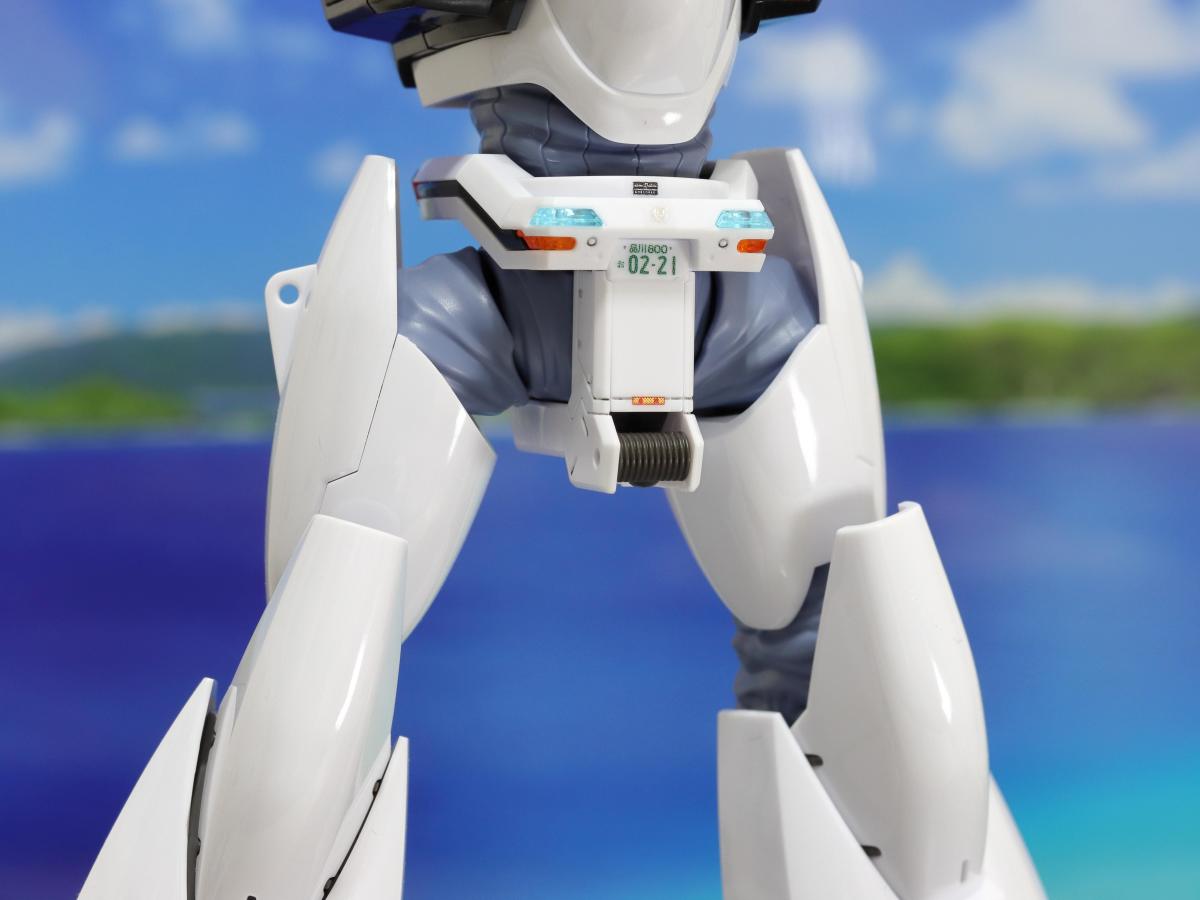
You can use the included flexible wire to simulate the Ingram Kai performing a road rescue mission by towing a vehicle (ahem).
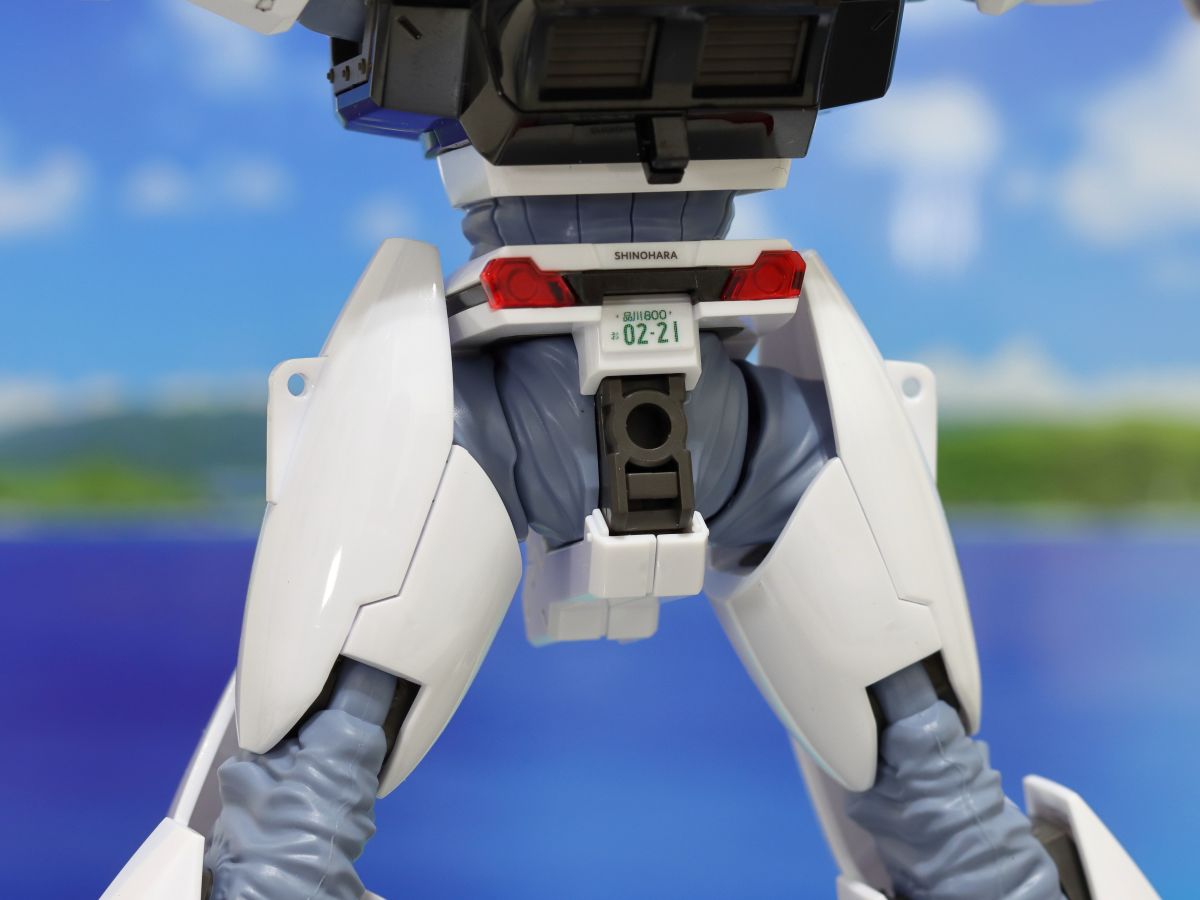
Turning to the rear, a small hole is hidden beneath the prominent Metropolitan Police Department logo.
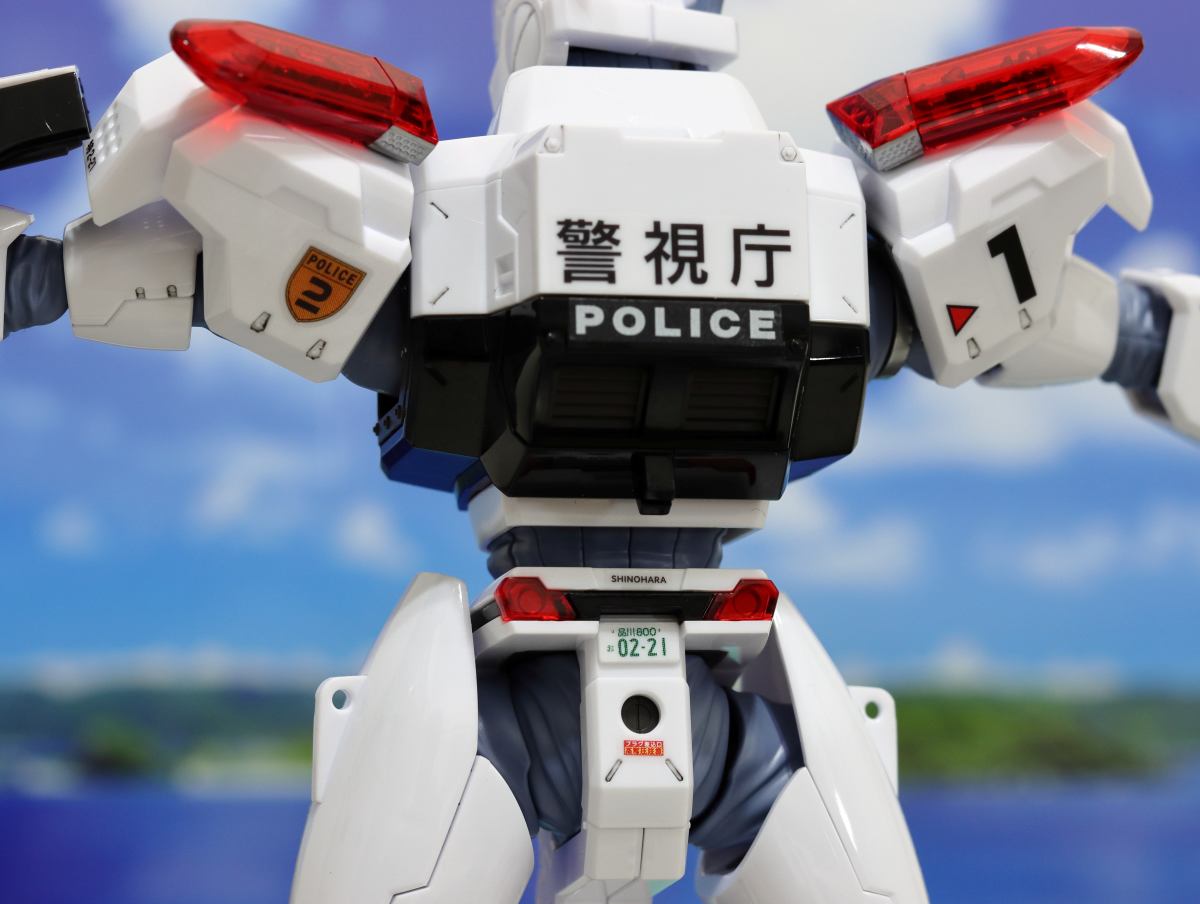
Flipping out an internal part reveals a connection port for a display stand (so, where's that stand, Bandai?).
Further down at the end of the calf, it's worth noting that the red section on the RG uses a sticker for color separation. It's a bit puzzling why they couldn't use a clear part here like Aoshima did; feels a little lazy.
Turning back to the front, once the outer armor is attached, the calf's ammo storage compartment features an eye-catching linked mechanism that allows the three rows of ammo to be pulled out in sequence.
We have to recreate Patlabor's classic extended-arm firing pose one more time!
In some ways, this Unit 1 pilot, Towa Kuga, seems to have inherited the hot-headed personality of Isao Ota. She often has to be stopped by her commander, Kippei Amatori, from firing indiscriminately in the city. After all, every bullet is paid for with taxpayer money!
And with that, our unboxing of the new era's Mobile Police is complete. It's fantastic to once again feel Bandai's passion as they apply new technology to remake and rebuild the cool image of the familiar Ingram. We're eagerly looking forward to news of a potential Unit 2 or Type Zero release.

Personally, though, I'm still holding out hope for the reappearance of those dark wings that once blotted out the night sky—the Griffon!