

Plenty of people have collections of their own, whether it is games, merchandise, models, books, or other publications. These are more than just valuable possessions: they hold memories and reflect the things we love.
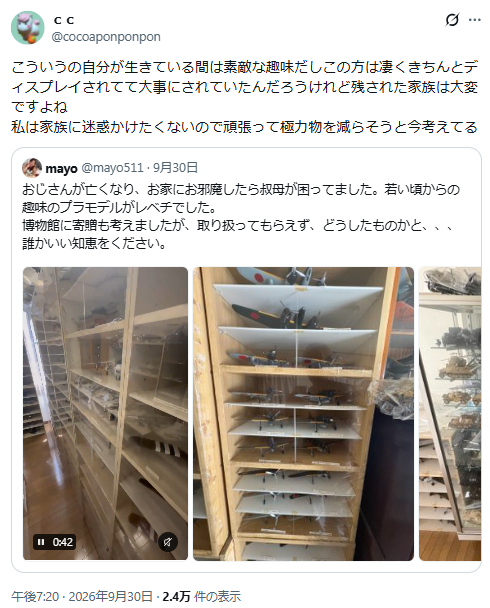
A user in Japan recently shared photos on X of the enormous collection of military plastic models left behind by their late uncle. He had been collecting and building them since he was young, amassing an astonishing number over the years. The models were also remarkably well preserved and neatly arranged in display cabinets. After his death, however, the family was left facing a difficult question: what should they do with all of it?
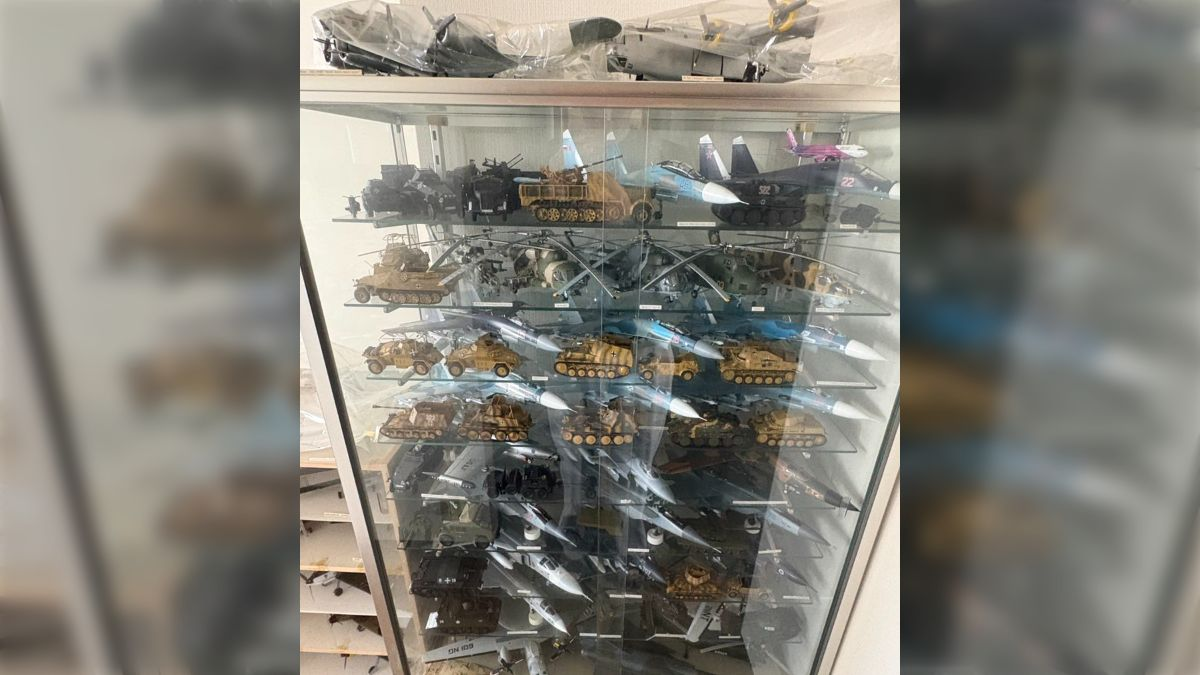
The original poster, mayo, said they discovered the situation while visiting their aunt after their uncle's death. She was struggling to decide what to do with the vast collection of military models he had accumulated over a lifetime devoted to the hobby.
The family initially considered donating the models to a museum, but after making inquiries, they learned that the process was far from simple. Unsure how to proceed, mayo turned to social media for suggestions.
Judging by the photos, most of the models had already been assembled and were carefully displayed in cabinets. Many users noted their excellent condition, which made it clear how much the uncle had treasured his creations.
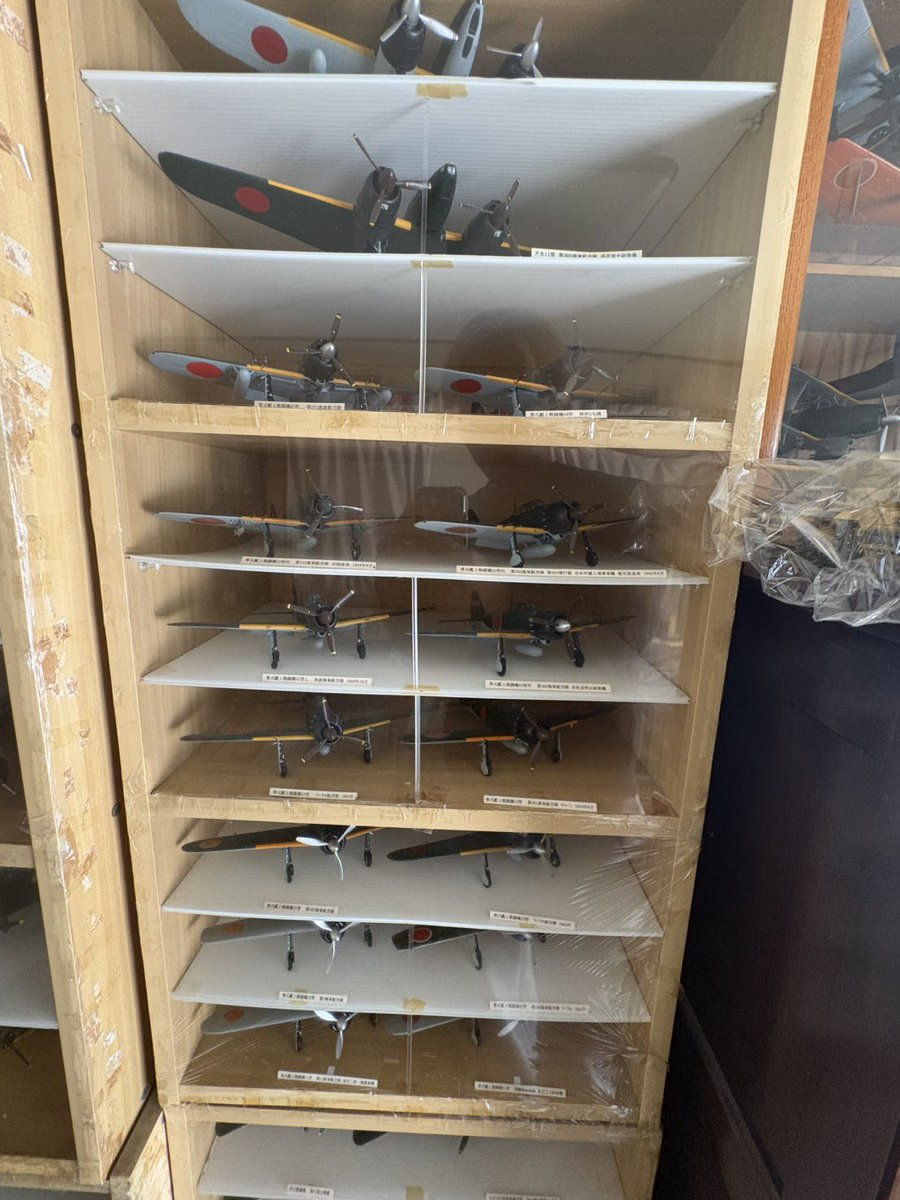
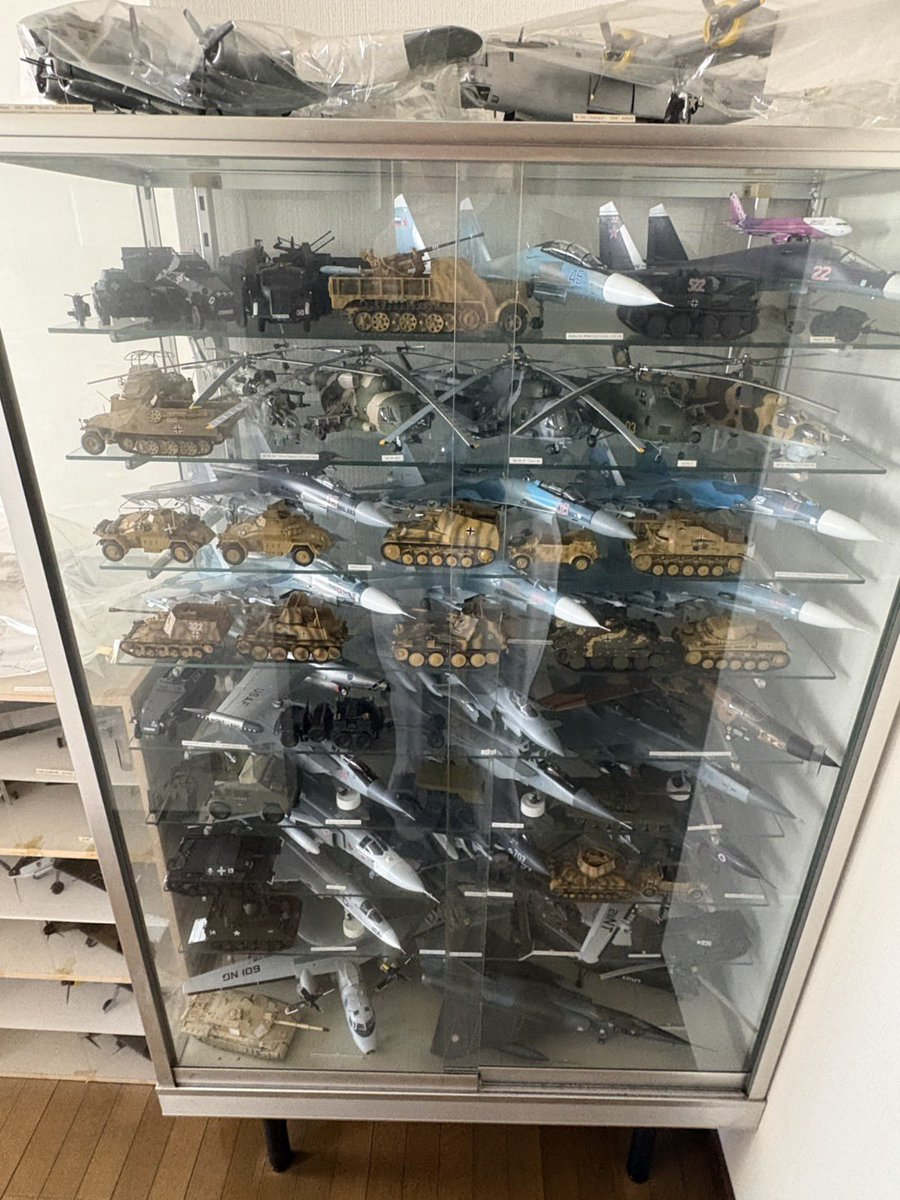
As the post gained attention, many users immediately suggested donating the models to a museum. Some even proposed asking the Japan Self-Defense Forces whether one of its facilities might accept them.
However, users familiar with model collecting and museum operations pointed out that the reality is much more complicated. Museums across Japan regularly receive offers to donate belongings from private estates, but relatively few items have genuine historical value or match a museum's collection needs, and limited storage space means museums simply cannot accept everything. Detailed models like these are also easily damaged during transportation. Formally accepting them would require staff, equipment, and additional handling, so it is not as simple as dropping them off at the door.
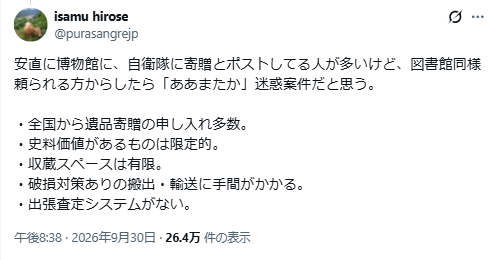
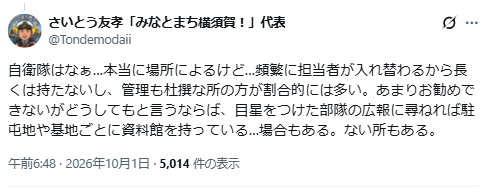
As for the Japan Self-Defense Forces, users noted that facilities vary considerably between garrisons and bases. Some have archives or exhibition halls, while others do not. Even if a facility agreed to accept the models, its preservation and management policies could differ.
Others suggested selling the collection through online platforms such as Yahoo! Auctions. Model enthusiasts, however, explained that this option comes with plenty of practical challenges of its own.
Completed commercial scale models generally have limited resale value unless they were built by a renowned modeler or possess some other special significance. While beautifully painted Gundam models may attract buyers, the same cannot be assumed for every completed kit.
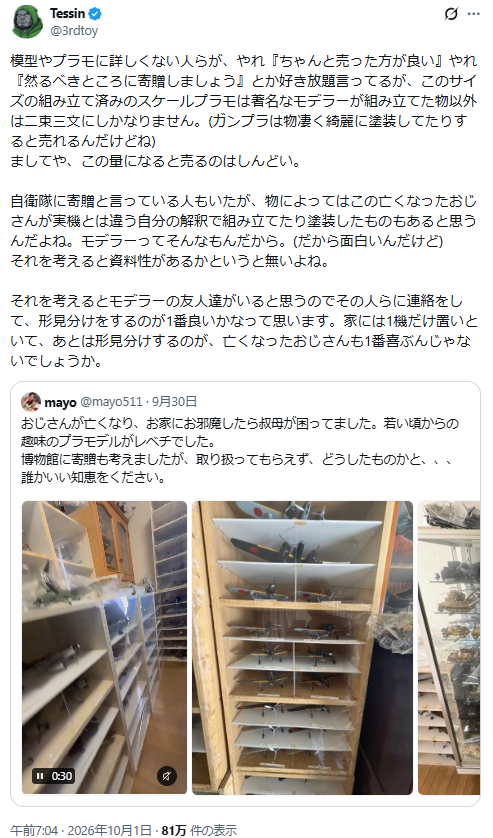
More importantly, the collection is enormous. Listing each model individually would mean inspecting its condition, taking photos, writing a description, answering questions from potential buyers, and then carefully packing every sold item to prevent damage.
Large, delicate models such as aircraft are especially vulnerable during shipping, making safe packaging a demanding job in itself. Some users argued that people suggesting the family simply sell the models over time had probably not considered the work involved in safely shipping such a huge number of finished pieces. In practice, it could be far more exhausting than it sounds.
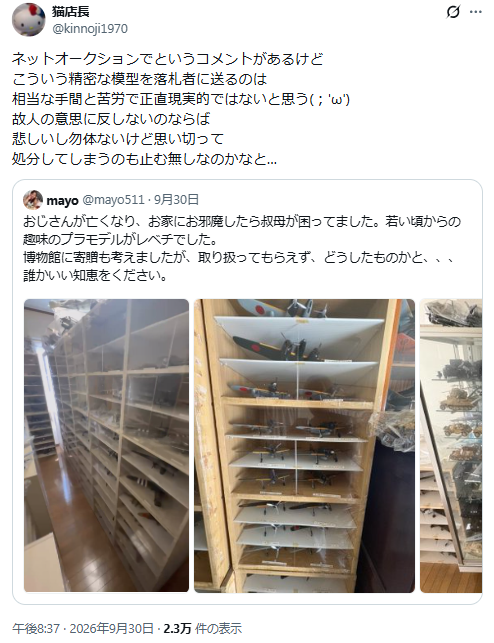
Many users also argued that before outsiders propose an ideal solution, they should consider how much time and effort the family would actually have to invest. A large collection leaves behind more than the objects themselves: there is sorting, moving, contacting organizations, arranging transactions, packing, and shipping. That burden could be overwhelming for an older family member handling everything alone.
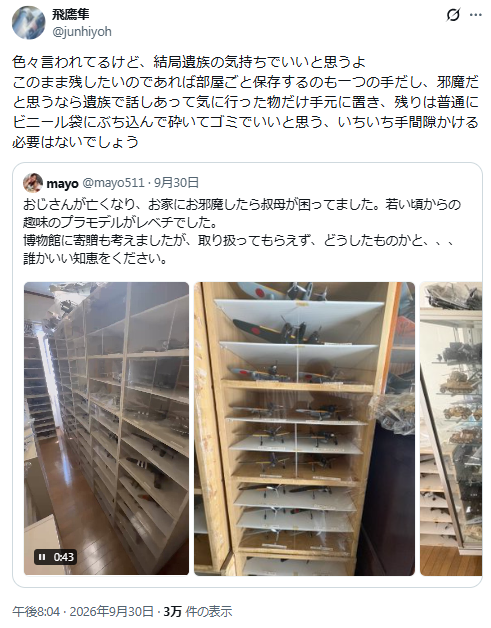
Some therefore suggested photographing the most important pieces, keeping a small number with sentimental value, and disposing of the rest if the family had no desire to preserve the entire collection. Rather than forcing the bereaved family to shoulder enormous stress, it may be more reasonable to let them decide what works best without pressuring them to preserve everything for the sake of outsiders.
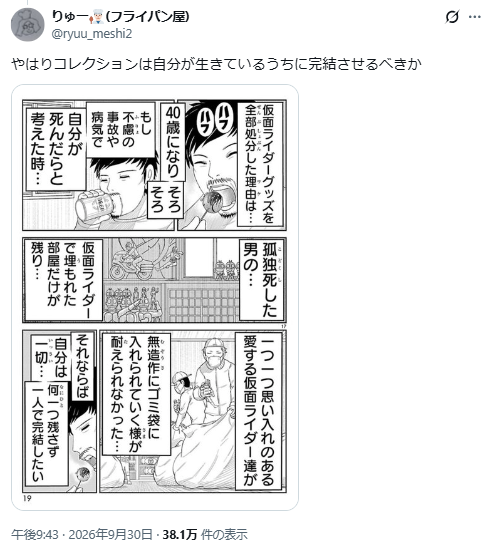
The story also prompted collectors to think about what will happen to their own possessions after they die. A collection can be a treasured hobby and a source of pride during a person's lifetime, but for the family left behind, it can suddenly become a massive estate-clearing project.
Instead of leaving relatives to deal with a collection whose value they may not understand, collectors could begin organizing it while they are still alive and decide in advance what should be kept, sold, or given away. Some joked that this kind of planning is the real final stage of collecting, while others came to the same sobering conclusion: "You really do need to sort this stuff out while you're still alive."
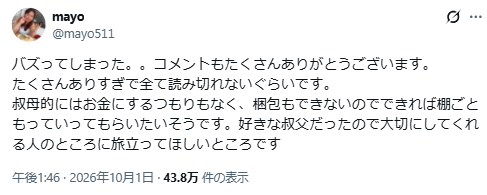
After the post was widely shared, mayo provided another update. They said the post had unexpectedly gone viral, drawing so many replies that it was impossible to read them all, and thanked everyone for their suggestions.
Their aunt is not looking to make money from the models, and mayo does not have the ability to perform the careful packing required for such delicate pieces. For now, the family's ideal outcome would be to find someone willing to take the models together with their display cabinets. Mayo added that their uncle had been someone they loved dearly, so rather than simply converting his collection into cash, they hoped it would eventually reach someone who genuinely appreciated it and would continue to care for it.
The story has reignited discussion in Japan over who determines the value of a collection and whether collectors should make plans for their possessions before they die.
For collectors, models kept for decades may hold irreplaceable memories. For their families, however, dealing with an enormous collection can become a challenge too difficult to shoulder alone.