

Shueisha’s Shonen Jump+ editorial department recently drew attention after announcing that it had ended its outsourced editorial arrangement with MIXGREEN, the company led by prominent manga editor Shihei Lin. The situation drew further interest when Lin announced that his company had signed direct agreements with the creators of four Shonen Jump+ series, leaving many manga fans wondering how the relationship between the two companies would work.
In a recent interview with French publication L’Internaute, Lin discussed his independent publishing venture, MIXGREEN, and addressed the speculation that has circulated within the manga community over the past few months.
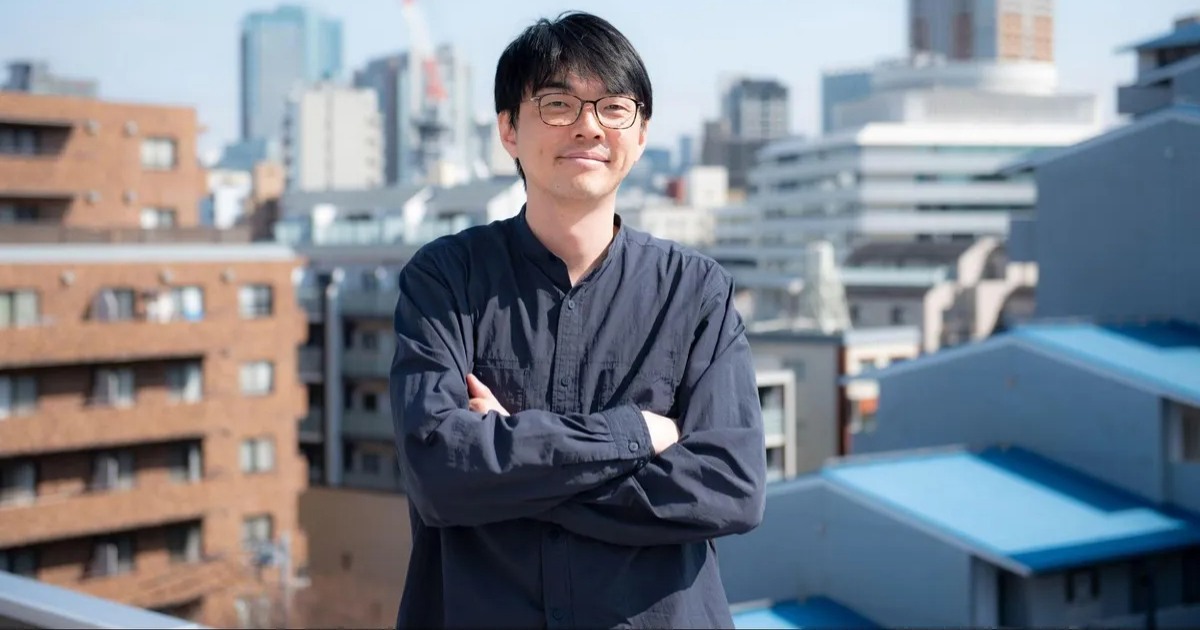
Lin was first asked why he had chosen to leave Shueisha in 2022 and become an independent editor.
Shihei Lin:
The reason is very simple. My results led to successive promotions, but the higher you climb in the hierarchy, the harder it becomes to keep working directly with creators as their editor in charge. I left the company a little over a year after becoming deputy editor-in-chief.
What I particularly love about editing is staying close to creators, discussing the stories they are developing and the characters they are building. I didn’t want to move further away from that side of the job.
Q: Your company, MIXGREEN, has generated considerable discussion online. Will you publish your own manga? How would you define the project?
Shihei Lin: We do intend to become a publisher. We will create our own manga app, develop many new series, and carefully nurture young creators. My wish is very simple: over the next ten or twenty years, I want MIXGREEN to become a place where great works and great creators emerge. To me, MIXGREEN must become the place where tomorrow’s great manga artists are born.
I’m not thinking in terms of competing with Shueisha, nor is my first concern whether we have to become a very large company. Above all, we want to be a company that can properly support and serve the creators who choose to make their work with us.

Q: How do you view Japan’s current manga editorial system?
Shihei Lin: I think the industry is generally healthy. Manga sales are growing worldwide. In Japan, however, the declining population will probably eventually lead to fewer readers and, in turn, lower manga sales. International markets, by contrast, continue to grow strongly.
We are going through a period of change. That doesn’t mean throwing away everything that has been built so far. It means preserving what matters while thinking more carefully about how to make these works accessible to readers around the world. Many companies are already working on this, but we have reached a stage where we need to consider the issue with greater precision.
Q: Before Dandadan, Yukinobu Tatsu faced repeated rejections, including during his time at Jump SQ. Is that kind of lengthy development process still possible today? Have major publishers become less willing to take risks? Is this something MIXGREEN hopes to address?
Shihei Lin: It is less a question of company size than of who makes up each editorial department. Whether a work gets published depends on the people making editorial decisions within that department. Tatsu faced many rejections during his time at Jump SQ. At least back then, there was a difference between that editorial team’s approach and my own thinking. But when we later worked together at Jump+, I didn’t feel the same incompatibility.
In my experience, though, you never know how long the same team will remain together. Since establishing my own company, I don’t want to adopt a way of judging projects that I disagree with. This isn’t about imposing my personal tastes on everyone. We need the courage to embrace new things.
I may be the head of the company, but even if I personally find a project boring or don’t understand it, I want to give it a chance if discussions with younger colleagues show that it is worth trying. I hope to use my experience to avoid repeating the kinds of decisions that I found unsatisfactory in the past.

Q: Weekly Shonen Jump’s system requires a series to win readers over quickly. Will MIXGREEN give more time to slower-starting works, particularly those that need time to build their worlds?
Shihei Lin: Our platform hasn’t launched yet, so we don’t know exactly how we should evaluate its series or what kind of audience it will attract. It would be dishonest to say everything has already been decided. However, I still believe that ending a series at the right time is a good system.
Having a creator spend years drawing a series that isn’t selling or finding an audience is unfortunate for both the creator and the readers. That means we need rules for deciding when a series should end. At Weekly Shonen Jump, a series is evaluated after its first three chapters and may end after as few as around ten chapters. That can seem harsh, but it also gives the creator an opportunity to try something else.
A manga artist may have only around thirty years in which they can keep drawing without compromising their health. Asking someone to spend two, three, or even four years on a series that never finds its audience is not necessarily the best approach. We therefore need to establish figures and rules that both the creators and we can accept. We want to avoid asking creators to continue indefinitely with a work that isn’t succeeding. Early on, though, ending series will be difficult because our catalog won’t yet have enough titles. If we cancel one series after another at launch, it will be hard to maintain a sufficient selection for readers.
But once the number of series increases, taking creators seriously also means knowing when to bring a work to an end and being able to explain, “We are ending this series because of these figures.” I would prefer that decision not to be driven by emotion. A series shouldn’t end simply because an editor-in-chief says, “I don’t find this interesting.” I think it is healthier to establish that the work genuinely hasn’t found support from readers.
▼ Titles Currently Handled by MIXGREEN

Q: Will established creators you already work with, such as Tatsuya Endo and Yukinobu Tatsu, participate in MIXGREEN’s launch through one-shots or special projects?
Shihei Lin: Tatsuya Endo is currently chairing the judging panel for our first manga competition. As for me, I’m still editing four ongoing series on Jump+: SPY×FAMILY, Dandadan, Centuria, and WITCHRIV. Those series will continue to be published on Jump+.
Meanwhile, our company will handle the supervision and production of their adaptations and related projects, such as anime adaptations and merchandise. It is a somewhat unusual arrangement. As for those creators drawing one-shots or producing other content for MIXGREEN, that is certainly something I would like to see.
However, their current series are absolutely the priority. If they have some spare time and the capacity to take on other work, they might create something, but there are no concrete plans at this stage.
Q: What makes a good editor today? Is it primarily the ability to read, write, listen, negotiate, or produce?
Shihei Lin: First, a good editor needs to be able to have meaningful working discussions with creators and help them feel positive about their work. That means making them feel, “Drawing manga is enjoyable” and “I want to keep doing this.”
Next, we need to promote the work entrusted to us, introduce it to more readers, and bring it to audiences around the world. Today, that also requires the ability to properly produce anime projects and develop good merchandise. Ultimately, it means staying as close as possible to the creator and their work.
While Shueisha has ended its outsourced editorial relationship with Lin and his company, the four titles will continue on Shonen Jump+ under a new arrangement. Their creators have signed direct agreements with MIXGREEN, and, according to Lin, the company will also oversee the supervision and production of anime adaptations, merchandise, and other related projects for SPY×FAMILY, Dandadan, Centuria, and WITCHRIV. This gives MIXGREEN a significant role in developing these series beyond their original manga.
Few manga editors have become as recognizable or closely associated with their creators as Shihei Lin. Although he says his aim is not to compete with Shueisha, MIXGREEN’s approach is bringing a different model to the industry.
via: L'Internaute