

I’m sure many Nikkan Denden readers are ramen fans. With ramen shops opening across Taiwan one after another in recent years, do you usually finish the broth?
A Japanese user recently shared that when they ate at the ie-kei ramen chain Konshinya (魂心家), they poured the remaining ramen broth over white rice and finished it, unexpectedly receiving a complimentary “Makuri Certificate” from the restaurant. The voucher could be exchanged for a free topping, leaving them surprised. After the post went viral, netizens began discussing the health risks of ramen, with some even joking that it was a “devilish business strategy” that traded customers’ health for lower waste-disposal costs.
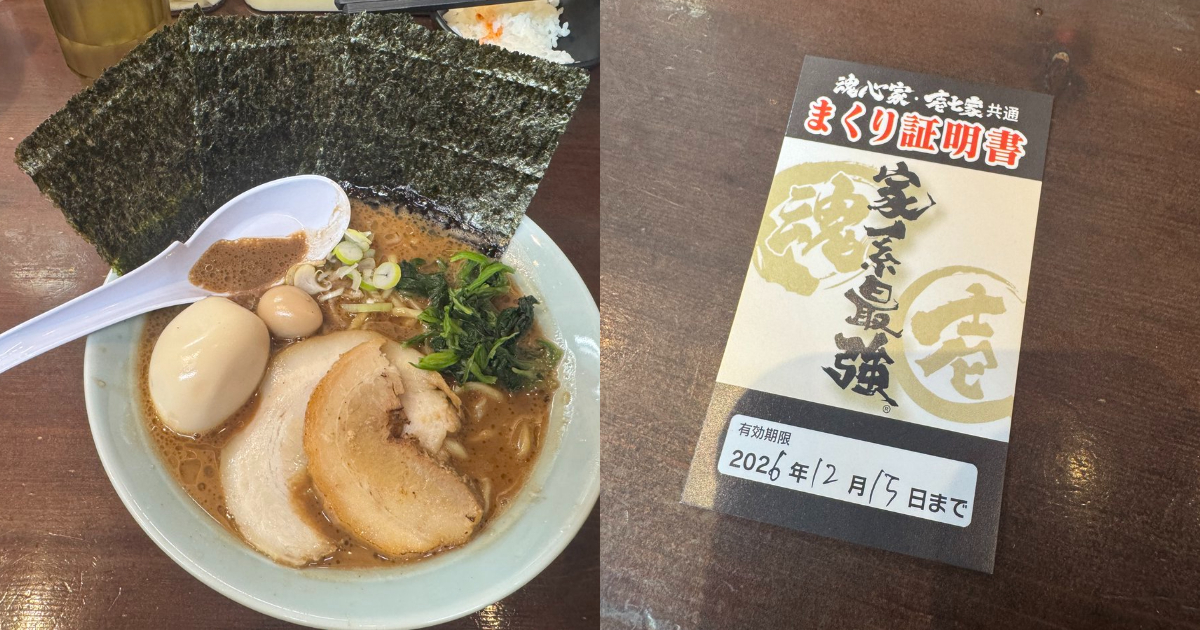
The term “makuri” means drinking the ramen broth until not a single drop remains. The certificate can be exchanged for a free topping and used an unlimited number of times before it expires. Once customers accumulate 22 “Makuri tickets,” they can still use them after the usual expiration period and redeem an additional reward.
The original poster added that they did not fully understand what the staff member meant by “makuri” at the time, but accepted the certificate after thanking them. Since they had already received the certificate, they felt it would be awkward not to finish the remaining broth, so they eventually poured it all over their rice.
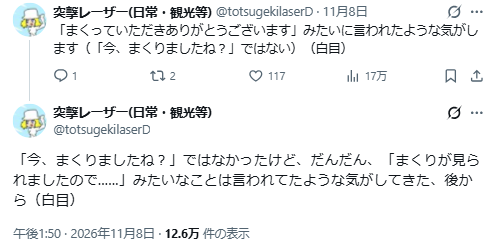
After the post sparked discussion, many netizens began analyzing why ie-kei ramen restaurants offer free rice and encourage customers to finish their broth.
Some pointed out that ie-kei ramen broth typically contains a substantial amount of fat. If it is poured directly into the drainage system, it can clog pipes and increase the cleaning and maintenance costs of grease traps. By offering free rice, restaurants encourage customers to finish the leftover broth with it, thereby reducing the amount of wastewater that needs to be processed.
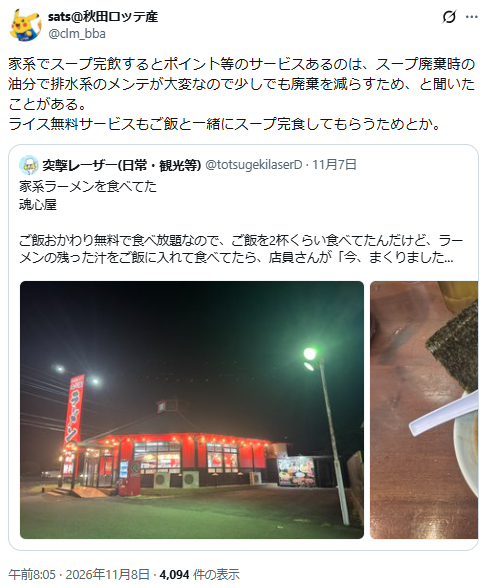
Others elaborated that oily wastewater is not only more expensive to treat, but can also accelerate wear on a restaurant’s drainage pipes and shorten maintenance intervals. From the restaurant’s perspective, rather than paying to process leftover broth, it can encourage customers to eat it themselves through discounts. In that sense, it becomes a mutually beneficial arrangement: customers finish their meal, help the restaurant, receive a discount, and may even return for another meal.
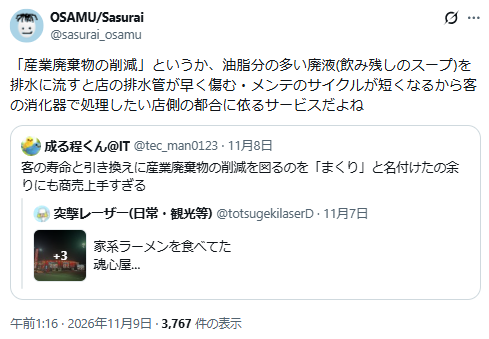
The explanation prompted netizens to joke: “Using customers’ kidneys as grease traps—that’s an idea only a devil could come up with,” and “Calling the act of trading customers’ lifespans for reduced business waste ‘makuri’—that’s some truly brilliant business thinking.”
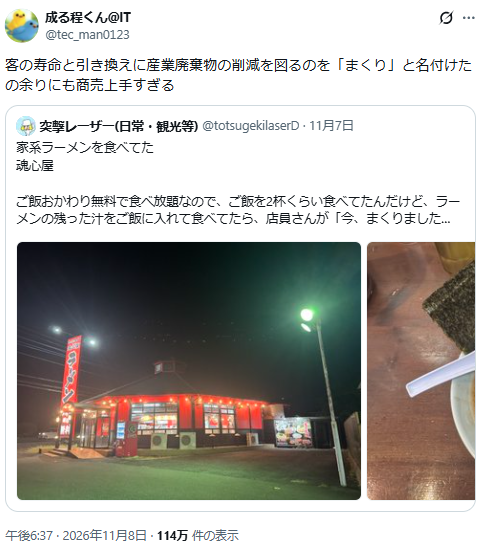
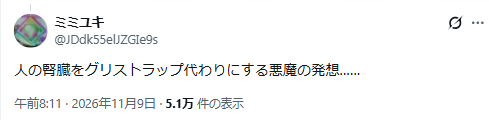
Some ramen enthusiasts, however, took a different view. They argued that the broth is the essence of ie-kei ramen and that anyone who comes to enjoy it should naturally drink it all. Some even said that being able to eat delicious ramen, receive free toppings, and reduce the environmental burden makes this a win-win system.
The discussion also drew attention to how the seemingly simple combination of free rice and vouchers for finishing the broth may conceal a business motive to reduce operating costs. Whether it is a thoughtful customer perk or a business strategy so clever that it is almost laughable has become a hot topic among netizens.
via: X@tec_man0123