In 2016, Hideaki Anno, the pure otaku creator widely known for his series of masterpieces "Neon Genesis Evangelion," together with his comrade Shinji Higuchi, spearheaded the release of the 29th Godzilla film, "Shin Godzilla" (シン・ゴジラ). The term "シン" (Shin) in its title not only carries the expectation of "newness" and a "new era" but also the aspiration of returning to the "original" or "authentic" roots.
Image credit:Twitter
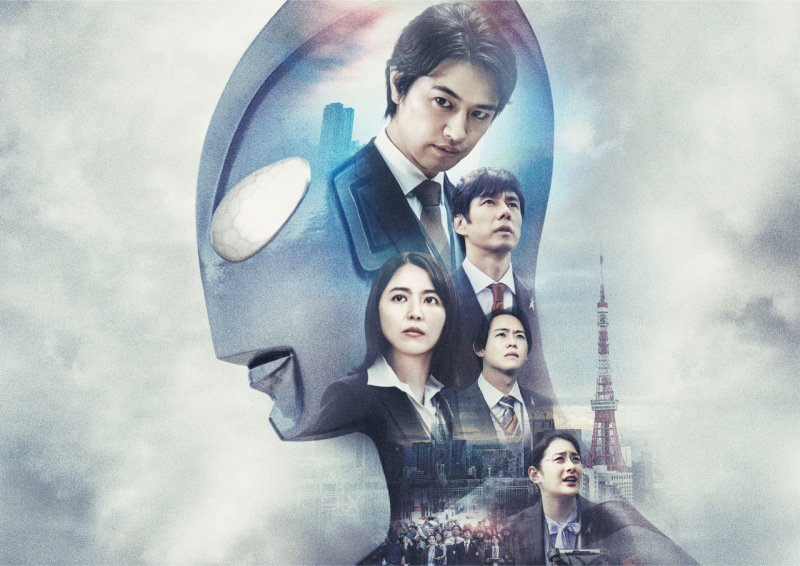
Following "Evangelion: New Theatrical Edition" and "Shin Godzilla," Japan's renowned tokusatsu hero, "Ultraman" (ウルトラマン), also joined the "Shin Japan Heroes Universe (SJHU)" with a spirit of "newness," a "new era," and "authenticity." The brand-new film "Shin Ultraman" (シン‧ウルトラマン) premiered in Japan on May 13th this year and officially met its Ultraman fans in Taiwan on September 16th. The homages and reinterpretations within it are truly satisfying for connoisseurs. After reading this comprehensive guide, you too can become an inheritor of the secrets of light!
WARNING!!! This article contains maximum spoilers; those who wish to avoid them should steer clear immediately.
Additionally, for distinction, when referring to Ultraman in the film, we will use "Shin Ultraman," while for the widely circulated image and the original TV series version, the "Shin" prefix will be omitted.
1. Opening Style Animation Image credit:Twitter
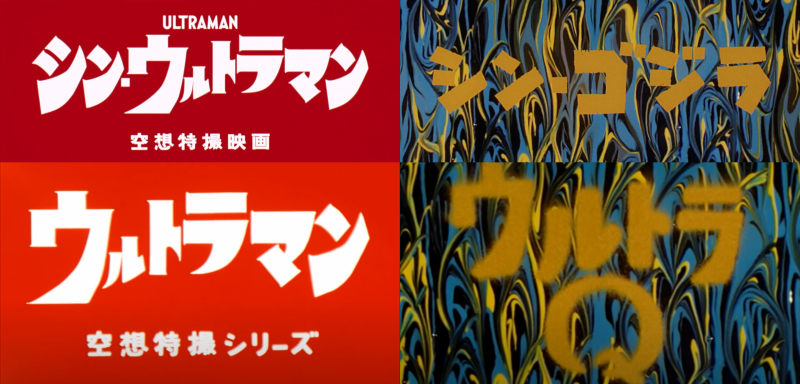
At the beginning of the film, rotating colors predominantly yellow, blue, and black appear, accompanied by eerie music. The title "Shin Godzilla" (シン・ゴジラ) then slowly emerges. Subsequently, a red light flashes, introducing the main title "Shin Ultraman" (シン‧ウルトラマン), along with the words "Fantasy Tokusatsu Film."
This design is derived from the opening sequence that appeared in every episode of "Ultraman" (ウルトラマン) when it aired on television. In the original, the title emerging from the oil paint was "Ultra Q" (ウルトラQ). Below the Ultraman title, the smaller text read "Fantasy Tokusatsu Series." "Ultra Q" was the first work in this series, centered on stories challenging various strange incidents (caused by monsters and aliens). "Ultraman" was the second work in the series.
2. Kaiju (Kaii-ju) Numbers 1-6The film uses extremely rapid editing to introduce six "Kaiju" (カイジュウ, pronounced the same as "monster" in Japanese) that suddenly wreak havoc on Earth. This briefly introduces the world's setting before the appearance of Shin Ultraman.
The first giant unidentified lifeform to appear is named Gomess (ゴメス). It originates from "Ultra Q" Episode 1, "Defeat Gomess!" (ゴメスを倒せ!). The close-up shot of its eye and the tunnel construction site both pay homage to the scenes where Gomess appeared in the original TV series.
Image credit:大人のウルトラ怪獣超百科~今日から君も、怪獣のプロだ~
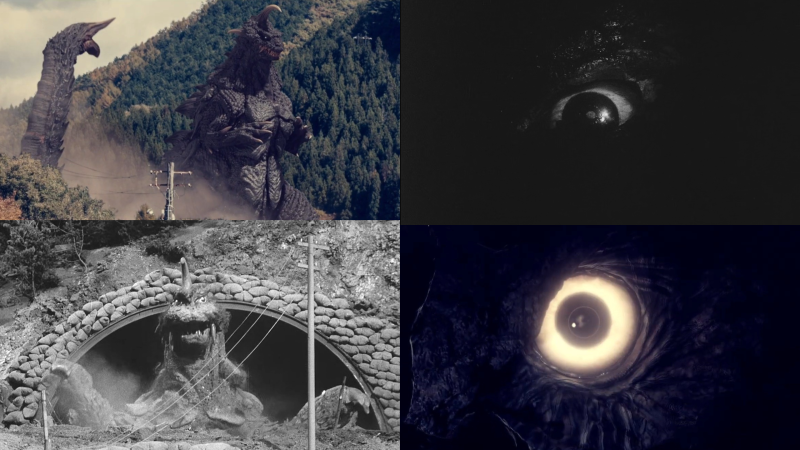
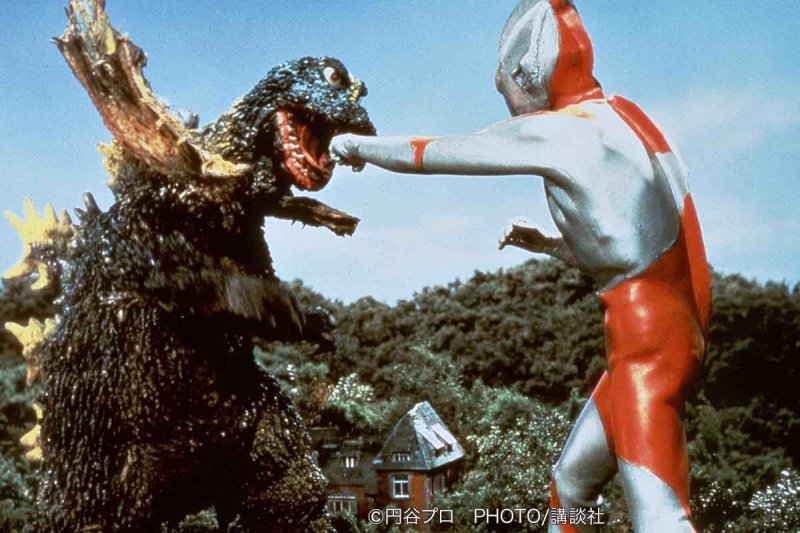
Furthermore, Gomess in the film was modified based on the animated model of Shin Godzilla; Gomess from "Ultra Q," on the other hand, borrowed the Godzilla suit from "Mothra vs. Godzilla" and "Ghidorah, the Three-Headed Monster."
▼The monster Jirahs (ジラース), which appeared in "Ultraman" Episode 10, was also modified from a Godzilla suit Image credit:TELEMAGA.net
The second giant unidentified organism is Mammoth Flower (マンモスフラワー). This plant originates from "Ultra Q" Episode 4. Its original name in the series was "Giant Plant Jurann (巨大植物ジュラン)," with Mammoth Flower actually being the episode's title.
Image credit:Twitter
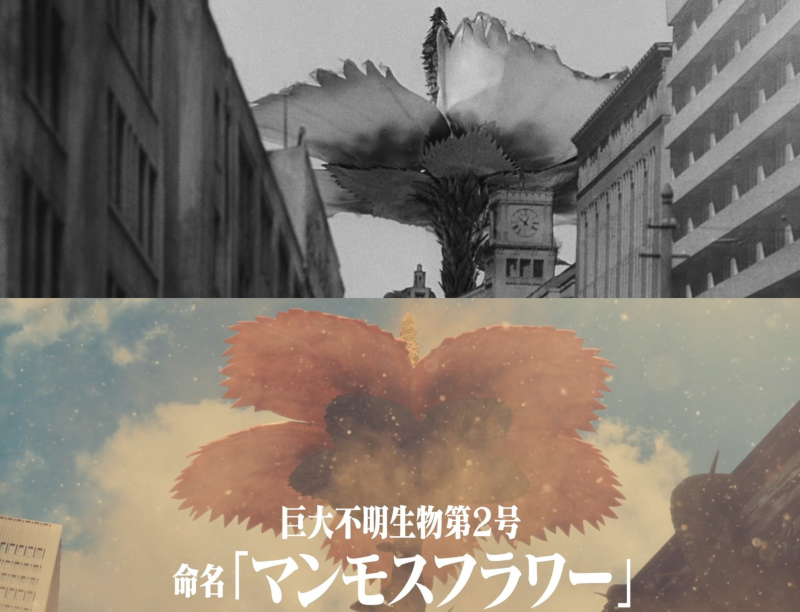
▼Speaking of Jurann's "famous cameo," it was likely in the recent masterpiece "Ultraman Z," where Pirate Alien Barossa II used Jurann's seeds to achieve giantification Image credit:マサキの冒険

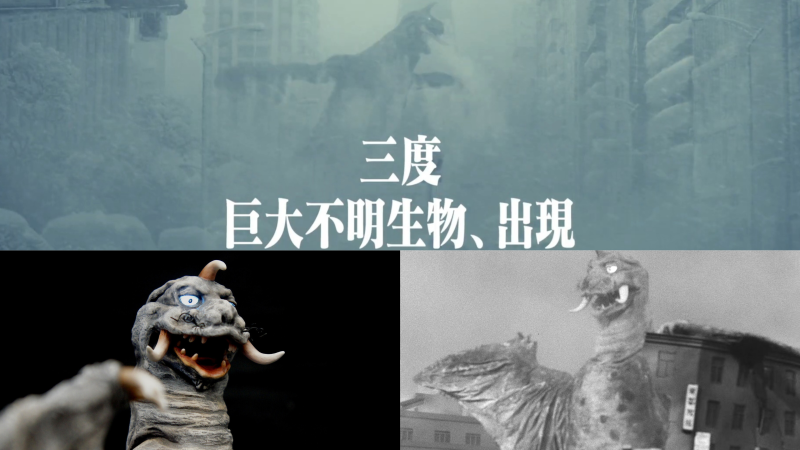
Giant unidentified organism number three is "Peguila (ペギラ)," appearing in "Ultra Q" Episodes 5 and 14. In the film, Peguila uses its abilities to plunge Tokyo into an ice age, paying homage to the story of Episode 14, "Tokyo Ice Age (東京氷河期)." Following this incident, the Japanese government in the film officially renamed giant unidentified organisms to "Kaiju."
Image credit:Robin Kwok
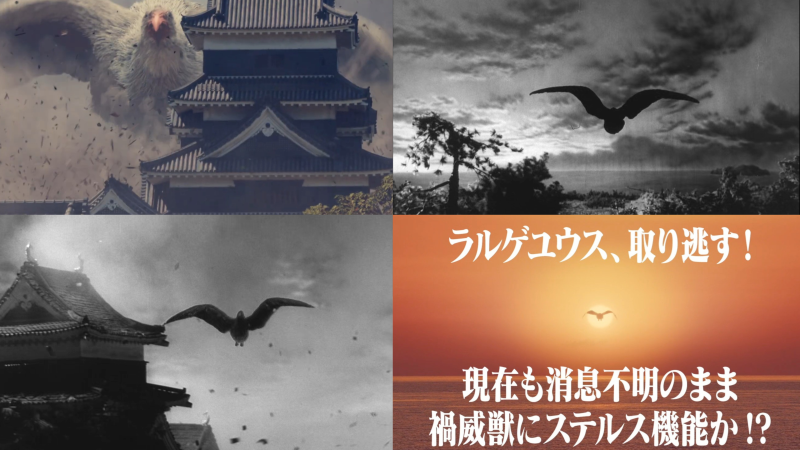
Kaiju number four is "Flying Kaiju Larugeus (ラルゲユウス)," from "Ultra Q" Episode 12, "I Saw a Bird (鳥を見た)." The story revolves around a lonely child and the ancient time-traveling monstrous bird, Larugeus (古代怪鳥‧ラルゲユウス). At the end of the episode, Larugeus transforms from its small bird form back to its giant bird original form, breaking out of a police station cage. The powerful winds from its wings destroy the city, and it eventually goes to the beach to bid farewell to its young friend before departing.
▼In the film, will Larugeus's next stop be the past or the future? Image credit:ウルトラマンオーブ 公式サイト
Kaiju number five is "Melting Kaiju Kaigel (カイゲル)," from "Ultra Q" Episode 24, "The Statue of Goga (ゴーガの像)." Its original name was "Shell Beast Goga (貝獣ゴーガ)." In the original series, it possessed the ability to shoot corrosive liquid from its eyes and once destroyed an entire empire in ancient times.
Image credit:TELEMAGA
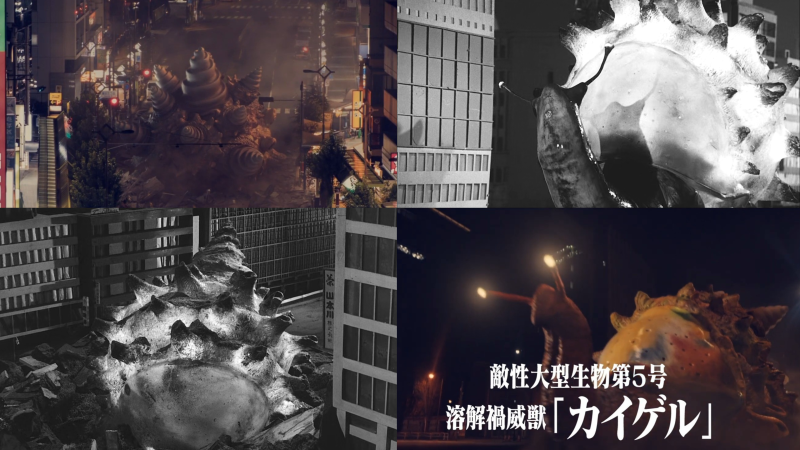
So why was the monster originally named "Goga" changed to "Kaigel" in the film? In fact, the concept of a "shell beast awakening from ancient slumber" comes from an unused "Ultra Q" script titled "Fossil City (化石の城)," and the monster's name in that unused script was "Kaigel." From this, one can see Hideaki Anno's dedication as a tokusatsu connoisseur!
Kaiju number six is "Radioactive Material Predatory Kaiju Pagos (パゴス)," from "Ultra Q" Episode 18, "Rainbow Egg (虹の卵)." In the film, it was dealt with by a strategy seemingly adapted from the one used against Shin Godzilla, ultimately being frozen and shattered.
▼Pagos had an impressive appearance in the latest Ultraman TV series, "Ultraman Decker" (ウルトラマンデッカー) Image credit:TSUBURAYA IMAGINATION

此外,這一連串快速蒙太奇的配樂,也採用了《超異象之謎》片頭劇組人員名單跑動時的音樂。
3. S-Class Species Suppression Protocol (SSSP) Image credit:禍特対|映画『シン・ウルトラマン』公式サイト
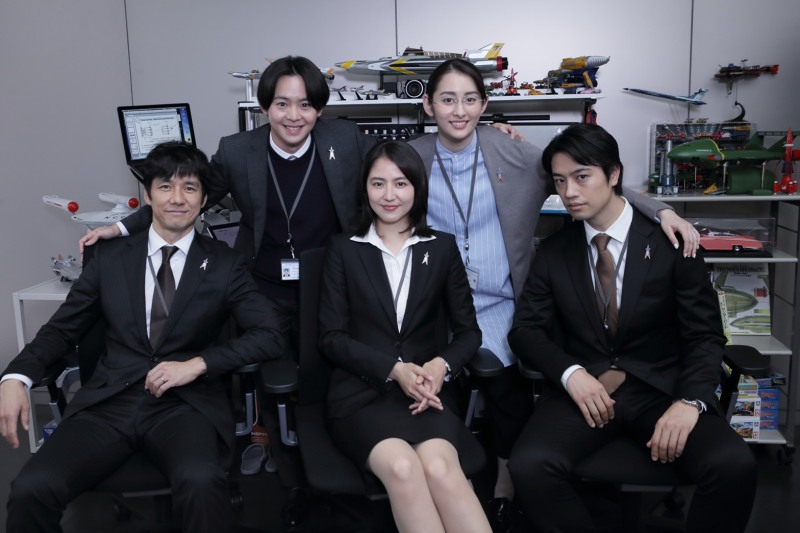
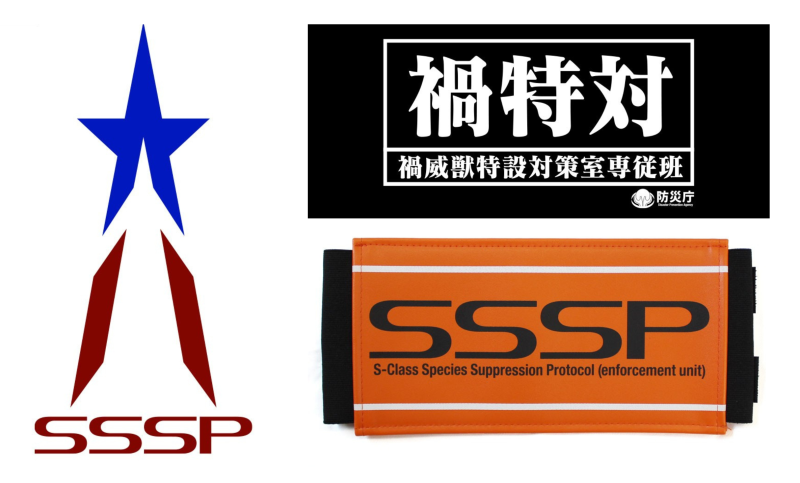
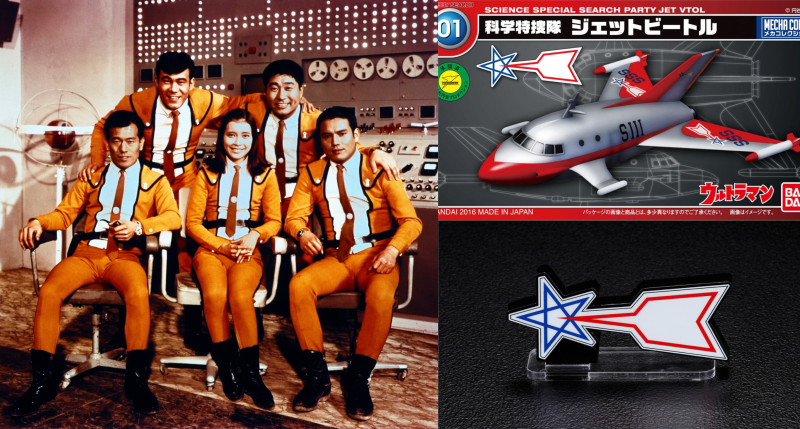
To counter the Kaiju, the Japanese government established the Disaster Prevention Agency, under which five top experts from different fields formed the Kaiju Special Suppression Task Force, abbreviated as "Katokutai" (カトクタイ, pronounced the same as "Science Patrol"). Its English designation, S.S.S.P, stands for "S-Class Species Suppression Protocol." This organization corresponds to the "Science Special Search Party," abbreviated as "Science Patrol" (科特隊), with the English designation S.S.S.P standing for "Special Science Search Party" in the original "Ultraman" series.
Image credit:禍特対|映画『シン・ウルトラマン』公式サイト
4. Kaiju No. 7: Neronga (ネロンガ)Kaiju No. 7, Neronga, is the first Kaiju that Shin Ultraman battles on Earth in the movie. It originates from "Ultraman" Episode 3, "Science Patrol Sortie!" (科特隊出撃せよ), possessing the ability to turn invisible and feeding on electricity.
Image credit:MOVIE WALKER
Image credit:Amazon
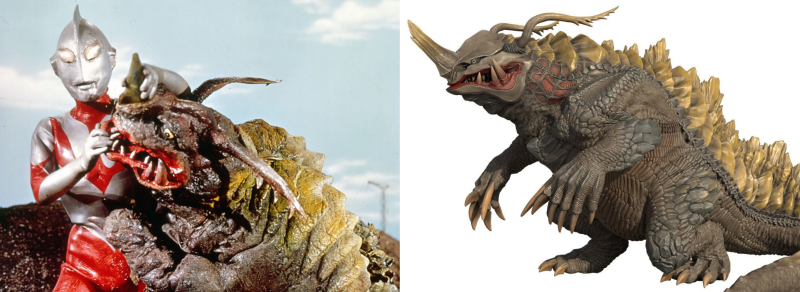
While the first monster opponent Ultraman faced on Earth in the TV series was "Space Monster Bemular" (宇宙怪獣‧ベムラー), Bemular's encounters with Ultraman and the Science Patrol were confined to the vicinity of Ryumori Lake. Therefore, Neronga was the first monster in the series to cause widespread destruction to human structures and daily life.
5. Shin Ultraman's First Appearance!As Neronga wreaked havoc, Shin Ultraman descended to Earth like a meteor. At this moment, Shin Ultraman was entirely silver, a stark contrast to the familiar red and silver appearance, and his head sculpt also differed from the preview images.
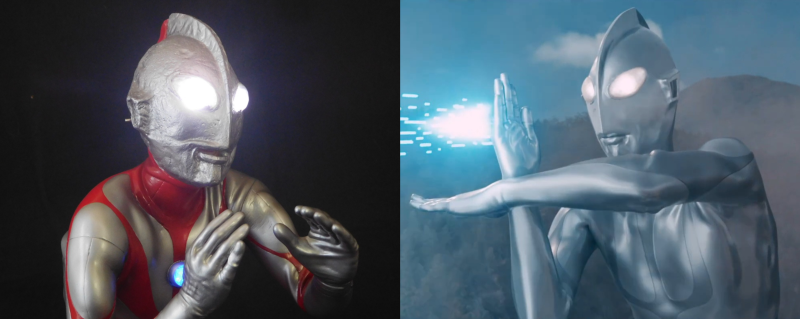
During the latter half of the 1960s, when "Ultraman" was originally filmed, suit-making technology was not yet mature. Consequently, across the 39 episodes, Ultraman's appearance evolved into three distinct forms, known today as "Type A," "Type B," and "Type C" faces. The Shin Ultraman appearing entirely silver on Earth in the movie draws its design inspiration from the "Type A" face.
6. Deceased SSSP MemberAs Shin Ultraman descended to Earth to confront Neronga, a massive amount of sand and debris was stirred up, killing Shinji Kaminaga (かみなが しんじ), the SSSP Strategic Planning Officer who was protecting children. Intrigued by humanity's act of self-sacrifice to protect others, Shin Ultraman chose to merge with Shinji Kaminaga, preserving his life, and simultaneously observe other humans up close.
Image credit:tumbig
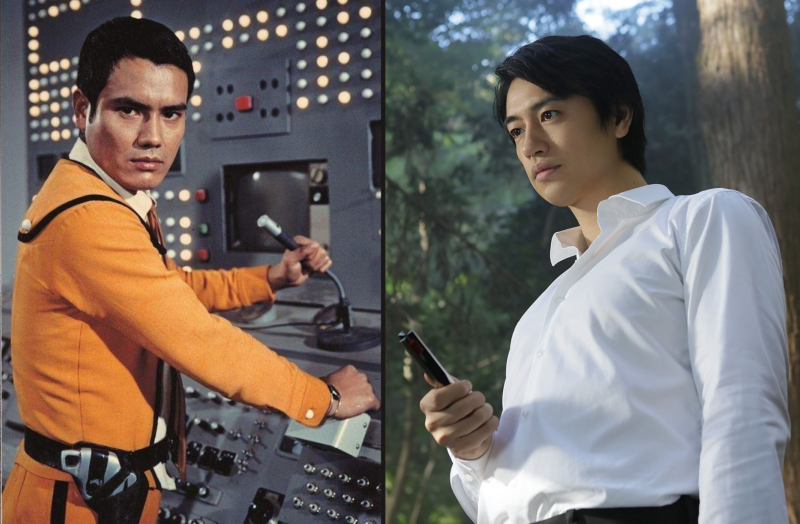
In the original TV series, Ultraman, in pursuit of the space monster Bemular, accidentally collided with the fighter jet piloted by SSSP member Shin Hayata, causing Hayata's death. Ultraman then merged with Hayata, allowing him to revive, but Hayata's own personality fell into a deep slumber. Only after Ultraman separated from the human body did Hayata's personality reawaken.
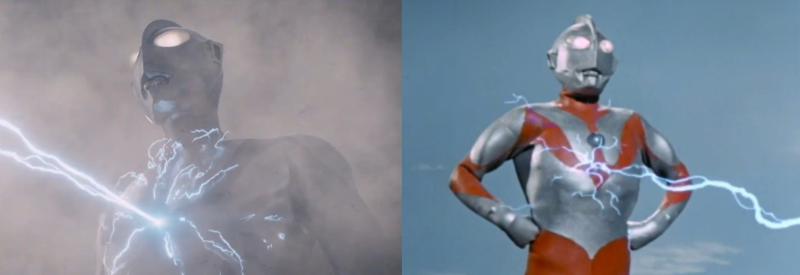
7. A Body Fearless of Electrical Attacks!Neronga launched an electrical attack from its horn at Shin Ultraman, who bravely took the full force of the assault with his chest. This scene pays homage to the classic confrontation between hero and monster in the third episode of the TV series, "SSSP Sortie."
8. Specium Ray and Charging PoseUltraman possesses numerous winning moves, among which the most famous is undoubtedly the "Specium Ray (スペシウム光線)," fired from his arms after forming a "cross" shape with his hands. In the original TV series, Specium is an element with atomic number 133, found on Mars. The SSSP weapon, MARS-133, was named after this element, as it was developed based on Specium technology.
▼SSSP Firearm—MARS‧133 Image credit:Mandarake
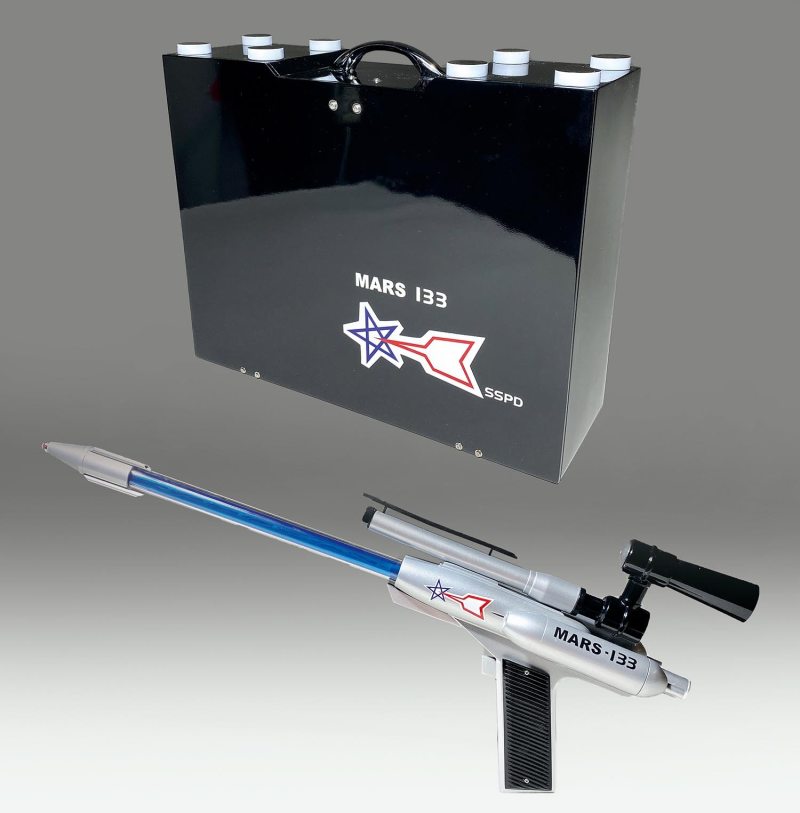
In "Shin Ultraman," the Specium element is fully named "Super Heavy Element Specium 133," serving as the constituent element and energy source for Shin Ultraman's body. Due to his fusion with Shinji Kaminaga, the consumption rate of Specium 133 is accelerated.
Furthermore, when Shin Ultraman is in his silver state and about to fire the Specium Ray, he does not directly form the "cross" hand gesture as in the original series. Instead, he first holds his right hand vertically, then quickly brings his left hand horizontally to meet his right wrist. This action is not from the TV original but comes from "Ultraman Powered," a collaboration between the US and Tsuburaya Productions, specifically from the preparation pose for his ultimate attack, the "Mega Specium Ray (メガ・スペシウム光線)," in its first episode.
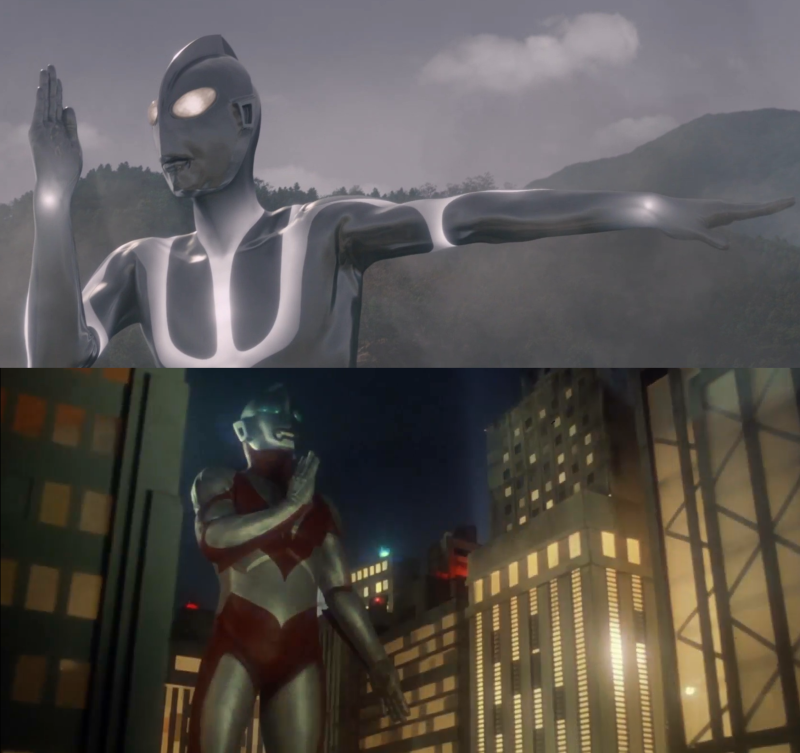
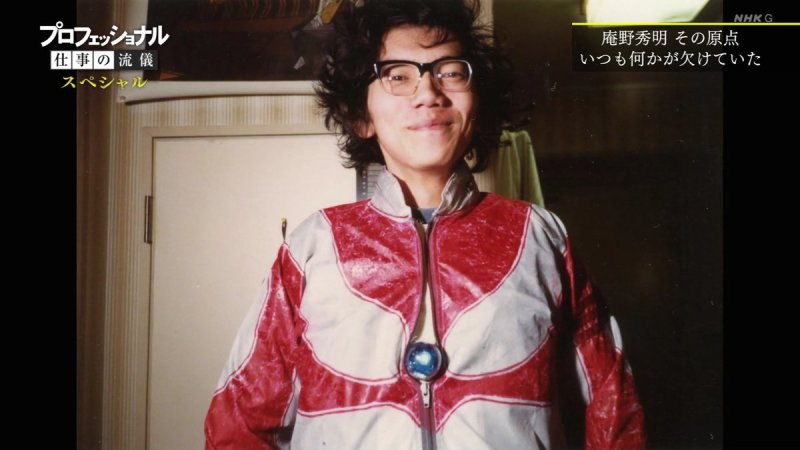
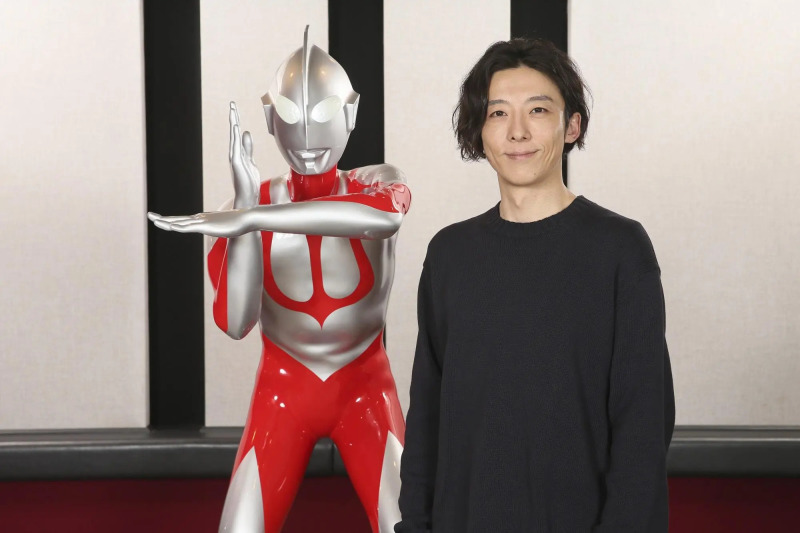
9. The "Man Inside" Ultraman"Shin Ultraman" opted for motion capture to portray Ultraman and the monsters, which bears a striking resemblance to the tokusatsu method of action actors performing in suit costumes. The two actors responsible for Ultraman's movements in the film are both heavyweights: Hideaki Anno himself, and Bin Furuya, who was the original Ultraman suit actor in the TV series. The voice acting is provided by Japanese actor Issey Takahashi.
▼This is not Hideaki Anno's first time as an Ultraman action actor; in the fan film "DAICON FILM's Return of Ultraman: MAT ARROW 1 Go! Launch Order," Anno Hideaki donned a simple costume to battle as Ultraman and a monster. Image credit:Twitter
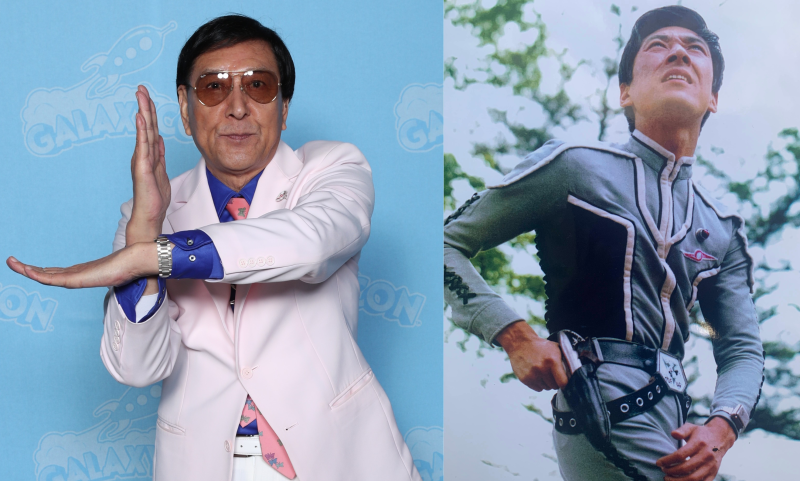
▼Bin Furuya's slender physique was the main reason he was chosen as the Ultraman suit actor back then; his insistence on a slight bend in the fingers of his left hand for the Specium Ray pose was a testament to his dedication to the character. In "Ultraseven," he wore the Ultra Guard uniform and played member Amagi. Image credit:Twitter
▼Issey Takahashi, who played Yasuda Ryuhiko, a member of the anti-Godzilla project team in "Shin Godzilla," lends his voice to Shin Ultraman this time. Image credit:livedoor News
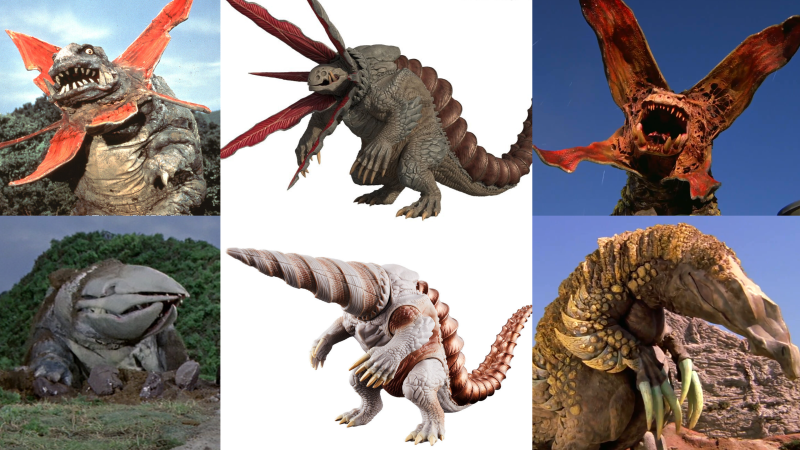
10. Kaiju No. 8: Gabola (ガボラ)Gabola appeared in Episode 9 of the original TV series, "Operation Lightning Strike (電光石火作戦)," similarly debuting with its head covered by a protective shell. After failing to grasp the Science Patrol's radioactive bait, it furiously opened its shell and attacked the Science Patrol with radioactive beams from its mouth. Finally, in its battle with Ultraman, its shell was torn off by hand, and it was defeated by a combination of punches and throws. However, the movie's Gabola, with its massive drill-like shell and powerful attacks, is closer to the version from "Ultraman Powered."
▼Left: Original Gabola; Middle: Movie Gabola; Right: Powered Gabola Image credit:livedoor News
11. The Giant Clad in Red and SilverWhen battling Gabola, Ultraman's appearance was the familiar red and silver body color. His face, devoid of wrinkles, took on a serene expression, and the well-known "Color Timer" (カラータイマー) was replaced by red stripes turning green to indicate a low energy state.
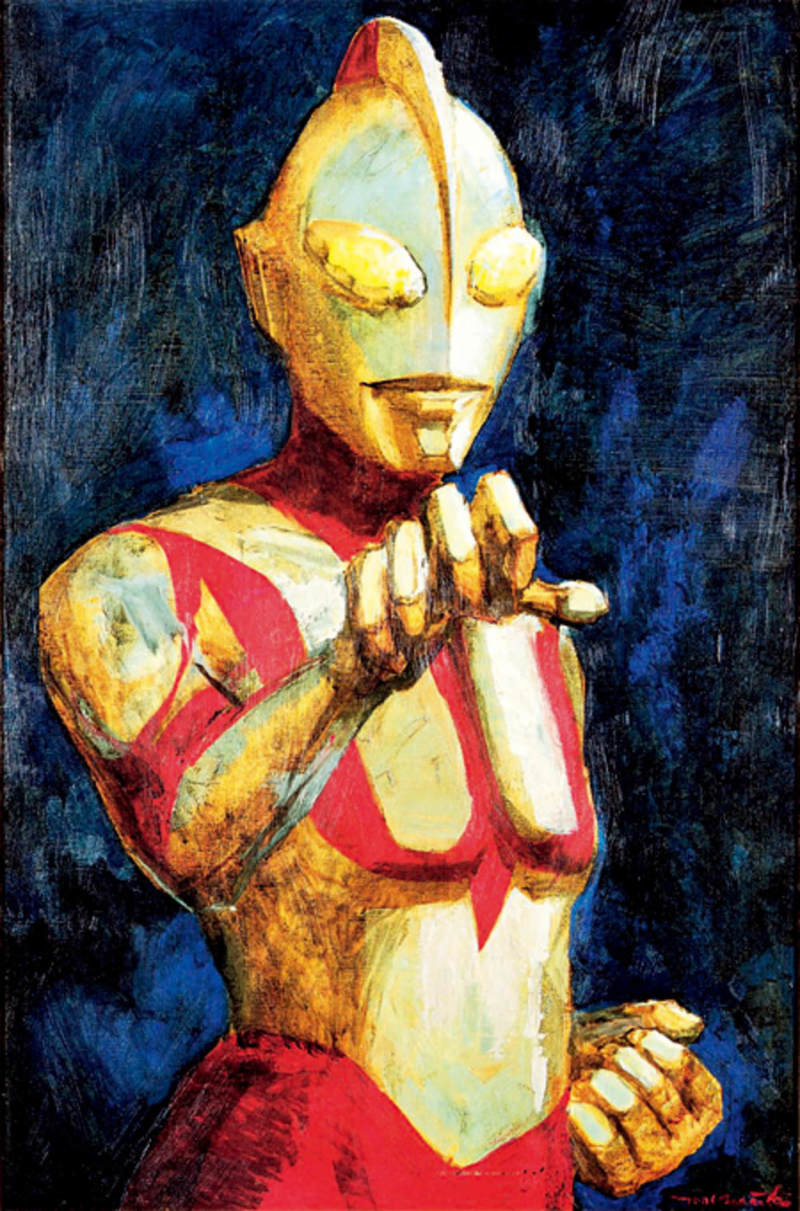
No Color Timer, no eye-slit holes, no suit zipper fin – this is precisely the "embodiment of truth, justice, and beauty" in the mind of Ultraman's design pioneer, Tohl Narita. In contrast to Narita's "chaos" concept of "modern chimeras" when designing monsters, Ultraman's simple lines symbolize "the concretization of cosmic-era order."
▼Tohl Narita's 1983 oil painting "Embodiment of Truth, Justice, and Beauty (真実と正義と美の化身)" Image credit:Eiga Natalie
(Note: This section cites Ms. Sakamizu Mirai's "Ultraman Day: An Initial Exploration of Tohl Narita's Tokusatsu Art Design Philosophy." We are grateful for this excellent Bahamut article on Tohl Narita, which provided a deep understanding of his creative philosophy: https://home.gamer.com.tw/creationDetail.php?sn=4052672)
12. The Origin of the Name "Ultraman"In fact, whether in the movie or the original TV series, "Ultraman / ウルトラマン" is the name given by humans to this mysterious cosmic hero. At the end of Episode 1 of the TV series, "Operation Ultra No. 1 (ウルトラ作戦第一號)," the Science Patrol members enthusiastically discussed who the alien that had just defeated the monster was. At this point, Shin Hayata, who had merged with the alien, proposed the name "Ultraman / ウルトラマン."
In the movie, the S-Class Species Suppression Protocol (SSSP) discovered that the Giant and the Kaiju possessed entirely different thought patterns. After compiling the data, SSSP analyst Hiroko Asami (あさみ ひろこ) designated him with the codename "Giant Humanoid Organism: Ultraman (Provisional)." However, later, when the new Ultraman conversed with Zoffy (ゾーフィ), the messenger from the Land of Light, it was revealed that the new Ultraman's original name was "Lipiah (リピアー)."
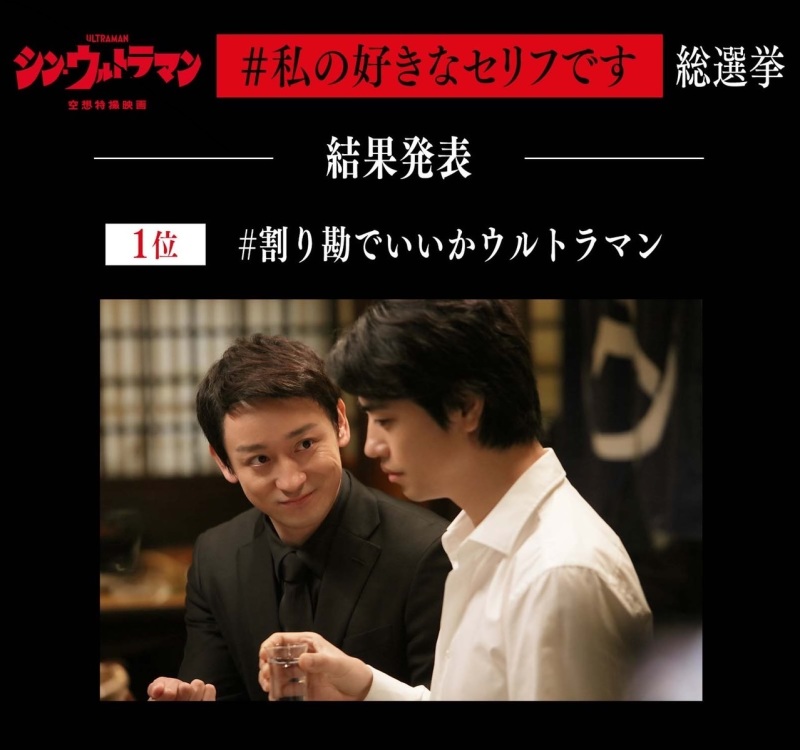
Additionally, when the movie was released in Japan, due to the lack of subtitles, online discussions mostly recorded Ultraman's original name as "リピア" (Lipia). In Chinese, "リピア" translates to "Lippia," and its flower language is "bond" and "honesty," which aligns well with the new Ultraman's role in the movie. It was only during the official website's "Most Popular Lines Poll" event that "リピア" was discovered to be an incorrect spelling, and "リピアー" (Lipiah) was confirmed as the official katakana notation.
▼Side note: The top-ranked line in the "Most Popular Lines Poll" was: "Can we split the bill, Ultraman?" (割り勘でいいかウルトラマン) Image credit:ORICON NEWS
13. Alien No. 2: Zarab (ザラブ)Known for impersonating Ultraman, the "Malicious Alien Zarab (兇悪宇宙人‧ザラブ星人)" first appeared in TV original episode 18, "Brothers from a Planet (遊星から來た兄弟)". In the film, Zarab's gentleman's hat and hooded coat attire, along with the battle content and cinematography of his fight with Ultraman, are almost identical to the TV version. For instance, Zarab extending goodwill to Earthlings, but actually aiming for humanity's ultimate destruction; Ultraman's human host being captured by Zarab when not carrying the transformation item – the Beta Capsule (ベーターカプセル); Ultraman shaking his hand in pain after a hand chop attack; Zarab writhing in agony after being hit by the Spacium Ray – these are all scenes that can be seen in the original work.
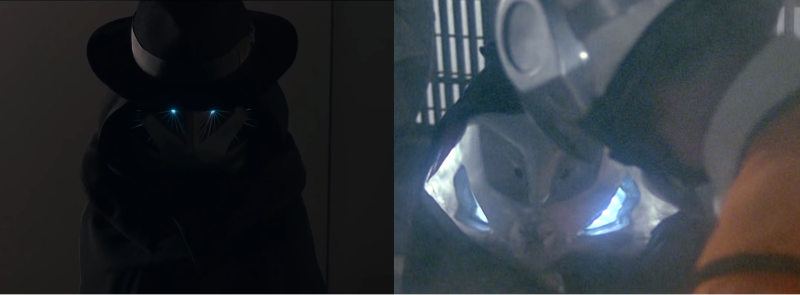
The film utilizes new-era technology to present more spectacular visual effects externally, while the plot incorporates realistic political situations, depicting the impact of Zarab's instigation strategy, creating an interesting drama with multiple layers of intertwined new and old elements.
▼Even that ambiguous handshake can be seen in the original work! Image credit:ツイコミ(仮)

14. "Are you an alien, or an Earthling?"After Hiroko Asami boldly broke open Shinji Kaminaga's cell with a chainsaw, she couldn't help but ask Shinji Kaminaga, "Are you an alien, or an Earthling?" intending to clarify Shin Ultraman's ambiguous identity and stance. Shinji Kaminaga responded with "Both." This dialogue actually appeared in TV original episode 33, "Forbidden Words (禁じられた言葉)", as lines exchanged between Mephilas and Ultraman/Shin Hayata.
Image credit:Ultraman Wiki
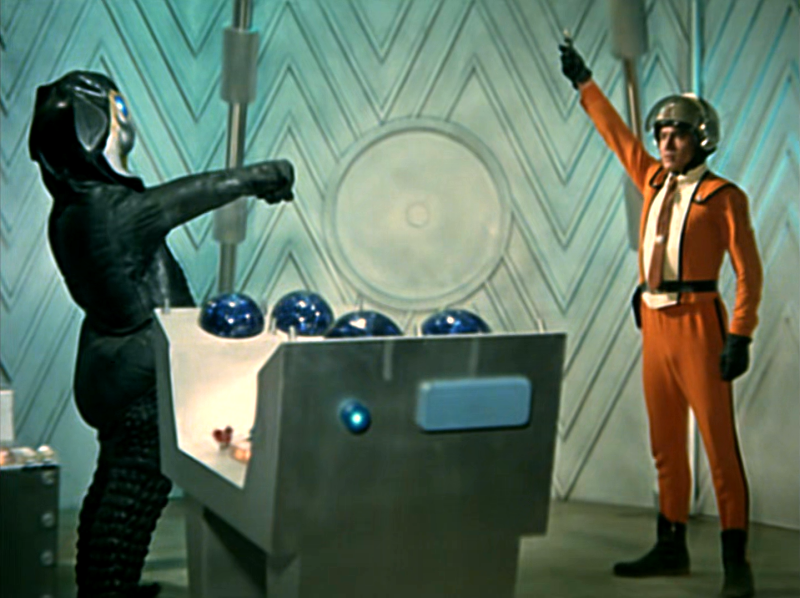
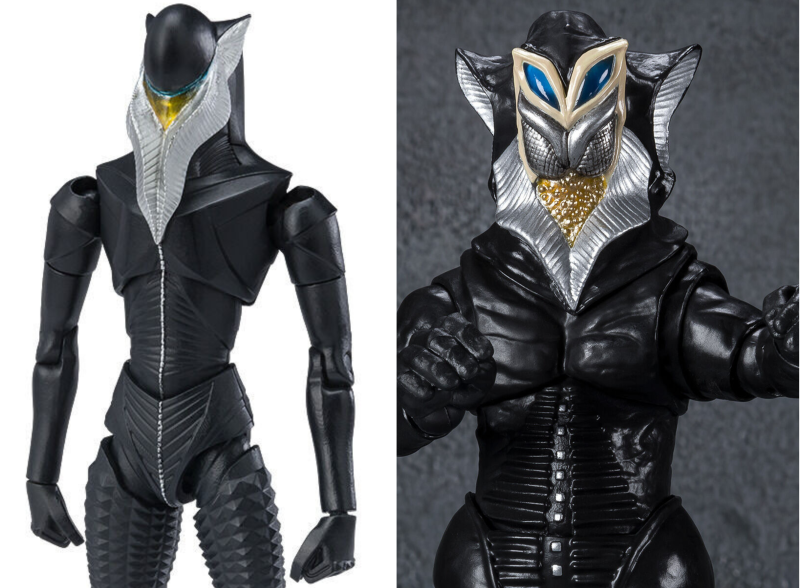
15. Alien No. 0: Mephilas (メフィラス)In the film, the alien schemer Mephilas successfully manipulated human psychology using Earth's disasters and his technology, leading the Japanese government to sign a treaty with Mephilas in a seemingly subservient manner. His image as a sophisticated colonizer, combining elegance and cunning, is truly admirable for his outstanding skill, even though his actions were intended for invasion. His catchphrases, "○○○ is a word I like (○○○私の好きな言葉です)" and "○○○ is a word I dislike (○○○私の苦手な言葉です)", are adapted from the title of episode 33.
In the original episode 33, the Malicious Alien Mephilas (悪質宇宙人‧メフィラス星人) had a demeanor and appearance that were not as cool and charming as in the film version; instead, he resembled a plump child abductor, constantly tempting Fuji Akiko's younger brother, Satoru, with gifts like immortality and planetary dominion, demanding he hand over control of Earth. Satoru ultimately refused Mephilas's proposal with his simple and honest nature. Compared to the adults in the film who couldn't resist Mephilas's gifts, the innocence of a child appears to possess greater power.
Image credit:株式会社BANDAI SPIRITS
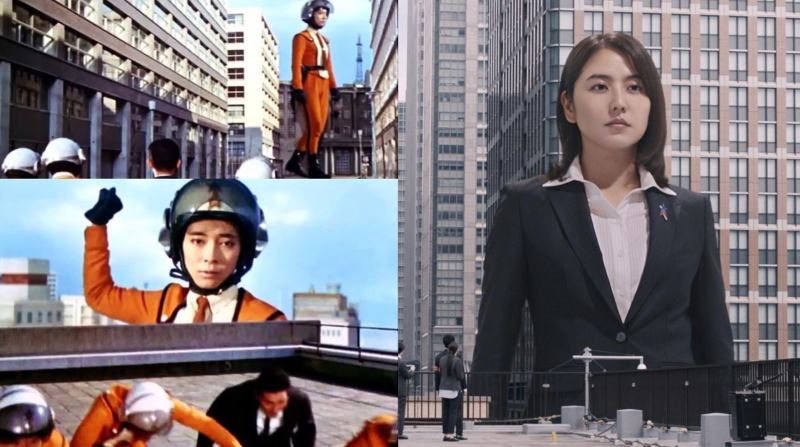
16. Giantized Female MemberTo demonstrate the Beta Giantization technology he possessed, Mefilas unilaterally used Hiroko Asami's body as a demonstration subject, hypnotizing Hiroko and giantizing her. The origin of this segment also comes from Episode 33 of the original TV series, where the victim was Akiko Fuji, a member of the Science Patrol. The difference is that the film further explores the bad habit of women being giantized and then becoming a subject of gossip and ridicule in contemporary society; meanwhile, the SSSP delved into the physical changes caused by giantization in humans.
Image credit:シネマトゥデイ
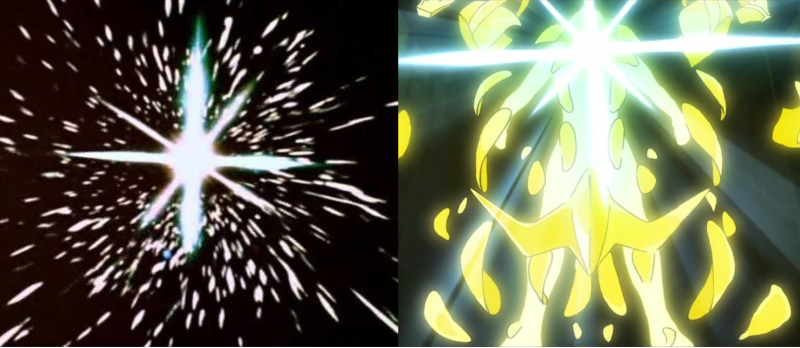
17. The Radiance of the Beta BoxMefilas showcased his giantization technology, the 'Beta Box (ベーターボックス)', to the SSSP. The radiance emitted when the box opened was identical to the light that shone when Hideki Go, the protagonist of Hideaki Anno's favorite Ultraman series 'The Return of Ultraman' (帰ってきたウルトラマン, also known as Ultraman Jack), transformed. The same radiance can also be seen in Hideaki Anno's planned short film 'The Ultraman: Jackal vs. Ultraman' (ザ・ウルトラマン ジャッカル 対 ウルトラマン), when the core character Ultraman Melos (ウルトラマンメロス) removes his armor.
Image credit:Tenor
18. Zoffy (ゾーフィ)Zoffy (ゾーフィー) appeared in Episode 39 of the original TV series, 'Farewell, Ultraman' (さらばウルトラマン). After Ultraman was defeated by the Space Dinosaur Zetton (宇宙恐竜‧ゼットン), Zoffy, captain of the Space Garrison, came to Earth. He originally intended to take the gravely wounded Ultraman back to the Land of Light on Planet M78. However, Ultraman's separation from Shin Hayata would have meant Hayata's death. Fortunately, Zoffy brought two lives from the Land of Light, allowing both Ultraman and Shin Hayata to survive.
Image credit:Ultraman Wiki
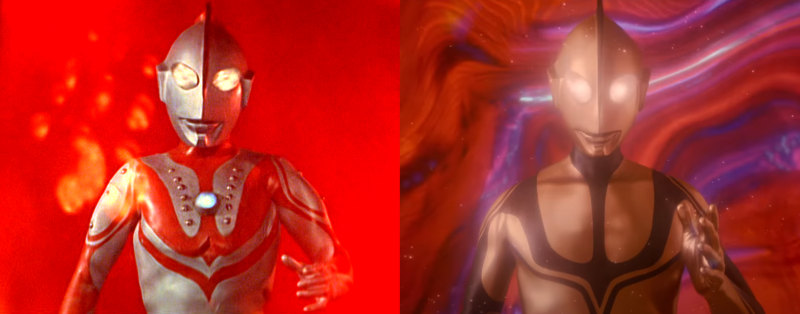
In the film, Zoffy is an envoy and monitor from the Land of Light, and his Japanese spelling also differs from the original Zoffy. Unlike the TV version, his goal is not to rescue Ultraman, but to prevent Earthlings from being exploited as biological weapon resources, and thus he intends to destroy Earth preemptively. Therefore, the film version of Zoffy naturally did not bring two lives, and at the end of the story, he acceded to Shin Ultraman's request, entrusting his life to Shinji Kaminaga.
Zoffy, with black and gold as his main body colors, is not only a result of Hideaki Anno's meticulous research, much like 'Kagel,' but also contains highly interesting Easter eggs.
Firstly, the 3D model for Zoffy's head sculpt was created by scanning the suit mask preserved from the filming of 'The Return of Ultraman.' Secondly, an Ultraman with black and gold coloring is not a first in the history of the Ultraman series. It can be traced back to 1989, when Tsuburaya Productions, the company behind Ultraman, was preparing to collaborate with Australia to produce a new Ultraman TV series (which would later become 'Ultraman Great'). Tsuburaya Productions invited Toru Narita to return as the chief designer for Ultraman's appearance. Narita then presented a work titled 'Ultraman Shinhen' (ウルトラマン神変), in which Ultraman featured a black and gold intertwined design.
▼In addition to 'Ultraman Shinhen' (ウルトラマン神変) (left image), Toru Narita also had other drawings depicting his vision for the next generation of Ultraman Image credit:MUUSEO (ミューゼオ)
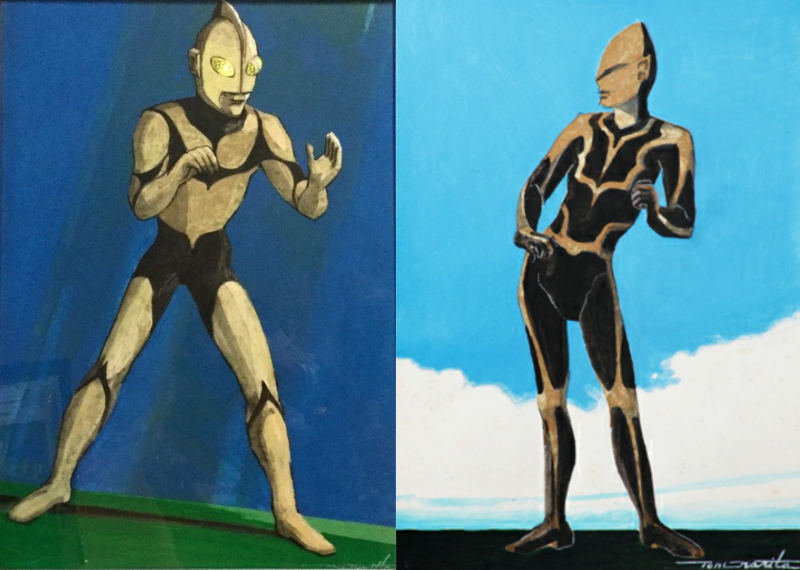
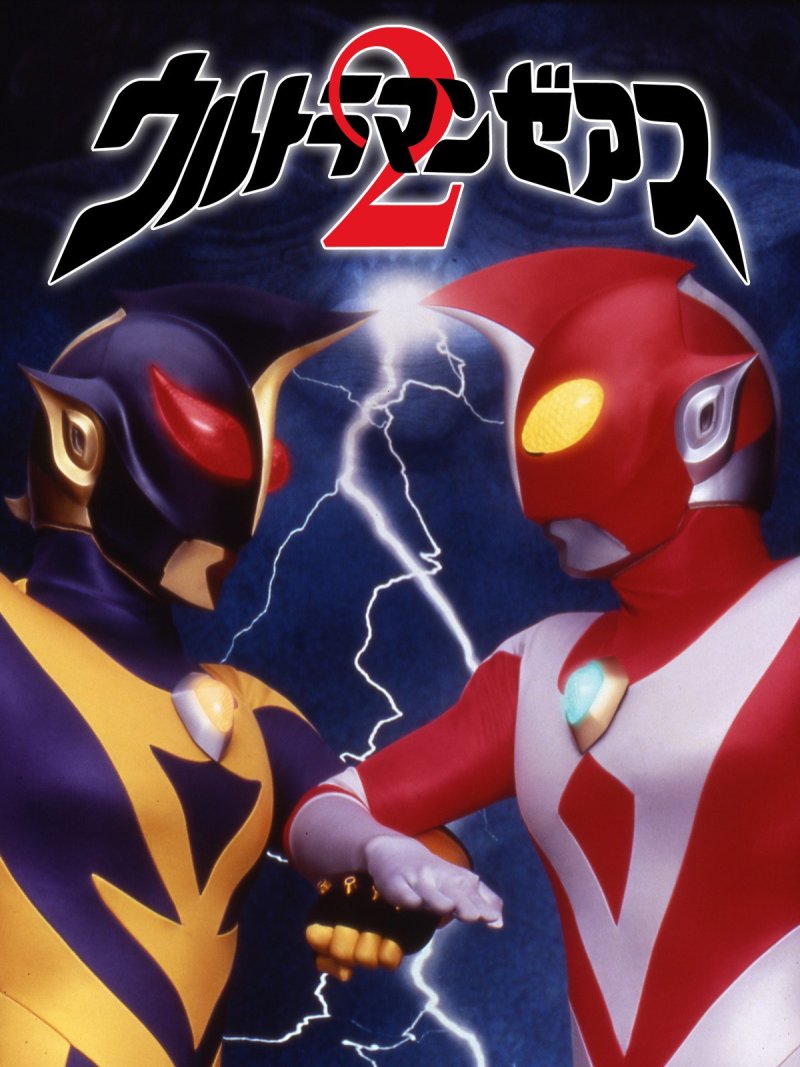
However, due to Toru Narita's demand for 30% of the series' copyright as design fees for a brand new Ultraman, an agreement could not be reached with Tsuburaya Productions. This new design, primarily black and gold, would later make its debut in the 1997 film "Ultraman Zearth 2: The Great Battle of Light and Shadow" as the villainous robot Ultraman, "Ultraman Shadow" (ウルトラマンシャドー). It wasn't until this year's "Shin Ultraman" with Zoffy that Toru Narita's unrealized "dream project" was truly completed.
▼Ultraman Zearth 2: The Great Battle of Light and Shadow Image credit:Amazon
The final Easter egg is the voice actor for Zoffy—Kōichi Yamadera. Fans familiar with Hideaki Anno will know that Yamadera previously voiced the mature male character Ryoji Kaji in "Neon Genesis Evangelion." In the Ultraman world, Yamadera also lent his voice to Zoffy and Ultraman Mebius in Hideaki Anno's planned short film "The Ultraman: Jackal vs. Ultraman."
▼Ultraman Mebius is famous for his uniquely designed armor; Zoffy has also worn the Mebius Armor Image credit:東京フィギュア
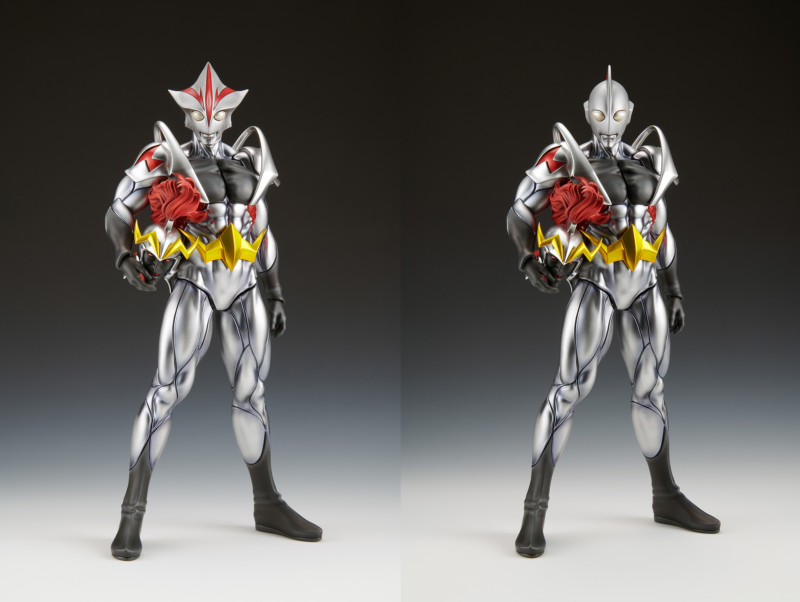
19. Celestial Suppression Final Weapon: Zetton (天体制圧用最終兵器.ゼットン)
The Space Dinosaur Zetton (宇宙恐竜.ゼットン) appeared in Episode 39 of the original series, which was also the final episode of the "Ultraman" TV series. It was a kaiju weapon used by the Zettonians to invade Earth. Zetton possessed powerful abilities such as instantaneous movement, a formidable shield, and a one-trillion-degree fireball. Even the battle-hardened Ultraman fell after a fierce struggle against its immense power.
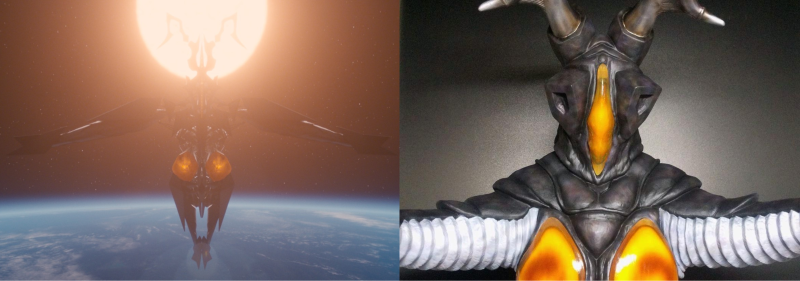
In the movie, Zetton's size is magnified several times, and its role is significantly upgraded from an invasion bio-weapon to a superweapon capable of destroying star systems (the screenwriter seriously noted that a one-trillion-degree fireball is more than enough to obliterate the entire solar system). The colossal shield, giant red beam, and massive fireballs unleashed from the gigantic Zetton's body convey a sense of utter despair, even for viewers who aren't the new Ultraman facing it directly.
Furthermore, in his first battle with Zetton, the new Ultraman deflected Zetton's beam attacks by maintaining a flying posture while simultaneously spinning. His rapidly rotating form also emitted a red glow. The same move can also be seen in the animated short film "The Ultraman: Jackal vs. Ultraman."
Image credit:ウルトラマン公式
20. The Despairing Team MemberAs Zetton was activated by Zoffy and Earth's doomsday approached, Akihisa Taki (たき あきひさ), a non-particle physicist and member of the S-Class Species Suppression Protocol (SSSP), fell into complete despair, uttering words close to total surrender, such as "Everything is up to Kaminaga-san/Ultraman." This scene pays homage to Episode 37 of the original TV series, "The Little Hero" (小さな英雄).
In that story, Mitsuhiro Ide (イデ・ミツヒロ), the SSSP's weapon technology specialist, felt deeply powerless with humanity and its technology against powerful kaiju. When a kaiju attacked, he even gave up fighting, only looking up and hoping for Ultraman's arrival. It was only after the sacrifice of the friendly monster Pigmon (友好珍獣ピグモン) and the successful elimination of the Comet Monster Dorako (彗星怪獣ドラコ) with his self-developed weapon, "Spark 8" (スパーク8), that he regained his confidence.

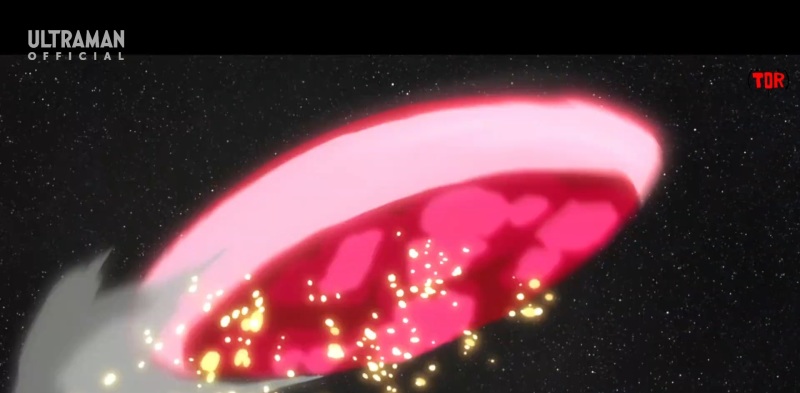
21. The Decisive Battle Between Shin Ultraman and ZettonShin Ultraman, unable to withstand the celestial suppression ultimate weapon, Zetton, fell into a coma after being defeated in their first encounter. However, he left behind the Beta Technology formula and his hopes for humanity, trusting them to independently derive a method to defeat Zetton from the formula. Inspired by Shin Ultraman's encouragement, Akihisa Taki, regaining his confidence, fulfilled his mission by discovering that Shin Ultraman could, through a second activation of the Beta Capsule, collide with Zetton's trillion-degree fireball, thereby sending Zetton into an alternate dimension. His appearance during the decisive battle utilized the overhead shot, a filming convention established by the Ultraman series; and the red spherical glow emitted when Shin Ultraman activated the Beta Capsule for the second time closely resembled the red spherical form of Ultraman's arrival and departure from Earth in the original series.
Image credit:

The entire decisive battle sequence in the film, in addition to the Kaiju Disaster Response Team's valiant efforts against Zetton—a homage to the original series' final episode where the Science Special Search-Party defeated the Space Dinosaur with their self-developed weapons—also contained traces of homage to "Ultraman Dyna (ウルトラマンダイナ)", which aired from 1997 to 1998.
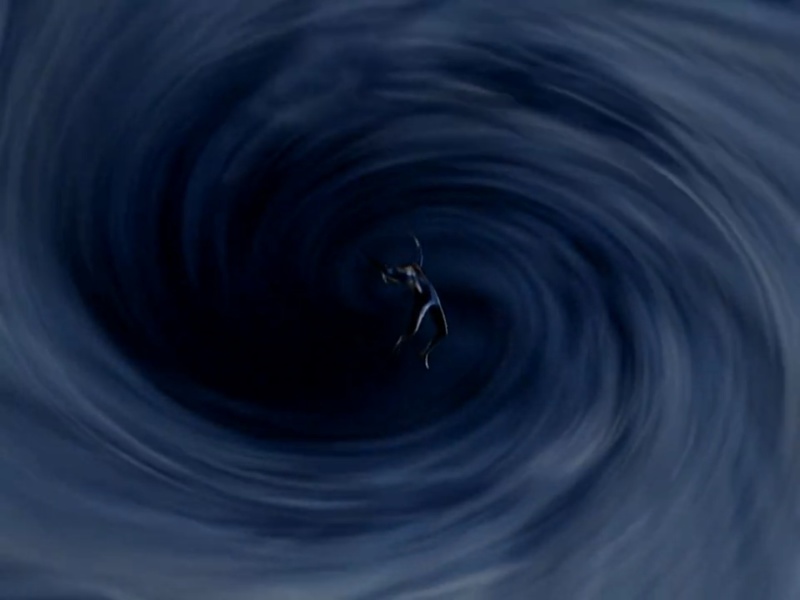
The immense gravitational pull generated by Shin Ultraman's collision with Zetton's fireball made it impossible for Shin Ultraman to escape, even with all his might. Similarly, in the final episode of "Ultraman Dyna", "Towards Tomorrow (明日へ...)", Dyna and his comrades combined their ultimate attacks against the colossal demon "Dark Planet Gransphere (グランスフィア)", which could form a cosmic black hole. Although they successfully defeated the enemy, Dyna could not escape the spatial collapse after the Dark Planet's destruction, being sucked into a dimensional tunnel and vanishing into the far reaches of space. While it cannot be confirmed whether Hideaki Anno referenced Dyna's storyline when writing this segment, it undoubtedly evoked the sense of loss and regret many series fans felt when facing Dyna's original ending.
Image credit:Ultraman Wiki
22. Theme Song: Kenshi Yonezu Sings "M87" Image credit:Kenshi Yonezu official site「REISSUE RECORDS
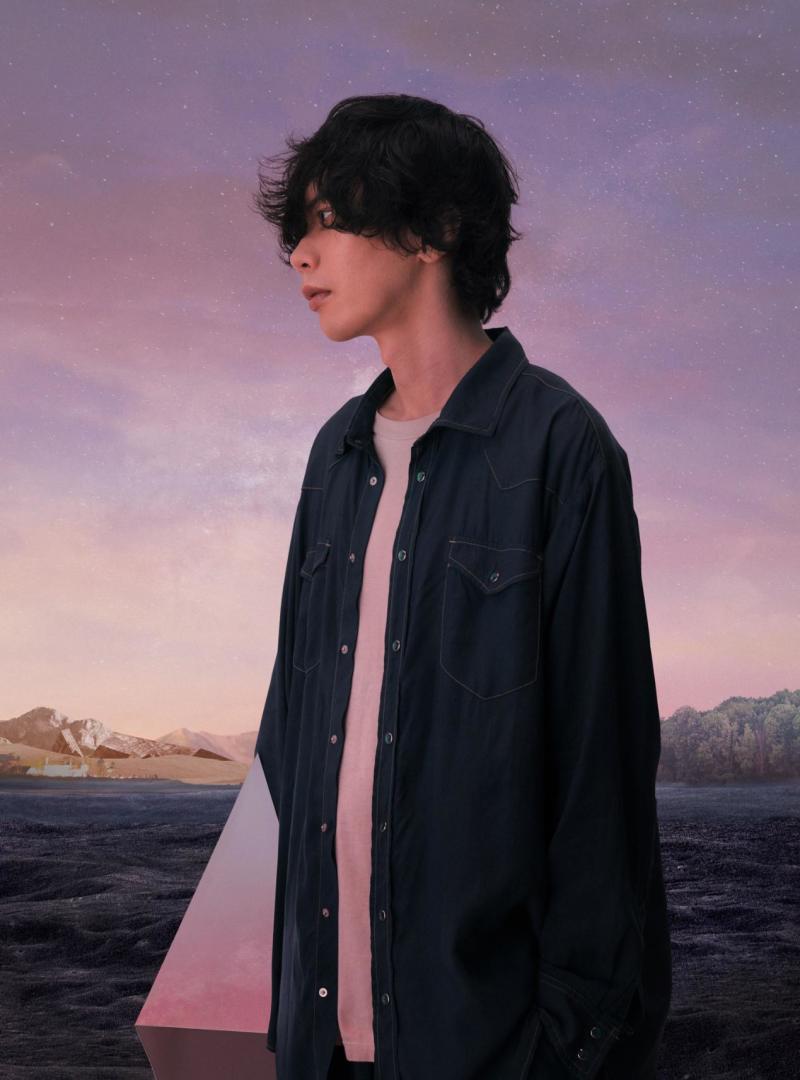
At the end of the story, Shinji Kaminaga accepted Shin Ultraman's life and returned to Earth. Immediately after Hiroko Asami told Shinji Kaminaga, "Welcome back," the film transitioned into the scrolling credits and the theme song "M87" performed by Kenshi Yonezu. Its gentle melody encompassed Kenshi Yonezu's blessings for a new generation of viewers, bringing the film to a perfect close.
▼The Shin Ultraman on the album cover was also personally drawn by Kenshi Yonezu Image credit:Kenshi Yonezu official site「REISSUE RECORDS
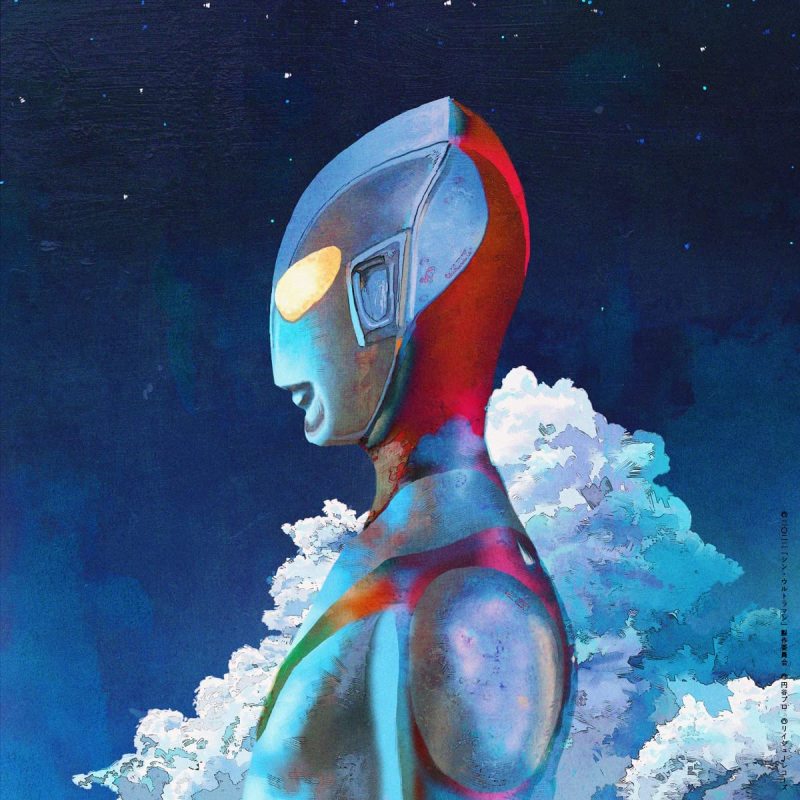
In the original "Ultraman" series' lore, Ultraman's home, the Land of Light in Nebula M78, was reportedly initially conceived as "Nebula M87". However, due to a printing error, "Nebula M78" came into existence, while M87 was retained as Zoffy's signature attack, the "M87 Ray". According to Kenshi Yonezu, the song title was indeed originally intended to be "M78", but he later changed it to "M87" following Hideaki Anno's suggestion. The final official title, "M87", written in Kanji, was chosen because Kenshi Yonezu thought it looked cool.
23. Anime Easter Eggs
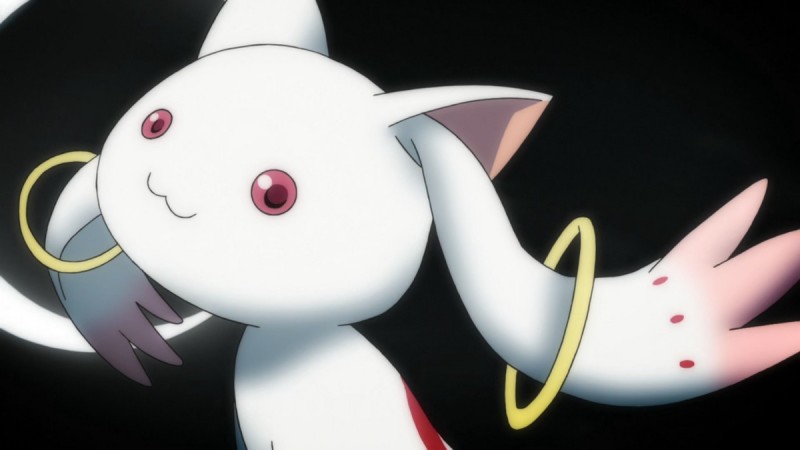
Hideaki Anno and Shinji Higuchi, both renowned in the anime industry, naturally wouldn't forget to leave some relevant traces when playing with Easter eggs. First, an Easter egg with a slightly mischievous twist comes from the famous magical girl series "Puella Magi Madoka Magica": the alien creature "Kyubey/QB (キュウべえ)" is printed on a mug in the SSSP office. Kyubey, adhering to its duty of collecting despair energy from magical girls and unable to comprehend human anger stemming from information asymmetry, serves to hint at Zoffy's role in the film.
Image credit:reddit
Furthermore, the new Ultraman's landing speed of "12,000 kilometers per hour," and Hiroko Asami's "Welcome home" to Shinji Kaminaga at the end of the film, might be references to the OVA series "Gunbuster (トップをねらえ!)", directed by Hideaki Anno and written by Toshio Okada. The famous robot "Gunbuster" originates from this work. Interestingly, the fan film "DAICON FILM's Return of Ultraman: MAT ARROW 1 Launch Order" shares the same director and writer combination as "Gunbuster".
Image credit:Twitter