

As the Nintendo Switch 2's reveal draws nearer, market analysts are buzzing with predictions about its price and sales potential. A recent Bloomberg report highlights that several industry experts believe the Switch 2 will hit shelves at a minimum of $400, possibly even higher. But don't fret – they also suggest this won't deter buyers, potentially making it one of the best-selling consoles in gaming history.
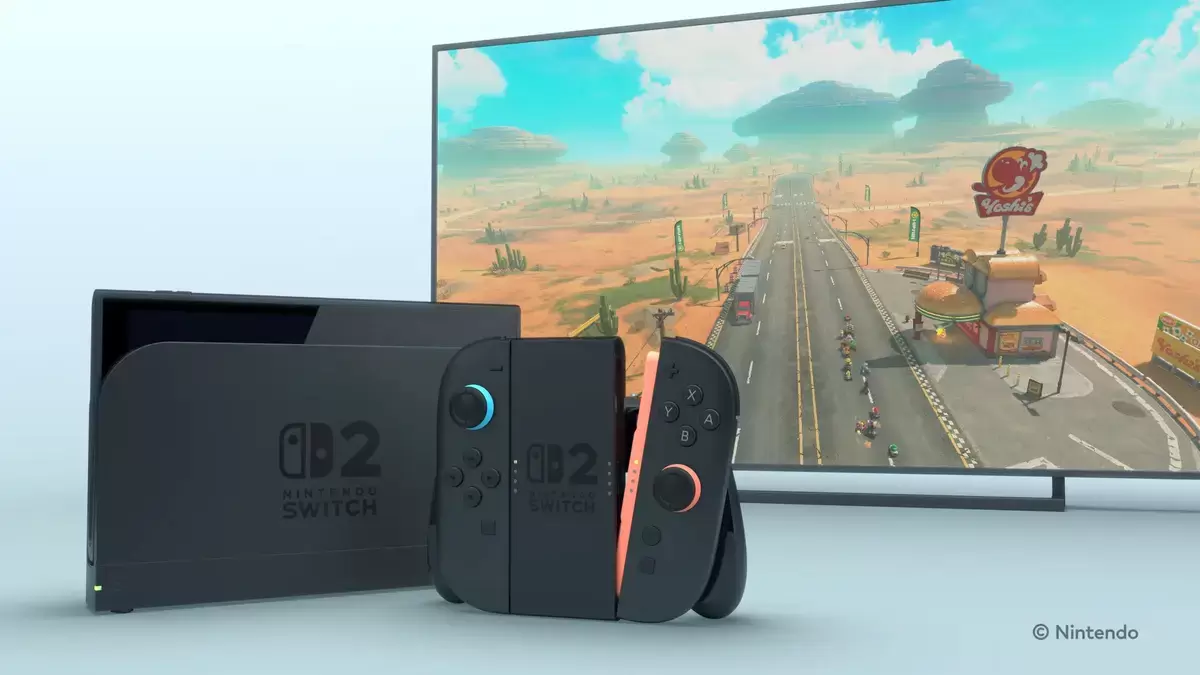
UBS points to rising hardware costs as the reason for the Switch 2's steeper price tag, expecting it to start at $400 or more, a jump from the original Switch's $299. Analysts at Toyo Securities go even further, estimating the Switch 2's chip costs alone at $130-$150 – a significant leap from the original Switch's $80. This makes a $499 price point a real possibility for Nintendo.
Stacked Game Lineup Could Propel Switch 2 to Break Sales Records
Despite the potential price hike, analysts are overwhelmingly optimistic about the Switch 2's market performance, with some even forecasting it to smash all previous console launch sales records. Analyst Zhu predicts a June launch, with Nintendo reportedly prepping a massive initial stock of 6 to 8 million units. For context, the original Switch sold 2.7 million units in its first month, while the PS5 moved around 4.5 million in its debut quarter.
Toyo Securities also emphasizes that a killer game lineup will be crucial for the Switch 2's success. They expect Nintendo to drop major titles in the first year, including a new Mario Kart, a new 3D Mario adventure, "Pokémon LEGENDS Z-A," and "Metroid Prime 4: Beyond." Plus, third-party publishers are likely to bring heavy hitters like Call of Duty to the launch, further fueling sales.

Nintendo is slated to host a special Nintendo Direct on April 2nd, where we might finally get official confirmation on the Switch 2's release date, price, and its initial game roster. As anticipation builds, all eyes will be on whether the Switch 2 can replicate the original's phenomenal success and become the world's next top-selling console.
via: Bloomberg