

A new TV anime adaptation of Lucy Maud Montgomery's classic novel series, Anne of Green Gables, has just hit the airwaves. Produced by Answer Studio and titled Anne Shirley, the show's premiere on April 5th was highly anticipated by fans, but it seems the adaptation is already hitting a few bumps.
Shortly after its debut, Japanese social media lit up with criticism from fans who were unhappy with key character design choices. The controversy has even drawn comments from Yuko Matsumoto, the translator of the complete Japanese edition of *Anne of Green Gables*, who has publicly pointed out several issues with the new series.
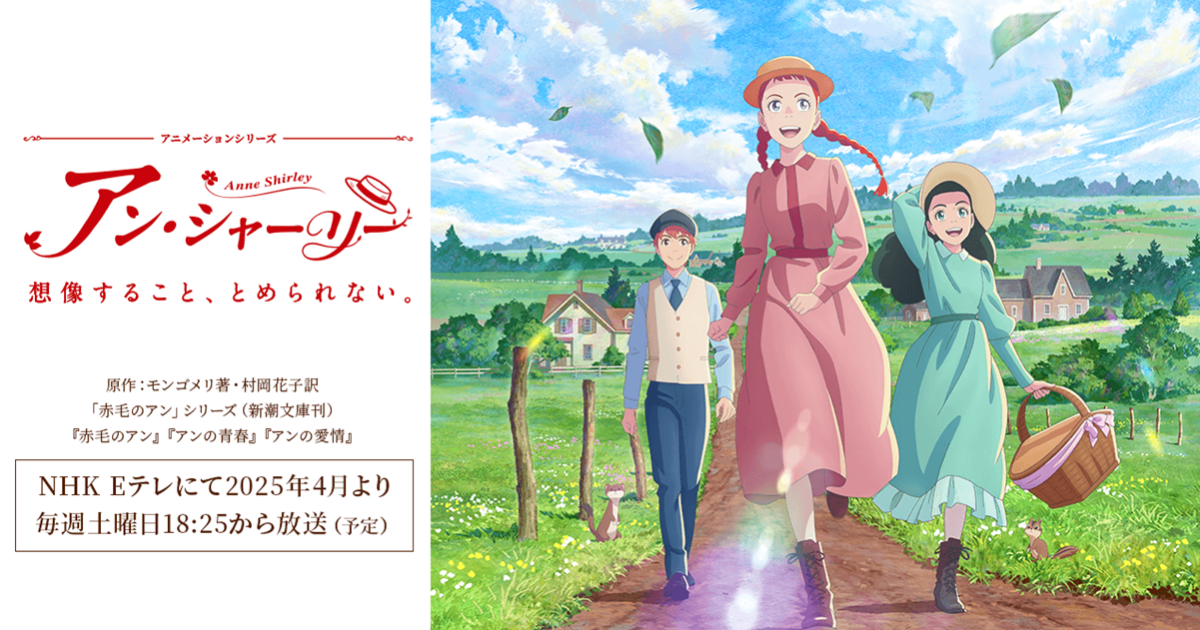
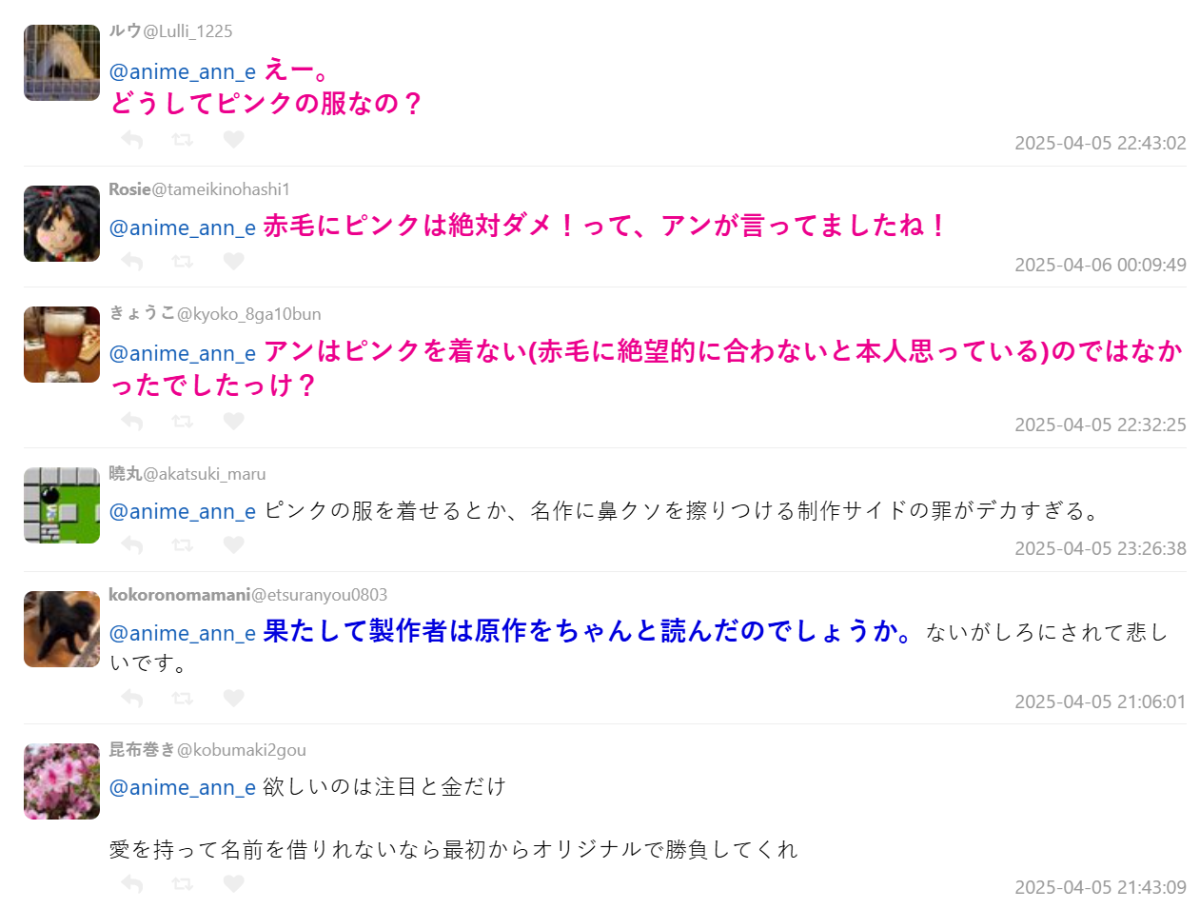
Many viewers were baffled by protagonist Anne Shirley's pink dress, questioning if the producers had even read the source material. "It's sad to see it being ignored," one fan commented.
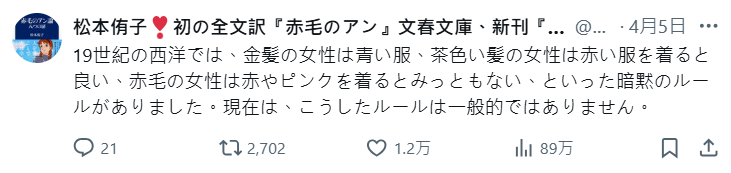
(In the 19th-century Western setting of the novel, there was an unspoken fashion rule: blonde hair paired well with blue, brown with red, but redheads wearing red or pink was considered tacky. This is why Isao Takahata's classic 1979 anime adaptation, *Anne of Green Gables*, famously dressed her in purple.)
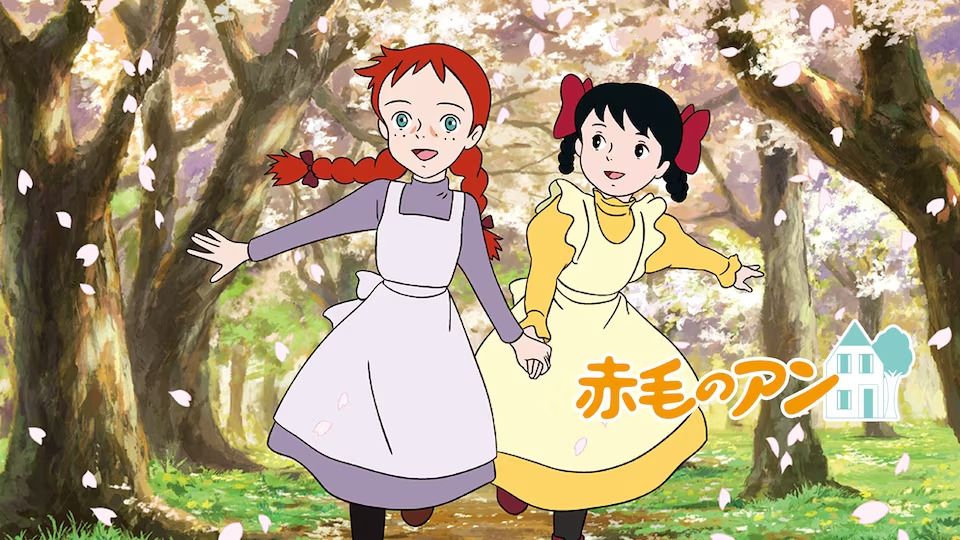
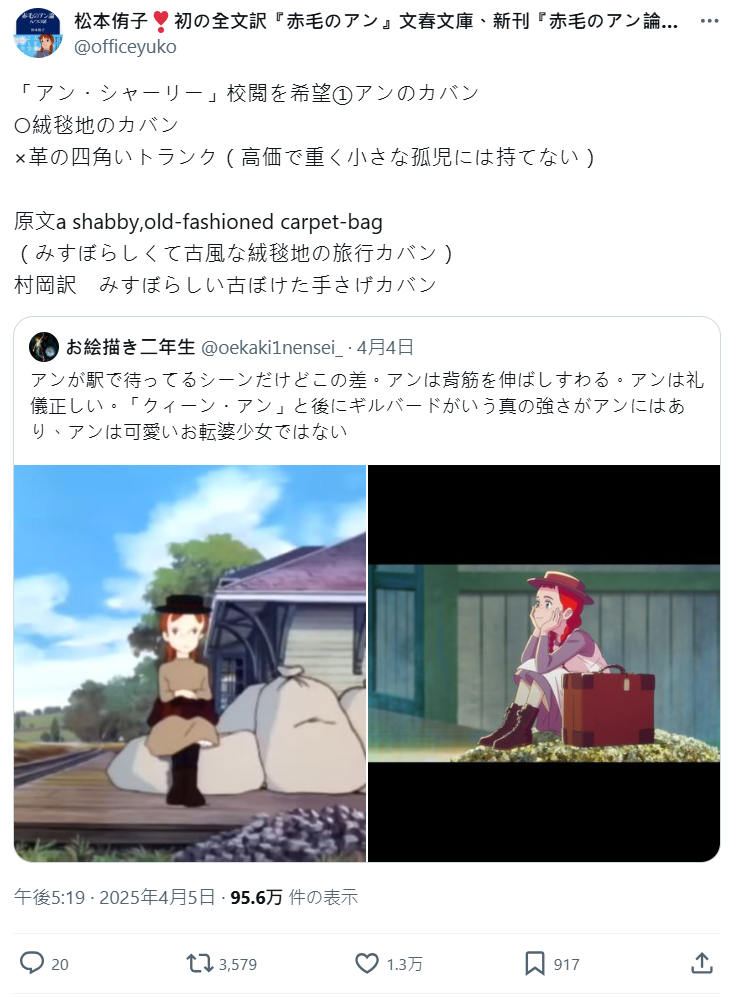
The growing discussion prompted Yuko Matsumoto to post her own detailed critique of NHK's new *Anne Shirley* anime, highlighting several significant deviations from the novel.
First, the book explicitly states Anne arrives with a "shabby, old-fashioned carpet-bag." Early Japanese translations by Hanako Muraoka also described it as a "shabby handbag."
However, the new anime depicts Anne carrying a "hard-shell leather suitcase," a detail that is not only anachronistic but also clashes with her status as an orphan. Such suitcases were expensive, heavy, and would have required a porter, making it highly unlikely for a young girl to carry one herself. Matsumoto added that 19th-century carpet bags were popular among women for being cheap, durable, lightweight, and available in many patterns. She noted that previous adaptations, from the Takahata anime to Canadian films and even the official Green Gables heritage site, all correctly feature the cloth bag.
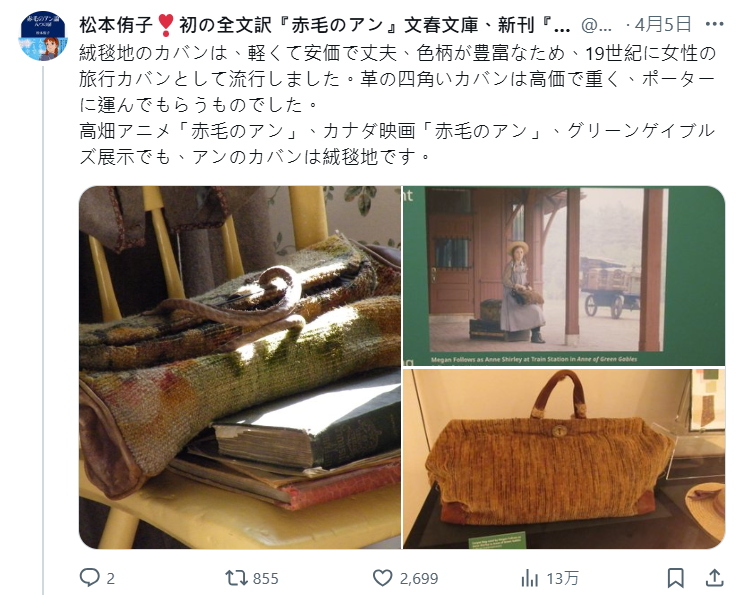
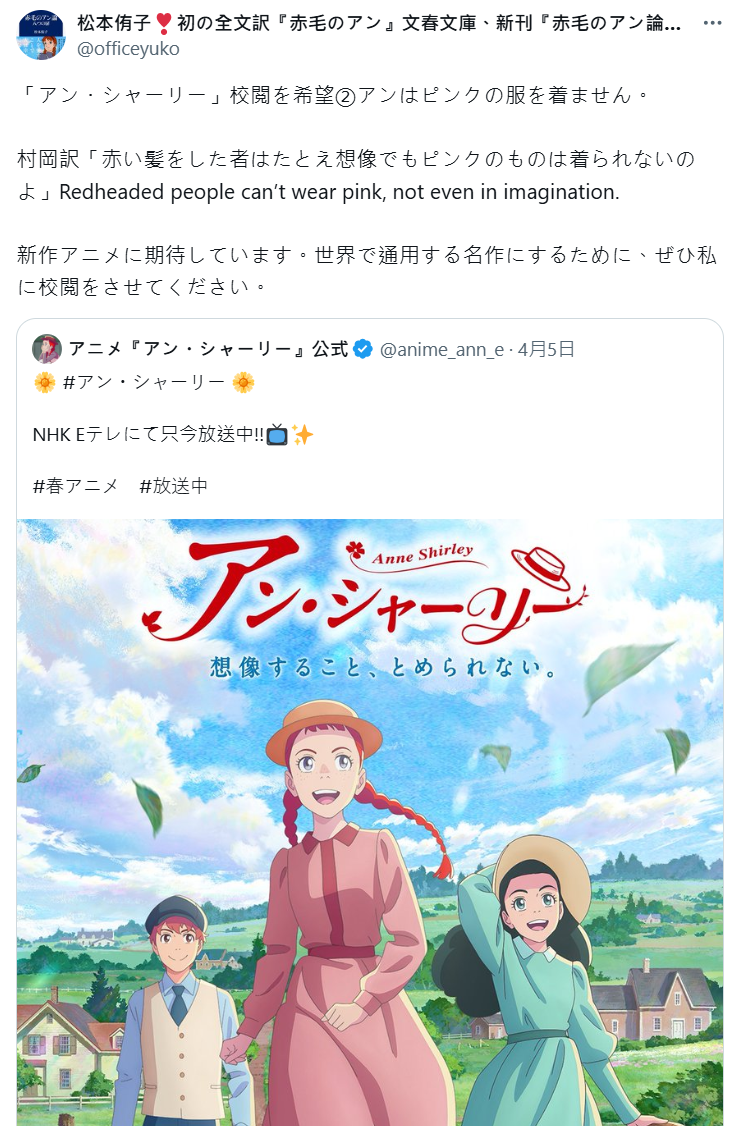
Furthermore, Matsumoto called the decision to put Anne in a pink dress a complete betrayal of the original's spirit.
She referenced Hanako Muraoka's translation of a key line: "Redheaded people can’t wear pink, not even in imagination." The original English text is just as direct.
In 19th-century Western society, it was a common belief that red or pink clashed horribly with red hair. While these fashion standards are outdated today, Matsumoto argues that an adaptation claiming to be faithful to the original shouldn't casually alter such an important character detail. She has even publicly offered her services as a consultant to help create a work that respects the source material and can succeed on the international stage.
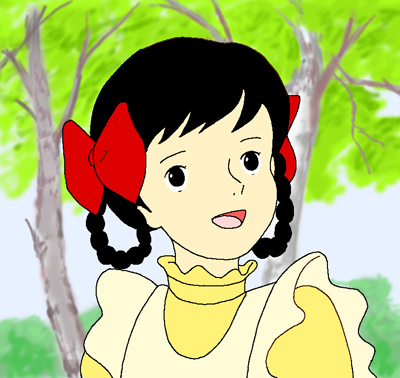
Matsumoto then pointed out that Anne's best friend, Diana, is drawn with "blue eyes," whereas the novel describes her as having "black eyes." The original text reads, "She has black eyes and hair and rosy cheeks." Muraoka's translation similarly describes her with "dark eyes and rosy cheeks."
Matsumoto explained that Diana is of Northern Irish descent, a "Black Irish" type often characterized by dark hair and eyes. As one of the few dark-featured characters in the story, the blue-eyed design simply doesn't fit her established look.
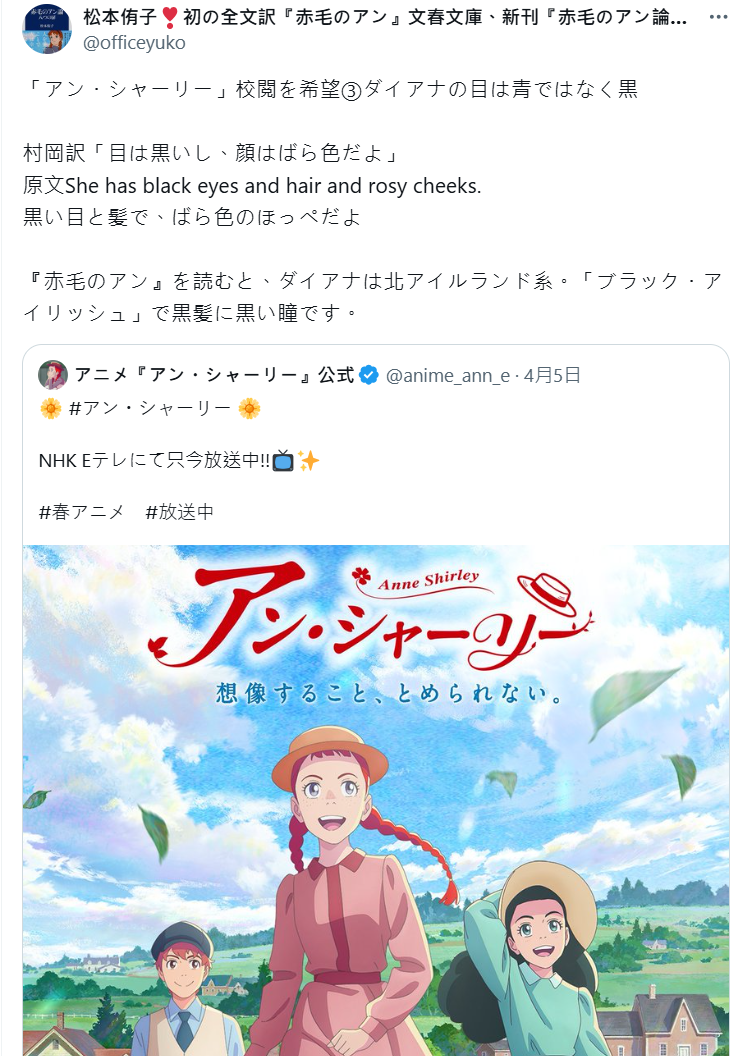
▼ Diana in *Anne Shirley*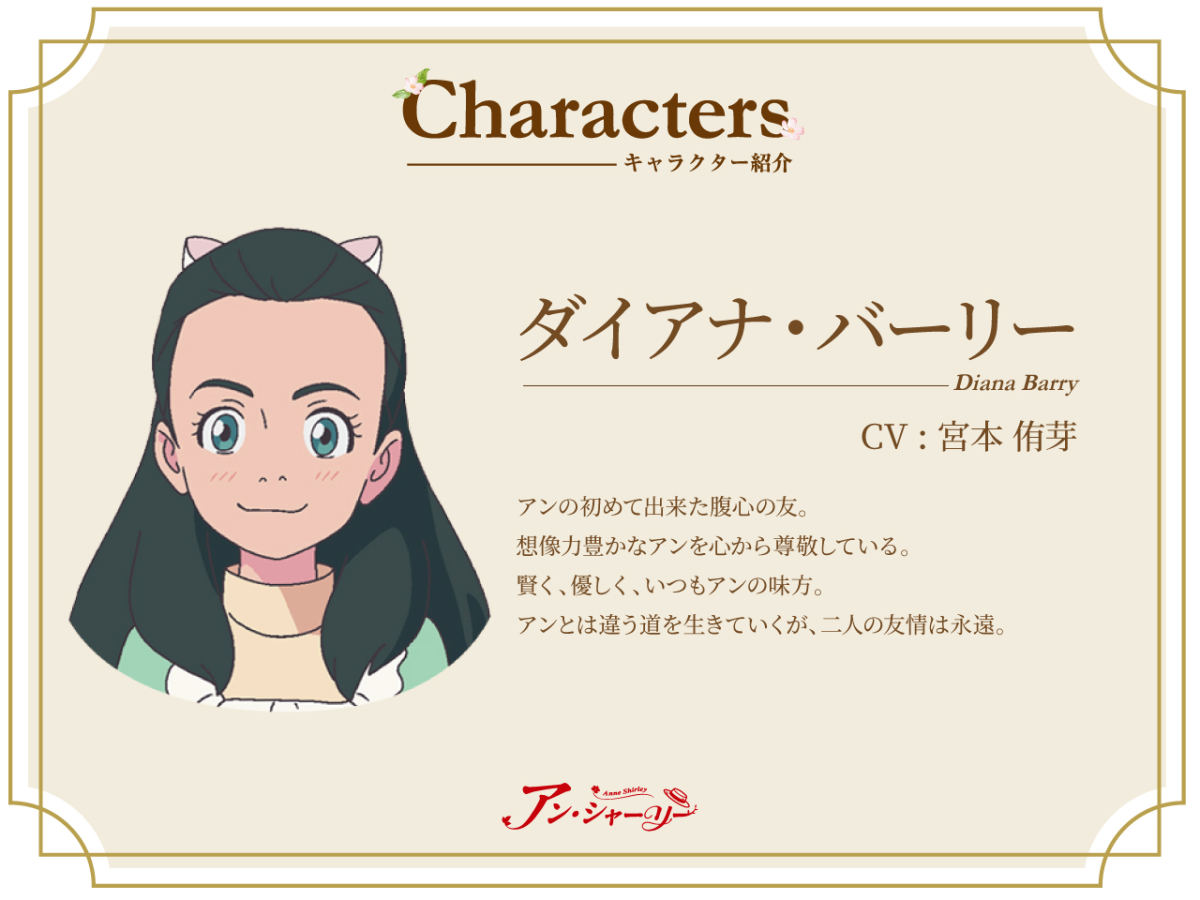
▼ Diana in Isao Takahata's classic anime adaptation
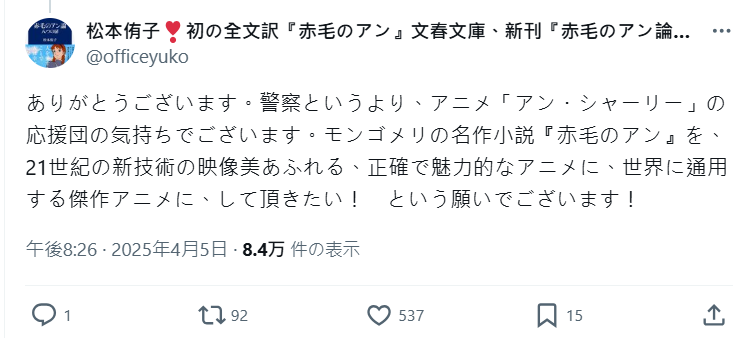
Matsumoto clarified that she sees herself not as a critic but as a "cheerleader" for the new anime. "My most sincere wish," she wrote, "is for Montgomery's classic novel, *Anne of Green Gables*, to be adapted into a masterpiece that blends 21st-century technology with exquisite art, remains faithful to the original, and captivates audiences worldwide."
Many fans share her sentiment, expressing frustration that the production team appears to be disregarding the source material and its historical context. With such issues present from the very first episode, viewers are worried about the direction of this adaptation of a beloved classic.
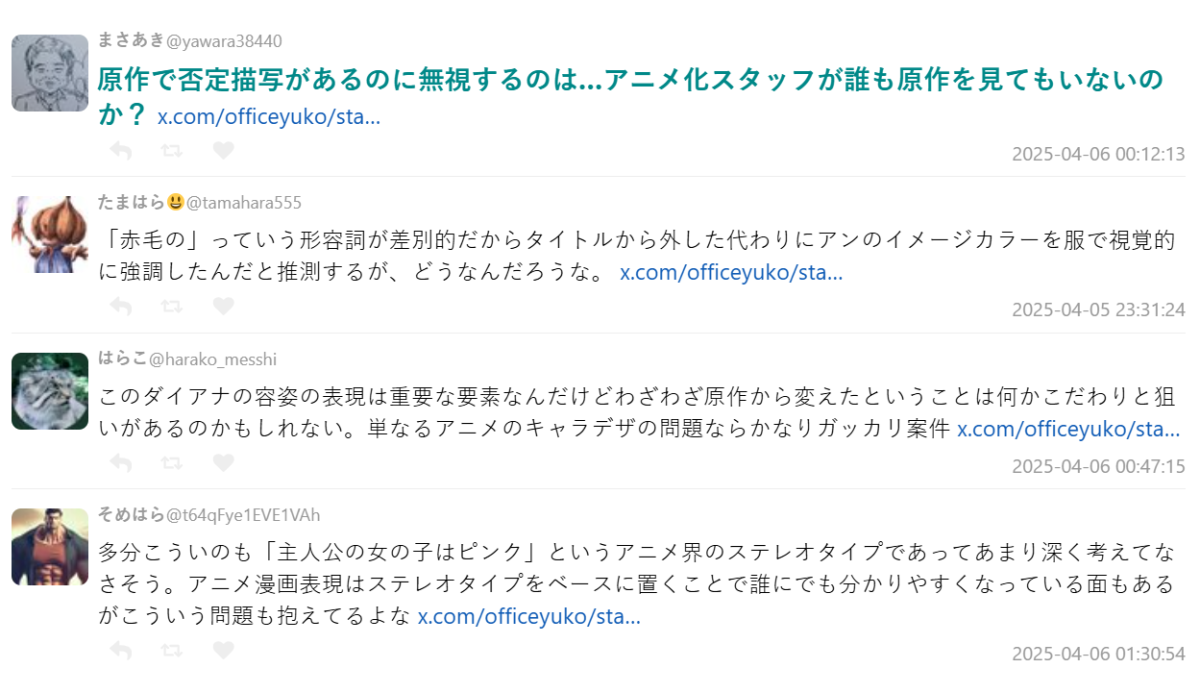
The controversy sparked by these "violations" of the original text continues to grow. Fans argue that while these details may seem small, they are integral to the atmosphere of the work and the author's original characterizations, and they hope the production team will show more respect for the source material going forward.
via: togetter