

Anyone familiar with or currently learning Japanese knows that kanji readings can be incredibly varied. The same pronunciation can often lead to completely different meanings and words, a linguistic minefield even native speakers sometimes stumble through.
Recently, X user もっちどーん (@mochi_dooooon) shared a hilarious work blunder that quickly went viral. They sent a quote to a client, only for their boss to point out an unexpected typo: they had accidentally typed "execution fee" instead of "miscellaneous expenses"!
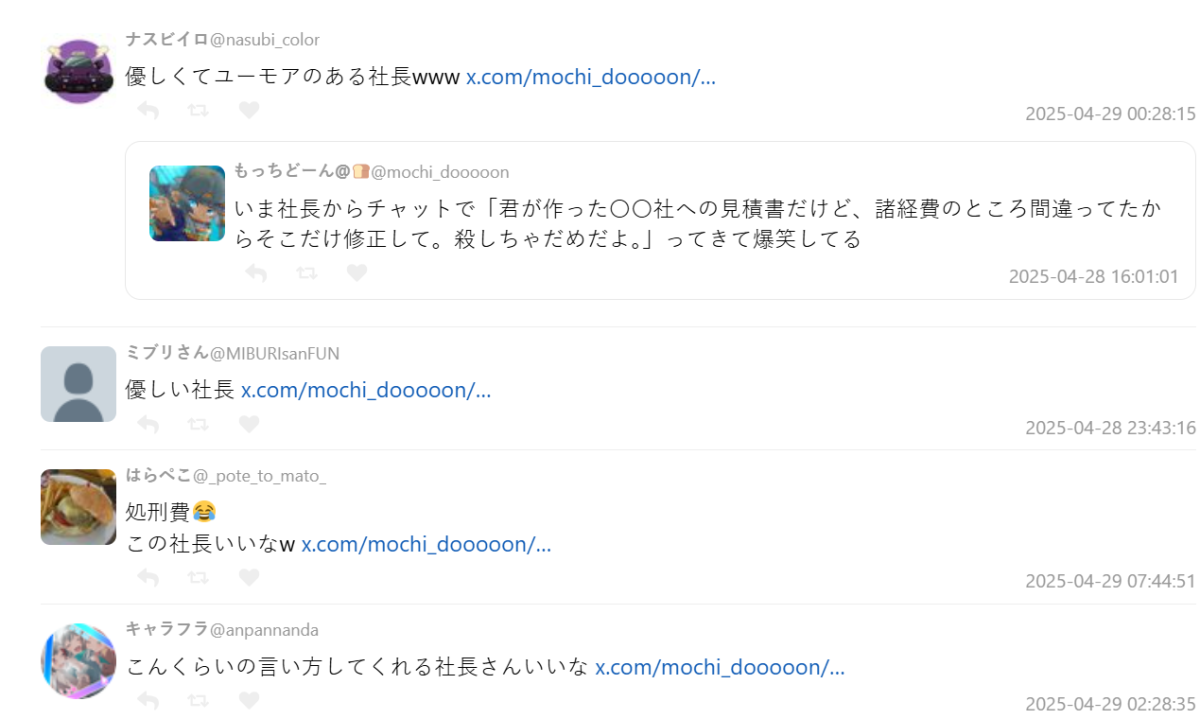
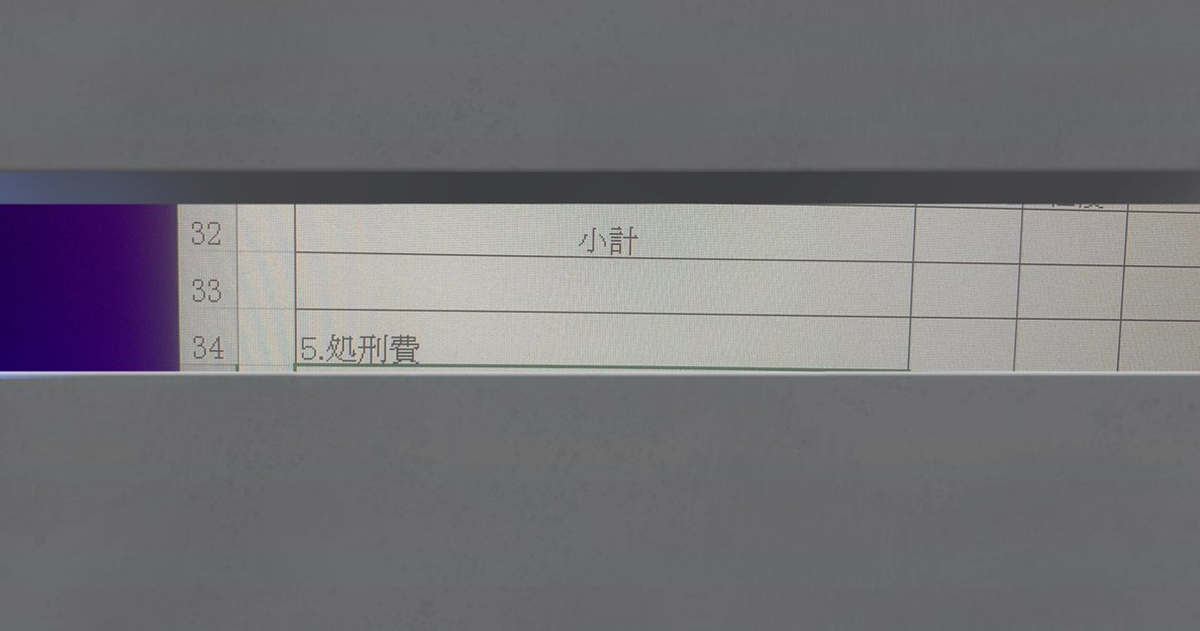 もっちどーん recounted their boss's message: "My boss just messaged me saying, 'Hey, that quote you sent to [Company Name]... you got the 'miscellaneous expenses' part wrong. Just fix that, no need to kill anyone.' " The user immediately burst out laughing, wondering how they could make such a ridiculous mistake.
(Turns out, both 諸経 (shokei - miscellaneous expenses) and 処刑 (shokei - execution) share the exact same pronunciation, making the typo surprisingly understandable.)
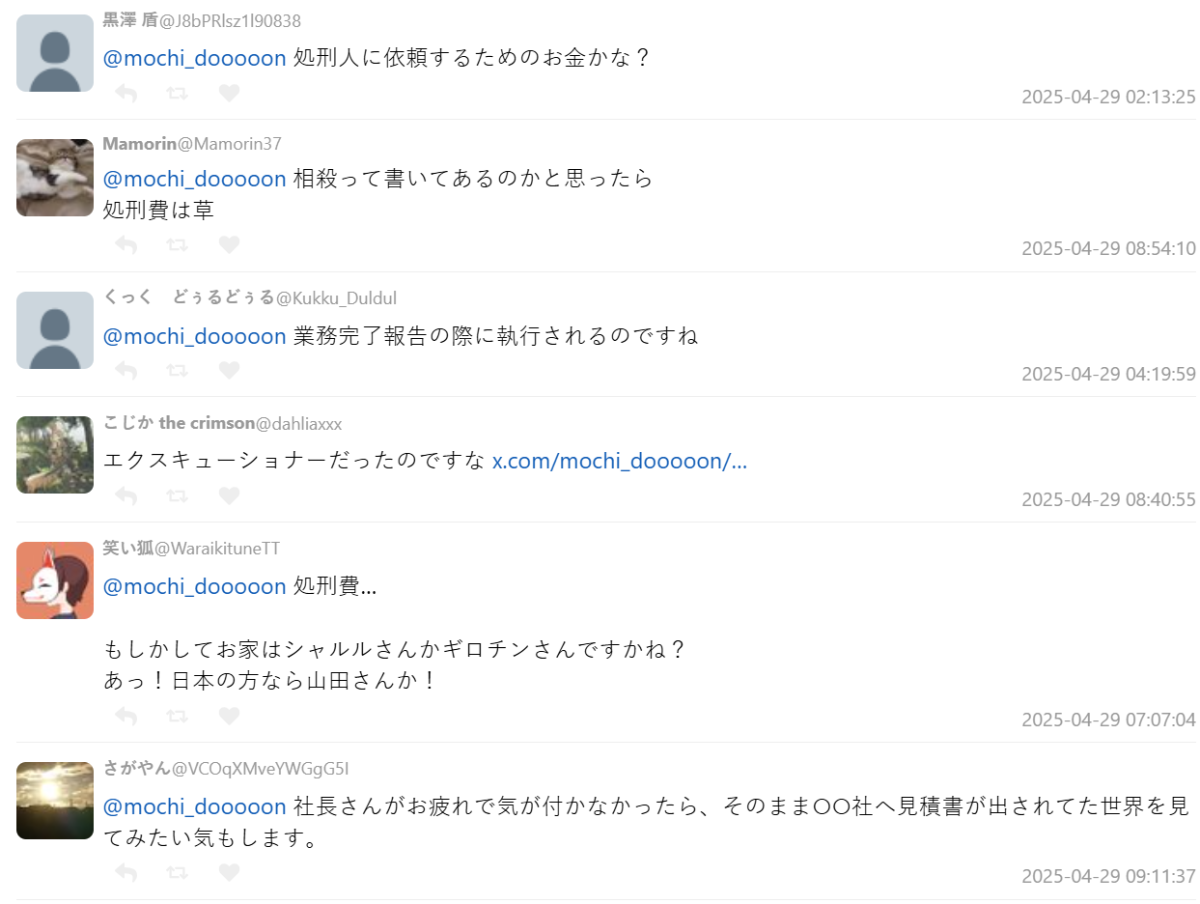
The post quickly resonated, attracting tons of retweets and comments. Netizens cracked up, with some asking, "Is this a budget for an assassin?" and "Looks like a quote straight from the 'Death Penalty Department'!" Others praised the boss's incredible sense of humor, commenting, "This boss is too cute, where do I apply?"
The thread then became a full-blown comedy show as other users chimed in with their own "typo disasters" from the business world. Stories included typing "please the corpse" (お遺体します) instead of "please" (おねがいします), or "dear biters" instead of "dear esteemed guests." One user even shared how they typed "miscellaneous fees" (諸会費 - shokaihi) only for it to auto-correct to "first-time H" (初回H - shokai H, implying adult content), almost causing them to die of embarrassment.
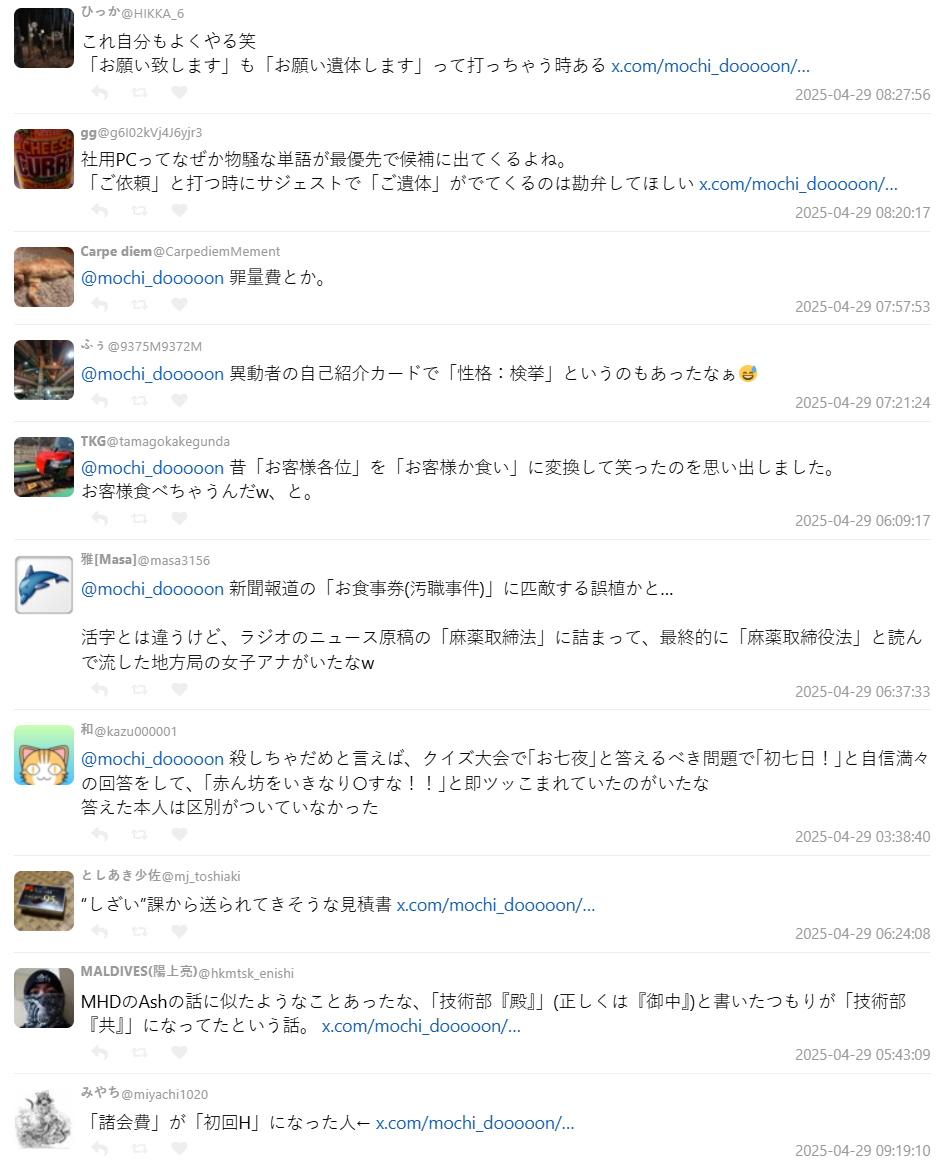
Many comments highlighted that Japanese business input methods frequently suggest bizarre words automatically. Examples included "entrust" (委託 - itaku) being suggested as "corpse" (遺体 - itai), or "miscellaneous" (諸 - sho) prioritizing "execution" (処刑 - shokei). Users shared the heart-pounding moments these suggestions caused. One user humorously lamented, "You have to protect yourself from your computer committing crimes while typing official documents."
This whole saga really shines a light on the fascinating, sometimes terrifying, complexity of Japanese kanji. When the same or similar pronunciations can lead to such hilariously disastrous meanings, it's a wild ride! So, if you're learning Japanese, keep an eye out for these linguistic landmines!
via: togetter