

A recent X post has sparked a heated debate across Japan: Why are agricultural high school products always cheaper than what you find in stores? Some even wonder if the quality is subpar, leaving many scratching their heads about the price difference.
Turns out, one X user dropped a short, sharp dose of reality that cleared up the confusion instantly: "No labor costs are factored in." This simple truth has everyone reflecting on the sheer hard work agricultural students put in.

Goru, an X user and cattle rancher himself, shared that he constantly gets asked, "Why are agricultural high school products so cheap? Is the quality bad?" His blunt reply? "Because labor costs aren't included in the price." He pointed out that since students are doing the work, they don't get paid, which naturally slashes production costs – making those products a steal for consumers.
This straightforward answer resonated with countless netizens. Some drew parallels to culinary school cafeterias, where student-made meals are cheap because the students themselves are essentially free labor. One user even quipped, "Agricultural high school students basically have no human rights!"


Funnily enough, many users also brought up how manga like "Silver Spoon" and "Moyashimon" have already vividly depicted the struggles and realities of agricultural school life, practically serving as "pre-enrollment textbooks."


Even graduates chimed in with their own experiences: "Besides growing the produce, we had to go door-to-door in residential areas to sell it – unpaid! And we’d buy any leftovers to take home." Another netizen exposed an even harsher truth: "Students even have to pay tuition for their practical training, essentially paying to be free labor!"
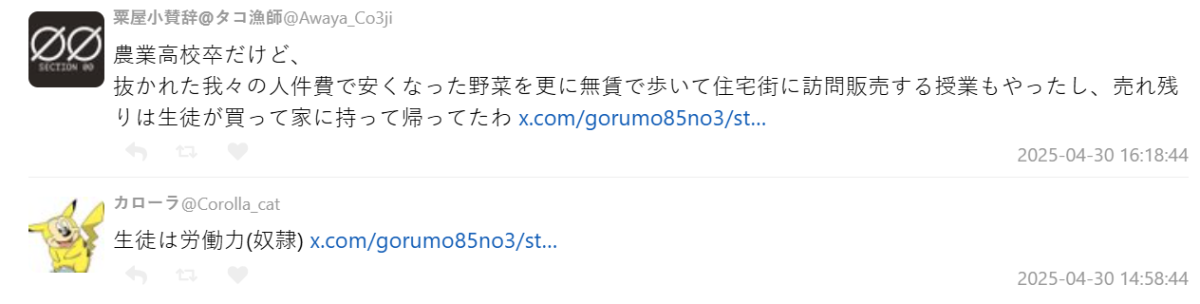
Despite the lack of pay, the quality often rivals that of professional farmers. These products are frequently the result of students meticulously tending to their practical assignments. Many emphasized, "It's for educational purposes, so quality is paramount." Others pointed out that with schools providing land, utilities, and materials, it's easy to keep prices low.
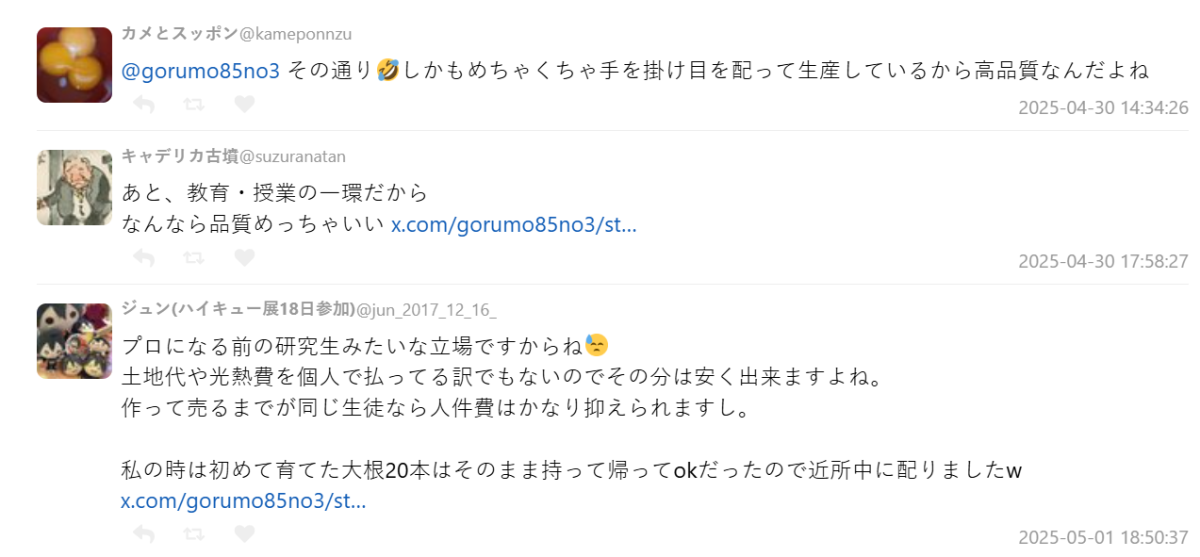
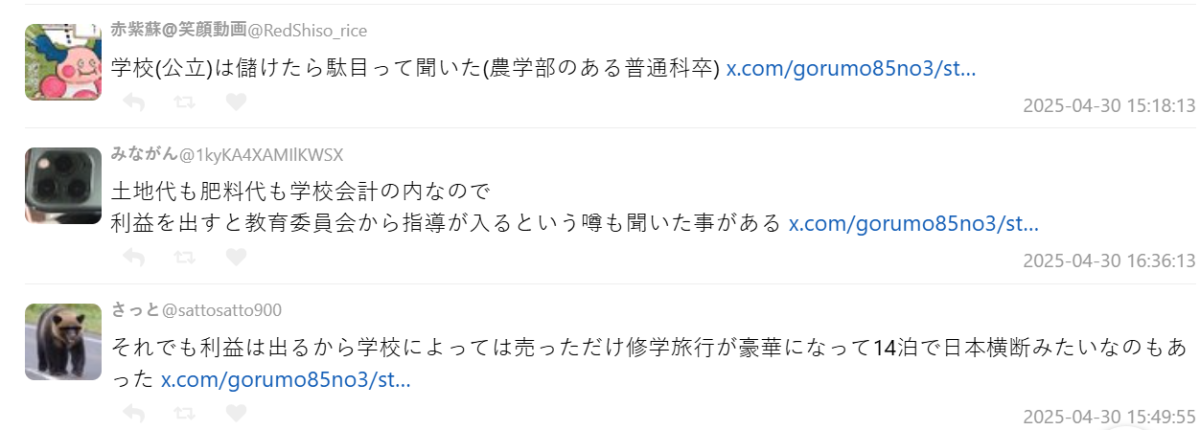
However, since public schools aren't allowed to turn a profit, and any earnings go straight back into funding the next semester's cultivation costs (like fertilizer, seedlings, and fuel), students rarely see any direct benefit from sales. One netizen wryly joked, "This isn't a part-time job; I'm paying tuition to be free labor!"
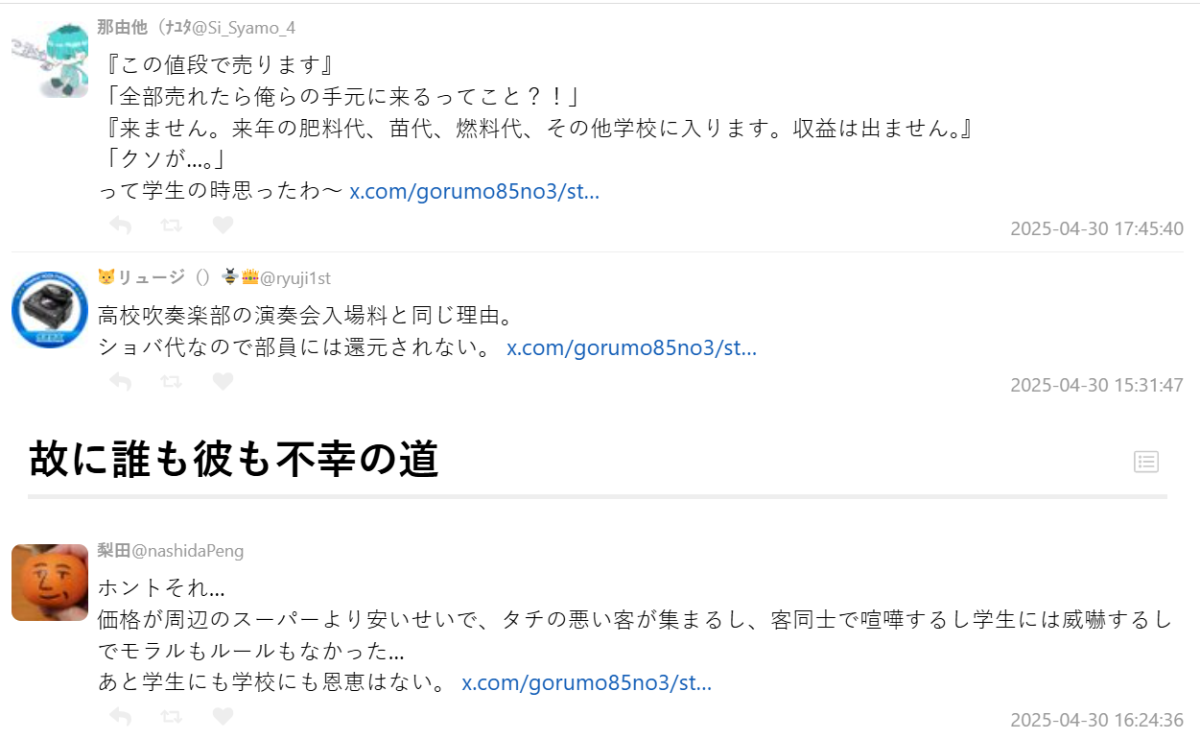
Another user quipped, "We grow the vegetables, but we don't get any money when they sell. The cash just goes to next year's fertilizer and fuel." They compared it to high school band concerts where ticket sales cover venue costs, but the musicians don't see a dime. Even worse, some victims shared that the ultra-low prices attract entitled customers, with some even getting into arguments with students on the spot.
Many netizens lamented that while these "student-made" agricultural products offer delicious, affordable options, they also starkly reveal the harsh realities and frustrations within the educational system. No wonder "Silver Spoon" portrays graduating from an agricultural school as "slave liberation!"
via: togetter