

 (Image: Apple)
(This article contains spoilers.)
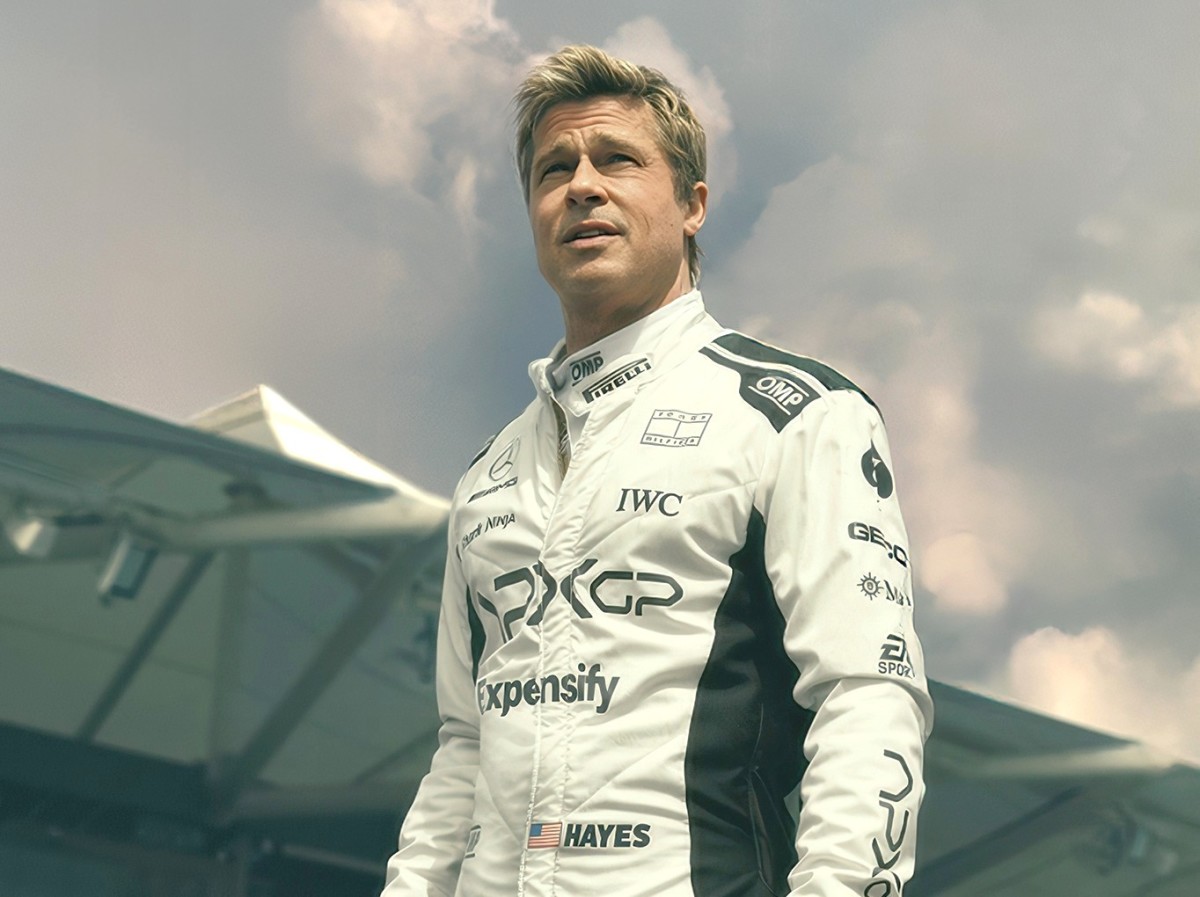
I've always felt that Apple's decision to invest a reported $300 million into its F1 film was an impractical one. They seem overly optimistic, harboring sky-high expectations for the project and seemingly dreaming of perfectly replicating the success of "Top Gun: Maverick." But achieving that kind of lightning-in-a-bottle success isn't as simple as reuniting the same producer (Jerry Bruckheimer), director (Joseph Kosinski), composer (Hans Zimmer), and one of the screenwriters (Ehren Kruger). The F1 film lacks the generational nostalgia that fueled "Maverick," and more importantly, Brad Pitt is no Tom Cruise.
Casting Pitt in the lead is the film's biggest gamble. Apple seems to be banking on him possessing Tom Cruise-level box office drawing power, but in reality, he doesn't. Tom Cruise is Tom Cruise because he made a career choice that most of his peers wouldn't: dedicating his youth and sweat to one commercial blockbuster after another, a commitment he hasn't abandoned even in his sixties. Cruise commands cross-generational influence because he has relentlessly aligned himself with the mainstream, exclusively making films that appeal to the widest possible audience. This strategy has kept him constantly in the public eye, continuously remembered and revered. Among his contemporaries, only Johnny Depp and Robert Downey Jr. have followed a remotely similar path (and even they occasionally venture into niche projects that mainstream audiences ignore).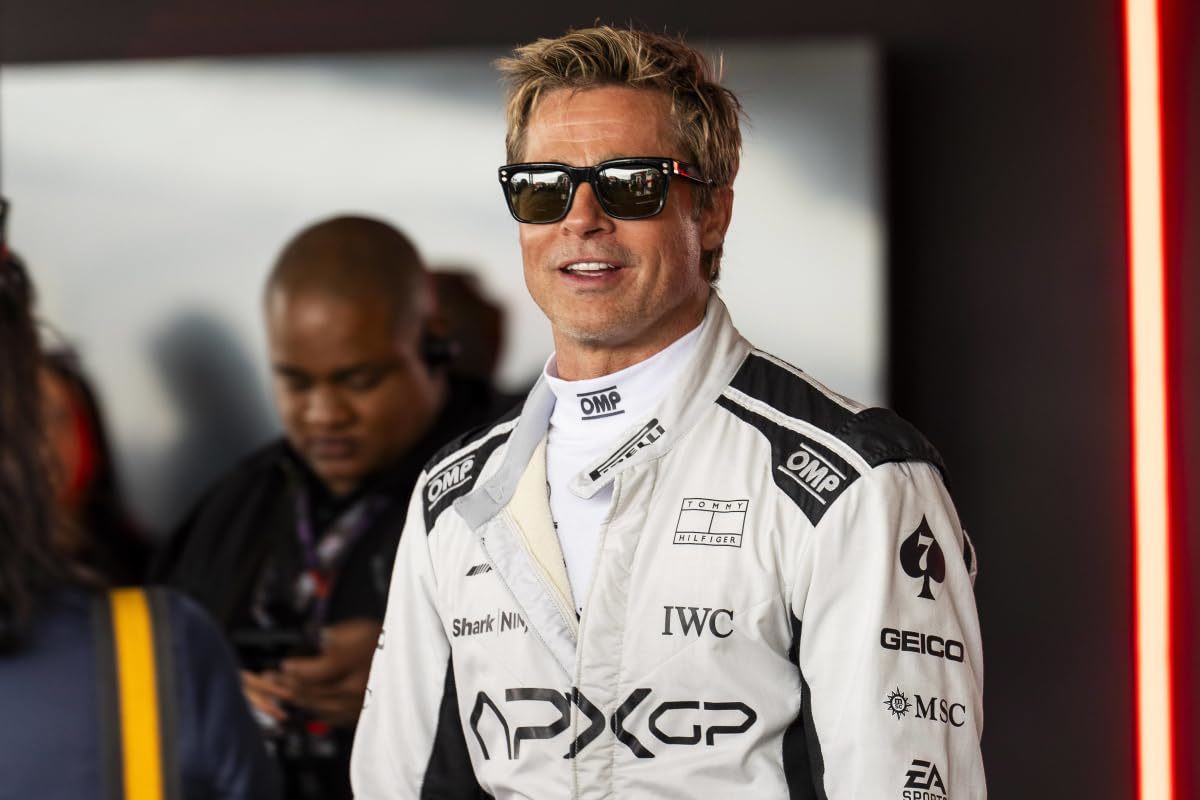
(Image: Apple)
But that's not Pitt's path. He occasionally takes on purely entertaining films like "Bullet Train" or "Mr. & Mrs. Smith," or co-leads in ensemble pictures like "Troy" and the "Ocean's" series, but he has never positioned himself as a box office titan. Pitt, much like his good friend George Clooney, enjoys immense prestige that can be mistaken for box office magnetism. In truth, their home turf is in relatively niche arthouse films, or quietly producing them to help secure financing. Pitt's highest-grossing solo-led film is arguably "World War Z," but audiences weren't just showing up for him; they came for the best-selling novel and the zombies. Pitt was a bonus.
However, it seems Apple and Bruckheimer had few other options. At the same time, Cruise was busy hanging off a plane, Depp hadn't been fully welcomed back by Hollywood, Downey Jr. had noticeably slowed his pace, and Clooney clearly had little interest in headlining another major blockbuster. Matt Damon and Ben Affleck are focused on building up their production company, Artists Equity, with mid-budget films. Christian Bale, having already done "Ford v Ferrari" and being notoriously selective, would surely have no interest in a similar project. And Bradley Cooper is out of the question, as he now only agrees to cameos or supporting roles in commercial films. The rest of their peers, like Charlie Sheen, Sean Penn, Rob Lowe, and Alec Baldwin, are either past their prime or completely disconnected from younger audiences. That really only left Brad Pitt.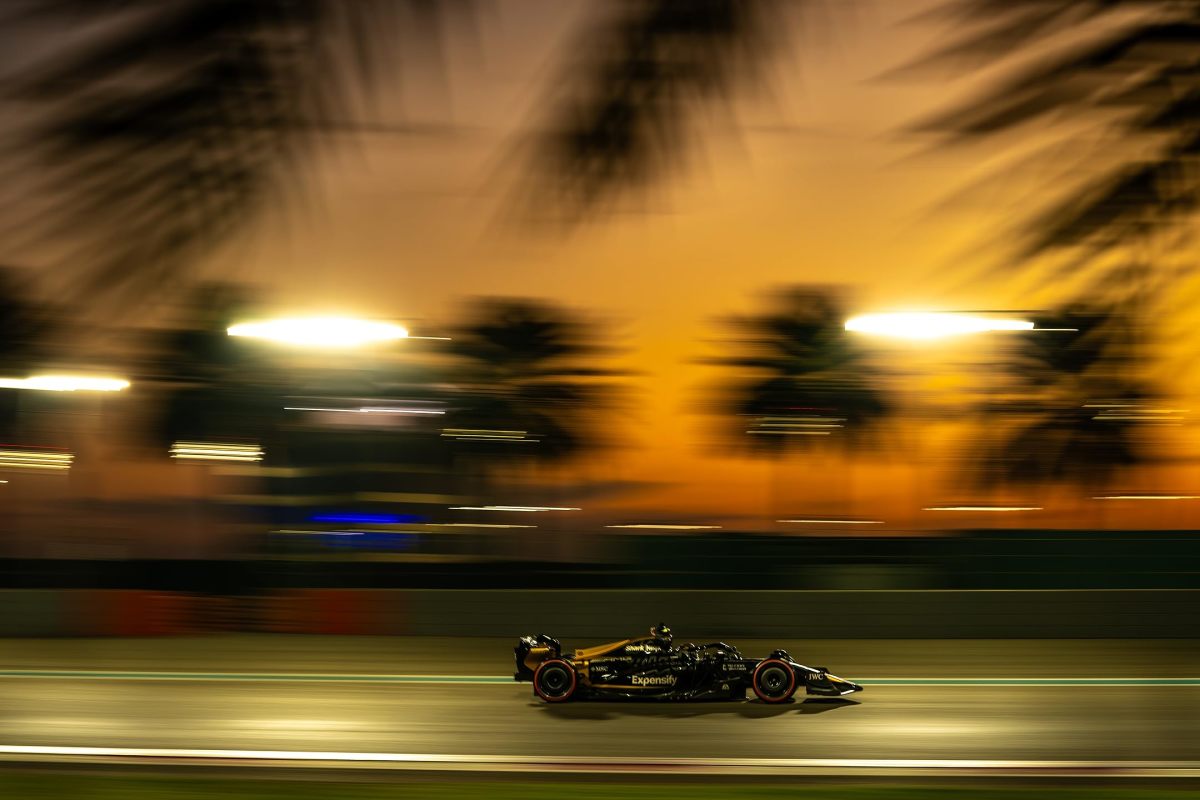 (Image: Apple)
You can feel that Apple, Kosinski, and Bruckheimer are doing everything in their power to ensure Pitt's star power is fully unleashed. Pitt has never been a Cruise-level superstar, but this F1 film works overtime to create that illusion. If you're a film fan with any real knowledge of Pitt's career, the pretense is almost amusing—like watching someone who doesn't belong in that position being forcibly pushed into it. That said, Pitt's own charisma is potent enough, and his name is still practically synonymous with "Hollywood leading man," so the illusion might just be convincing enough for the average moviegoer.
The F1 film is a well-worn, formulaic blockbuster that Tom Cruise has starred in a thousand times over, but for Pitt, it's a first. This is part of what makes the film's manufactured image so funny; Pitt has reached his sixties before finally taking on a role he probably should have played in his thirties or forties. What is this old-school formula? Here's the short version: A cool but disillusioned hero, haunted by a past tragedy, has withdrawn from the world. He's lured out of his self-imposed exile when an old friend needs his help. To complete the mission, he must work with a female team member with whom he clashes, and eventually, they clash their way into bed. I've basically just spoiled the entire movie for you.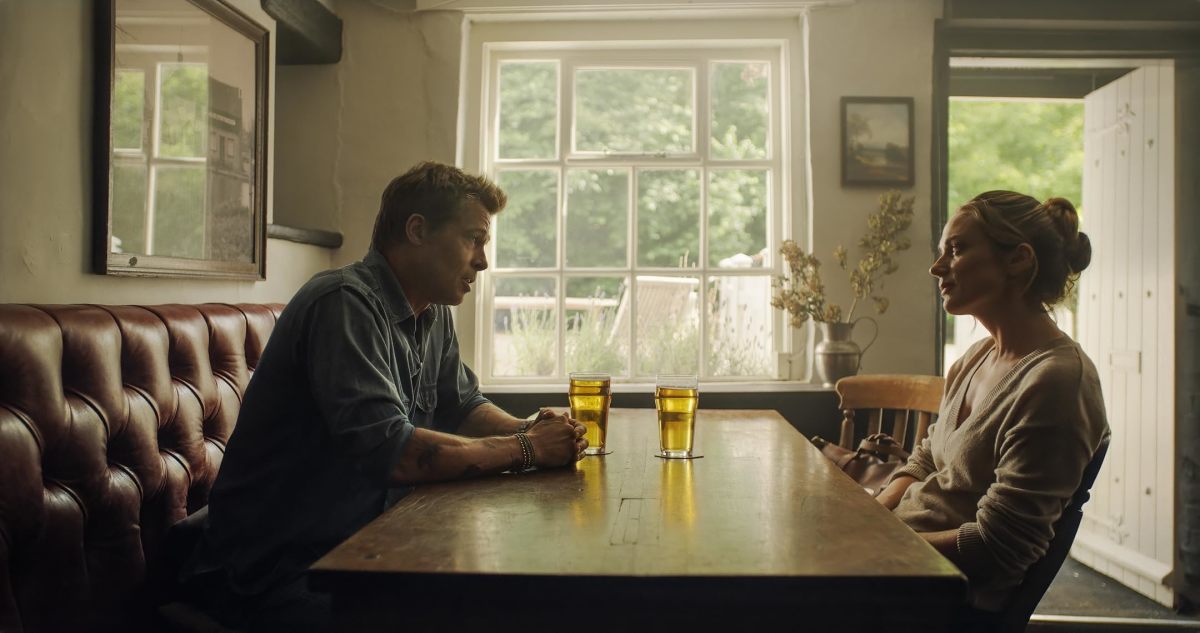 (Image: Apple)
Of course, the film adds a dash of the "old pro mentors the rookie, but the rookie doesn't appreciate it" generational conflict that Kruger, Kosinski, and Bruckheimer already used in "Maverick." But for the most part, there's an overwhelming sense of déjà vu. The movie constantly emphasizes Pitt's character's colorful romantic history and failed marriages, and watching Kerry Condon's character, despite being on her guard, inevitably fall for him had me thinking, "Here we go again." The F1 film is just that old-fashioned, so much so that it feels like a 4K restoration of a movie that time-traveled from the '80s or '90s. Traditional studios like Universal and Warner Bros. don't even invest in scripts this dated anymore. But Apple, like most streamers without major IP like Marvel or DC, is left to build its empire by recycling the concepts that legacy studios have cast aside.
This formula is both easy and difficult to execute. If it succeeds, it follows in the footsteps of "Maverick," reviving the glory of old-school summer blockbusters. If it fails, it becomes a laughingstock like "Red Notice," derided as outdated content calculated by an algorithm. It's either a huge hit or a huge miss. Fortunately, on a production level, the F1 film is a success, and a large part of that credit likely goes to Bruckheimer. He was the master who dominated '80s and '90s Hollywood with this very formula. Kosinski, meanwhile, seems to be a director who thrives under his guidance. After all, without a strong team, Kosinski can deliver bizarre misfires like "Spiderhead" or visually stunning but narratively thin tech demos like "Tron: Legacy."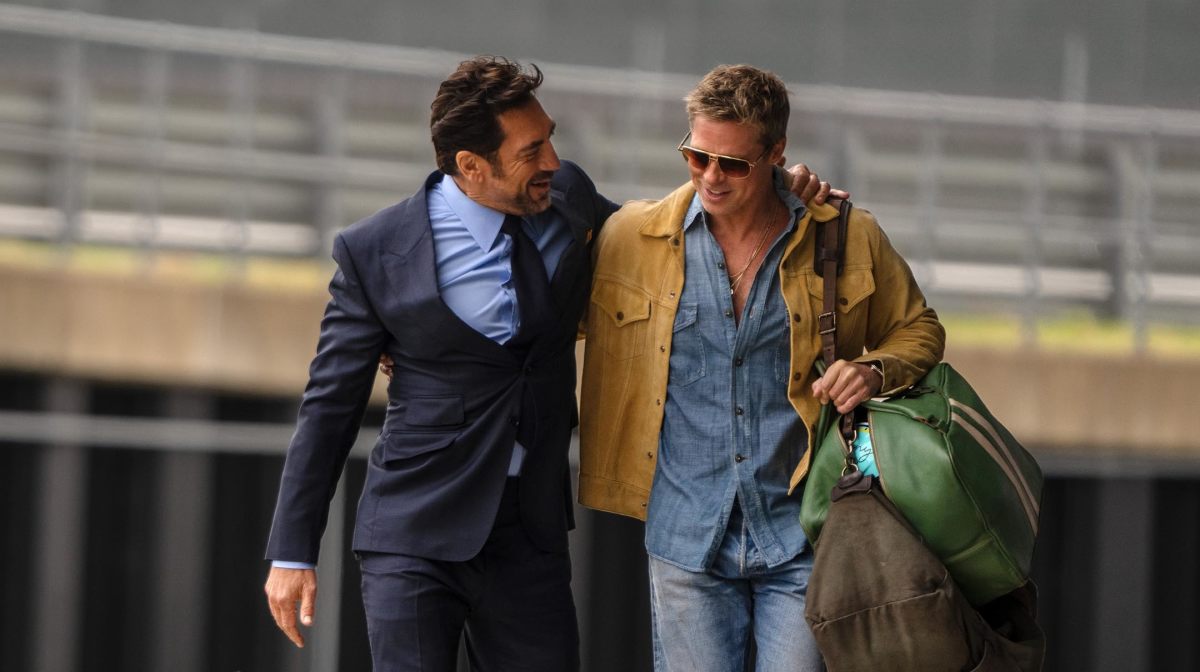
(Image: Apple)
The F1 film's clichés often made me chuckle—not in a derisive way, but with a nostalgic sense of admiration, a "man, they still make these kinds of movies" feeling. For instance, I guarantee just finding an actress willing to play Pitt's love interest was a challenge. You can't cast his contemporaries like Michelle Pfeiffer or Julia Roberts; the studio would deem them too old. Hollywood basically forbids the female lead from being older than or the same age as the male star. If you look at actresses in their early fifties, A-listers like Charlize Theron or Jessica Chastain would never agree to what is essentially a decorative role, no matter how "strong" she appears on the surface. (Jennifer Connelly's agreement to do "Maverick" was a minor miracle.)
Actresses close to Pitt's age are largely uninterested in "trophy wife" or "trophy girlfriend" roles. That leaves you with a choice like Kerry Condon. At just over forty, she's nearly twenty years younger than Pitt—not old enough to be rejected by the studio, but not so young that audiences will mock Pitt for cradle-robbing. Condon also isn't an overly selective actress; her filmography shows she's happy to take a "money job" now and then. Plus, she recently earned an Oscar nomination for Best Supporting Actress for "The Banshees of Inisherin." That recent Oscar buzz provides a level of comfort for studios—an industry superstition, really, since mainstream audiences rarely watch the films that get nominated.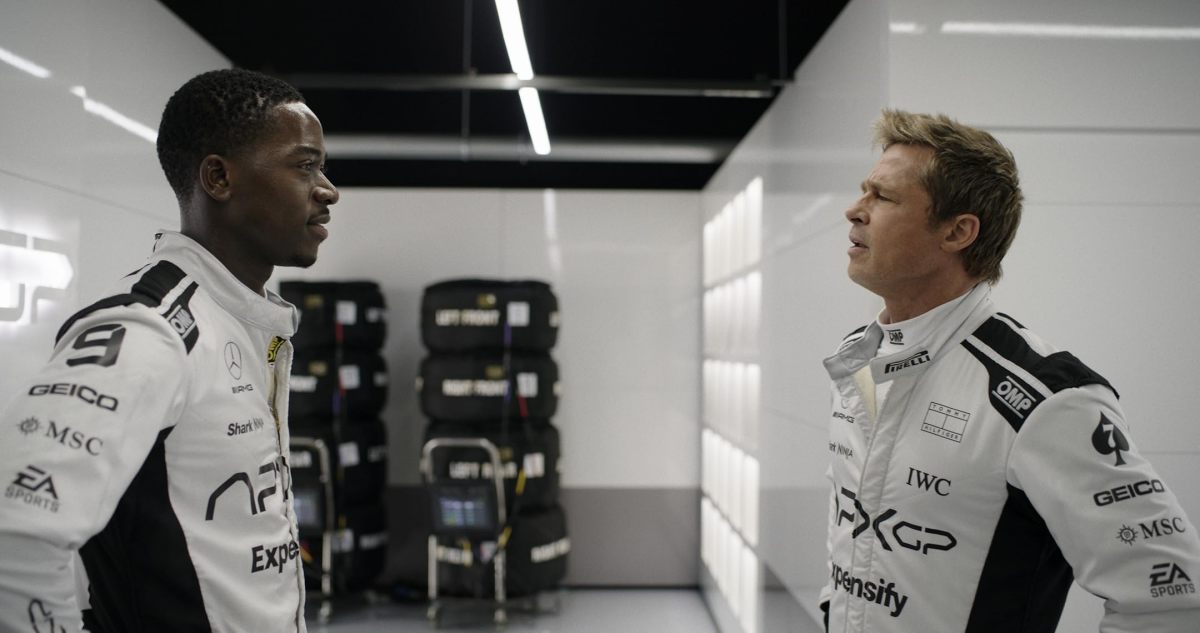 (Image: Apple)
But no matter who you cast opposite Pitt, no one can hold his heart. Pitt's character, Sonny, is like a gunslinger in a Western. He never stays in one place for long. After saving a town from bandits, he immediately rides off to the next one. Sonny's soul is that of a wanderer, which is why he never commits to a racing team or a long-term partner. He is always a transient, forever seeking the next adventure. This is another of the film's old-fashioned romantic notions. To its credit, the movie handles this romance with restraint, avoiding excessive melodrama. The same goes for the mentor-rival-friend conflict between Sonny and Joshua. It could have been far more melodramatic, but the film smartly pulls back, expressing emotions concisely just before they become overwrought, only to unleash them fully during the exhilarating climax. The evolution of their relationship is never spelled out in an overly simplistic way.
Of course, the most obvious appeal of the F1 film is still the cars. Kosinski's direction has always possessed a clean, sharp, precision-crafted quality, from "Tron: Legacy" and "Oblivion" to "Maverick" and now this. That holds true for both his CG-driven set pieces and his practical, on-location shoots. The combination of precision-engineered racing sequences and a precisely controlled, formulaic plot gives the F1 film a streamlined aesthetic in every respect. Whether the box office will be as kind is the ultimate test for Pitt's star power and the marketing teams at Apple and Warner Bros. Pictures.