

AI's recent innovations have garnered global attention, with more and more people experimenting with this emerging technology for everything from image and video generation to smart conversations and document processing. While its applications are expanding rapidly, it has also sparked numerous controversies.
Japan has been grappling with a serious bear problem recently, with sightings causing harm across various regions. Miyagi Prefecture's Onagawa Town issued a "bear sighting" alert on its official X account yesterday (November 26th). However, it wasn't long before they discovered the accompanying photo was actually an AI-generated fake image, rendering the entire report a false alarm and causing a stir online.
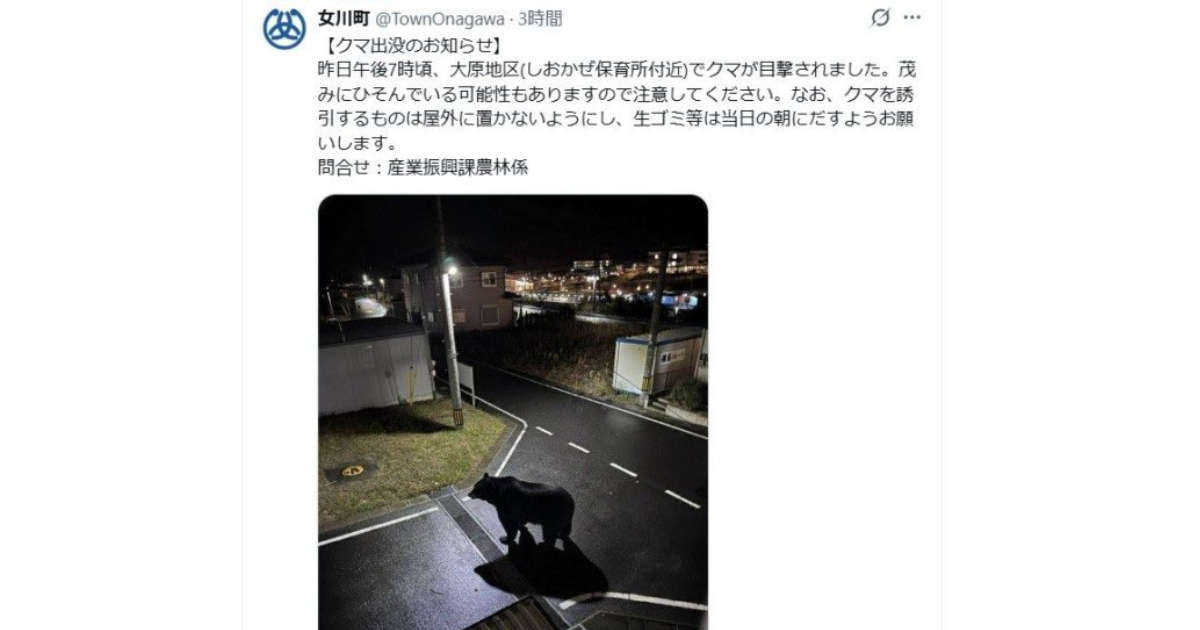
The incident began on the afternoon of the 26th when Onagawa Town posted a warning: "A bear was sighted around 7 PM on the 25th." It included a photo of a bear walking in the dark, advising residents to exercise caution.
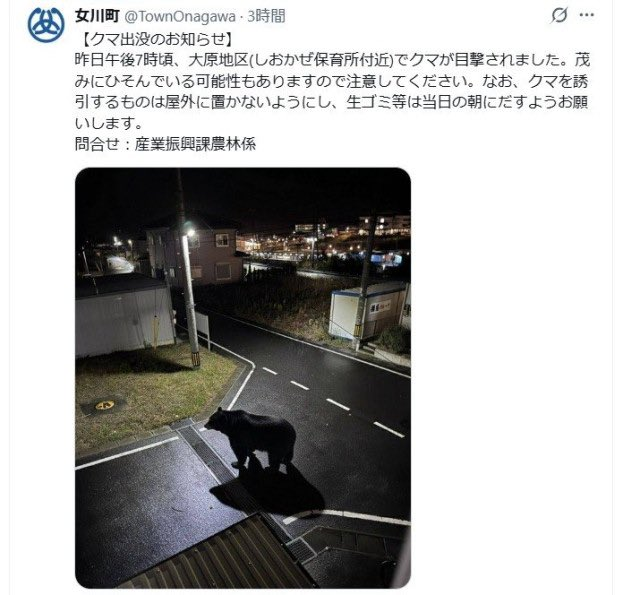
However, it was later confirmed that the photo was an AI-generated fake. What's more concerning is that the person who reported it didn't realize the image was fake, believing it to be real when they contacted the authorities. This incident underscores another layer of risk in the AI era: even well-intentioned citizens can easily be misled by fake images and misinformation.
Onagawa Town subsequently issued an apology, reiterating: "While this was a false alarm, a high level of vigilance for bear sightings remains necessary. We will continue to provide information swiftly and accurately, and ask residents to remain safe."
Reportedly, the fake image was "made for fun" within a certain group, and one member mistakenly believed it was real, leading to the false report.
This incident has sparked anger among many netizens. While safety is paramount, this situation differs from those involving deliberate misinformation spreaders. The more alarming issue here is that even citizens with no malicious intent can fail to distinguish real from fake, inadvertently becoming propagators of false information. There's a strong hope that governments will establish more comprehensive regulations for AI to prevent such entertainment-driven incidents from causing social panic.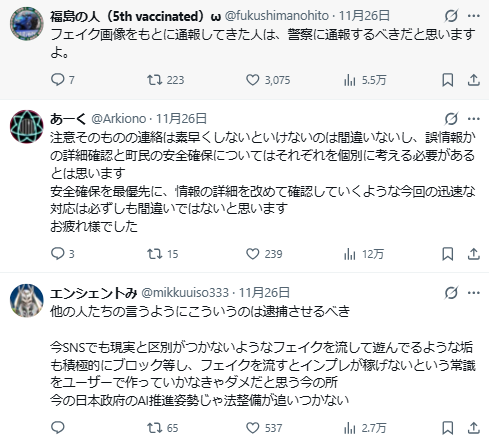
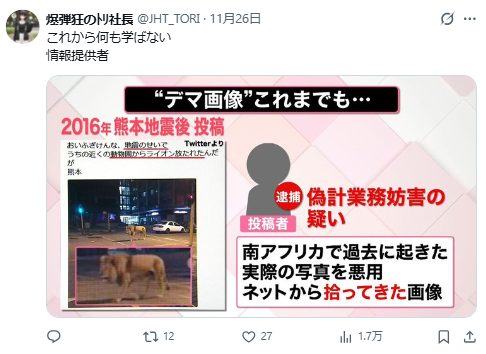
In serious cases, fake news during disasters or emergencies can even constitute a crime. Japan has seen such instances; during the 2016 Kumamoto earthquake, a false rumor about "lions escaping from the zoo" circulated, using foreign photos. This disrupted the zoo's operations, and the 20-year-old who posted it was eventually arrested for "forcible obstruction of business."
This is a situation anyone could face. Generative AI images are becoming increasingly realistic, especially those with poor lighting or low resolution. It's difficult for the general public, and even public sector employees, to quickly discern their authenticity.
In an era where everyone is likely to encounter AI-generated fake images, videos, and information—and potentially share them by accident—we all need to re-evaluate how we interact with information and how to identify what's real.