

Japan's anime industry has been absolutely booming in recent years, flexing its soft power muscles globally. Thanks to a boost during the pandemic, the international market is looking more lucrative than ever.
But beneath all that glitter, there's a growing shadow. A recent article by economic analyst Satoshi Fuwa for Japanese media outlet Nikkan SPA points out that TV anime production costs are skyrocketing, making the 'hit or miss' gamble riskier than ever. The whole situation bears an uncanny resemblance to the mobile game industry right before its bubble burst, sparking fears that anime might be next.

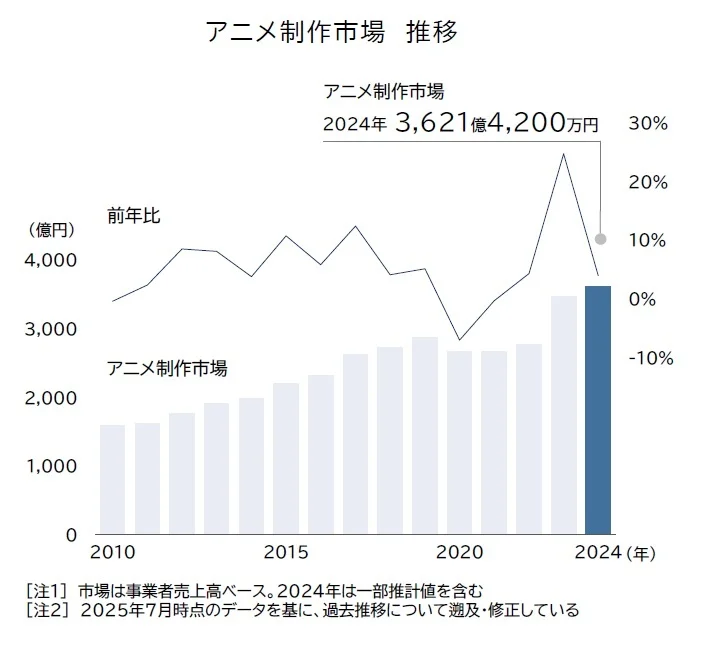
According to data from Japanese business research firm Teikoku Databank, Japan's anime production market hit a whopping 362.1 billion yen in 2024, a 4.0% year-on-year increase that once again shattered previous records. Beyond TV and movies, the rise of streaming platforms has been a game-changer. Currently, 45.2% of anime production companies are collaborating with overseas giants like Netflix and Amazon, who have become crucial clients.
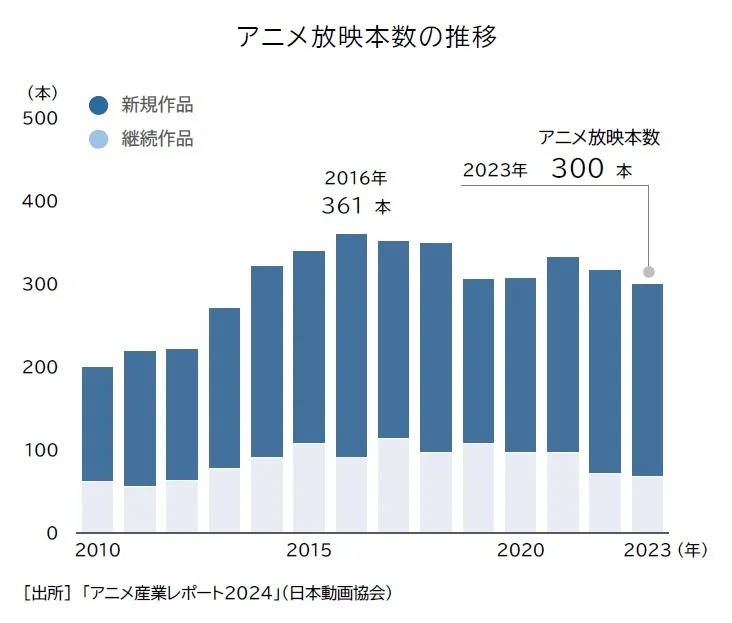
However, the actual number of anime titles aired is dropping. After peaking at 361 titles in 2016, it dipped to around 300 by 2023. Yet, during the same period, the market size ballooned from just over 200 billion yen in 2016 to approximately 348.2 billion yen in 2023. This clearly points to one thing: the production cost for a single title is significantly increasing.
Back in the day, a 30-minute TV anime episode would typically cost around 10 to 15 million yen. Now, you're looking at 20 to 30 million yen per episode. That means a 13-episode series that once cost a little over 100 million yen can now easily run anywhere from 200 million to nearly 400 million yen.
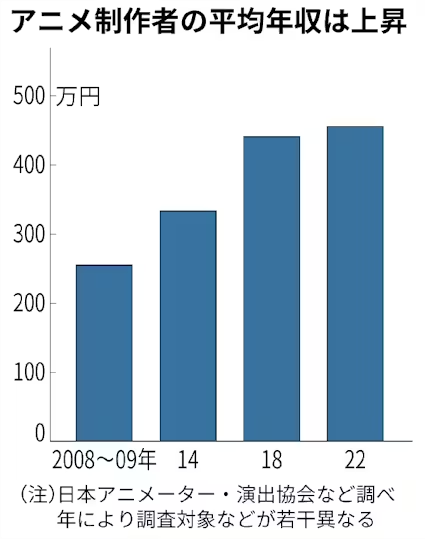
Anime production is incredibly labor-intensive, and the industry used to get slammed for 'exploiting passion' with low wages and grueling hours. However, in recent years, the average annual income for anime professionals has indeed risen, and working conditions are slowly improving. From that perspective, the increase in production costs is actually a positive development. But on the flip side, if a project fails to recoup these massive expenses, it becomes a high-risk, high-reward gamble.
One prime example of a recent high-investment project is the original anime 'GIRLS BAND CRY.' It premiered last April, built up a massive following, and is even slated for a concert at the Budokan this September. What's remarkable is that 'GIRLS BAND CRY' is entirely CG-animated, featuring motion capture from professional bands for its performance scenes. Plus, the voice actors were specially selected and trained as a band from the ground up before the show even aired. Rumor has it the production cost exceeded one billion yen.

But high-stakes investments don't always pay off. Take Studio Ghibli's 2013 film, 'The Tale of the Princess Kaguya.' Its production budget soared past 5 billion yen, yet it barely scraped together 3 billion yen at the box office. The following year, Ghibli disbanded its production department, laid off a large number of staff, and shifted to a project-based system where they'd hire talent only when needed. That period also happened to be a slump for the anime industry.

The reason for comparing this to the mobile game industry is because it's a prime example of a bubble burst. Game development is inherently a high-cost investment, but with market growth stagnating and success rates plummeting, it led to an oversupply of too many titles and not enough players. Now, we're seeing a flood of low-cost, disposable mobile games, indicating a clearly saturated market.
In the anime world, the common phenomenon of 'dropping a show after a few episodes' (known as '0-wa giri' or 'cutting after 0 episodes' in Japanese fandom) also, to some extent, reflects the problem of too many titles and audience fatigue. Of course, there are plenty of 'low-budget' productions out there, but they usually don't get great feedback and are generally niche. While established hits like 'Detective Conan' or 'Demon Slayer' don't have to worry, many smaller titles could end up becoming casualties.
Note: Financial figures and earnings forecasts should be confirmed through the company’s official announcements.
via: 日刊SPA