

Nvidia recently officially unveiled its next-generation imaging technology, DLSS 5, touted for combining generative AI with real-time rendering to elevate game visuals to a new level of realism. However, as official demo footage emerged, the technology has not received universal praise; instead, it has sparked widespread controversy within the gaming community due to a strong "AI-generated" look in character facial expressions.

Nvidia hails DLSS 5 as its most significant graphics breakthrough since real-time ray tracing in 2018. CEO Jensen Huang even described it as the "GPT moment" for game visuals, emphasizing that the technology merges "hand-crafted rendering" with generative AI to significantly enhance visual detail and realism while maintaining creator control.
Huang stated, "DLSS 5 merges geometry, materials, and the entire game's controllability with generative AI. It's not just post-processing; it's generative control at the geometric level."
According to official explanations, DLSS 5 generates lighting and material details in real-time via an AI model, based on each frame's color and motion vectors, while maintaining visual continuity and supporting up to 4K resolution. This technological approach has become the core of the controversy. Unlike previous DLSS iterations that focused on boosting performance and resolution, DLSS 5 is perceived as directly intervening in the fundamental generation of visuals, potentially altering the original art style.
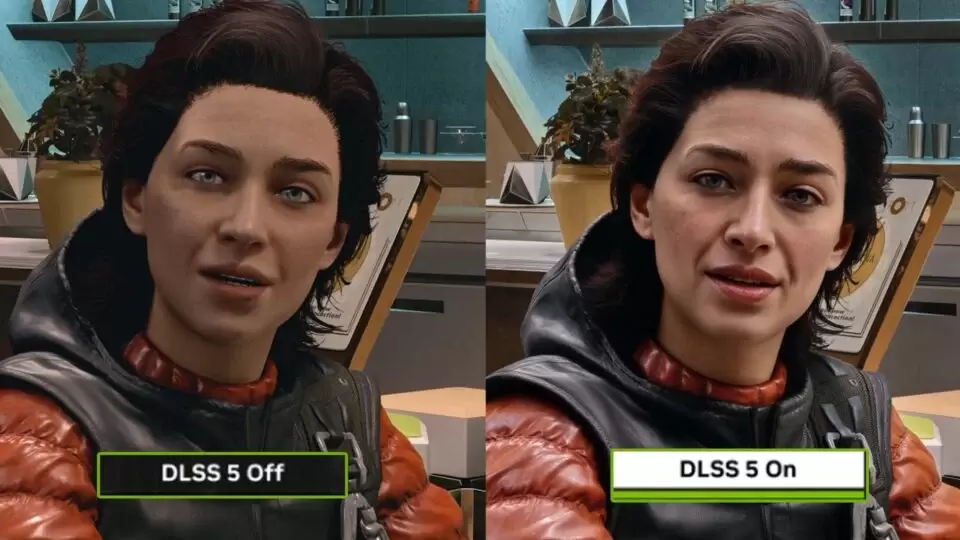
Based on Nvidia's released examples, titles such as "Resident Evil Requiem," "Starfield," and "Hogwarts Legacy" show an unnatural enhancement of character facial details after applying DLSS 5. Some players have described this as "AI collage faces" or an "overly aggressive beauty filter." Particularly in close-ups, facial structures exhibit a noticeable deviation from their original designs, raising concerns about character recognition and artistic consistency.
Responding to external criticism, Jensen Huang took a firm stance, stating directly that "those criticisms are completely wrong" and emphasizing that the technology ultimately remains under developer control.
He noted that collaborating teams, including Capcom and Bethesda, can fine-tune the generative AI to ensure it meets their creative requirements. Bethesda Game Director Todd Howard also backed the technology, stating, "When we ran DLSS 5 in 'Starfield,' it truly brought the game to life. We've experienced it, and we look forward to players feeling it for themselves."
Despite these assurances, the gaming community remains largely unconvinced. Many commentators point out that DLSS 5's issue isn't its adjustability, but rather the inherent unpredictability of its core mechanism, which can easily lead to results that deviate from the original art style. Some players further question whether direct involvement of generative AI in visual composition means game aesthetics will gradually slip from the control of art designers.
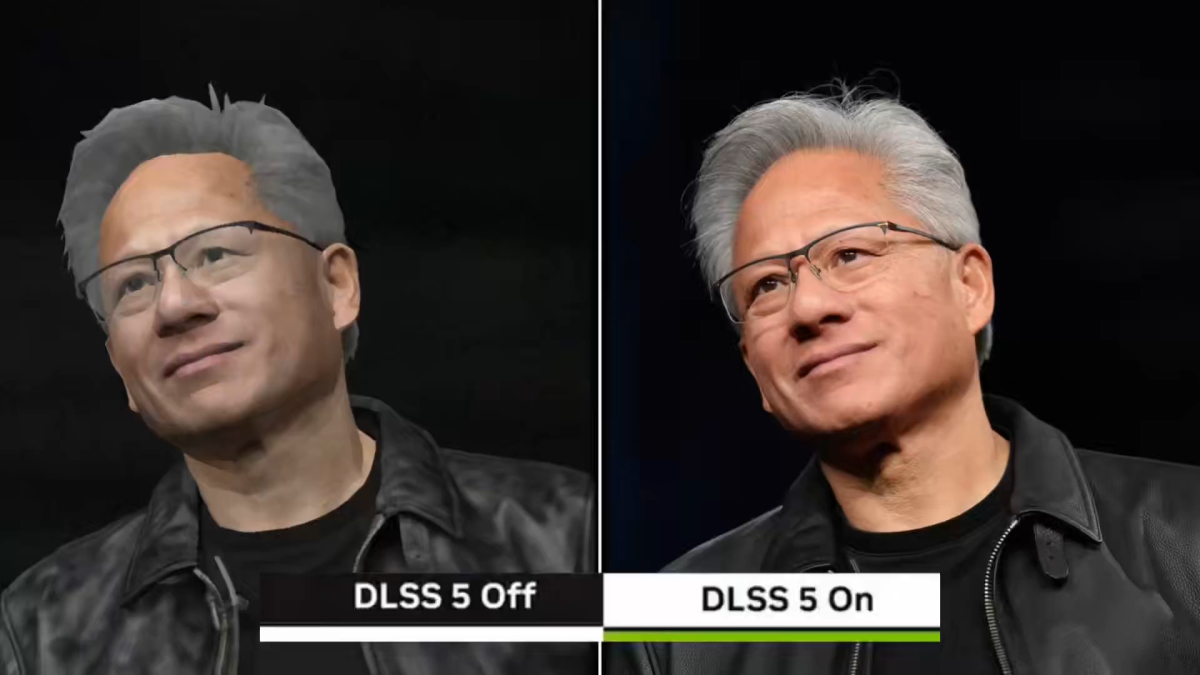
Furthermore, Nvidia's presentation style has also sparked discussion. Most promotional materials primarily feature static images, with relatively limited actual dynamic demonstrations. This has led to external skepticism that the AI enhancement might appear more jarring during actual gameplay. Concurrently, one of the most pressing questions for players is whether DLSS 5 will offer a complete disable option to preserve the original visual experience.
DLSS 5 is slated for an official launch this fall, with support for titles including "Assassin's Creed Shadows," "Phantom Blade Zero," and "The Elder Scrolls IV: Oblivion Remastered." As generative AI progressively integrates into the core of game visuals, it remains to be seen whether this technology will establish a new industry standard or ignite further creative and aesthetic debates, awaiting further validation from the market and players.