

Gacha, blind boxes, Ichiban Kuji—these "random merchandise" sales methods, where you don't know what you're getting until you buy, are absolutely everywhere in "oshi-katsu" (fandom activities) culture.
Recently, Hamaru Strategy, a Japanese company specializing in character business, released an interim report for its "2026 Random Merchandise Consumer Opinion Survey." The survey, which received 35,866 responses, revealed a staggering statistic: 89.9% of respondents expressed "dislike" or "strong dislike" for random merchandise. However, almost everyone admitted to having purchased random goods, proving that despite the hate, people still shell out.
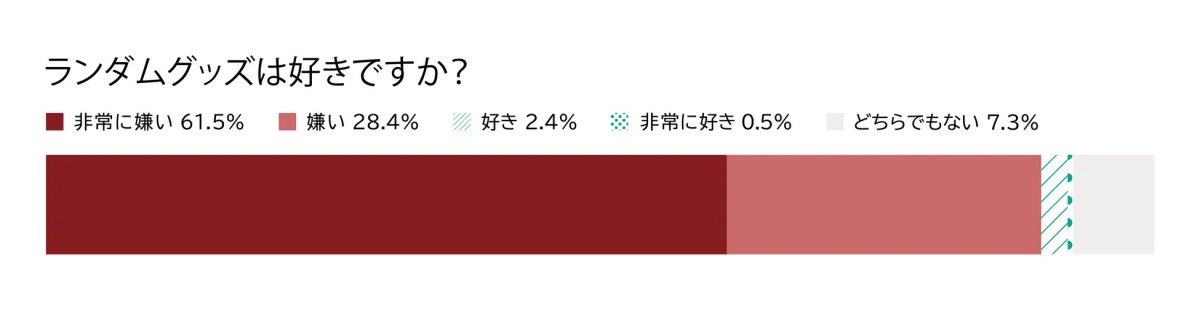
Looking at the scale, almost 90% fall into the "dislike" or "strongly dislike" categories alone. Even more striking, only a mere 2.9% held a positive view. This clearly shows that while "random merchandise" is incredibly popular in Japan, it rarely garners positive feedback from consumers.
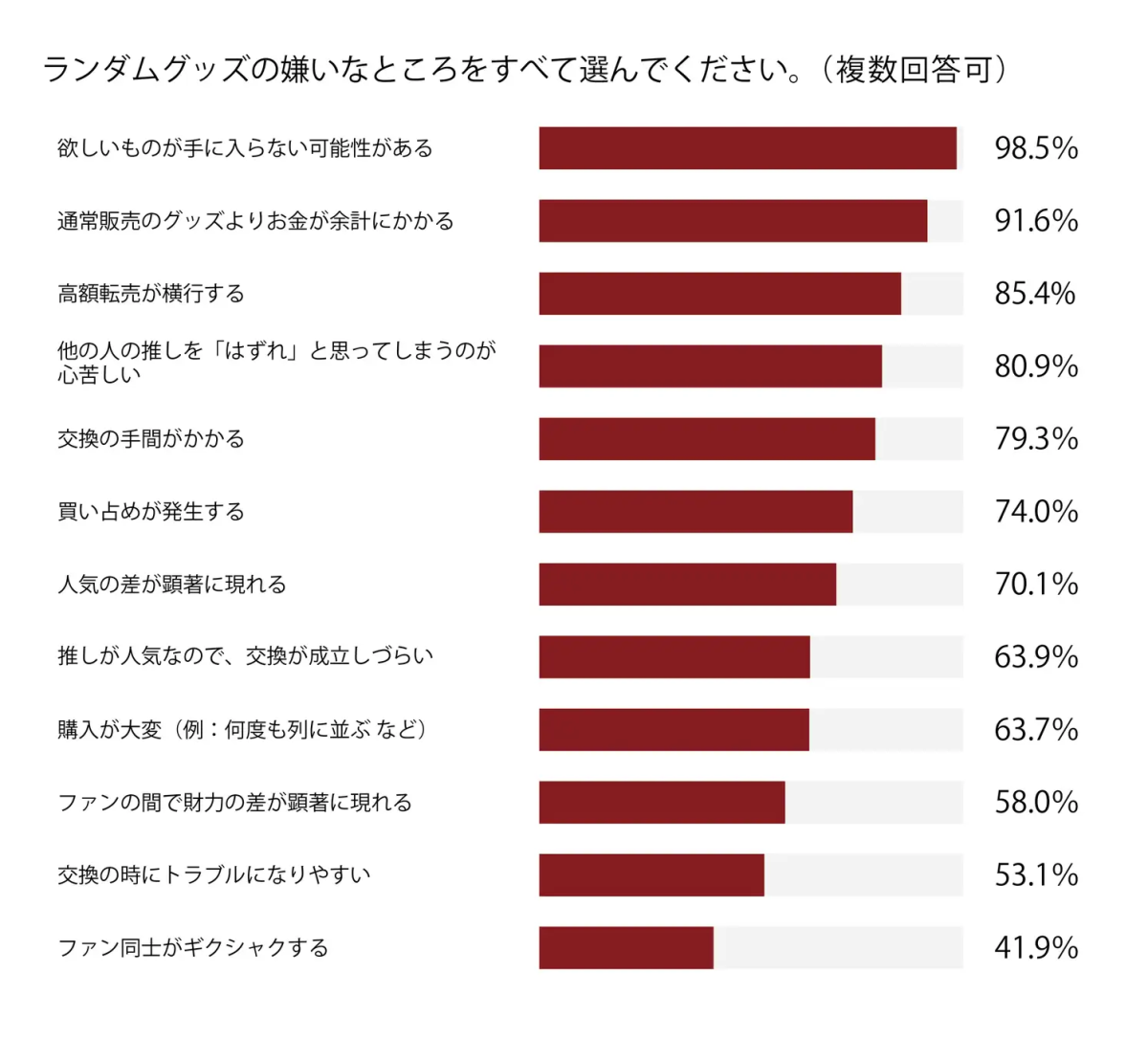
The primary reasons cited for this widespread dislike were: "the risk of not getting what I want" (98.5%) and "it costs more than regular sales" (91.6%). Many also expressed dissatisfaction with "rampant high-priced resales" (85.4%).
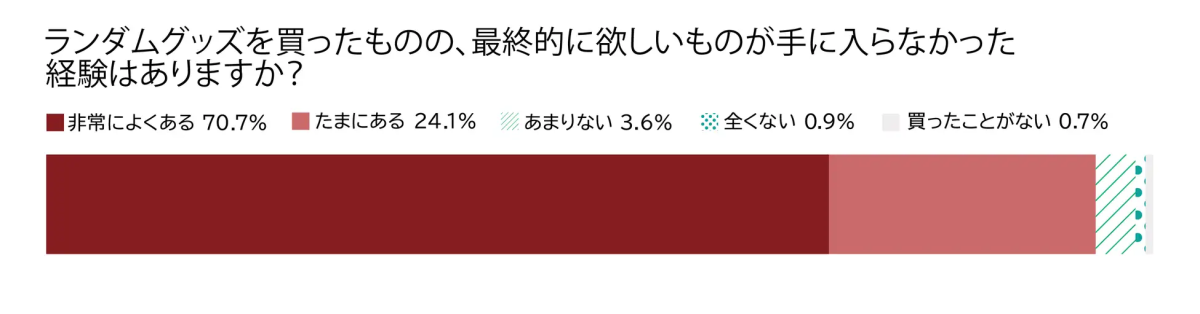
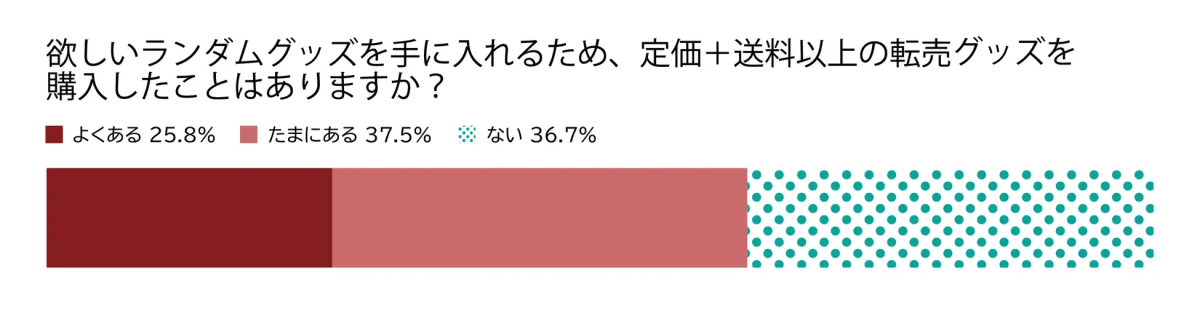
Furthermore, 94.8% of respondents have experienced "not pulling the desired item," and 63.3% have even purchased resold items above their original price. This indicates that consumers are fully aware that this mechanism fundamentally means "spending more for an uncertain outcome."
▼ The percentage of people who have bought "random merchandise" and didn't get what they wanted. Both dark red and red represent those with experience, totaling 94.8%.
▼ The percentage of people who have bought "random merchandise" through resales at a higher than original price. Both dark red and red represent those with experience, totaling 63.3%.
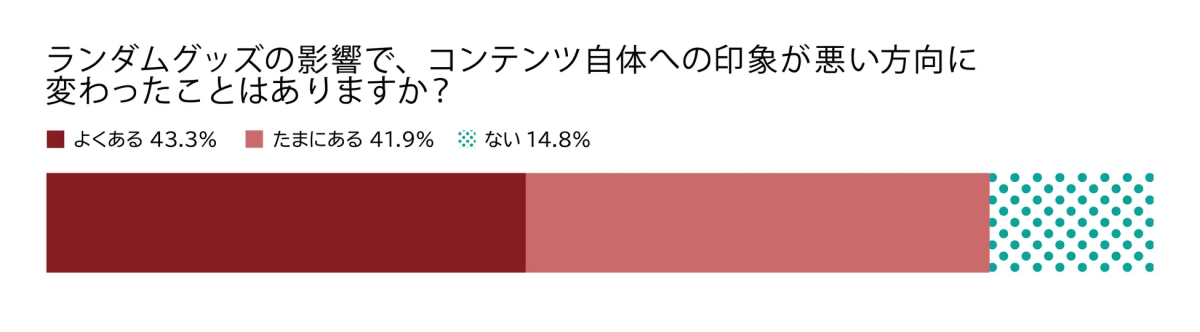
Even more concerning, 85.2% stated that "random merchandise has soured their impression of the IP itself," demonstrating how this sales method can negatively impact brand affinity.
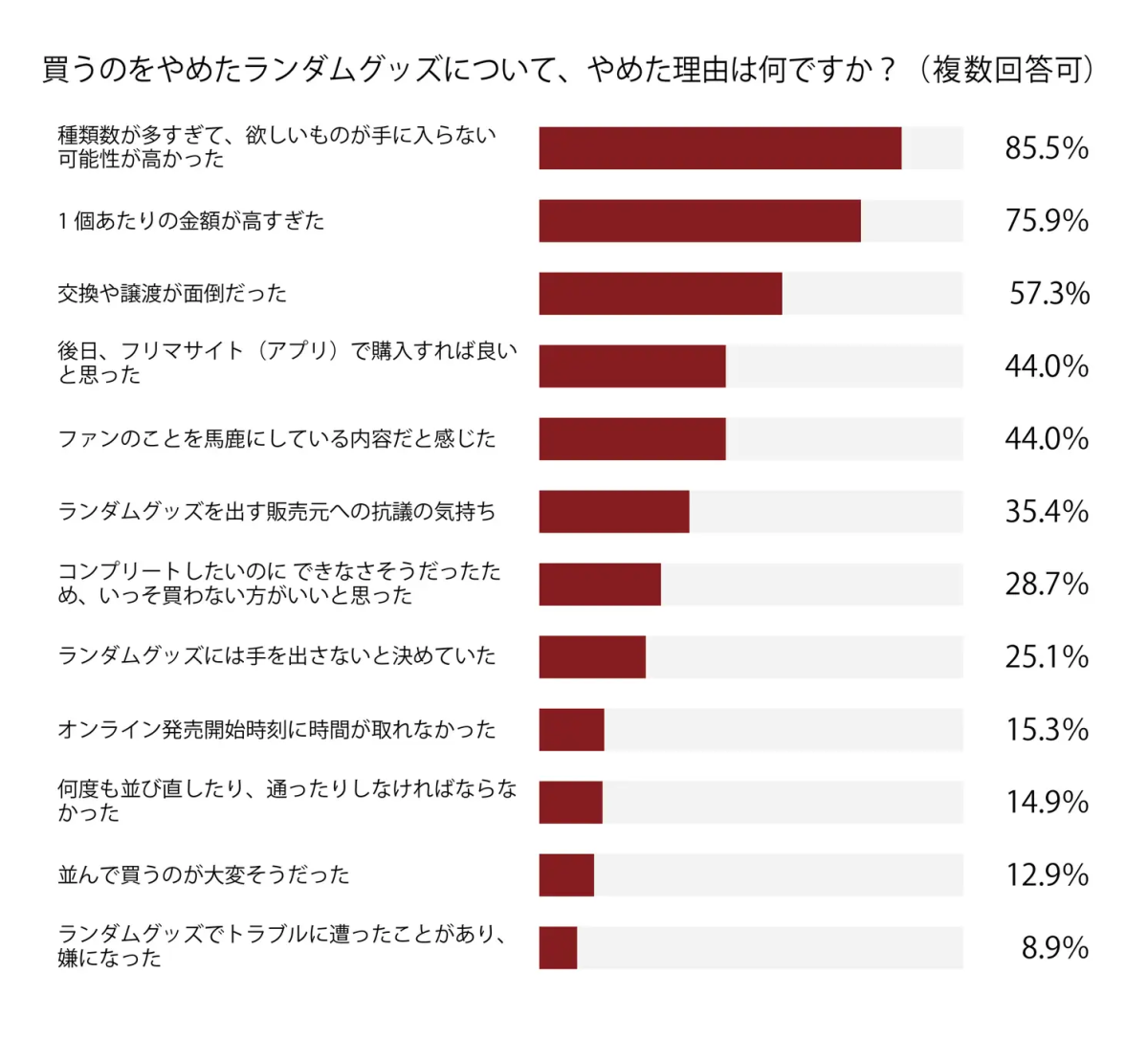
Additionally, a significant number of people have given up on purchasing random goods for reasons including: "too many variations, making it impossible to get what I want" (85.5%), "it's too expensive to get the item I actually want" (75.9%), and "the hassle of trading for desired items" (57.3%).
Conversely, when asked about an alternative sales method where items are "higher priced, but I can choose what I want," a whopping 89.7% expressed support. Over half of respondents even found the idea of "selling full sets directly" to be acceptable. 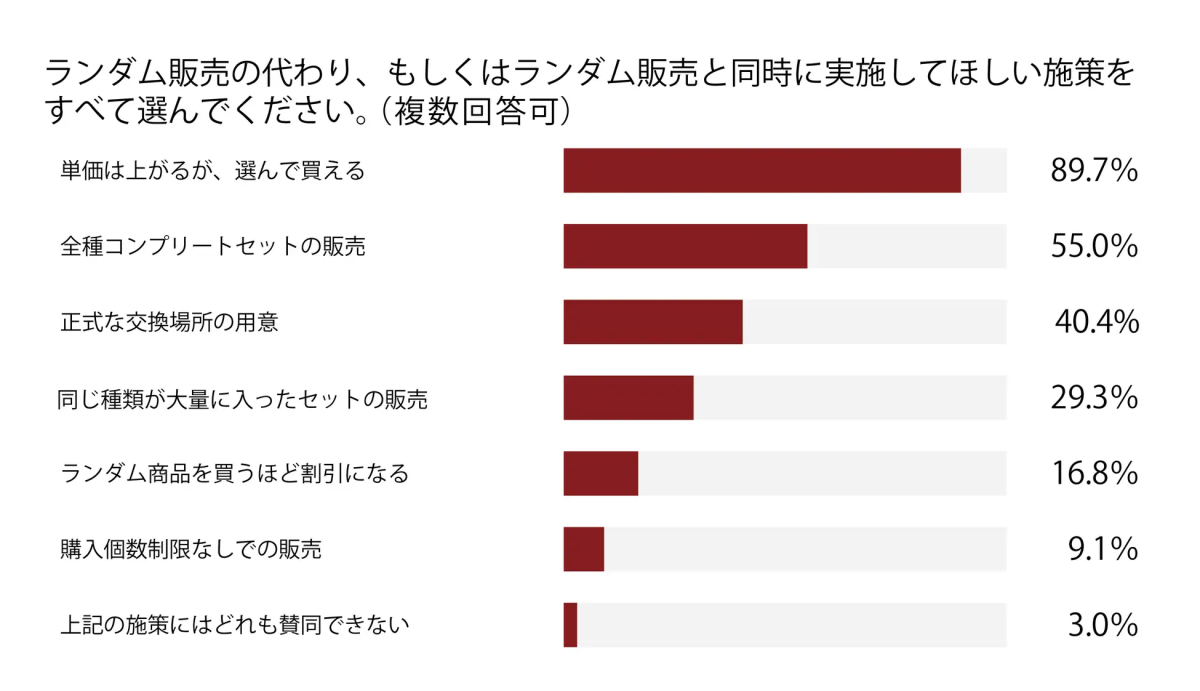
This survey was actually prompted by Hamaru Strategy's belief that the industry's perception of random merchandise might be out of sync with consumer reality. The catalyst was a survey released by BANDAI SPIRITS on March 24th, which highlighted the "excitement and thrill of not knowing what you'll get" as a positive appeal. At the time, many on Japanese social media scoffed, "That's completely out of touch with reality!"
▼ A survey released by major gacha brand BANDAI SPIRITS on March 24th stated that 45.7% of people find the appeal of "random merchandise" to be "excitement and thrill."
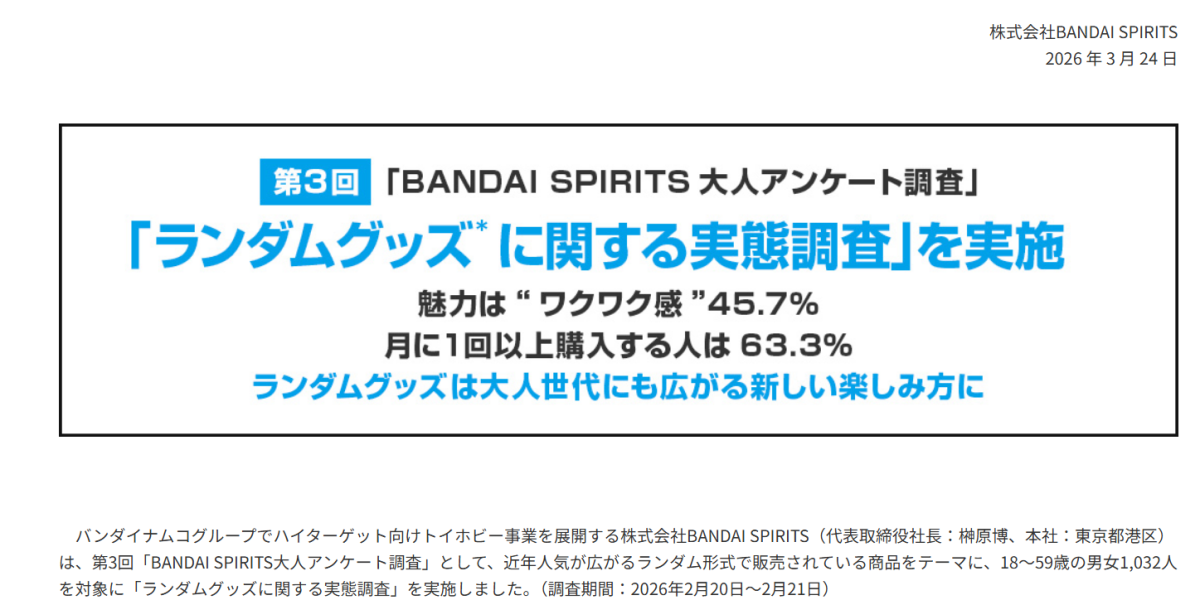
Regarding this disconnect, Hamaru Strategy noted that some companies genuinely believe random merchandise is "something everyone loves." The goal of this survey is to compile authentic consumer voices, hopefully giving the industry a chance to adjust in the future.
The overall takeaway? Consumers might grumble about "random merchandise," but they still pull the trigger, often ending up unhappy and even resenting the IP. It's safe to say this sales model creates some seriously mixed feelings.
via: PR TIMES