

AI's revolutionary advancements, from image generation to video production and smart dialogue, are capturing global attention. While its applications are expanding rapidly, commercial use often runs into controversy.
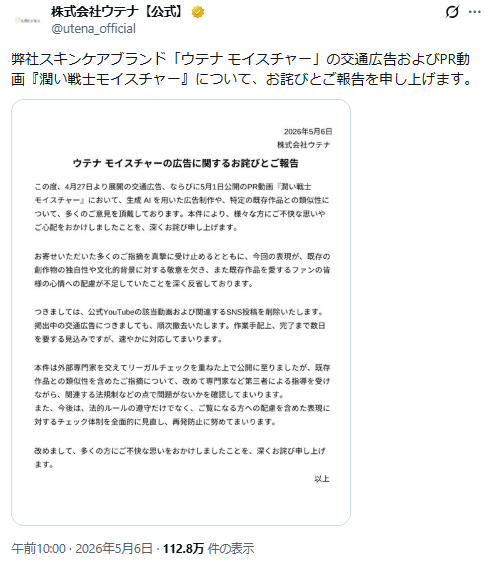
Recently, Japanese cosmetics and skincare brand Utena sparked a major controversy with an AI-generated advertisement that many netizens accused of plagiarizing "Sailor Moon." In response, the company issued a formal apology on May 6th, announcing the removal of the promotional video from YouTube and all transit advertisements.
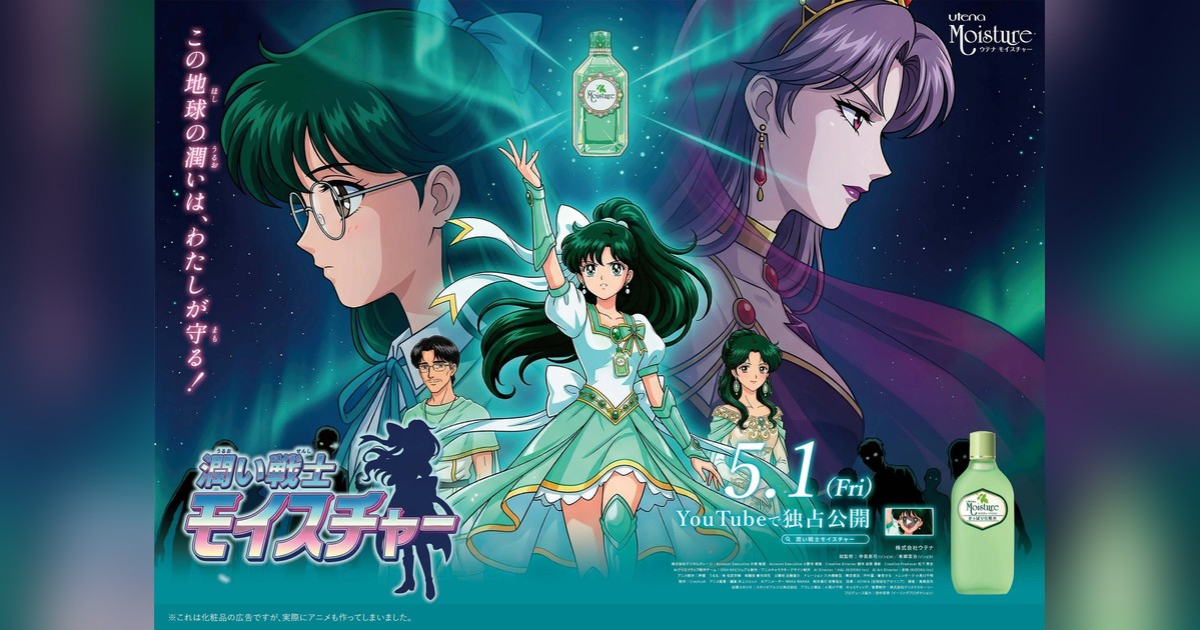
The ad in question was part of Utena's campaign for its skincare brand "Utena Moisture," titled "Moisture Warrior Moisture."
Starting in late April, Utena displayed outdoor advertisements at 28 JR Yamanote Line stations, followed by exposure on the Osaka Metro Midosuji Line in May. On the same day, the company also released a promotional animation on YouTube, explicitly stating it was "entirely produced using generative AI." However, immediately after its release, numerous netizens pointed out that the character designs, composition, color palette, and presentation style strongly resembled "Sailor Moon," igniting a widespread debate on Japanese social media.
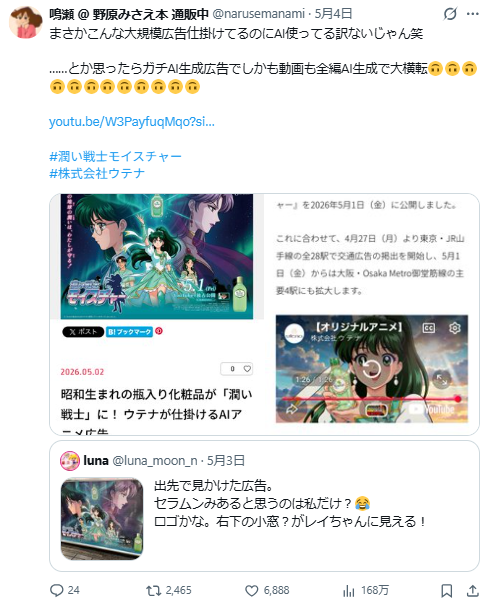
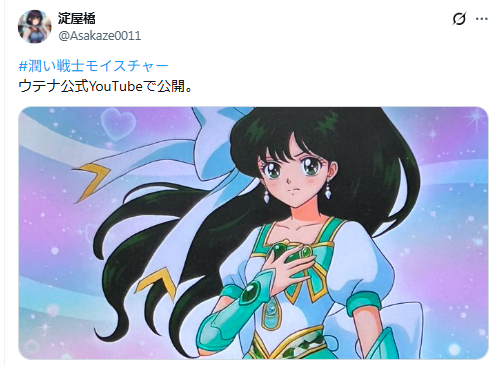
As the promotional animation has since been taken down, this is a screenshot captured by a Japanese netizen. While the overall styling isn't identical to "Sailor Moon," the character designs undeniably share a similar aesthetic.
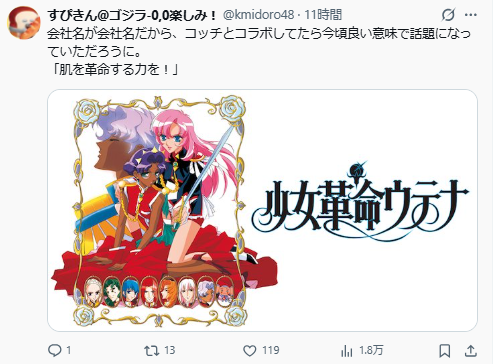
Some netizens also sarcastically noted the brand's name, Utena, is shared with the classic 90s anime "Revolutionary Girl Utena," suggesting the AI-generated promotion made it seem like an unauthorized collaboration, which many found appalling.

Following the online uproar, Utena issued a statement: "We sincerely accept the numerous opinions raised by the public and deeply regret that our use of AI in this expression lacked respect for the uniqueness and cultural background of existing creative works, and did not sufficiently consider the feelings of fans who love the original work." The company formally apologized for the incident.
When the advertisement was first released, Utena had emphasized that AI technology allowed them to shorten an animation production process that would typically take over half a year to "just a few hours to half a day." At the time, the company also stated, "We did not train the AI on any specific existing works, and human oversight was involved to supervise the process and confirm originality."
However, in their announcement to withdraw the ads, Utena admitted that while they had consulted external legal experts beforehand, they would now seek guidance from third-party specialists to re-evaluate potential similarities with existing works and any related legal issues. Regarding future preventative measures, the company stated that they would not only adhere to legal regulations but also re-examine their internal review mechanisms, including considerations for audience perception and sentiment, to prevent similar situations from recurring.
Despite initially promoting the ad as AI-generated, the brand faced significant backlash due to the perceived strong resemblance to a famous work, leading to accusations of over-reliance on AI. While brands can certainly utilize AI, it seems such approaches require thorough review and careful consideration to avoid similar pitfalls.