

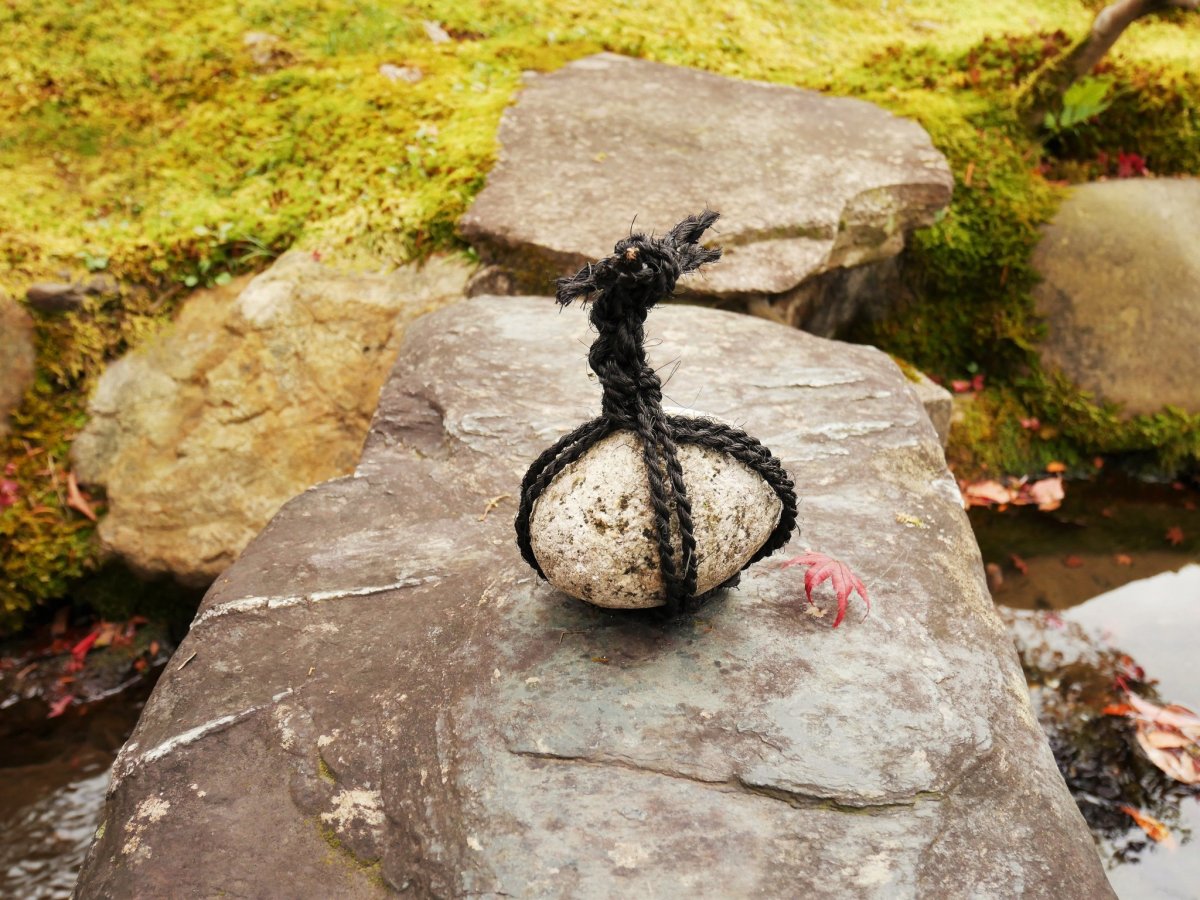
Ever been strolling through a historic Japanese garden, traditional restaurant (ryotei), or temple grounds and spotted a small stone tied with a black rope? You might think it's just part of the landscaping, maybe even overlook it entirely. But hold up! In traditional Japanese culture, this seemingly innocuous stone is actually a super subtle "do not enter" sign.
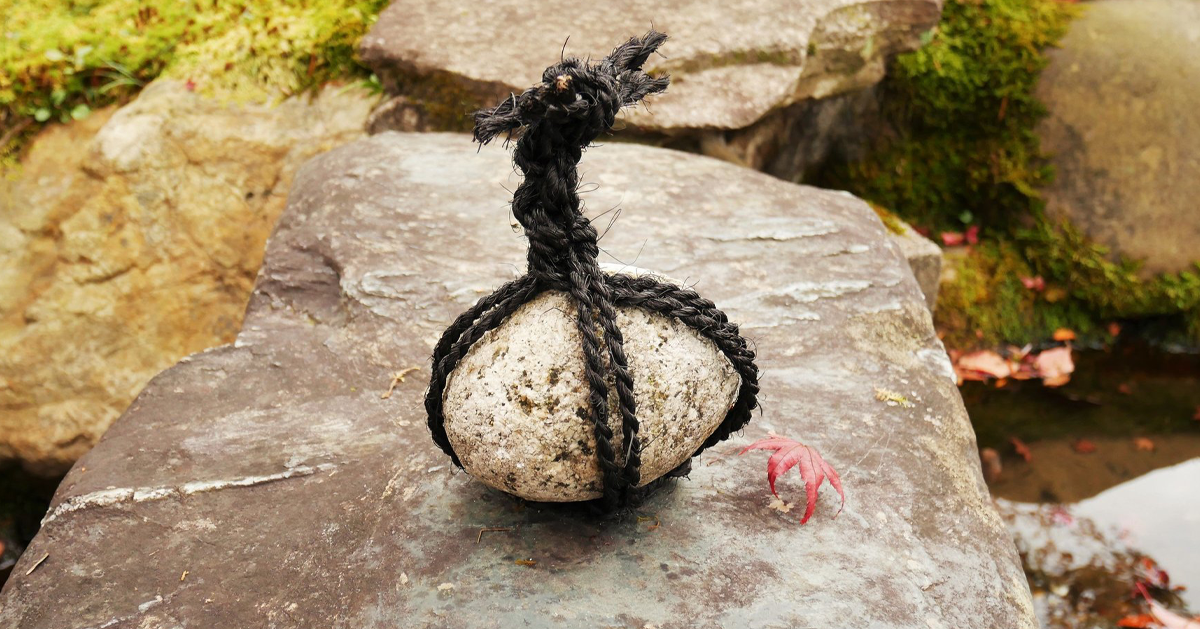
Twitter user "すぽんちゅ(@Iwatekko6969)" recently dropped this little knowledge bomb, noting that even many Japanese people today are unaware of its meaning. So, next time you're wandering through an ancient garden, ryotei, or temple, and you see one of these rope-bound stones on a path, it's a polite, unspoken message: "Please don't go any further." In other words, the area beyond that stone is off-limits!
These stones are generally known as "Sekimori-ishi" (barrier stones) or sometimes "Tome-ishi" (stop stones). Unlike modern signs that bluntly scream "NO ENTRY," these stones gently tell visitors to halt their progress. If you don't know the cultural code, it's easy to mistake them for mere decoration and accidentally wander into forbidden territory.
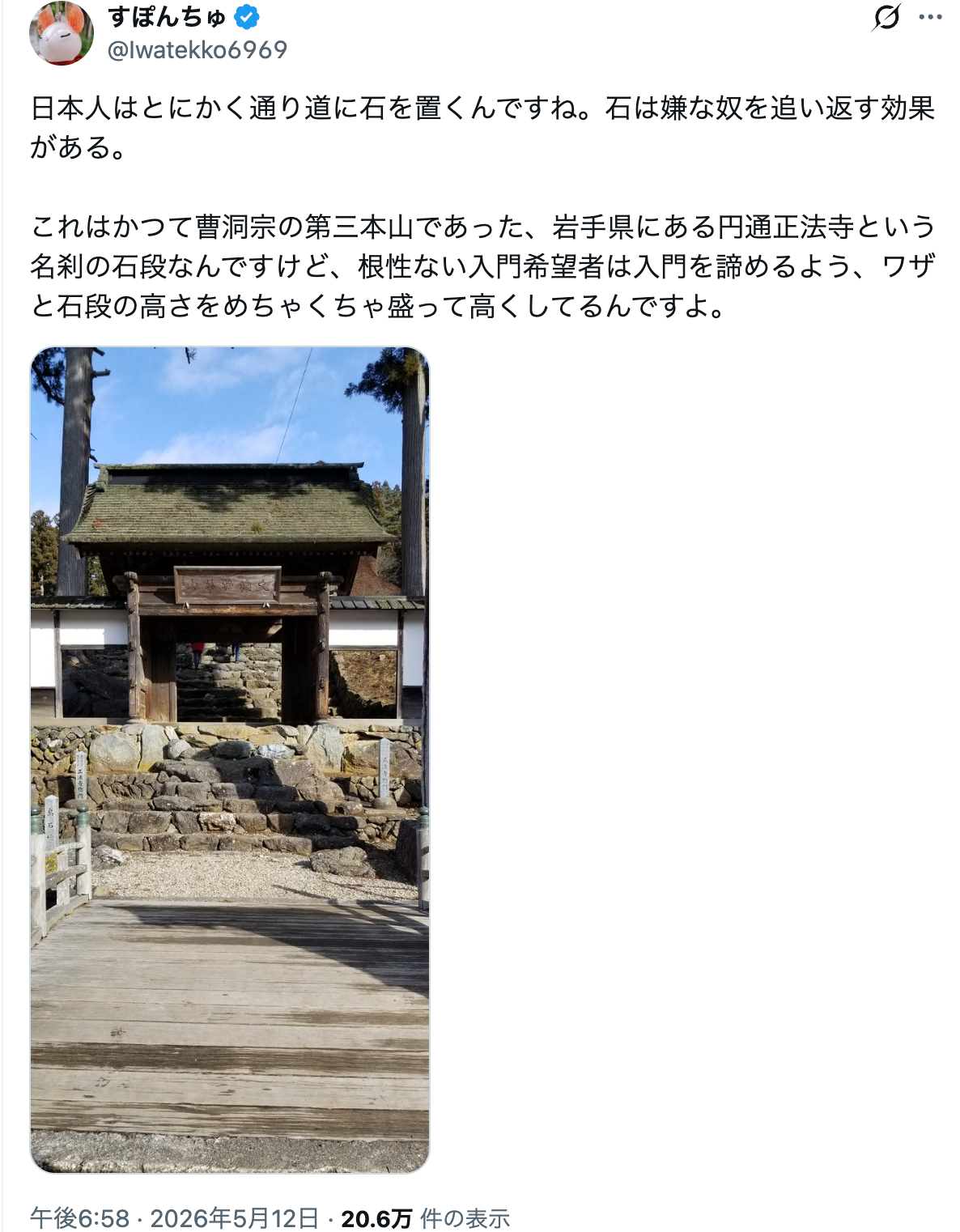
The user further explained that placing stones on paths as a symbolic deterrent is a common thread in Japanese culture. They cited the example of the Entsu Shoboji Temple in Iwate Prefecture, where the temple's stone steps are deliberately built high and steep. The purpose? To make those lacking true resolve give up and abandon their path to spiritual training before even entering the temple.
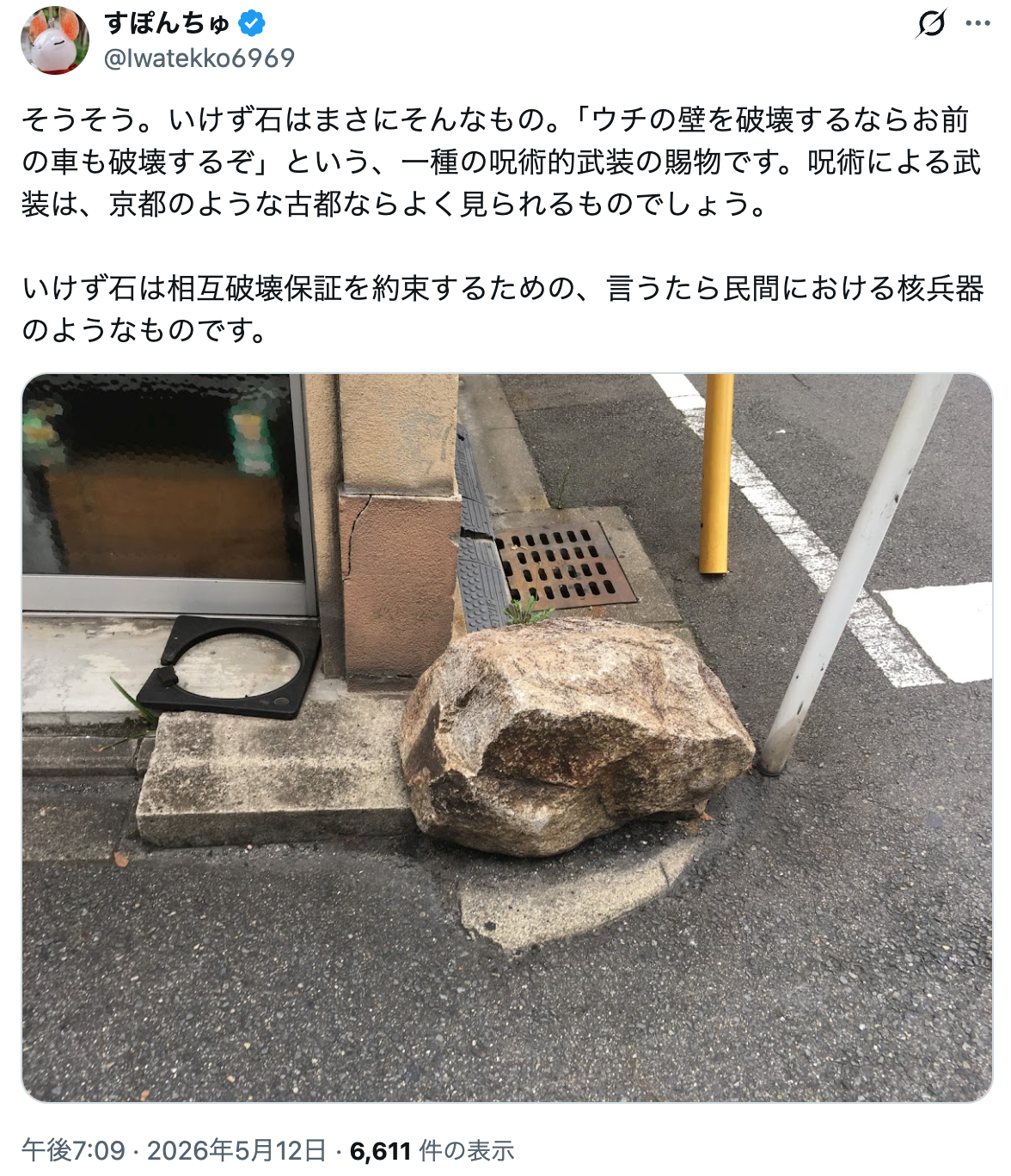
One netizen chimed in, asking if "Ikezu-ishi" (spiteful stones) were a similar concept. Ikezu-ishi are large stones often placed by residents in narrow alleys, at house corners, or along walls to prevent vehicles from scraping against buildings. They look like ordinary roadside rocks, but they carry a strong, unspoken warning.

The original poster agreed that Ikezu-ishi definitely fall into the same category. They're like a "curse-like" deterrent, a silent threat to drivers: "If you try to damage my wall, your car won't get away unscathed either." They even went so far as to describe these stones as a civilian version of "nuclear weapons," guaranteeing mutual destruction – a truly unique form of silent warning delivered by a rock!
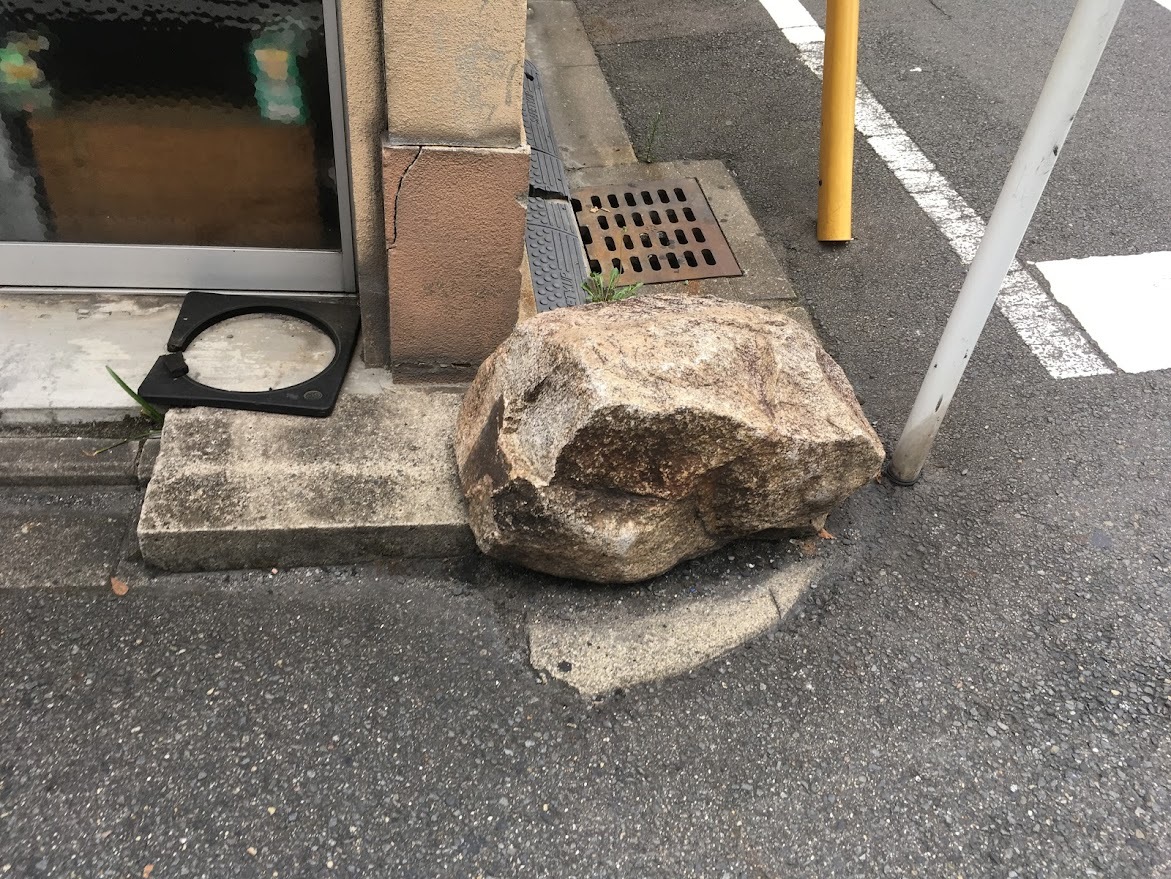
This "barrier" stone culture, along with the strict spiritual test of resolve embodied by the challenging stone steps, really struck a chord with netizens. After all, instead of a direct "no entry" sign, a single stone quietly conveying a warning is just so quintessentially Japanese – subtle, respectful, and steeped in tradition!