

 (Image: Sony Pictures)
(This article contains spoilers.)
Adapting "Masters of the Universe" into a live-action film in this day and age is no easy feat. In fact, it wasn't even a success back in the eighties. Some properties are simply meant to be cartoons, and forcing them into a live-action format requires significant adjustments to avoid extreme awkwardness. But if you change too much, you risk enraging the fanbase for straying too far from the source material. Sometimes, these cross-media adaptations feel like an unnecessary exercise—a film that doesn't need to be made is greenlit for profit, while certain fans and studios have to invent convoluted justifications to convince themselves it's a meaningful endeavor.
"Masters of the Universe" is exactly that kind of property. A direct, cartoon-accurate adaptation would be incredibly silly, but a heavily altered version would be accused of being unrecognizable. The 1987 film "Masters of the Universe" managed to be both: it was unapologetically goofy, yet it relegated its core protagonist, He-Man, to a supporting role, making a pair of random high school sweethearts the main characters. He-Man came off as little more than a cute alien creature they stumbled upon. It's easy to see the market-driven logic here; they hoped civilian characters would resonate with non-fans and likely assumed the general audience would connect more with teenage romance than with a muscle-bound hero from outer space.
(Image: Sony Pictures)
The 1987 film was poorly received, failing to make either the fantasy world of "Masters of the Universe" or the high school drama on Earth memorable. While the 2026 version of "Masters of the Universe" certainly doesn't repeat the same mistakes, its core thinking isn't so different. It’s still burdened by heavy market considerations—perhaps even more so. But because it's so over-calculated, the film feels like a soulless, sterile product, never truly coming alive or fully digesting the very calculations it was built upon.
First, the film is aware that "Masters of the Universe" is a dated IP, constrained by the era and format in which it was created. For instance, it clearly knows that He-Man's pageboy haircut and Conan the Barbarian-esque physique don't align with contemporary standards of male beauty (let's be real, that haircut is a tough look for any era). Dolph Lundgren's body type is no longer the mainstream ideal. The film seizes on this to reflect on how definitions of masculinity have changed over the past forty years. This sounds like a fascinating angle, ripe for exploration, but it's also the part that was most difficult to watch.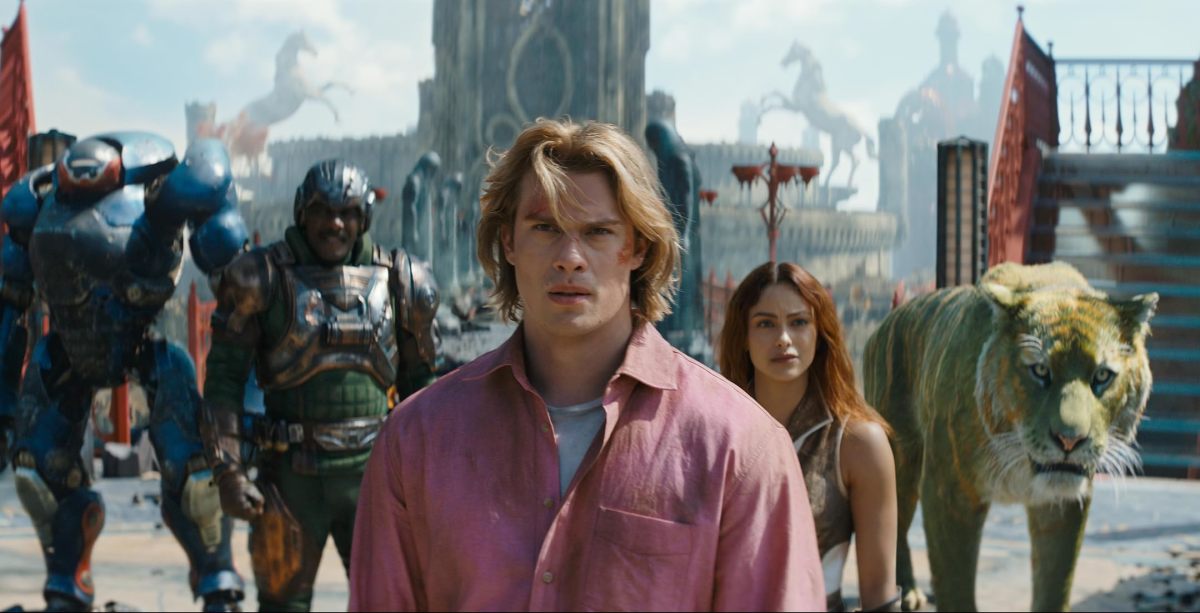 (Image: Sony Pictures)
The film's perspective and execution in deconstructing masculinity are, in some ways, more outdated than the IP itself. The discussion is handled with a crude and childish approach, as if the screenwriter just learned how to write. Its attempts to critique or poke fun at masculinity boil down to this: having random people objectify He-Man; having He-Man misread a woman's signals and impulsively try to kiss her, only to play it cool after the misunderstanding... just stale, cringey gags that reek of old-man humor. The film also establishes that He-Man disliked fighting as a child but was forced to learn, brainwashed into worshipping traditional male values. His way of breaking free? Trying to persuade Skeletor to turn from his evil ways, getting naively tricked, and then having to resort to violence anyway. What is this story even trying to say? What kind of conclusion is that?
If you want to humorously depict a non-masculine prince trapped by his hyper-masculine father's outdated ideas, Pixar's "Elio" handles it far more effectively with a conclusion that actually lands, instead of just defaulting to a brawl. Furthermore, this film doesn't feel genuinely interested in exploring masculinity. It treats the issue more like a hollow designer label, thinking that simply wearing it will mitigate the IP's dated awkwardness. It feels like it's cynically exploiting the topic rather than engaging in a serious discussion. Little do they know, this approach only magnifies how out of touch it is. Like a tasteless nouveau riche, it wears the designer brand but still looks cheap, failing to carry the clothes with any real class. (Image: Sony Pictures)
And to think Mattel officially claimed this is the male version of "Barbie"—that "Barbie" addresses the female condition while "Masters of the Universe" tackles the male condition. That statement is an insult to their own work. "Barbie" was entirely about its themes, while "Masters of the Universe" treats them as empty slogans. The depth and sincerity are worlds apart. How dare they call it the male "Barbie"? "Barbie" even had room to explore Ken's male anxieties (with a tone that was both warm and satirical), covering that ground already. Who needs "Masters of the Universe" for that? Not to mention, "Barbie"'s portrayal of Ken's plight was so nuanced it sparked a pop-culture phenomenon of men everywhere saying, "He's literally me." "Masters of the Universe" has no claim to the title of the male "Barbie"; "Barbie" was already a film for everyone.
But more troubling than the masculinity angle is the film's failed attempt at being a comedy. It throws every common Hollywood blockbuster joke at the wall (e.g., a villain in pursuit is suddenly hit by a car), yet almost every single gag is painfully unfunny. I don't know how they managed it, but turning these usually reliable old tropes into comedic dead ends is a special kind of skill. And as mentioned before, "Masters of the Universe" is a dated IP, so like the "Baywatch" soft-reboot movie, it tries to poke fun at its own source material's recurring tropes. In this regard, it's a total train wreck.
(Image: Sony Pictures)
The "Baywatch" movie mocked the TV show's gratuitous slow-motion running shots; "Masters of the Universe" mocks Skeletor's villainous monologues and cartoonish, skyward cackles—things that are normal in a cartoon but bizarre in a realistic setting. This kind of self-aware humor is a staple for some reboots of older IPs, which often smartly evolve with their audience to acknowledge the cheesiness of the original. Normally, these jokes are an easy win, but "Masters of the Universe" consistently makes them backfire. The harder it tries, the less funny it gets. I understand where the punchline is supposed to be, but I just can't bring myself to laugh.
Do you know that awkward feeling when someone manages to tell a funny joke in a completely unfunny way? That frustrating sense of a great punchline ruined by terrible timing and setup? "Masters of the Universe" is that ruined joke. Repackaging a less comedic IP with a comedic wrapper to broaden its appeal is a common strategy. The "21 Jump Street" movies did it successfully, and Marvel films do it all the time, usually to good effect. But with "Masters of the Universe," it fails more often than not. Worse, I'm not just talking about the jokes; I'm also referring to the formulas it applies. (Image: Sony Pictures)
We've seen countless films use the "Hamlet" template to tell a prince's revenge story—so many it's not even worth listing examples. It's an incredibly easy framework to work with; as long as you don't mess it up, you're guaranteed at least a passing grade. But somehow, "Masters of the Universe" still manages to fumble this template into something below passing, something boring as f**k. By the end, I couldn't tell if the IP itself is just mediocre or if the screenwriters are. I have a nagging feeling they were so obsessed with preserving the original's juvenile tone that they hamstrung themselves, self-censoring any elements that could have been deepened until the entire film felt flat and lifeless.
I highly doubt this version of "Masters of the Universe" will win over enough new fans to justify a sequel. Perhaps existing fans will be thrilled, but if it can't break out of its niche, if it can't make non-fans feel like liking "Masters of the Universe" is cool, then this new franchise is dead on arrival. As it stands, to put it bluntly, this film is still a dated relic that reeks of old-man energy. Only those already familiar with the IP will understand its value. For anyone who has never heard of He-Man, they'll be lucky if they don't find his muscle suit hideous.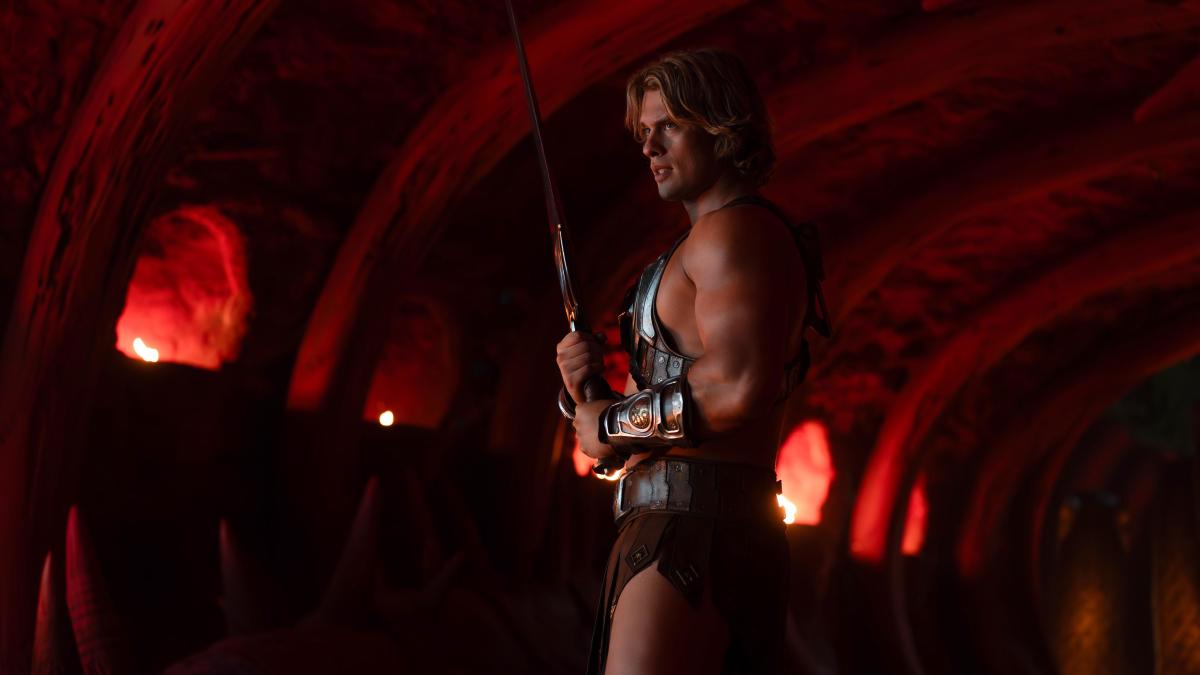 (Image: Sony Pictures)
Some fans will read that last part and angrily accuse me of being an outsider. On the contrary, if I were an outsider, I wouldn't be able to recognize just how badly the film's self-deprecating inside jokes fail. This brings up a question that Hollywood (and we, the ticket-buying consumers) should have figured out by now: must we continue forcing IPs that could only truly shine in a specific bygone era to adapt to a new one? And if we insist, can we do it with more care to find the perfect balance? Instead, we often get these compromised, Frankenstein-like creations where every party is forced to concede something. We keep getting these rehashed films that serve as loyalty tests for both the studio and the audience, with no guarantee of box office success. Why bother?
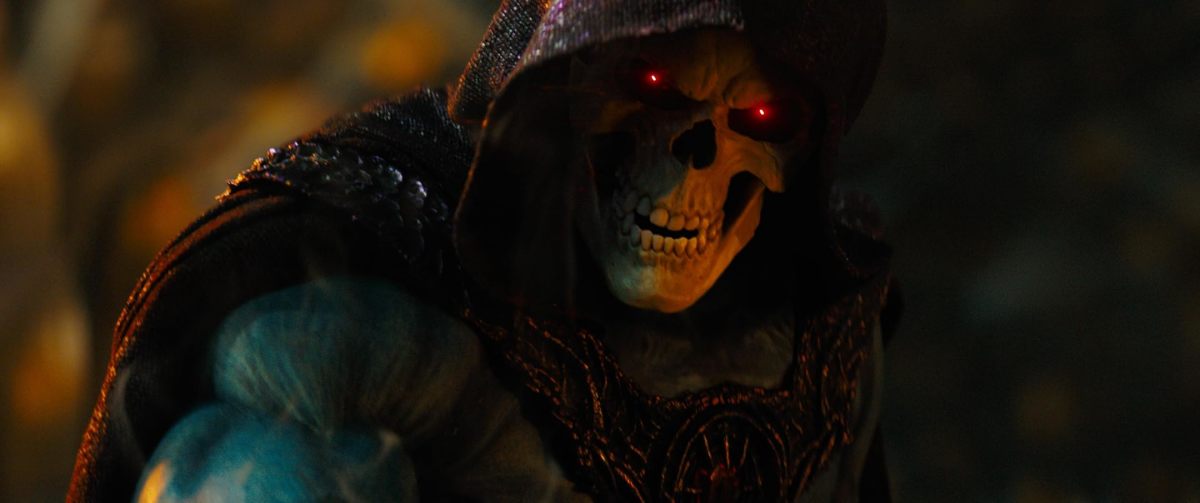
The film's only saving grace is Jared Leto, the one cast member who didn't participate in the press tour. His voice for Skeletor is magnificent! It combines the traditional oily villain tone with his signature rockstar madness, making it a joy to listen to. He was also a joy to "watch." Unlike Pedro Pascal in "The Mandalorian," who mostly provides voice work, director Travis Knight confirmed that Leto was on set, performing the physical movements in costume under the mask. If you're familiar with Leto, you'll occasionally notice that some of Skeletor's arrogant hand gestures are clearly Leto's own reflexive mannerisms.
But even a great performance from Leto can't save the box office. Current media and market analyst projections for the film's North American opening are grim. This looks poised to be another entry on the long list of major IP box office bombs slaughtered by the franchise-killing leading man.