

As generative AI technology continues to advance, a growing number of AI-generated videos and images have appeared using the faces and voices of celebrities without their consent. In May, it was revealed that popular voice actor Kenjiro Tsuda had filed a lawsuit with the Tokyo District Court seeking the removal of TikTok videos that allegedly used generative AI to imitate his voice without permission.
On September 30, the Tokyo District Court dismissed Tsuda’s request because the videos in question had already been removed. At the same time, however, the court issued Japan’s first judicial finding that a person’s voice may qualify for protection under the right of publicity, making the decision particularly significant amid growing concerns over unauthorized AI voice imitation.
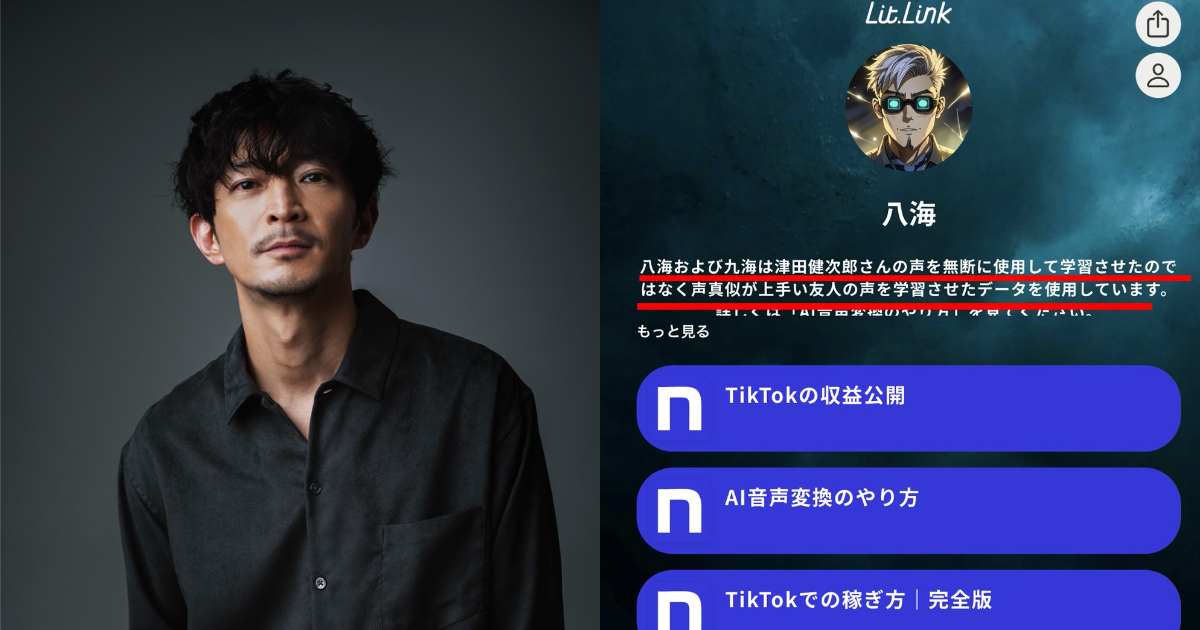
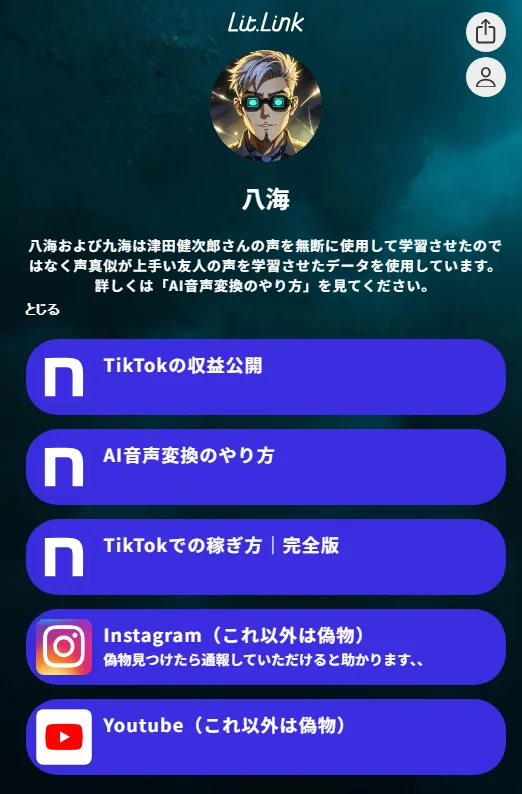
The dispute began with a TikTok account named “Hakkai” (八海), which allegedly used generative AI to create narration resembling Tsuda’s voice without authorization. Between July 2024 and September 2025, the account uploaded at least 188 videos, primarily covering urban legends, trivia, and similar topics.
Because TikTok offers a monetization program based partly on video views, the account operator was reportedly earning approximately 500,000 to 750,000 yen per month. Tsuda’s legal team requested that the videos be removed and argued that the unauthorized commercial use of his voice infringed upon his right of publicity—the right to control the commercial use of identifying aspects of a person’s public identity.
The lawsuit had originally been filed in November 2025. TikTok’s operator argued that the narration featured only a “generic male voice,” rather than a voice uniquely identifiable as Tsuda’s, and maintained that no violation of his publicity rights had occurred.
In its September 30 ruling, the Tokyo District Court concluded that TikTok no longer had any obligation to remove the content because both the account and the videos had already been deleted. It therefore dismissed Tsuda’s request.
However, the court also stated that a person’s voice, like their likeness, can serve as a symbol of their individual identity. It found that the unauthorized use of a performer’s voice may infringe upon publicity rights when the purpose is to exploit the voice’s commercial appeal. Because the disputed videos had already been removed, the court did not determine whether those specific videos had actually infringed Tsuda’s rights.
Following the ruling, the Japan Actors Union issued a statement through its official X account:
“A judgment was handed down today in Kenjiro Tsuda’s case. We support Mr. Tsuda’s efforts and are grateful for the courage he has shown. We can only imagine that the psychological burden he has endured during this period was considerable. Our union will formally review the complete written judgment and publish a further statement on our official website.”
Tsuda’s request was dismissed because the account and videos had already been deleted, meaning the removal he sought had effectively taken place. The dismissal therefore does not mean that the court rejected all of the legal arguments presented by Tsuda’s team.
The more significant part of the ruling is the Tokyo District Court’s finding that a person’s voice may qualify for protection under publicity rights. Although the court did not decide whether the videos in this particular case constituted an infringement, its reasoning could become an important reference in future disputes involving unauthorized AI-generated voices. The decision may also help advance clearer protections for voice actors, performers, and others whose voices are central to their professional identities.