
"Has there ever been a game that so captivated you, so astonished you, that you lost all track of time, forgot the troubles of the world, and focused solely on what was before you? I believe this feeling stems from humanity's intrinsic love for art, for beauty in its purest form..."
I am a first-year high school student (16 years old) with a passion for video games. After playing Hidetaka Miyazaki's Soulsborne games, I began to understand the beauty of gaming—a pursuit of beauty originating from the self that cannot be described in just a few words (more on this later). I hope that through my own humble efforts, I can help more people understand the "beauty" of games, so they are not unjustly labeled as "digital heroin."
When it comes to the game that has moved me the most recently, it is undoubtedly the current sensation, "Tears of the Kingdom." I still remember getting my Switch back in my first year of middle school; the first game I bought was its predecessor, "Breath of the Wild." Although my mind was still young then, the near-perfect sense of immersion was undeniable. Since then, I have played many other titles and read a number of books, enriching my mind and spirit. After three years, the release of "Tears of the Kingdom" has arrived, and I feel a bit more confident in writing articles online to share my thoughts.
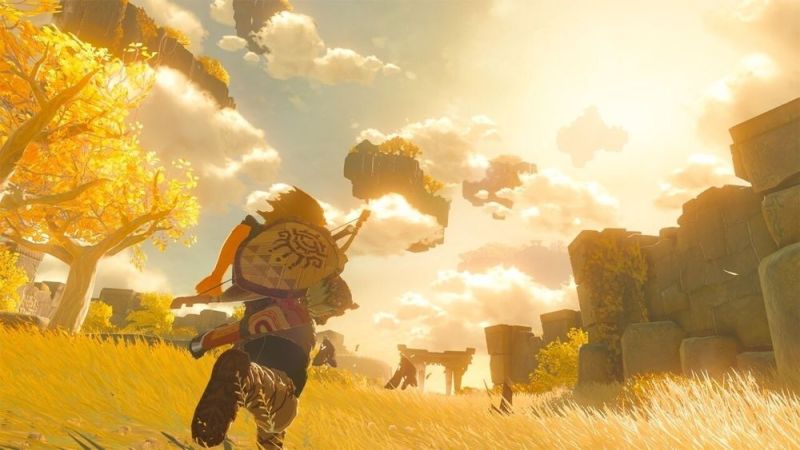
After a month of gameplay, allow me to share my vision of the "Hyrule" in "Tears of the Kingdom" and some of my personal reflections.
(A quick note: I am currently only a high school freshman, and my writing still has many unrefined areas. If there are any inappropriate word choices, please feel free to offer your guidance. Now, I shall present my humble work.)
I. A Simple Story, Sincere Emotion
The Zelda series has never been praised for the complexity of its stories. On the contrary, if I were to point out one of the few shortcomings of this game, it would be the lack of explanation for what happened to the Sheikah technology from "Breath of the Wild." When Link returns to the continent of Hyrule, we are granted Zonai technology, yet the abilities from "Breath of the Wild" are no longer usable. I hope the official sources can provide a reasonable explanation for this in a future art book or guide.
Returning to the topic, the plot in the Zelda series mostly serves the gameplay. The abilities we acquire at the beginning are the core of how we advance through the game. We use these abilities to help NPCs, solve problems, receive rewards, or make new discoveries. This simple, small joy is one of the reasons this game is so addictive.
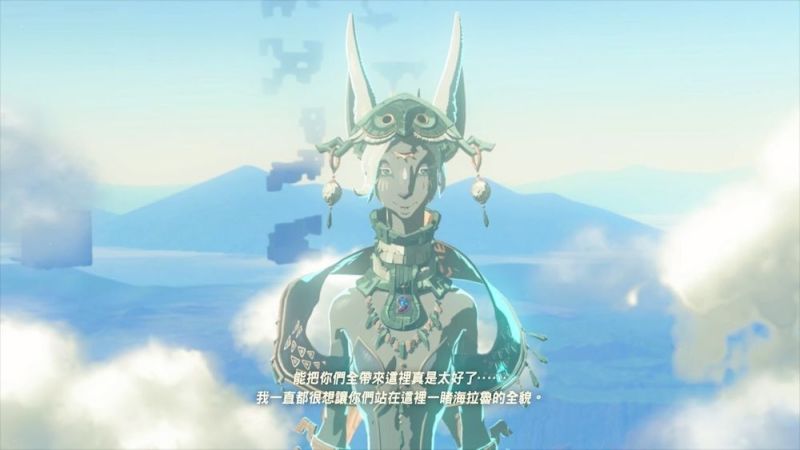
The main storyline is set against the backdrop of the Imprisoning War mentioned in "A Link to the Past," contrasting the present with the past. It speaks of the regrets of an old era and the inheritance of a new generation—wiping away tears of regret, healing inner wounds, and striding forward together to witness a hard-won peace. Indeed, whether in games or in reality, peace can only be achieved through the collective effort of everyone. I hope that all of you reading this can remember the scars of the past and continue to strive for the peace you hold in your hearts.
Overall, while "Tears of the Kingdom" may not have the narrative tension and profound philosophical ideas of "NieR:Automata," nor the captivating world-building of "Cyberpunk 2077," it is precisely this simple and sincere narrative structure that highlights the freedom the game wants to convey. You are not constrained by the plot, playing just to finish the story or to understand it for understanding's sake. I believe that even today, there are many "Calamity Links" in Hyrule who have not yet completed the main story, and the freedom the plot grants you is a key factor in that.
While the story of "Tears of the Kingdom" may not be its strongest point, who among us didn't dream of such a simple time-traveling adventure in our youth? From my perspective, it passes with flying colors!
II. The "Changes" and "Constants" of the Map
This game adds two new major regions. In addition to the original Hyrule continent, the Sky and the Depths have been added. These areas are filled with abundant treasures and interesting side quests for players to explore, injecting a sense of novelty into the existing foundation. It can be said that Nintendo has successfully catered to both new and veteran players.
In an interview with the development team, they mentioned that "creating a sense of novelty on an existing foundation" is much more difficult than "starting everything from scratch." It is clear that Nintendo has accomplished this arduous task.
It is worth mentioning that although I was immersed in the world Nintendo created, there is one small area that could have been more refined: the color palette and terrain of the Depths. Compared to the surface, it is considerably less impressive, and sometimes exploring for long periods can lead to visual fatigue. Additionally, regarding the interior design of the Shrines, if they could incorporate some of the local customs and culture of their respective regions, the overall visual astonishment and sense of surprise would be greatly enhanced, making the gameplay even more immersive.
Of course, the suggestions above are merely nitpicking. Overall, I was still very engaged during my adventure. And these aren't really flaws, as the main focus of the Shrines is puzzle-solving, and the monsters and side quests in the Depths are quite rich. In summary, Nintendo still accomplished 95% of the goals they set for themselves. Excellent!
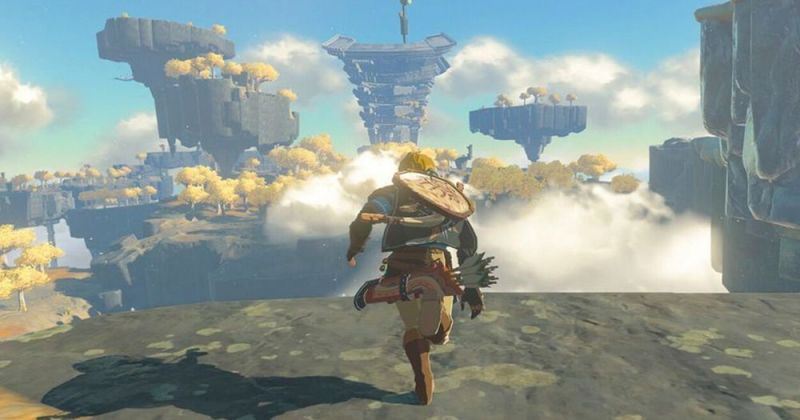
(The Sky Islands)
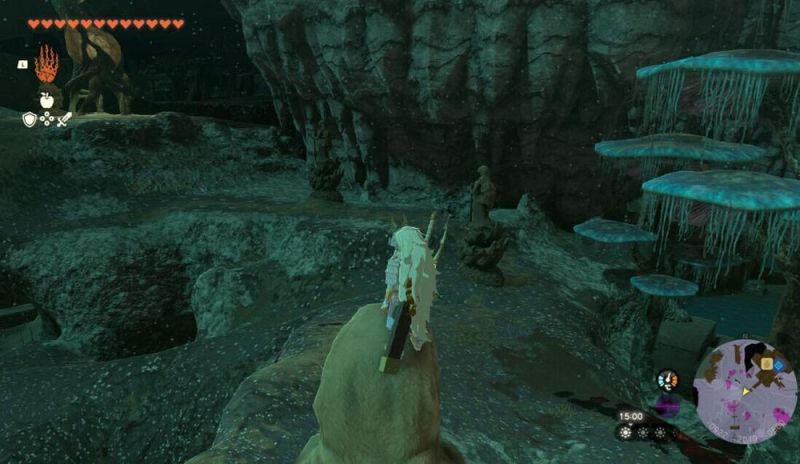
(The Depths)
III. Application of the Physics Engine and Abilities
We finally arrive at the biggest selling point of this game, the very feature that has earned every hero the title of "Calamity Link": the "Ultrahand" ability!
Ultrahand allows you to freely move any interactive object and connect it to any other interactive object. Yes, "any." Combined with the newly added Zonai Devices, each with its own function, the entirety of Hyrule has become a playground for every Link. Hilarious scenes are constantly emerging. Here are a few of the more famous ones:
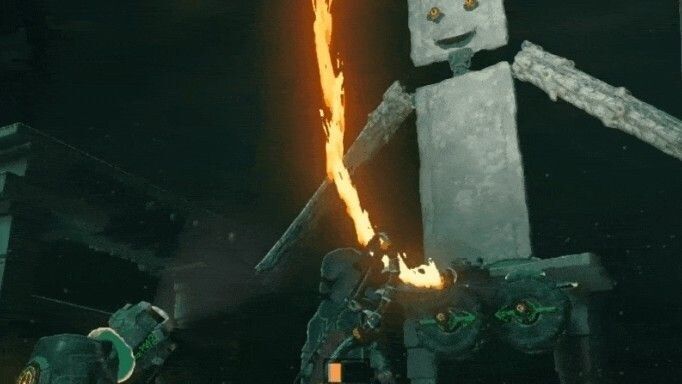
(This was probably the first creation to go viral.)
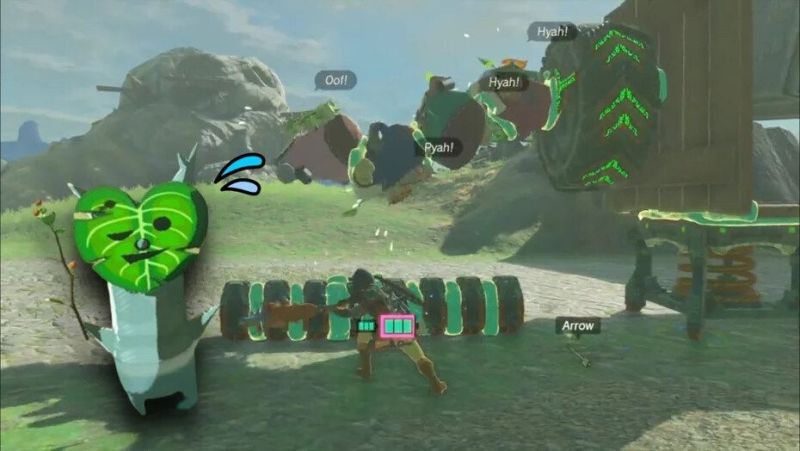
(One million ways to torture a Korok.)
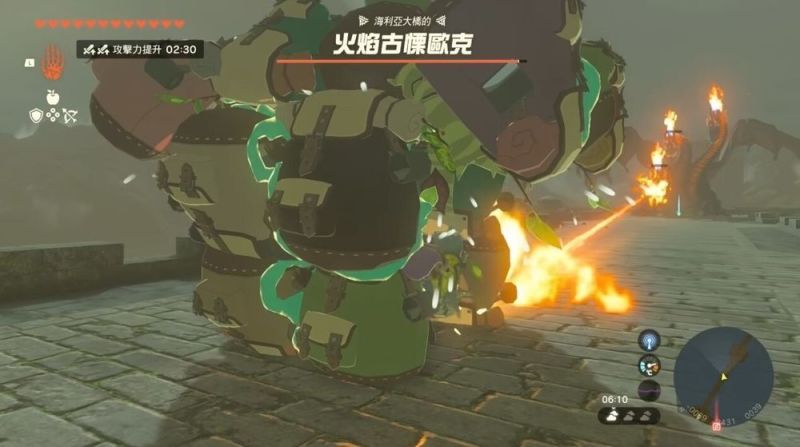
(The ultimate protective shield.)
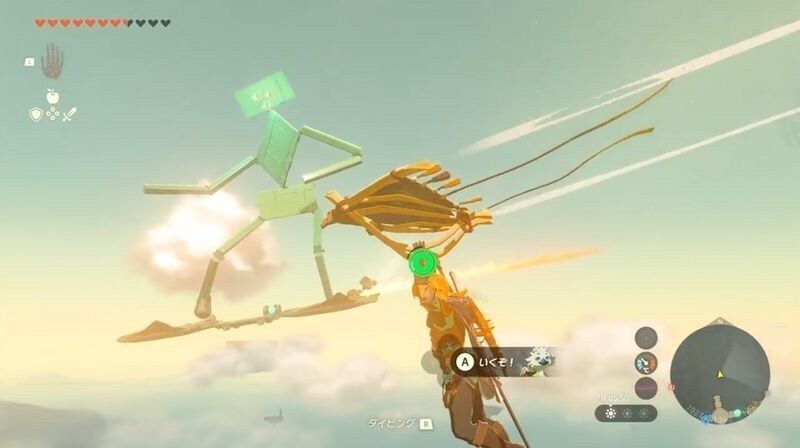
(Is that you, Master?)
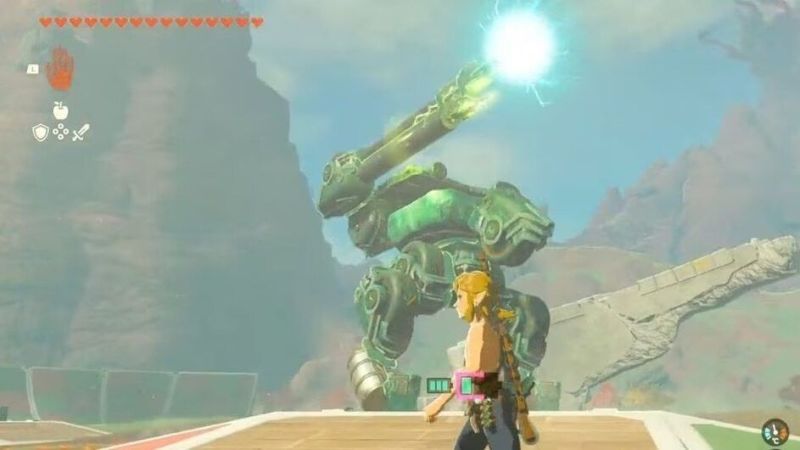
(This Metal Gear-style mech is so cool!)
Of course, there are many other interesting creations not shown here, but this should give you a general idea. Besides these visually entertaining builds, there are also devices with practical applications. Here are a few examples:
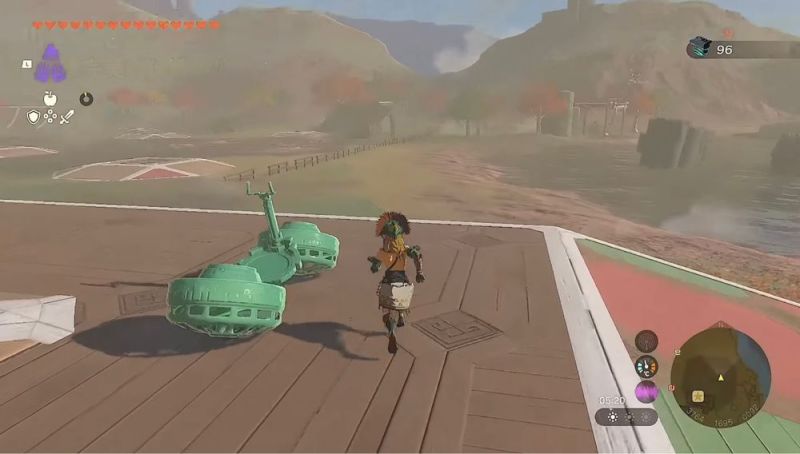
(An essential electric vehicle for getting around.)
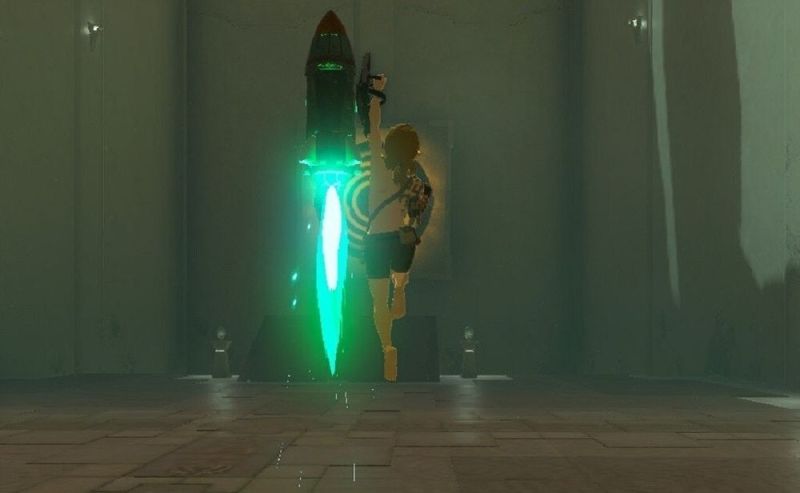
(The must-have Rocket Shield for cheesing challenges.)
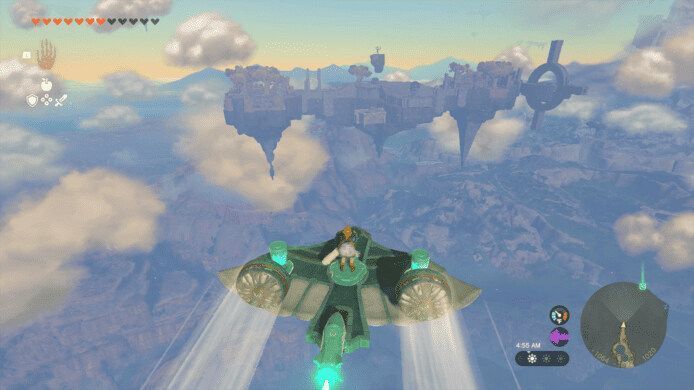
(The classic Green Goblin glider.)
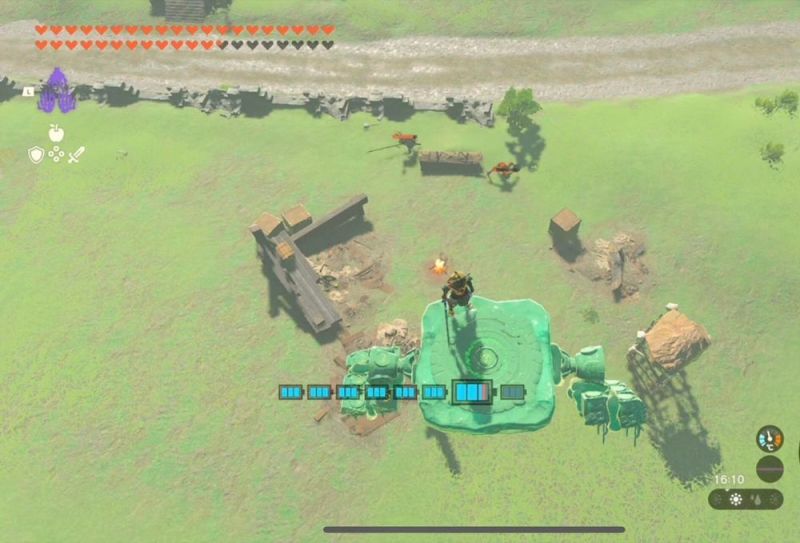
(A drone that plays dirty.)
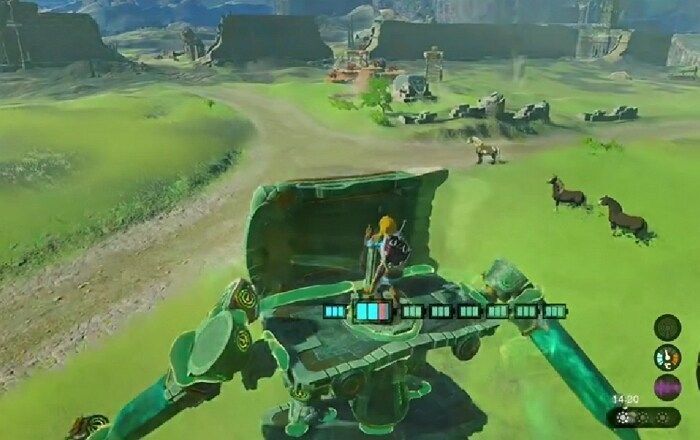
(A god-tier Gundam that cuts through enemies like butter.)
Naturally, the game features a wide variety of Zonai Devices waiting for players to create with, embodying the principle of "the only limit is your imagination."
The Ultrahand function has become the core of this game's playability, with nearly limitless potential. For anyone with even a slight interest in building things, especially for the vast number of men who grew up playing with building blocks or for all the Gundam fans out there, I think this feature alone makes the game worth the price of admission.
Underpinning the myriad combinations of items is the game's masterful control of its physics engine. While building our creations, we also need to consider their structure, tire size, center of gravity (weight and balance), steering, and many other issues, as if we were building the object in real life. I happened to come across a news story a while back about a school teacher using the previous game, "Breath of the Wild," as teaching material. It seems that with "Tears of the Kingdom," that teacher will need to update their curriculum!
In addition to Ultrahand, this game introduces many other new abilities that further enrich the gameplay. "Fuse" diversifies the weaponry, allowing any item and weapon to be combined at will. "Ascend" speeds up player traversal; using it on a cliff face can save a great deal of time and is also a key tool for puzzle-solving. "Recall" is a very interesting ability in this game, with a place in traversal, combat, and puzzle-solving. It is especially crucial for puzzles, as most of the game's riddles require its assistance, making it an essential tool.
These four abilities have established the irreplaceable gameplay of this title and have cemented its place in the "great" annals of gaming history. And we are all witnesses to this process.
IV. ...
After all that has been said, I believe none of these are the core reasons why this game has become a "masterpiece" in the hearts of some players. I believe the reason this game is divine is because it has a "soul".
Some time ago on Bahamut (a popular Taiwanese gaming forum), there was an article about a forum moderator who fought cancer with the help of "Breath of the Wild." The article received countless upvotes, and many people in the comments shared similar experiences and feelings, offering each other warm words of support.
In Hyrule, I can cook sumptuous meals, forge powerful weapons, and vanquish mighty bosses. I can go wherever I want, embarking on a spontaneous journey without any external constraints. I can unleash my creativity, building the LEGO blueprints in my mind or decorating a warm and cozy home. I can... there are so many things I can do.
In reality, many things trouble us: the deceit in interpersonal relationships, the pressure from elders, the black and white letters on a report card, the work demands from superiors... All of it gradually becomes layers of gauze, covering the painting called "soul." The self is slowly stripped away, slowly forgotten.
And "Breath of the Wild" and "Tears of the Kingdom" allowed me to lift that gauze again. In a daze, I finally understood that this faint flame of the soul is so genuinely, dazzlingly brilliant. It also made me realize that all these current processes are indispensable materials for building my future utopia. When you meet like-minded people, like the friends Link makes in Hyrule, that sincere joy will burst forth like fireworks, displaying all its splendor in the sky. This is what makes life worth living, isn't it?
V. A Word from the Author
In this post-industrial era, games have long become a medium for transmitting knowledge and art. To like a game, to love its experience and artistic expression, is that not to love the beauty of a form? To then love its lore and its gameplay rules, is that not to love the beauty of a logical system? To then love its deeper thoughts, its profound value system and worldview, is that not to love the beauty of philosophical wisdom? And finally, for that love to become an indescribable emotion...
Although games themselves are not bad and even have many benefits, we cannot deny their strong addictive potential. A look at your playtime can tell you a thing or two. I hope everyone can understand that while playing games can be good for our physical and mental well-being, excessive indulgence that leads to misplaced priorities is no different from drug abuse.
I hope all players can adhere to one principle: "Life first, games second." Otherwise, when the pressure from the backlash overwhelms you, I believe that even starting up your favorite game will feel tasteless.
"To have everyone call me a Gamer, I must keep doing better," I am the Fledgling Connoisseur, see you next time.