

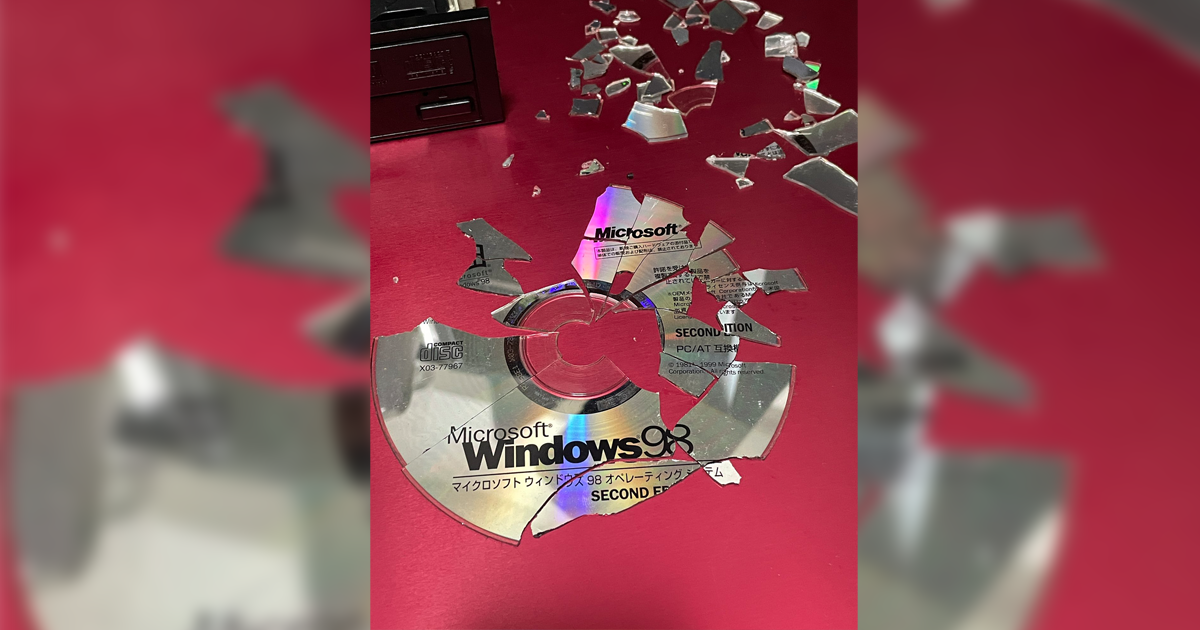
A truly wild tech mishap has been making waves on Twitter (now X) recently, leaving netizens stunned. According to user オタク孔明 (@Natasya_kgy_F), a simple attempt to back up an old Windows installation CD-ROM spiraled into a full-blown disaster, not only wrecking their disc drive but also bricking their entire computer. Talk about a bad day!
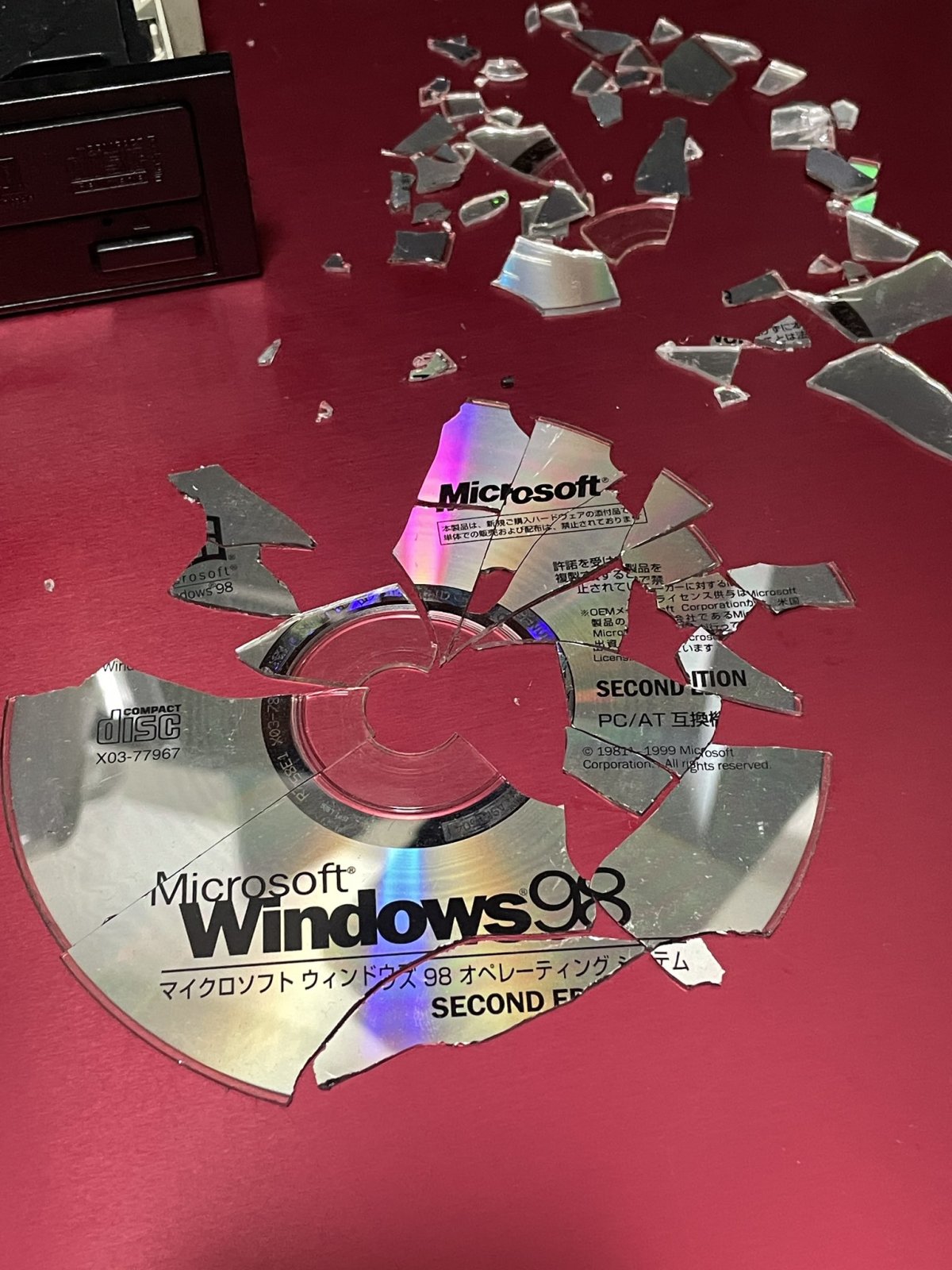
Koumei recounted finding an old Windows 98 CD-ROM with a visible crack. Fearing it would only get worse, they decided to quickly back up its contents. What seemed like a straightforward task quickly turned into a tech horror story after the disc was inserted into the computer's drive.
As the drive spun up to read the CD, Koumei heard a terrifying "snap, crackle, pop" from inside. In an instant, the CD-ROM exploded, sending countless fragments flying everywhere. Just picturing it is enough to make any tech enthusiast wince.
But the carnage wasn't limited to the disc itself. The internal components of the disc drive were utterly destroyed in the process, rendering the tray inoperable. Even worse, the entire computer suffered a catastrophic failure and could no longer boot up. Koumei suspects the existing crack on the CD-ROM expanded rapidly under the stress of the drive's rotation, leading to its explosive demise.
This shocking incident quickly captured the internet's attention, racking up approximately 2.83 million views in a short span. Netizens flooded the comments section, expressing a mix of shock, sympathy, and theories.
Some speculated that modern disc drives, designed for higher speeds, might have been too powerful for the fragile, vintage CD. Others simply called the situation "terrifying," unable to imagine a disc shattering in such a dramatic fashion.
Several users pointed out that contemporary disc drives often lack the ability to operate at the slower speeds that older media might require, suggesting that the high-speed read was likely a major contributor to the catastrophe. Many were also surprised by the sheer fragility of old CDs, noting that such incidents are far less common today, especially with the widespread adoption of digital storage.