

Plenty of folks out there love to draw, and for many, a career in art—especially in the ACG (Anime, Comics, Games) industry as an illustrator or character designer—is the ultimate dream.
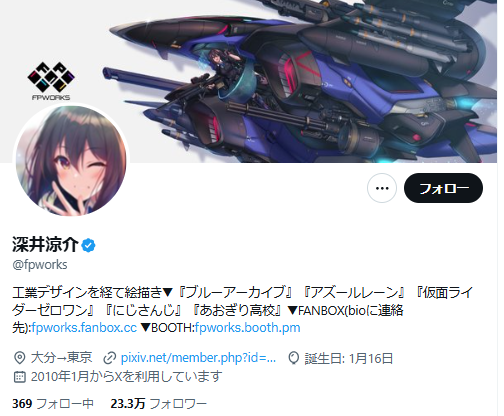
Recently, renowned Japanese illustrator Ryosuke Fukai (@fpworks) dropped some truth bombs on his X (formerly Twitter) account. He shared his honest thoughts after years of being asked by young aspiring artists, "How do I become an illustrator?" His candid take sparked a massive discussion among industry pros and hopefuls alike.

Fukai's impressive portfolio includes work on games like "Blue Archive" and "Azur Lane," as well as "Kamen Rider Zero-One." He's also lent his design talents to VTubers for Nijisanji and Aogiri High School, plus countless character models. His distinctive style has earned him a huge following.
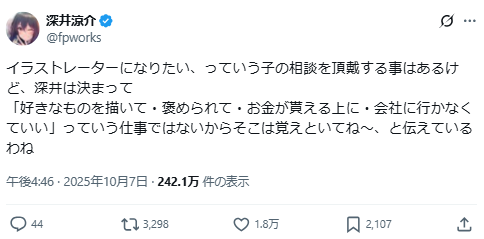
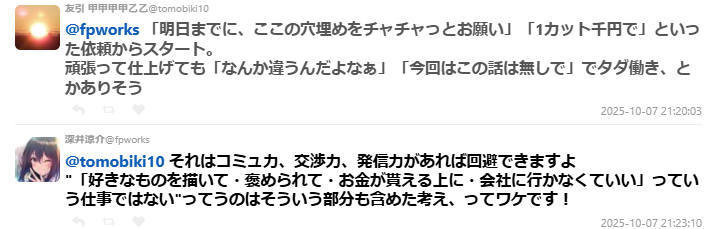
So, what's his real talk on "how to become an illustrator"? He didn't mince words: it's absolutely not a fantasy gig where you "just draw what you love, get showered with praise, rake in cash, and never have to step foot in an office." It's a profession that demands a dose of reality and a diverse skill set.
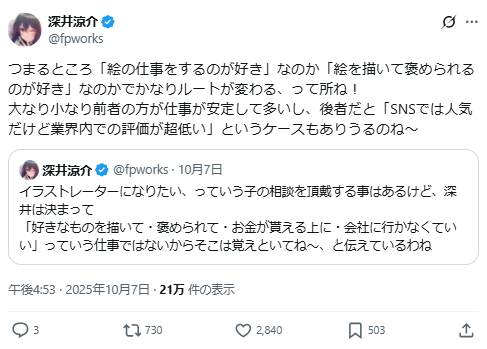
Fukai points out that many people confuse two wildly different paths: "loving art as a profession" versus "simply loving to draw and get compliments." He explains, "If you just want to draw what you like and get praised, you might end up with high popularity on social media but low industry recognition. On the flip side, if you want to make a living from art, you'll face the real-world challenges of dealing with clients, meeting deadlines, revisions, and constant communication."
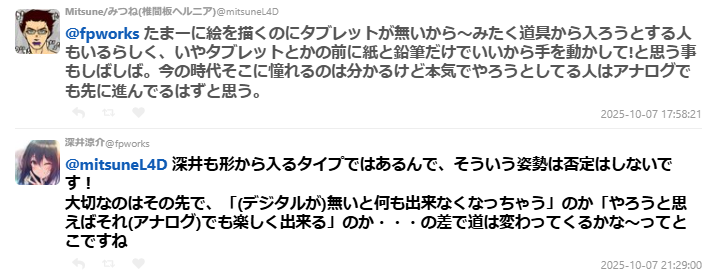
One netizen brought up the idea that some believe "you can't start drawing without a drawing tablet." Fukai responded, "I'm also someone who preps my gear first, but the real point isn't the tools—it's the mindset. Is it 'I can't draw without tools,' or 'I can still enjoy creating even with just paper and a pen'? That distinction will lead you down completely different roads."
Another user mentioned how illustration gigs often come with last-minute, low-ball offers like "Can you fill this gap for me? I need it tomorrow, and it's ¥1,000 per piece." Fukai countered, "Situations like these can actually be avoided with good communication, negotiation skills, and self-promotion. The idea that 'you can't just draw whatever you like and make money' definitely includes this aspect."
Many other illustrators chimed in with their own real-world experiences: "Drawing what you love doesn't always pay the bills." "You have to be okay with drawing subjects you don't love, otherwise it's tough to make a living." "No office doesn't mean freedom; it means you're your own boss, negotiating contracts, chasing payments, and handling taxes." "Don't be fooled by the glamorous social media image; behind it all is hard work and anxiety."
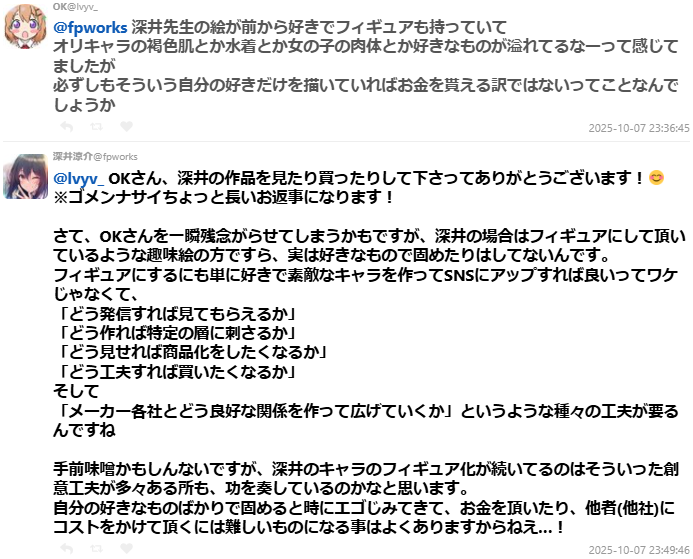
A fan commented that Fukai's original characters "seem full of personal preference," and they were surprised to hear even those weren't "purely for himself." Fukai admitted, "Even with those pieces, I'm thinking, 'How can I post this to make people want to see it?' 'How can I design it to appeal to a specific demographic?' 'How can I present it so people want to commercialize it?' For a character to become a figure, to be seen, to be loved—it all requires strategy."
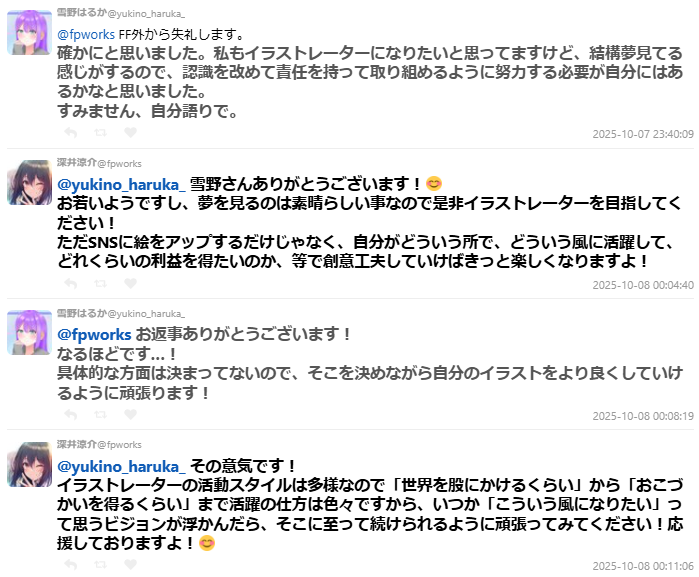
When a young netizen confessed, "I might be a bit too idealistic," Fukai encouraged them: "Dreams are awesome, keep chasing them! But beyond just drawing, also think about which field you want to excel in, how much you want to earn, and how you want to be seen. That will give your creative work more direction and make it even more enjoyable."
The discussion ultimately resonated with numerous industry veterans. Many summed it up with a stark reality check: "Doing what you love, getting praised for it, making money from it, AND not having to go to an office—those four things simply cannot exist simultaneously."
Ryosuke Fukai's insights sparked a wide-ranging conversation, prompting many aspiring illustrators to reconsider their dreams. Being an illustrator isn't just a romantic, freelance gig; it's a long journey requiring professionalism, strategy, negotiation skills, and self-discipline. While drawing what you love is certainly a joy, the real challenge lies in making a sustainable living from your art.
via: togetter