

Since its launch, the mobile game Pokémon Sleep has charmed players with its adorable and unique gameplay centered around, well, sleeping. But beyond just catching 'mons in your slumber, many users have found it to be a handy tool for tracking their sleep health.
Now, that data is powering some serious science. A research team led by Professor Masashi Yanagisawa from the University of Tsukuba recently published a paper titled "Association of sleep patterns assessed by a smartphone application with work productivity loss among Japanese employees." Using AI to analyze sleep patterns, the study sorted participants into five types. The difference between the best and worst sleepers? An estimated economic loss of ¥136,000 per person annually. When scaled up to the entire country, that productivity hit from irregular sleep could be costing Japan a staggering ¥1 trillion a year.
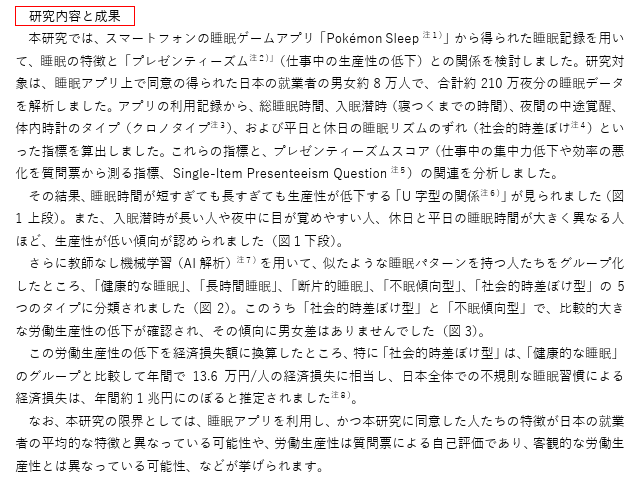
The study analyzed data from approximately 80,000 Pokémon Sleep users in Japan, covering a cumulative total of about 2.1 million nights of sleep. This marks the first large-scale, objective investigation into the relationship between "sleep habits" and "work efficiency."
Previously, research on sleep and productivity relied heavily on self-reported questionnaires or small sample sizes, making it difficult to capture real-life sleep patterns accurately. This study, however, leveraged actual usage data from the app, analyzing multiple factors, including:
Total sleep time
Time taken to fall asleep
Frequency of waking up mid-night
Individual chronotype (body clock)
Difference between weekday and weekend schedules (aka "social jetlag")
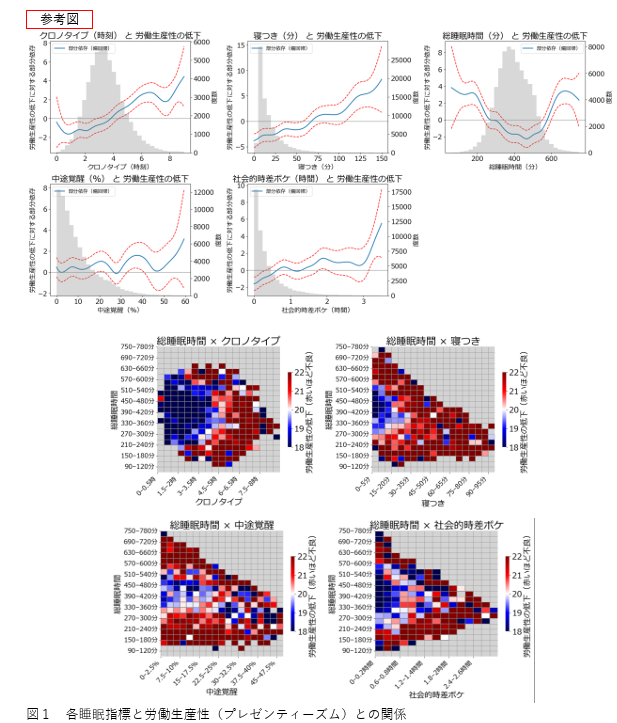
These data points were then cross-referenced with questionnaire responses on "degrees of decreased work efficiency." The results showed a clear "U-shaped relationship": both too little and too much sleep negatively impacted work performance. Furthermore, individuals who had trouble falling asleep, woke up frequently during the night, or had significant discrepancies between their weekday and weekend sleep schedules generally reported lower work efficiency.
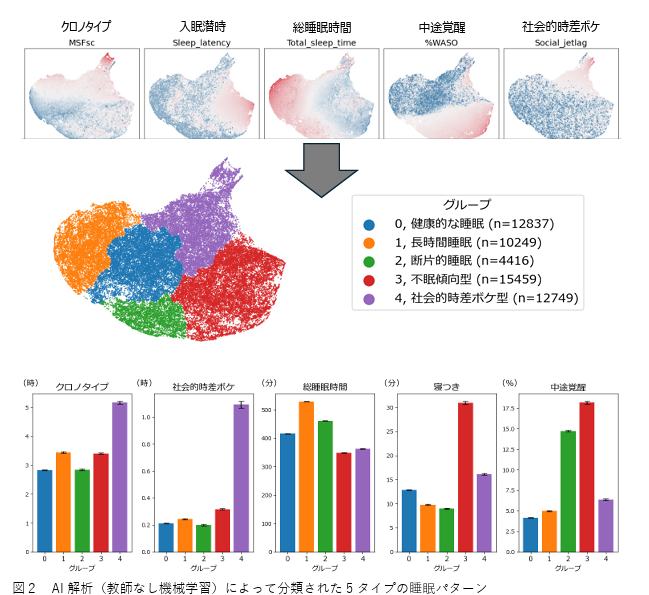
The research team used AI analysis to categorize participants into five distinct sleep types based on pattern similarity:
Healthy Sleep Type
Long Sleep Type
Interrupted Sleep Type
Insomnia-Prone Type
Social Jetlag Type
Among these, the "Social Jetlag Type" and "Insomnia-Prone Type" showed the most significant drops in productivity, a phenomenon observed without notable differences between genders.
In monetary terms, individuals in the "Social Jetlag Type" category incurred an average annual economic loss of approximately ¥136,000 per person compared to the "Healthy Sleep Type." Extrapolated across Japan, the total productivity loss due to irregular sleep schedules could reach an estimated ¥1 trillion per year.
The study's findings, titled "Association of sleep patterns assessed by a smartphone application with work productivity loss among Japanese employees," were published on December 11, 2025, in the Nature-affiliated scientific journal npj Digital Medicine.
This research demonstrates that Pokémon Sleep can be a valuable tool for scientific study, with its data even being validated in a peer-reviewed journal. For the average user, it's a reminder that both sleeping too much and too little can hurt your work efficiency. In today's world, sleep is a vital health metric, and using tools to monitor your patterns might just help you identify underlying health issues.
( Related Reading: Japanese Pokémon Sleep Player Discovers They Have Sleep Apnea, Thanks Game for Early Detection )
via: itmedia